Worksheets
Protein Synthesis
Total questions: 45
Worksheet time: 23mins
Where is DNA found in the cell
Cytoplasm
Nucleus
Golgi Body
Rough ER
What is the building block of a nucleic acid?
Monosacharide
Nitrogen Couple
Nucleotide
Polymer
What does the letter "A" stand for
Adderal
Adjective
Adenine
Adenosine triphosphate
The rungs of the ladder are
Sugars
Phophates
Nitrogen Bases
ATP
what is the sugar found in DNA?
Ribose
Deoxyribose
Glucose
Helicase
What letter pairs with Adenine in DNA
C
T
G
B
What letter pairs with guanine in DNA
A
C
G
T
What letter pairs with A in RNA?
Uracil
Cytosine
Guanine
Thymine
A protein that helps a chemical reaction occur is called a(n) ______
Enzyme
Nucleic Acid
Lipid
Carb
The name of DNA's shape is
twisted helicase
Double Helix
Triple Ladder
Rotated nucleotide
How many strands does DNA have
Single
Double
Triple
Quadruple
How many strands does RNA have
Single
Double
Triple
Quadruple
Taking 1 strand of DNA and using it to make 2 strands of DNA is called
DNA Duplication
DNA Replication
DNA Copying
DNA Synthetics
What does the info in the DNA store
Instructions to make lipids
Instructions to make Proteins
Instructions to make Carbs
Instructions to make Chromosomes

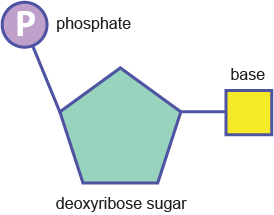
What is this molecule?
DNA
RNA
Ribosome
Nucleus
Which organelle is the location where protein is made?
Ribosome
Nucleus
Cytoplasm
Nucleotide
Insertion, deletion, and substitution are all examples of a change in a genetic sequence which is also referred to as (a)
Gene
Amino Acid
Ribose
Mutation
During transcription, this molecule delivers the genetic code from DNA to the ribosome
tRNA
mRNA
rRNA
dRNA
When these bond together, they form a protein
Amino Acids
Peptide Bonds
Ribose
Nucleotides
These building blocks consist of a sugar, phosphate, and nitrogen base.
Ribose
Nucleotide
Gene
Protein
There are a total of ____ different amino acids
20
1
4
unlimited
mRNA is made during the _________________ step of protein synthesis
Translation
Transcription
Replication
Delivery
Which of the following is the complementary mRNA sequence to this DNA strand: AACTGAA
UUGACUU
TTGACTT
AACTGAA
AACUGAA
What discovery was needed to find the shape of DNA?
Rosalind Franklin X-ray photos
Thomas Edison Light Bulb
Newton physics
Einstein Relativity
Which of these is found in RNA but not DNA
Ribose sugar
double helix
Thymine
nitrogen base
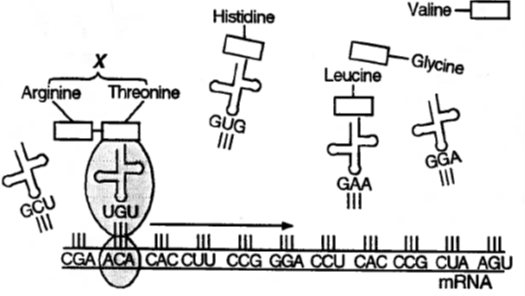

What process is happening in the diagram?
transcription
translation
dna replication
mitosis


A mutation where only one amino acid is changed in the protein
Frameshift Mutation
Point Mutation
Chromosomal Mutation
Redundant Mutation
Mutations that involve changes in the number or structure of chromosomes in a cell or organism are called _____________________.
Frameshift Mutation
Point Mutation
Chromosomal Mutation
Redundant Mutations
Mutations can be ______________________
Helpful
Harmful
Neither good or bad
All of the Above
Which do BOTH prokaryotes and eukaryotes contain?
nucleus
mitochondria
ribosomes
cell wall
Which does only eukaryotic cells contain?
nucleus
DNA
cell membrane
ribosomes
Prokaryotic cells do not have…….
membrane bound organelles
cell membrane
DNA or RNA
life
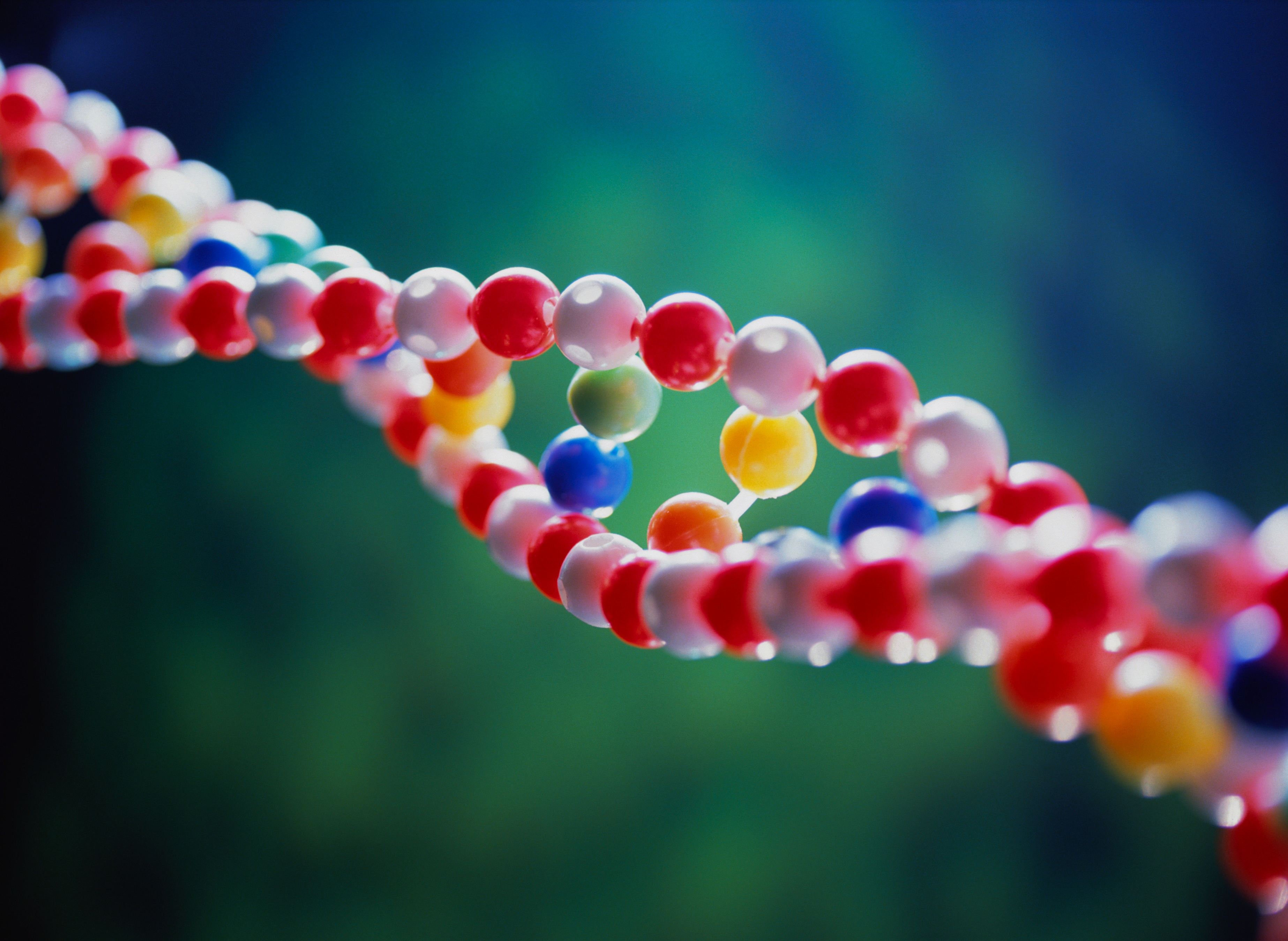
Why is DNA important?
it is very small and very complicated
it's in everything
it serves as the instructions for traits of all living things
because we eat it every day for energy
Where is DNA and RNA made?
nucleus
cytoplasm
mitochondria
ER
RNA has what base that is instead of thymine?
guanine
adenine
thymine
uracil