wayground logo

Free Printable Worksheets

Font size

S
M
L
XL
Worksheets

Chemistry review

Total questions: 92

Worksheet time: 3hrs 10mins

Name
Class
Date
1.
Jack has a rock. The rock has a mass of 14g and a volume of 2cm3. What is the density of the rock?
a)
7 mL
b)
7 g/cm3
c)
28 g/cm3
d)
1/7 g/cm3
2.
What is the volume of Object X?
a)
10.0 cm3
b)
15.0 cm3
c)
20.0 cm3
d)
25.0 cm3
3.
Which lab tool might you use to measure the volume of a liquid?
a)
electric scale
b)
bunsen burner
c)
test tube
d)
graduated cylinder
4.
I have two objects with the same volume but different masses.  Which object will be more dense?
a)
The object with less weight.
b)
The object with more weight.
c)
The object with more mass.
d)
The object with less mass.
5.
True or False:  The density of a specific type of material never changes.  
a)
True
b)
False
6.
What is the formula for density?
a)
density = mass x volume
b)
density = mass / volume
c)
density = mass + volume
d)
density = mass - volume
7.
Frank has an eraser. It has a mass of 4g, and a volume of 2cm3. What is its density?
a)
8 g/cm3
b)
2 g/cm3
c)
1/2 g/cm3
d)
24 g/cm3
8.
Frank has a paper clip. It has a mass of 9g and a volume of 3cm3. What is its density?
a)
3 g/cm3
b)
1/3 g/cm3
c)
27 g/cm3
d)
39 g/cm3
9.
A block has a mass of 54g and a volume of 20cm3.  What is the density of the block?
a)
74 g/cm3
b)
1080 g/cm3
c)
34 g/cm3
d)
2.7 g/cm3
10.
A can of Coke will sink in a bowl of water.  A can of Diet Coke will float in a bowl of water.  What does this tell you about the density of the Diet Coke?
a)
it is bigger than 1
b)
it is smaller than 1
c)
it is equal to 1
d)
it is equal to -1
11.
Why do ice cubes float in a  glass of water?
a)
the ice cubes are more dense than the water
b)
the water is more dense than the ice cubes
c)
the water is more dense than the glass
d)
the ice is more dense than the glass
12.
Veal finds a gold colored rock in a river.  It has a mass of 9.65 grams and a volume of 0.5 cm3.  What is the density of the rock?
a)
10.15 g/cm3
b)
19.3 g/cm3
c)
9.15 g/cm3
d)
4.825 g/cm3
13.
Which property of matter is determined by dividing its mass by its volume?
a)
elasticity
b)
buoyancy
c)
density
d)
viscosity
14.
The following liquids are poured together in a beaker: alcohol (density=0.79), corn syrup (density=1.38), water (density=1.0), and cooking oil (density=0.93).  Which of these liquids will sink to the bottom of the beaker?
a)
alcohol
b)
corn syrup
c)
water
d)
cooking oil
15.
What is the density of water?
a)
0 g/ml
b)
1 g/ml
c)
10 g/ml
d)
100 g/ml
16.
What is volume
a)
How many molecules are in an object
b)
how much space an object takes up
c)
how heavy and object is
d)
how loud the music is
17.
How are regular shaped objects measured?
a)
On a triple beam balance
b)
in grams
c)
LxWxH
d)
cm3/g
18.
How are irregular shaped objects measured
a)
in water with grams changed to cm3
b)
in water with ml changed to cm3
c)
in water then changed to density
d)
they cant be measured
19.
What is mass?
a)
The amount of matter in an object
b)
The amount of space an object takes up
c)
An object's ability to sink or float
d)
An object's weight
20.
What is this object used to measure?
a)
Density
b)
Mass
c)
Volume
d)
Amount
21.
What is the object pictured used to measure?
a)
Weight
b)
Density
c)
Volume
d)
Mass
22.
How long is this nail?
a)
7.0 centimeters
b)
7.3 centimeters
c)
7.3 millimeters
d)
7.3 inches
23.
What is the volume of water inside this graduated cylinder?
a)
10.3 mL
b)
13.0 mL
c)
14.0 mL
d)
15.0 mL
24.
What is the volume of the fish inside the graduated cylinder?
a)
38 mL
b)
6 mL
c)
32 mL
d)
Not enough information to solve
25.
Mass is measured in
a)
grams
b)
liters
c)
meters
d)
g/cm3
26.
What is the volume of water in this graduated cylinder?
a)
47 mL
b)
50 mL
c)
45 mL
d)
45.4 mL
27.
Which box has a higher density?  
a)
Box A
b)
Box B
c)
cannot be determined
d)
they are the same
28.
The name of the liquid measurement line that is read for liquid volume is known as the _____.
a)
bubble
b)
meniscus
c)
water line
d)
none of these
29.
The displacement method is used to:
a)
determine the mass of various objects
b)
determine the weight of various objects
c)
determine the volume of regular solids
d)
determine the volume of irregular solids
30.
all matter is made of what 
a)
energy 
b)
atoms 
c)
electrons 
d)
compounds 
31.
The positive particles of an atom are 
a)
electrons 
b)
positrons 
c)
neutrons 
d)
protons 
32.
the central region of an atom where its neutrons and protons are is its 
a)
nucleus 
b)
electron cloud
c)
core 
d)
center 
33.
an atom with atomic number 6 would have how many protons 
a)
6
b)
12
c)
3
d)
cannot be determined 
34.
Particles in an atom that are neutral and have no charge are 
a)
negatrons 
b)
electrons 
c)
neutrons 
d)
protons 
35.
True or False? Neutrons have a negative charge
a)
True
b)
False
36.
What is the atomic number for an element with three protons?
a)
2
b)
1
c)
3
d)
6
37.
A particle that moves around the nucleus is a(n)...
a)
Proton
b)
Neutron
c)
Electron
d)
Quark
38.
What does the 1.00794 stand for?
a)
Hydrogen
b)
atomic number
c)
atomic mass
d)
atomic explosion
39.
What is the atomic mass of "F"
a)
9
b)
18
c)
17
d)
19
40.
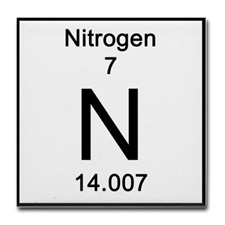
What is the number of protons that the element in this image contain?
a)
14
b)
7
c)
15
d)
18
41.
The particles that are found in the nucleus of an atom are
a)
neutrons and electrons
b)
electrons only
c)
protons and neutrons
d)
protons and electrons
42.
Most of the mass in an atom is concentrated in the...
a)
electrons
b)
nucleus
c)
protons
d)
empty space
43.
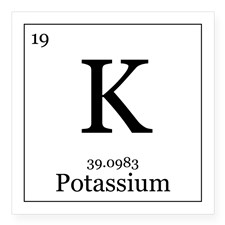
How many neutron are in the atom "K"?
a)
7
b)
2
c)
39
d)
20
44.
What are the 3 particles that make-up the atom?
a)
protons, neutrons, and isotopes
b)
neutrons, isotopes, and electrons
c)
positives, negatives, and electrons
d)
protons, neutrons, and electrons
45.
What particle uniquely identifies an element?
a)
Number of Valence Electrons
b)
Number of Protons
c)
Number of Electrons
d)
Atomic Mass
46.
Which one of these is NOT located in the element square on the Periodic Table?
a)
Atomic Number
b)
Atomic Mass
c)
Room Temperature
d)
Chemical Symbol
47.
If an atom has 10 protons, 10 neutrons, and 10 electrons, what is the mass of the atom?
a)
10
b)
20
c)
30
48.
Which subatomic particles contribute the most to the mass of an atom?
a)
Protons, Neutrons, Electrons
b)
Protons only
c)
Protons and Electrons
d)
Protons and Neutrons
49.
What is the atomic number?
a)
the number of protons
b)
the number of protons and neutrons
c)
the number of neutrons
d)
the number of protons and electrons
50.
a)
1
b)
2
c)
3
d)
4
51.
a)
2
b)
3
c)
4
d)
5
52.
a)
10
b)
2
c)
8
d)
18
53.
How many valence electrons does Lithium have?
a)
1
b)
2
c)
3
d)
4
54.
Valence electrons are located...
a)
inside the nucleus
b)
in outer space
c)
on the outermost orbit of an atom
55.
Most elements will gain or lose electrons so that they end up with _______ valence electrons.
a)
2
b)
6
c)
8
d)
10
56.
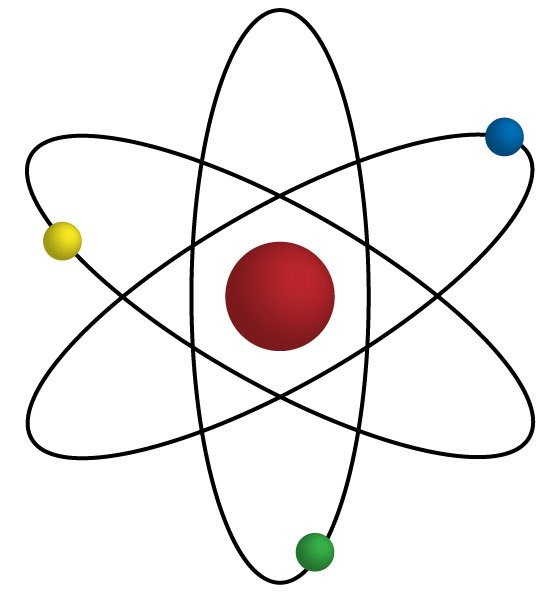
What is this element?
a)
Lithium
b)
Boron
c)
Carbon
d)
Hydrogen
57.
How many total electrons does Fluorine (F) have?
a)
2
b)
7
c)
9
d)
19
58.
How many shells of electrons does Calcium (Ca) have?
a)
1
b)
2
c)
3
d)
4
59.
How do covalent bonds form?
a)
Donating & receiving valence e- between atoms.
b)
Opposite slight charges attract each other between compounds.
c)
Scientists are still not sure how they form.
d)
Sharing valence e- between atoms.
60.
What two types of atoms make a covalent bond?
a)
2 Nonmetals
b)
1 Nonmetal and 1 Metal
c)
2 Metals
d)
2 Noble Gases
61.
Which of the following is NOT formed by a covalent bond?
a)
K2S
b)
H2O
c)
I2
d)
CO2
62.
How are ionic bonds formed?
a)
When atoms share an electron
b)
When opposite charged atoms attract
c)
When one atom takes a proton
d)
When one atom takes a neutron
63.
Why do ionic bonds form?
a)
so the number of protons equals the number of electrons
b)
to fill the outermost energy level
c)
so an atom can become unstable
64.
Atoms form ions in order to become this
a)
isotopes
b)
stable
c)
metals
d)
nonmetals
65.
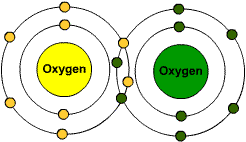
Is this image an example of covalent bonding?
a)
Yes
b)
No
66.
Atoms want
a)
A full outer shell of electrons
b)
One electron short of a full shell
c)
kit kats
67.
What are ionic bonds?
a)
valence electrons transferred between atoms
b)
Inner most electrons transferred between atoms
68.
Why do ionic bonds form?
a)
so the number of protons equals the number of electrons
b)
to fill the outermost energy level
c)
so an atom can become unstable
69.
An atom that has gained or lost electrons is called ...
a)
a winner
b)
an isotope
c)
an ion
d)
a loser
70.
Atoms that gain electrons become...
a)
negatively charged
b)
positively charged
c)
remain neutrally charged
d)
21
71.
How do positive ions form?
a)
by gaining electrons
b)
getting compliments
c)
by losing electrons
d)
gaining more protons
72.
How do negative ions form?
a)
by losing electrons
b)
by gaining electrons
c)
by gaining protons
d)
by being a bully
73.

Atoms gain lose, gain, or ______electrons to get a stable outer energy level.

a)

share

b)

split

c)

create

d)

destroy

74.

A _______ is the force that holds atoms together in a compound.

a)

Chemical Formula

b)

Chemical Reaction

c)

Chemical Bond

d)

Synthesis Reaction

75.

An atom with a different number of electrons than it should have (more or less) is called an ---

a)

isotope

b)

valence electron

c)

ion

d)

octet

76.

An atom of Neon complies with the Octet Rule because it has ___ electrons in its outer shell.

a)

10

b)

8

c)

2

d)

7

77.

Which is NOT true of the chemical bond shown on the diagram?

a)

An electron from Na is transferred to Cl.

b)

The bond is Covalent since electron is shared by the two atoms.

c)

A metal and a non-metal are involved in the bonding.

d)

Na will become positively charged and Cl will be negatively charged.

78.

Which two statements are correct about the figure shown?

a)

It is a covalent bond.

b)

Hydrogen atoms loss electrons and Carbon gains the atoms.

c)

It happens on metal and on another non-metal.

d)

The valence electrons are shared by both atoms.

79.
Which of these is covalent?
a)
NaCl
b)
Pb(NO3)2
c)
CO2
d)
AlCl3
80.

Which of the following atoms is most likely to bond with another atom?

a)
b)
c)
d)
81.

In this chemical formula, which number represents the subscript?


3CH4

a)

3

b)

4

82.

In this chemical formula, which number represents the coefficient?


6H2O

a)

2

b)

6

83.

How many Hydrogen atoms are present in this formula?


3H20

a)

2

b)

3

c)

5

d)

6

84.

How many Carbon atoms are present in this formula?


2C6H1206

a)

2

b)

6

c)

12

d)

1

85.

The formula for ammonia is NH3. How many ammonia molecules are present in NH3?

a)

1

b)

2

c)

3

d)

4

86.

The formula for rust is Fe2O3.


In order to create rust, there must be ______ iron (Fe) atoms present for every 3 oxygen (O) atoms.

a)

1

b)

2

c)

3

d)

5

87.

How many Carbon atoms are present in this chemical formula?


6C6H2 + H

a)

6

b)

12

c)

13

d)

36

e)

38

88.
What is the Law of Conservation of mass?
a)
Mass is created in a chemical reaction
b)
Mass is created in a physical change
c)
New chemicals formed from a chemical reaction have a larger overall mass than the original reactants
d)
Mass is never created or destroyed
89.
In a reaction A + B ----> C,  reactant A has 5g and product  C has 9g. How many grams does reactant B should have? 
a)
4g
b)
5g
c)
9g
d)
14g
90.
Matter can not be created nor destroyed: it can only be
a)
Destroyed a little bit
b)
Invisible
c)
Transformed, changed
d)
None of the above
91.
What is the law of conservation of mass?
a)
The amount of matter changes when reacted or changed.
b)
The mass of all reactants are changed during a physical or chemical change
c)
The mass of the reactants equals the mass of the products
d)
The mass of the products is different than the mass of the reactants.
92.
Students react baking soda & vinegar.
Which of the following would provide the evidence that the number of atoms present before a chemical reaction is equal to the number of atoms present after the chemical reaction?

a)
The mass of the plastic bag, baking soda, and vinegar before the reaction was equal to the mass after the reaction.
b)
Bubbles were produced during the reaction, which meant that a gas was being produced.
c)
The plastic bag did not change in any way, indicating that it was not involved in the reaction.
d)
The mass of the baking soda was exactly equal to the mass of the vinegar used to create the chemical reaction.