
 Worksheets
AP Biology--Cell Communication & Feedback
Total questions: 37
Worksheet time: 37mins
One very common receptor protein in eukaryotes is the __.
G protein-coupled receptor
cAMP receptor
phosphorylation receptor
ATP receptor
The binding of a ligand to a ligand-gated ion channel can cause the channel to ___.
open
close
both answers can be correct
A cell converting a chemical signal into a cellular response is known as __.
energetics
transduction
ligand response
transformation
After a ligand binds, the intracellular domain of a receptor protein changes _____, initiating transduction of the signal.
color
size
shape
One cellular response to a signal is apoptosis, otherwise known as programmed cell ____.
division
death
growth
reproduction
Which of the following is a chemical message that usually travels through the bloodstream to target cells?
hormone
local regulator
endocrine cell
plasmodesmata
Signal amplification is most often achieved by
an phosphorylation cascade
binding of multiple signals
branching pathways
action of adenylyl cyclase
We learned in our tea party that gymnema tea binds to taste receptors and blocks sugars from binding. The tea could be known as a(n) ____.
activator
inhibitor
How bacteria communicated to all "glow" simultaneously--the fluorescent gene expression was regulated by population density.
quorum quotient
quorum sensing
quorum glowing
quorum majority
___________ messengers, such as cyclic AMP (cAMP) are molecules that relay and amplify intracellular signals.
Primary
Secondary
Tertiary
Quaternary
What do secondary messengers, like cAMP, do?
transport a signal through the lipid bilayer
relay & amplify a signal from the outside to the inside of the cell
relay & amplify a message from the inside of the membrane throughout the cytoplasm
dampen the message
Any signal molecule that binds to a receptor is called a _______.
Neurotransmitter
Ligand
Receptor
Acetylcholine
ATP each lose TWO phosphates to adenylyl cyclase. After losing two phosphates, ATP becomes _______.
ADP
Adenylyl phosphate
Protein kinase
cyclic AMP (cAMP)

cAMP binds to ________ and activates the catalytic portion.
Phosphorylase
Adenylyl cyclase
Protein kinase
ATP
The general name for an enzyme that transfers phosphate groups from ATP to a protein is __________.
protein dehydrogenase
protein kinase
protein phosphatase
peptidase
protein cyclase
Phosphorylation cascades involving a series of protein kinases are useful for cellular signal transduction because __________.
they are species specific.
the number of molecules used is small and fixed.
they always lead to the same cellular response.
they amplify the original signal manyfold.
they counter the harmful effects of phosphatases.
Receptors for signal molecules __________.
all work via protein kinases
are never found in the nucleus of a cell
may be found embedded in the plasma membrane, or found within the cytoplasm or nucleus
all work by opening ion channels
are only found associated with the plasma membrane
What is an organic compound that is made by glands in the body (pituitary, thyroid, etc) that is used in long distance communication between cells?
Hormones
Neurotransmitters
Synapse
Carbohydrates

What type of transmembrane receptor is being shown?
gated ion channel
G-protein receptor
An example of a positive feedback loop is ____________.
Childbirth
Blood Pressure regulation
Body Temperature regulation
All of the above
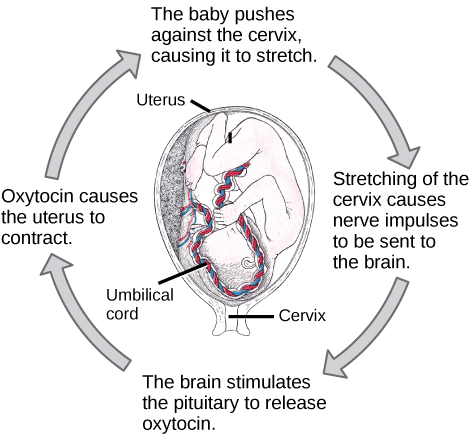
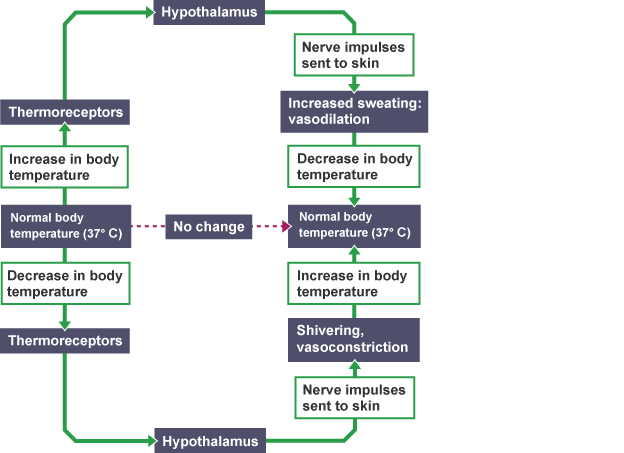
When you get cut, your skin cells release hormones that signal platelets to come and stop the bleeding. Platelets then release more hormones that signal even more platelets to help stop bleeding. The hormone signals continue until the cut is closed. This is an example of what type of feedback?
Positive Feedback Response
Negative Feedback Loop
If the calcium in your blood decreases below homeostasis levels, a gland in the brain will sense the decrease and send a chemical message to your bones. Your bones will release calcium into the blood, bringing blood calcium levels back up. This is an example of what type of feedback?
Positive Feedback Response
Negative Feedback Loop
As you get dehydrated, your blood becomes thicker and harder to pump. Your kidneys will respond by stopping urine production, sending the water from urine into your bloodstream to thin your blood back to normal level. This is an example of what type of feedback?
Positive Feedback Response
Negative Feedback Loop

Who is Mrs. Pekar's favorite biology teacher?
Mrs. Presnell
Mr. Peterson
Mr. Pekar
Mr. Anderson

