

wayground logo

Free Printable Worksheets

NEW

Font size

S
M
L
XL
Worksheets

Earth Moon Sun Relationships

Total questions: 60

Worksheet time: 2hrs 47mins
Name
Class
Date
1.
Which of the following lists the Earth, Sun, and Moon in order of size, from largest to smallest?
a)
Earth, Sun, and Moon
b)
Earth, Moon, and Sun
c)
Sun, Earth, and Moon
d)
Sun, Moon, and Earth
2.
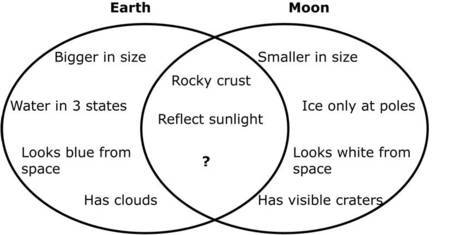
A student created a diagram to compare the characteristics of the Earth and the Moon.
Which of the following characteristics could be placed in the center part of the diagram?
a)
orbits another object
b)
strong gravitational pull
c)
rotates every 24 hours
d)
has an atmosphere
3.
Of the Earth, Sun, and Moon, which ones orbit another object?
a)
the Sun and the Earth
b)
the Sun and the Moon
c)
the Moon and the Sun
d)
the Moon and the Earth
4.
5.8C The earth's rotation lasts for _______. 
a)
24 hours
b)
24 days
c)
365 days
d)
365 hours
5.
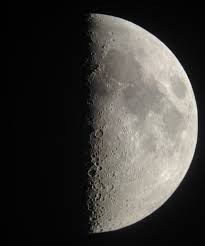
Name the moon phase
a)
First Quarter
b)
Last Quarter
c)
New Moon
d)
Full Moon
6.
What moon phase would be seen from Earth when the moon is at position 5? 
a)
new moon
b)
first quarter
c)
full moon
d)
third quarter
7.
What happens when it's spring in the Southern Hemisphere?
a)
It's fall in the Northern Hemisphere
b)
It's summer in the Northern Hemisphere
c)
It's winter in the Northern Hemisphere
d)
It's spring in the Northern Hemisphere
8.
Imaginary line through the center of the earth (from the north pole to south pole)
a)
axis
b)
orbit
c)
pole
d)
tilt
9.
The path around the sun
a)
orbit
b)
rotation
c)
season
d)
equinox
10.
Why is summer warmer than winter?
a)
The hemisphere experiencing summer is tilted more directly toward the sun
b)
The entire planet is closer to the sun during summer
c)
The sun radiates more energy during the summer
d)
The earth spins slower on its axis during the summer
11.
The sun appears to move across the sky each day.  What causes this?
a)
the spinning of the Earth's axis
b)
The path of the sun around the Earth
c)
the production the nuclear energy around the sun
d)
the tilt of the Earth on its axis
12.

The length of one year is the time it takes

a)

the moon to complete its phases.

b)

Earth to complete 12 rotations around its axis

c)

Earth to complete one revolution around the sun.

d)

the moon to complete one revolution around the Earth.

13.

The seasons are caused by Earth’s tilted axis as it travels around the sun. What causes winter in the Southern Hemisphere?

a)

The North Pole tilts away from the sun

b)

The equator receives more direct light

c)

The South Pole tilts away from the sun

d)

Earth moves further away from the sun

14.

What controls the length of a day?

a)

the amount of time it takes Earth to complete a

turn on its axis

b)

the amount of time it takes Earth to complete an

orbit around the sun

c)

the amount of time it takes the moon to complete

an orbit around Earth

d)

the amount of time it takes the sun to complete

a turn on its axis

15.

Because of the Earth's tilt, every part of the planet receive the exact same amount of direct sunlight

a)

true

b)

false

16.

During the equinox, days are longer than night

a)

true

b)

false

17.
The spin of a body on it's axis is the definition of ___________________.
a)
Revolution
b)
Rotation
c)
Axis
d)
Eclipse
18.
________________ is the movement of an object around the center of another object. Also known as an orbit. 
a)
Rotation
b)
Axis
c)
Revolution
d)
Waxing
19.
What type of eclipse is the picture showing?
a)
Solar
b)
Lunar
20.
When the moon appears to be "getting bigger", we call this _______________.
a)
Waxing
b)
Waning
21.
What is the phase of the moon during a lunar eclipse?
a)
Full
b)
New
c)
First Quarter
d)
Third Quarter
22.
What is the phase of the moon during a solar eclipse?
a)
New
b)
Full
c)
Third Quarter
d)
First Quarter
23.
How long is the moon's revolution around Earth?
a)
About a month
b)
About a year
c)
About a day
d)
About 3 - 4 days
24.
Which best describes the movement of the Earth and Sun?
a)
The Earth goes around the Sun once a day
b)
The Sun goes around the Earth once a day
c)
The Earth goes around the Sun once a year
d)
The Sun goes around the Earth once a year
25.
What is the reason why we experience seasons on Earth?
a)
Earth's distance from the Sun
b)
The speed of Earth's rotation
c)
The tilt of the Earth
d)
The sun's orbit around Earth
26.
When the moon appears to be "getting smaller", we call this _______________.
a)
Waxing
b)
Waning
c)
Shrinking
d)
Disappearing
27.
Which direction does the Earth revolve around the Sun?
a)
Left / Counter clockwise
b)
Right / Clockwise
28.

The picture shows some phases of the Moon. Which statement best explains why the Moon appears to have phases?

a)

As the Moon revolves around Earth, the illuminated side of the Moon is not always fully visible from Earth.

b)

As Earth revolves around the Moon, the illuminated side of the Moon is not always fully visible from Earth.

c)

As the Moon revolves around the Sun, the Sun blocks the light created the Moon.

d)

As the Sun revolves around the Moon, the Sun blocks the light created the Moon.

29.

What is the best description of what happens during a lunar eclipse?

a)

The Sun comes between the Earth and the Moon.

b)

Earth casts a shadow on the Moon.

c)

Earth falls into the shadow of the Sun.

d)

The Moon's light reflects all the light from the Sun.

30.

Which is the best description of the Moon's position during a new moon?

a)

The Moon has moved behind the Sun.

b)

The Moon has moved behind clouds.

c)

The Sun is between Earth and the Moon.

d)

The Moon is between Earth and the Sun.

31.

The phases of the Moon are a result of which of the following?

a)

the Moon's orbit around the Sun

b)

the Moon's orbit around Earth

c)

Earth's orbit around the Moon

d)

Earth's orbit around the Sun

32.

During a solar eclipse, what is the phase of the Moon?

a)

first quarter

b)

new

c)

full

d)

third quarter

33.

In what order are the Moon, Earth, and the Sun aligned during a total eclipse of the Sun?

a)

in the order of the Sun, the Moon, and Earth in a straight line

b)

in the order of the Sun, Earth, and the Moon in a straight line

c)

in the order of Earth, the Sun, and the Moon in a straight line

d)

in the order of the Moon, Earth, and the Sun in a straight line

34.

Solar eclipses are different than lunar eclipses because solar eclipses

a)

are longer than lunar eclipses.

b)

happen more often than lunar eclipses.

c)

are dangerous to look at and lunar eclipses are not.

d)

increase the temperature of Earth and lunar eclipses do not.

35.

Which statement best describes the characteristics of areas near the equator?

a)

Areas near the equator get less direct sunlight so the temperatures are lower.

b)

Areas near the equator get more direct sunlight so the temperatures are higher.

c)

Areas near the equator have more yearly rainfall so the temperatures are lower.

d)

Areas near the equator have less yearly rainfall so the temperatures are higher.

36.

The diagram shows Earth in its yearly orbit around the Sun. During the year, places in the Northern and

Southern Hemispheres experience seasons because of the tilt of Earth's axis. Which statement correctly identifies the season in the Northern hemisphere when the Earth is at Position D?

a)

It is summer because Earth is farther away from the Sun.

b)

It is winter because the Earth is farther away from Sun.

c)

It is winter because the northern part of Earth tilts away from the Sun.

d)

It is summer because the northern part of Earth is titled toward the Sun.

37.
What is a revolution?
a)
standing still
b)
spinning in place about an axis
c)
bouncing to another object
d)
one object moving around another object
38.
Is the Moon larger or smaller than Earth?
a)
Larger
b)
Smaller
c)
They are the same size
39.
Both Earth and the Moon -
a)
orbit around a larger object.
b)
have liquid water on the surface.
c)
rotate once every 24 hours.
d)
experience weathering and erosion.
40.

Which body is composed entirely of burning gas?

a)

sun

b)

moon

c)

Earth

d)

sun and moon

41.
The Earth's _______ is an imaginary line that goes from the North Pole to the South Pole.
a)
vernal equinox
b)
axis
c)
solar eclipse
d)
solar flare
42.
The different shapes of the moon you see from Earth are called ________.
a)
lunar eclipse
b)
phases
c)
solar eclipse
d)
spring
43.
1. What is gravity?
a)
A type of rock
b)
A type of plate boundary
c)
When two objects are attracted to each other.
44.
Does the moon revolve?
a)
yes
b)
no
45.
Does the moon rotate?
a)
yes
b)
no
46.
What is at the center of the Solar System?
a)
Earth
b)
Moon
c)
Sun
d)
Jupiter
47.
When the Earth travels all the way around the Sun, it is called a . . .
a)
Day
b)
Rotation
c)
Year
d)
Spin
48.
It takes the Earth _______ days to travel all the way around the Sun.
a)
28
b)
100
c)
24
d)
365
49.
When the Earth spins around its own axis one whole time, it is called a ....
a)
Year
b)
Day
c)
Hemisphere
d)
Seasons
50.
It takes the Earth ___ hours to complete a rotation.
a)
12
b)
24
c)
50
d)
365
51.
At position A, which hemisphere would have summer?
a)
Northern hemisphere
b)
Southern hemisphere
52.
What happens when the area in which you live tilts away from the sun?
a)
It is summer.
b)
It is spring.
c)
It is winter.
d)
It is fall.
53.
What is responsible for the moon's illumination?
a)
infrared rays
b)
sunlight reflecting on the surace of the moon
c)
sunlight bouncing off the earth's atmosphere
d)
gamma rays
54.
Which is the MAIN cause of the ocean's tides?
a)
the tilt of the Earth's axis
b)
The earth's rotation on it's axis
c)
the gravitational pull of the moon,
d)
the uneven heating of the oceans by the sun
55.
What do June 21 and December 21 have in common?
a)
equinox dates
b)
the moon is full
c)
solstice dates
d)
the cold fronts blow in
56.
Neap tides occur at these two phases because the sun and moon pull against each other.
a)
1st and 2nd
b)
Full and New
c)
1st and 3rd
d)
crescents
57.
a natural satellite that orbits a planet. 
a)
sun
b)
atmosphere
c)
moon
d)
craters
58.
Which moon phases are associated with spring tides? 
a)
full moon & 3rd quarter
b)
new moon & 1st quarter
c)
new moon & full moon
d)
1st quarter & 3rd quarter
59.
If the Earth's axis tilt changed from 23.5 degrees to 0 degrees, what would most likely happen?
a)
There would be no lunar phases
b)
There would be no seasons
c)
There would be no difference between day & night
d)
The orbit around the sun would take fewer days to complete. 
60.
What type of tide is shown in the image?
a)
Spring Tide
b)
Neap Tide
c)
Lunar Eclipse
d)
Solar Eclipse
