Wayground logo

Free Printable Worksheets

Font size

S
M
L
XL
Worksheets

Unit 7 - Invertebrates Summative Review

Total questions: 77

Worksheet time: 1hrs 8mins

Name
Class
Date
1.
The molluscs are divided into...
a)
Arachnids, bivalves and sponges
b)
Worms, echinoderms and gastropods
c)
gastropods, bivalves and cephalopods 
d)
insects, arachnids and crustaceans 
2.

what are the basic characteristics of mollusks.

a)

they have a thick muscular foot to open and close their shell.

b)

they swim the speed of a turtle.

c)

they use their foot to clean the shell of the mollusks.

d)

they are very large.

3.

Which of the following are segmented worms?

a)

Barnacles and Crabs

b)

Squid and Snails

c)

Leeches and Earthworms

d)

Sea Urchins and Sand Dollars

4.
Special cells used by cnidarians to inject poison are called
a)
setae
b)
canals
c)
nematocysts
5.
Tiny, stiff hairs that help earthworms grip surfaces are called
a)
setae
b)
nematocysts
c)
canals
canal
d)
segments
6.
I have a digestive cavity with one opening, and have tentacles.  I am a hydra.
a)
Echinoderm
b)
Cnidarian
c)
Arthropod
d)
Mollusk
7.
A member of the phylum Nematoda, which consists of animals that have smooth skin and a long, cylindrical, and unsegmented body that tapers at both ends. Almost all are parasitic.
a)
segmented worms
b)
round worm
c)
flat worm
d)
cnidarian
8.

Arthropods are invertebrates with

a)

a soft body

b)

an exoskeleton

c)

many eyes

d)

bones

9.

What is the correct phylum for Wheel Animals?

a)

Cnidaria

b)

Rotifera

c)

Mollusca

d)

Echinodermata

10.

What moves water through the sponge?

a)

Collar cell

b)

Flagella

c)

Porocyte

d)

Amebocyte

11.

Sponges have radial symmetry.

a)

True

b)

False

12.

The large opening at the top of the sponge is called the

a)

Osculum

b)

Porocyte

c)

Spicule

d)

Spongocoel

13.

The sponge has no organs, tissues, and no nervous system.

a)

True

b)

False

14.
___________ are tiny hard particles that give a sponge support and can provide protection when they stick out of a sponge.
a)
spongin
b)
bones
c)
buds
d)
spicules
15.

Which of the following statements describes bilateral symmetry?

a)

the science of placing organisms into categories

b)

a group of organisms that share similar traits and can produce fertile offspring

c)

a body plan which cannot be divided into any two parts that are nearly mirror images of each other

d)

a body plan in which an organism can be divided into two parts that are nearly mirror images of each other

16.

A butterfly has a _________________

a)

Asymmetry

b)

radial symmetry

c)

bilateral symmetry

17.

The organism in the image above has _________________________

a)

Asymmetry

b)

radial symmetry

c)

bilateral symmetry

d)

trilateral symmetry

18.

Identify the symmetry of the following organism

a)

Asymmetry

b)

radial symmetry

c)

bilateral symmetry

19.

The spider shows ________________ symmetry

a)

Asymmetry

b)

radial symmetry

c)

bilateral symmetry

20.
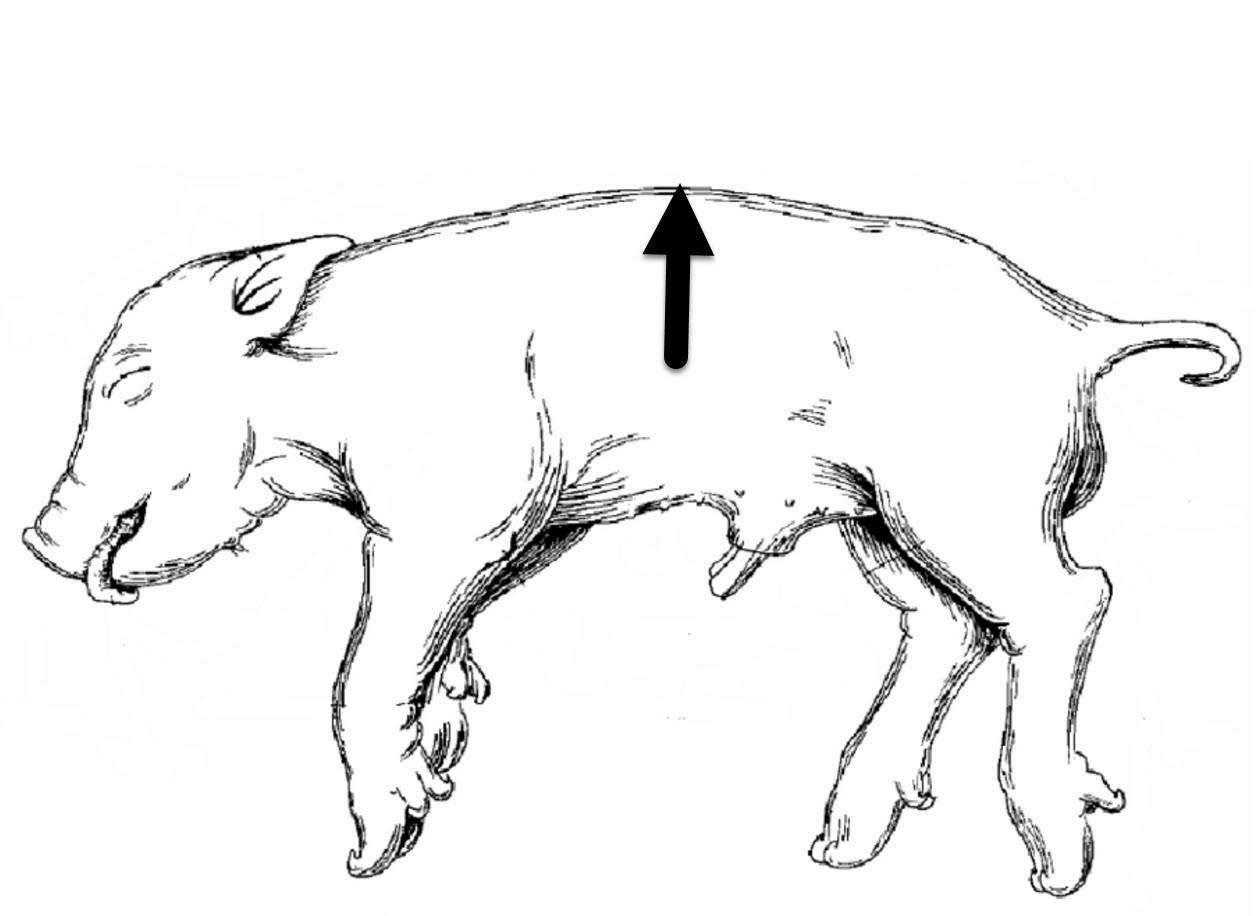
What body direction is the arrow pointing?
a)
anterior
b)
dorsal
c)
caudal
d)
ventral
21.

What body direction is the arrow pointing?

a)

cephalic

b)

dorsal

c)

caudal

d)

posterior

22.

What body direction is the arrow pointing?

a)

cepahlic

b)

distal

c)

lateral

d)

posterior

23.
What body direction is the arrow pointing?
a)
anterior
b)
distal
c)
lateral
d)
ventral
24.

Which is used by a jellyfish to sense and respond to changes in the environment?

a)

nerve net

b)

coelom

c)

undulation

d)

nerve cord

25.

Which is NOT used to provide an animal with structural support?

a)

Nerve net

b)

Endoskeleton

c)

Hydroskeleton

d)

Exoskeleton

26.

Includes jellyfish, coral and anemones

a)

Echinodermata

b)

Cnidaria

c)

Porifera

d)

Mollusca

27.

Includes snails, nudibranchs, clams, squid and octopus.

a)

Mollusca

b)

Echinodermata

c)

Cnidaria

d)

Porifera

28.

Many have a hard mouth part known as a beak or radula.

a)

Cnidaria

b)

Echinodermata

c)

Porifera

d)

Mollusca

29.

What is the name of an animal that has three cell layers, with a digestive tract, but no space for organs?

a)

acoelomate

b)

coelom

c)

psuedocoelom

d)

eucoelom

30.

The middle picture shows the ________________________ body plan.

a)

acoelom

b)

eucoelom

c)

pseudocoelom

d)

unicoelom

31.
Rigid rod that runs the length of the body, support body and gives it shape
a)
pseudocoelom
b)
exoskeleton
c)
notochord
d)
ectoderm
32.
Partial body cavity that is filled with fluid, allows room for internal organs to develop and cushions them
a)
notochord
b)
segmentation
c)
pseudocoelom
d)
radial symmetry
33.
Fluid-filled body cavity, completely enclosed by mesoderm, lies between digestive cavity and body wall
a)
mesoderm
b)
coelom
c)
radial symmetry
d)
hydrostatic skeleton
34.
Concentration of nerve tissue at one end of the body, forming a head region, first step in evolution of a brain
a)
exoskeleton
b)
cephalization
c)
animal
d)
notochord
35.
If a flatworm reproduces asexually, what would it do?
a)
produce larvae
b)
use fission
c)
create a polyp
d)
exchange gametes
36.
How would you describe Phylum Nematoda?
a)
Flatworms
b)
Roundworms
c)
Earthworms
d)
Insects
37.
How do you describe a roundworm (Phylum Nematoda) body cavity?
a)
Acoelomate
b)
Pseudocoelomate
c)
Coelomate
d)
Does not apply
38.
Which, of the phyla we have studied, was the first to develop an internal body cavity?
a)
Phylum Cnidaria
b)
Phylum Platyhelminthes
c)
Phylum Porifera
d)
Phylum Nematoda
39.
What is the nickname of Phylum Platyhelminthes?
a)
Roundworms
b)
Flatworms
c)
Rotifers
d)
Wheel bearers
40.
Flatworms have no true body cavity. This means they are ____________________. 
a)
Symmetrical
b)
Sessile
c)
Coelomates
d)
Acoelomates
41.
Bodies in sections, jointed legs, exoskeleton.
a)
Echinoderms
b)
Mollusks
c)
Arthropods
42.

Which characteristics makes rotifers different from roundworms?

a)

have bilateral symmetry

b)

have rings of cilia

c)

are pseudocoelomates

d)

live in freshwater habitats

43.
What are the organelles inside the cnidocyte stinging cells that inject paralyzing toxins into their prey?
a)
pinacocytes
b)
lysomatocyts
c)
choanocytes
d)
nematocysts
44.
Which two phyla contain radially symmetrical organisms?
a)
Porifera and Cnidaria
b)
Cnidaria and Echinodermata
c)
Echinodermata and Mollusca
d)
Porifera and Mollusca
45.
Which of the following is a characteristic of annelids?
a)
a closed circulatory system
b)
an anus
c)
segmentation
d)
all choices are correct
46.
This is when a new organism grows by cell division on the body of its parent. The bud, or offspring is identical to the parent. The bud, when large enough, can break off of the parent and live on its own.  Examples of this include yeast, hydra and potatoes.
 
a)
Regeneration
b)
Vegetative propagation
c)
Fission
d)
Budding
47.

What is a group of cells that can detect light called?

a)

eye spots

b)

sun dial

c)

ocular cells

d)

pigmental segment

48.
If a flatworm reproduces asexually, what would it do?
a)
produce larvae
b)
use fission
c)
create a polyp
d)
exchange gametes
49.
Which part of the Mollusk body is the tissue covering the body and secretes the shell?
a)
Mantle
b)
Trochophore
c)
Foot
d)
Visceral Mass
50.
Mollusk's tongue-like strip covered with teeth that point backward is called the ____
a)
trochopore
b)
radula
c)
gills
d)
visceral mass
51.
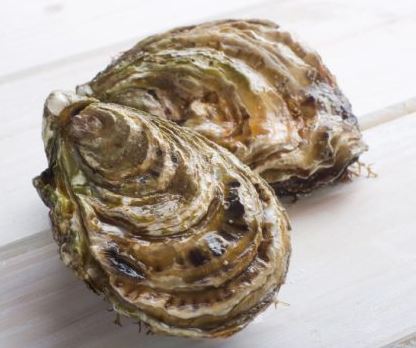
Which group of Mollusks does the picture belong to?
a)
Gastropod
b)
Bivalve
c)
Cephalopod
52.
Which of the following is a thickened segment of the earthworm’s body is used in reproduction?
a)
Septa
b)
Setae
c)
Clitellium
d)
Ganglia
53.
If present, which type of skeleton is found in worms?
a)
Longitudinal
b)
Circular
c)
Exoskeleton
d)
Hydrostatic
54.
In the jellies, the _________stage is dominant.
a)
radial
b)
symmetrical
c)
polyp
d)
medusa
55.
A Rotifer is a sessile organism.
a)
True
b)
False
56.

Which of the following is NOT a characteristic of arthropods?

a)

Exoskeleton

b)

Jointed appendages

c)

Segmented body

d)

Endoskeleton

57.

The exoskeleton of an arthropod is made of which of the following?

a)

chitin

b)

dentin

c)

protin

d)

chlorotin

58.

Which of the following correctly describes a crayfish's body regions?

a)

head, thorax, abdomen

b)

head, abdomen

c)

cephalothorax, abdomen

d)

head, cephalothorax

59.
What two characteristics do all Arthropods have?
a)
two legs per body segment
b)
jointed legs and a cephalothorax
c)
three body segments and metamorphosis
d)
jointed legs and segmented bodies
60.

All of the following structures serve the same function in invertebrates as kidneys do in humans EXCEPT

a)

nephridia

b)

flame cells

c)

malpighian tubules

d)

collar cells

61.

Tiny holes along the sides of an insect’s thorax and abdomen which are the means by which an insect breathes are called:

a)

proboscis

b)

pollen press

c)

hindwing

d)

spiracles

62.

This butterfly's mouthparts are used for what type of feeding?

a)

cutting plant tissues

b)

siphoning nectar

c)

sponging up food

d)

piercing skin and sucking liquids

63.

Which of the following is NOT true?

a)

Horseshoe crabs lack jaws so must eat soft food

b)

Horseshoe crabs only have one baby at a time

c)

Horseshoe crabs have remained largely unchanged since the Triassic Period

d)

Horseshoe have gills called book gills

64.

_____________________ are mouthparts of some arthropods.

a)

Chelicerae

b)

Pedipalps

c)

Jaws

65.

A tarantula spider is about to attack its prey. Which of the following structures will it most likely use to kill its prey?

a)

book lungs

b)

chelicerae

c)

pedipalps

d)

spinnerets

66.

Which pairs of arachnid appendages is located most anterior on its body?

a)

chelipeds

b)

pedipalps

c)

chelicerae

d)

spinneret

67.
The larva of echinoderms have _____ symmetry.
a)
Asymmetrical
b)
Bilateral
c)
Radial
d)
None
68.
What type of symmetry do adult echinoderms exhibit?
a)
Asymmetry
b)
Pentaradial symmetry
c)
Bilateral symmetry
d)
Trilateral symmetry
69.
Echinoderms have an internal skeleton and a system of fluid-filled tubes called a(n)...
a)
water vascular system
b)
nervous system
c)
notochord
d)
ampulla
70.
What type of skeleton do echinoderms have?
a)
Exoskeleton
b)
Hydrostatic skeleton
c)
Endoskeleton
d)
Mesenteric skeleton
71.
What allows water to enter the water vascular system?
a)
tube feet
b)
mouth
c)
ampulla
d)
madreporite
72.
What are these?
a)
Mouth
b)
Anus
c)
Madreporite
d)
Tube foot
73.
By what process will starfish regrow an arm torn off by a predator?
a)
Reconstructive meiosis
b)
Regeneration
c)
Tissue regenesis
d)
Mitotic restoration
74.
# 2 is pointing to the starfish's 
a)
Anus
b)
Madreporite
c)
Gonads
d)
Digestive Glands
75.
What is C?
a)
Mouth
b)
Anus
c)
Madreporite
d)
Tube foot
76.

What is the flexible skeletal support rod?

a)

Dorsal Hollow Nerve Chord

b)

Notochord

c)

Pharyngeal slits

d)

Endoskeleton

77.

Which organisms were the first to develop a head/brain?

a)

roundworm (nematode)

b)

flatworm (Platyhelminthes)

c)

segmented worms (Annelids)

d)

Mollusks (Mollusca)