
 Worksheets
Human Movement- Unit 1 Review
Total questions: 54
Worksheet time: 54mins
Define Anatomic position
Imaginary line that splits the body into two equal halves.
Body stands upright with arms besides trunk and facing forward.
Plane that bisects the body into right and left half.
Plane that bisects the body into a top half and bottom half.
Define the midline
Body part closest to the feet
Standard posture wherein the body stands upright, arms sides the trunk and facing forward.
body part closest to the head
Imaginary line that splits the body into two equal halves.
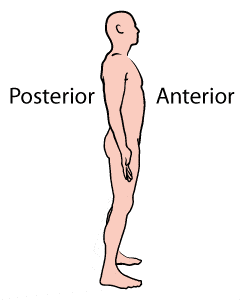
Define Anterior...
Body part towards the front of the body.
Body part towards the back of the body.
Body part closest to the head.
Body part closest to the feet.
Define superior...
Body part closest to the head
Body part closest to the feet
Body part towards the front
Body part near the trunk
Define medial...
means away from the midline of the body
body part towards the front
means toward the midline of the body
body part closest to the feet
How many planes of movement are on the human body?
5
3
2
10
Which plane of movement divides the body into two, a front half and a rear half?
Sagittal
Frontal
Transverse
Longitudinal Axis
Which plane bisects the body into a right half and left half?
Transverse
Frontal
Sagittal
Which axis cuts through the body laterally side to side?
Anterior-Posterior
Longitudinal
Medial-Lateral
Which axis cuts through the body front and back?
Anterior-posterior
Medial-Lateral
Longitudinal
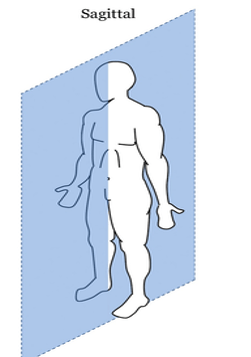
What sort of movement occurs in the sagittal plane?
Forwards and Backwards
Flexion and Extension
Sprinting
Left to Right
Which of the activities below is a sporting action that occurs in the sagittal plane?
360 Twist
Jumping
Running
Squatting
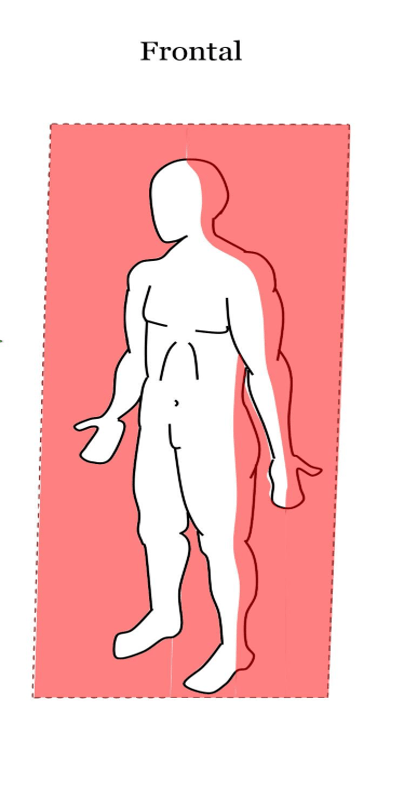
What movement occurs in the frontal plane?
Abduction/Adduction
Flexion/Extension
Rotation
Circumduction
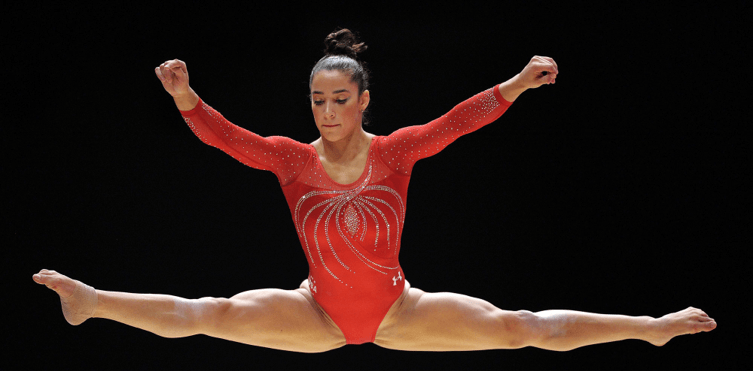
What plane does this movement occur in?
Sagittal
Frontal
Backwards
Transverse

As your bicep pulls weight towards your body the shortening of those bicep muscles is called:
Concentric contraction
Eccentric contraction
Isometric contraction

Lowering the weight during bicep curls lengthens the bicep muscle which is an example of
Concentric contraction
Eccentric contraction
isometric contraction

Movement that decreases the joint angle and is in the sagittal plane.
Flexion
Extension

Movement that increases the joint angle and is in the sagittal plane.
Flexion
Extension

Movement away from the midline of the body in the frontal plane
Adduction
Abduction

Movement towards the midline of the body in the frontal plane
Adduction
Abduction

Movement around a central axis in the transverse plane
Adduction
Abduction
Rotation
Flexion

Exercises that include a side to side motion are in which plane?
Saggital
Frontal
Transverse

Exercises that include a front and back motion are in which plane?
Sagittal
Frontal
Transverse

Exercises that involve a twisting motion are in the
Sagittal plane
Frontal Plane
Transverse Plane
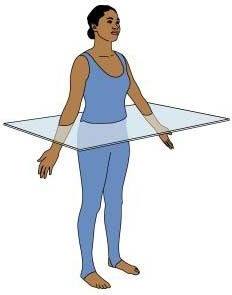
This plane divides body into top and bottom portions:
Medial Plane
Sagittal Plane
Coronal Plane
Transverse Plane
This plane divides the body into left and right halves.
sagittal plane
Vertical plane
transverse plane
frontal plane
This plane that divides the body into front and back.
sagittal
horizontal
transverse
frontall

Flexion and extension typically occur in which plane?
coronal plane
sagittal plane
transverse plane
oblique plane

Sagittal plane divides the body..
horizontally top and bottom
front to back
vertically side to side (left and right)
The 'prime mover' is also known as...
...the agonist
...the antagonist
...the main muscle
...the concentric muscle
A muscle fibre type that has a high aerobic capacity is known as...
...type 1
...type 2a
...type 2b
...type 2x
Select the muscle fibre types which operate with decreased presence of oxygen
Type 1a
Type 1b
Type 2a
Type 2x

Muscles that oppose one another are
synergist
hateful
prime movers
antagonists
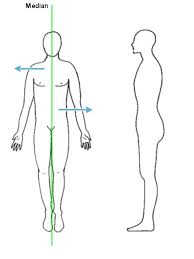
Away from midline or to the side
Lateral
Distal
Superior
Transverse

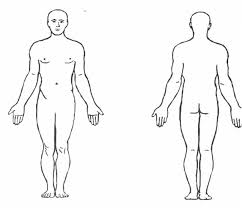
*right and left refer to "right" and "left" of the body in position.


The muscle fiber type known as "Endurance" type
Type 1
Type 2
Hybrid
Sedentary
The type of muscle fiber type considered "Fast Twitch"
Type 1
Type 2
Hybrid
Sedentary
Refers to joint movement in the frontal plane away from the midline of the body
Lateral
Abduction
Extension
Distal
Muscles that oppose the prime movers are known as
Agonist
Antagonists
Synergists
Stabilizers
Muscle lengthens in order to resist an external force.
Concentric
Eccentric
Isometric
Nosometric

