Wayground logo

Free Printable Worksheets

Font size

S
M
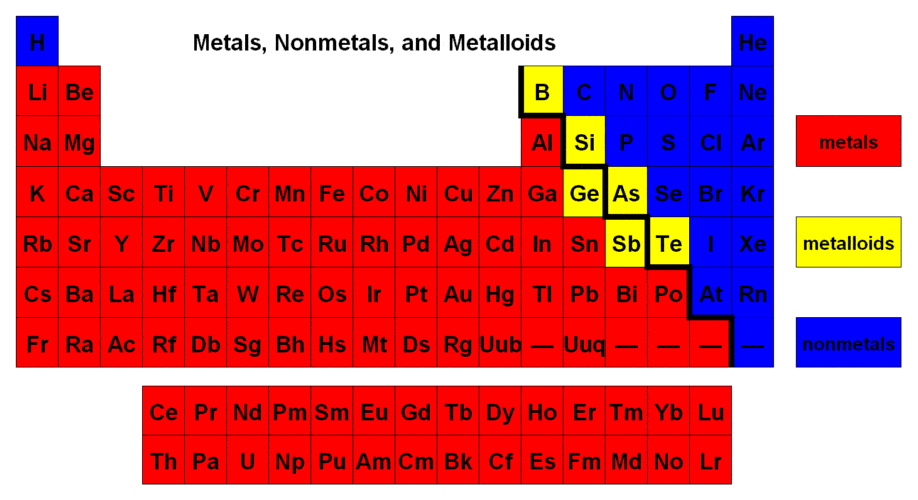
L
XL
Worksheets

Test 3 Part 2: Atoms thru Covalent Compounds

Total questions: 73

Worksheet time: 1hrs 29mins
Name
Class
Date
1.
Write the correct name for PN.
a)
monophosphorus nitride
b)
phosphorus mononitrogen
c)
phosphorus mononitride
d)
monophosphorus mononitride
2.
Write the correct name for BS3
a)
boron sulfide
b)
monoboron trisulfide
c)
boron(III) sulfide
d)
boron trisulfide
3.
Write the correct name for P2O5.
a)
diphosphorus tetr(a)oxide
b)
phosphorus(II) oxide(V)
c)
diphosphorus pent(a)oxide
d)
phosphorus pent(a)oxide
4.
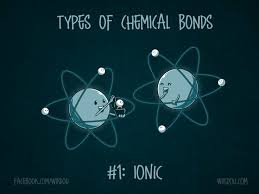
When forming an ionic bond, a metal atom
a)
Gains electrons to form a cation
b)
Loses electrons to form a cation
c)
Gains electrons to form an anion
d)
Loses electrons to form an anion
5.
What elements generally make an ionic bond?
a)
metal and nonmetal
b)
2 or more nonmetals
c)
metal
d)
none of the above
6.
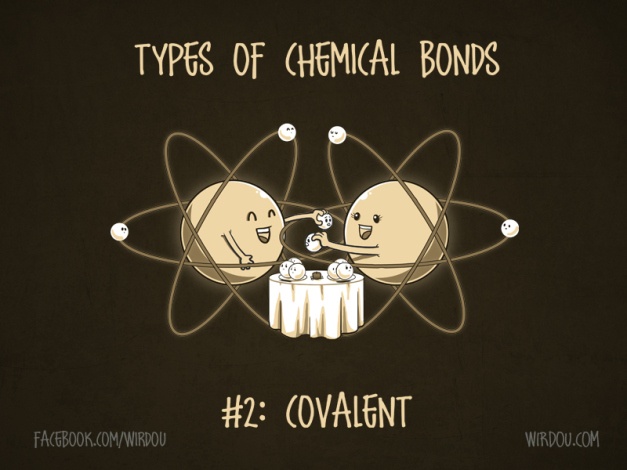
What elements generally make a covalent bond?
a)
metal and nonmetal
b)
2 or more nonmetals
c)
metal
d)
none of the above
7.
In chemical compounds, covalent bonds form when
a)
the electronegativity difference between two atoms is very large.
b)
electrons are completely transferred between two metals.
c)
pairs of electrons are shared between two nonmetal atoms.
d)
two nonmetal atoms are attracted to each other by opposite charges.
8.
An ionic bond forms when 
a)
Valence electrons are shared
b)
a sea of mobile electrons surround the cations
c)
valence electrons are transferred between atoms
d)
none of the above
9.
Predict the bond that will form between Be and F.
a)
Ionic
b)
Covalent
10.
Predict the bond that will form between Sr and S.
a)
Ionic
b)
Covalent
11.
How many valence electrons in this structure?
a)
6
b)
5
c)
4
d)
7
12.
An ionic bond forms when atoms ___________ electrons.
a)
gain
b)
share
c)
increase
d)
transfer
13.
Which type of bond has an equal sharing of electrons?
a)
Polar Covalent 
b)
Non Polar Covalent
c)
Ionic
d)
Metallic
14.
Which type of bond has an unequal sharing of electrons?
a)
Polar Covalent 
b)
Non Polar Covalent
c)
Ionic
d)
Metallic
15.

Bonds that form between atoms of the same metal are called ______________ bonds.

a)

ionic

b)

covalent

c)

metallic

d)

pervasive

16.
If an atom loses two electrons what charge will it have?
a)
+ 2
b)
 - 2
c)
+1
d)
-1
17.
If an atom gains one electron what charge will it have?
a)
-2
b)
-1
c)
+1
18.
What is the number of valence electrons for Oxygen?
a)
8
b)
6
c)
2
d)
1
19.
When electrons are shared unequally a/an ___________ bond is formed 
a)
ionic 
b)
hydrogen
c)
polar covalent 
20.

Which type of bond creates a "sea" of electrons between atoms?

a)

Ionic Bonds

b)

Covalent Bonds

c)

Metallic Bonds

d)

Saving Bonds

21.
This is the correct dot diagram for sodium (Na)
a)
true
b)
false
22.
This is a correct dot diagram for oxygen (O)
a)
true
b)
false
23.
Isotopes are elements with a different amount of
a)
protons
b)
neutrons
c)
electrons
d)
atoms
24.
What is the name of the group that has the MOST reactive METALS in it?
a)
Alkaline earth
b)
Alkali
c)
transition
d)
actinides
25.
The period for Bromine is ___________.
a)
3
b)
2
c)
4
26.

Determine the type of bond in an oxygen molecule (O2).

a)

Double covalent

b)

Single covalent

c)

Ionic

d)

Triple covalent

27.

Determine the type of bond in a nitrogen molecule (N2).

a)

Double covalent

b)

Single covalent

c)

Ionic

d)

Triple covalent

28.

Determine the type of bond in a hydrogen molecule (H2).

a)

Double covalent

b)

Single covalent

c)

Ionic

d)

Triple covalent

29.
According to the octet rule most elements need _______ valence electrons.
a)
2
b)
8
c)
6
d)
18
30.
Hydrogen needs _____ electrons in its valence shell to be stable.
a)
4
b)
6
c)
8
d)
2
31.

Which of the following is the correct Lewis dot structure for the molecule fluorine (F2)?

a)

A

b)

B

c)

C

d)

D

32.

How many total electrons can be used in the Lewis Structure for : NO3 -

a)

23

b)

20

c)

18

d)

24

33.

What is the correct structure for BF3?

a)

Option A.

b)

Option B.

c)

Option C.

d)

Option D.

34.

How many valence electrons are available for bonding in the sulfate ion (SO4-2)?

a)

30 electrons

b)

32 electrons

c)

28 electrons

d)

impossible to tell

35.

What is the correct Lewis Dot Structure for ammonia NH3

a)
b)
c)
d)
36.

Which is the correct molecular structure for carbon dioxide?

a)
b)
c)
d)
37.

What is the shape of the compound according to VSEPR?

a)

trigonal planar

b)

tetrahedral

c)

trigonal pyramid

d)

bent

38.

CO2 has how many lone pairs does this molecule have? (you need to draw the lewis structure)

a)

0

b)

1

c)

2

d)

3

e)

4

39.
What is the noble gas shorthand electron for Sulfur atom?
a)
[Ar] 3p4
b)
[He] 3s23p4
c)
[Ne] 3s23p4
d)
[Na] 3s23p4
40.
What atom matches this electron configuration?
1s22s22p63s2
a)
Neon
b)
Magnesium
c)
Aluminum
d)
Potassium
41.
Which element is depicted from this orbital diagram
a)
Fluorine
b)
Neon
c)
Chlorine
d)
Argon
42.
Which element is pictured?
a)
neon
b)
fluorine
c)
magnesium
d)
argon
43.
What atom matches this electron configuration?
1s2 2s2 2p6 3s2
a)
Neon
b)
Magnesium
c)
Aluminum
d)
Potassium
44.
What is the electronic configuration of iron?
a)
1s22s22p63s23p64s23d6
b)
1s22s22p63s23p63d8
c)
1s22p63s23p64s23d6
d)
1s22s22p63s23p64s13d6
45.

Which has the greater Electronegativity:

Cl or Al?

a)

Cl

b)

Al

46.

Which has the greater Electronegativity:

N or C?

a)

C

b)

N

47.
Which of the following will have a larger radius than Zinc?
a)
Gallium
b)
Aluminum
c)
Magnesium
d)
Strontium
48.
Which of the following will have a higher electronegativity than arsenic (As)?
a)
Carbon (C)
b)
Neon (Ne)
c)
Antimony (Sb)
d)
Germanium (Ge)
49.
Which of the following will have a lower ionization energy than Scandium (Sc)?
a)
Helium (He)
b)
Titanium (Ti)
c)
Calcium (Ca)
d)
Magnesium (Mg)
50.
As atoms of elements in group 16 are considered in order from top to bottom, the electronegativity of each successive element....
a)
decreases
b)
increases
c)
remains the same
d)
none of the above
51.
Which atom has the largest atomic radius?
a)
potassium
b)
rubidium 
c)
francium
d)
cesium
52.
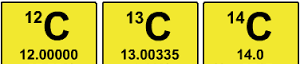
What do these isotopes of carbon all have in common?
a)
neutrons & mass number
b)
atomic number and neutrons
c)
atomic number and electrons
d)
protons, atomic number, and mass number
53.
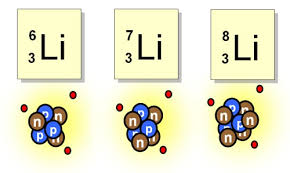
How many neutrons does the isotope of lithium have?
a)
8
b)
3
c)
4
d)
5
54.
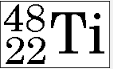
How many protons does this isotope of titanium have?
a)
48
b)
22
c)
26
d)
70
55.
which atom has  4 neutrons?
a)
Li-6
b)
Li-7
c)
Li-8
d)
they have the same # of neutrons
56.
How many neutrons in C-14?
a)
6
b)
7
c)
14
d)
8
57.
How many neutrons does the isotope below have?     89 36Kr
a)
53
b)
36
c)
89
d)
125
58.
How many neutrons does an atom of the isotope Neon-22 have?
a)
12
b)
10
c)
22
d)
20
59.
Four isotopes of lead include lead-204, lead-206, lead-207, and lead-208.  The average atomic mass of lead is 207.2.  Which isotope of lead is likely to be the most abundant.
a)
204
b)
206
c)
207
d)
208
60.
How many electrons are in an atom that has an atomic number of 34, an atomic mass of 74 and a charge of -2?
a)
34
b)
36
c)
2
d)
40
61.

The force of attraction between nonpolar molecules:

a)

Hydrogen Bonding

b)

Dipole - Dipole Forces

c)

London dispersion forces

d)

Ionic Forces

62.
The bond formed between atoms of the same element:
a)
nonpolar covalent
b)
polar covalent
c)
ionic bond
d)
hydrogen bond
63.

Which type of IMF is responsible for the attraction pictured above?

a)

Dipole-Dipole Interaction

b)

Ion-Dipole Interaction

c)

Hydrogen Bonds

d)

Covalent Bond

e)

Ionic Bond

64.

Which type of IMF is responsible for the attraction pictured above?

a)

Dipole-Dipole Interaction

b)

Ion-Dipole Interaction

c)

Hydrogen Bonds

d)

Covalent Bond

e)

Ionic Bond

65.

Intermolecular forces are attractions between ______.

a)

Cations and anions

b)

Atoms within a molecule

c)

Neighboring molecules

d)

Protons and electrons

66.

Intermolecular forces are responsible for which of the following properties?

a)

State of matter

b)

Color

c)

Odor

d)

Conductivity

67.
Will this molecule be polar or nonpolar? CCl4
a)
polar
b)
nonpolar
68.
Will this molecule be polar or nonpolar? PH3
a)
polar
b)
nonpolar
69.

For which of the following would hydrogen bonding occur between molecules?

a)
b)
c)
d)
70.
Which of the following does NOT contain hydrogen bonding?
a)
NH3
b)
H2O
c)
CF4
d)
HOF
71.
What is the predominant IMF for NH3?
a)
London dispersion forces
b)
Dipole dipole
c)
Hydrogen bonding
d)
What is an IMFA?
72.
Which IMF is the predominant IMF for non-polar molecules?
a)
London Dispersion Forces
b)
Dipole Dipole
c)
Hydrogen Bonding
d)
Both Dipole Dipole and Hydrogen Bonding
73.
What explains the very high melting and boiling point of water
a)
Strong dipole-dipole bonds between water molecules
b)
Strong hydrogen bonds between water molecules
c)
Dispersion forces which are present in all molecules
d)
Asymmetrical shape of the polar bonds.