wayground logo

Free Printable Worksheets

Font size

S
M
L
XL
Worksheets

Biology A Final Exam Review

Total questions: 81

Worksheet time: 1hrs 23mins

Name
Class
Date
1.

Organelle that reads codes and build proteins

a)

Endoplasmic Reticulum

b)

Nucleus

c)

Cell Membrane

d)

Ribosome

2.

How do CELLS communicate?

a)

Cells do not have to communicate with each other, they all work independently

b)

Cells communicate using a Chemical / Hormonal Signal.

c)

Cells communicate within the cell only

3.

Which is an example of the BASE PAIRING RULE

a)

CGTACGGT

GCATGCCA

b)

ATTAGCAT

ATTAGCAT

c)

AUGAUAU

UACUAAU

d)

none of these appear to be correct

4.

Why is DNA considered semi conservative?

a)

Upon replication, an old strand binds with an old strand.

b)

Upon replication, an old strand binds with a new strand

c)

Upon replication, an new strand binds with a new strand.

d)

DNA never replicates.

5.

Protein synthesis has 2 main steps…where do they take place?

a)

Transcription takes place in the cytoplasm, and translation takes place in the nucleus

b)

Transcription takes place in the nucleus, and translation takes place in the cytoplasm

c)

Transcription and translation both take place in the nucleus

d)

Transcription and translation both take place in the cytoplasm

6.

You go outside on a cold winter day. As your temperature drops your body begins to shiver. This response is one way your body tries to maintain

a)

Homeostasis - negative feedback

b)

Homeostasis - positive feedback

c)

Synthesis - of glucose

d)

Bodies do not respond to external stimuli

7.

This is an example of

a)

Positive feedback

b)

Negative feedback

c)

No feedback

8.

A protein is a chain of

a)

Lipids

b)

Glucose

c)

Amino Acids

d)

Bases

9.

Negative feedback starts when the body detects

a)

An effect

b)

A response

c)

A control center

d)

A stimulus

10.

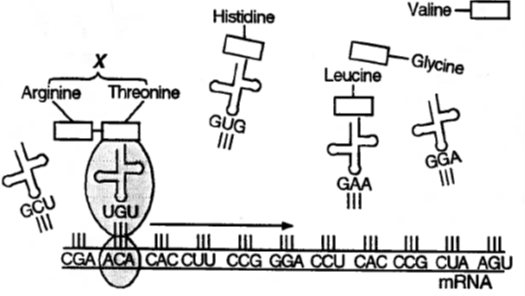
This image depicts the process of

a)

Glycolysis

b)

Protein Synthesis

c)

Photosynthesis

d)

Cell Replication

11.

2 Words to describe this image

a)

Cell Differentiation

b)

Cell Distinction

c)

Cell Communication

d)

Cell Sixtiation

12.

Which shows the beginning stages of a zygote

a)
b)
c)
d)
13.

Gases can move freely in and out of the cell because this is semi-permeable

a)

Cell Wall

b)

Cell Membrane

c)

Cytoplasm

d)

Chlorophyll

14.

Insulin (a protein hormone) can be pumped around the body because of what two systems

a)

Endocrine and Circulatory

b)

Reproductive and Digestive

c)

Skeletal and Muscle

d)

Circulatory and Digestive

15.

Which best describes the interaction between DNA and RNA during protein synthesis?


a)

RNA carries the code to the nucleus where DNA translates the code during protein synthesis.

b)

DNA travels to the ribosome where RNA translates the code during protein synthesis.

c)

RNA carries the code from DNA in the nucleus to the ribosome for protein synthesis.

d)

DNA travels to the cytoplasm while RNA remains in the nucleus during protein synthesis.

16.

Which of the following contains the protein code that is passed from parent to offspring?

a)

Traits

b)

Genes

c)

Amino Acids

d)

Ribnucleic Acid

17.

Mature human gametes have how many chromosomes, assuming no mutations

a)

0

b)

92

c)

46

d)

23

18.

Mitosis, a form of asexual reproduction results in how many daughter cells

a)

1

b)

2

c)

3

d)

4

19.

Mitosis has a goal of producing

a)

identical cells

b)

non identical cells

c)

Mutated cells

d)

no additional cells

20.

Meiosis, the formation of sex cells has a goal to create how many mature cells

a)

1

b)

2

c)

3

d)

4

21.

Why don't siblings look identical unless they are twins

a)

natural selection

b)

genetic variation

c)

Mitosis

d)

photosynthesis

22.
What amino acid is represented by the codon AUG?
a)
Aspartic Acid
b)
Histidine
c)
Glutamine
d)
Methionine
23.
In what phase of the cell cycle does DNA replication take place?
a)
G1
b)
S
c)
G2
d)
M
24.
The enzyme that unzips the DNA to prepare for replication
a)
helicase
b)
replicase
c)
polymerase
d)
synthase
25.

How can a person's muscle cells have the same exact DNA sequences as their nerve cells even though the look and perform completely different?

a)

The two different cells become mutated

b)

The proteins expressed in each cell are different

c)

They actually have different DNA in the two types of cells.

d)

The genome of the different cells changes

26.
mutations are
a)
always bad 
b)
never bad
c)
only bad if the mutation makes it more difficult for the organism to survive
27.
B=brown eyes
b= blue eyes
What is true about these two brothers that have brown eyes:
One has genotype BB the other Bb.
a)
they have same phenotype and genotype
b)
they have different genotypes and phenotypes
c)
they have same phenotype but different genotypes
d)
they have same genotype but different phenotypes
28.
Meiosis makes sperm and egg cells. In humans, sperm and egg cells each have _____ chromosomes. Therefore a fertilized human egg cell (sperm and egg cell combined) would create a cell with _____ chromosomes.
a)
23, 46
b)
46, 23
c)
2, 4
d)
50, 100
29.
If cells accumulate too much DNA damage, they have 3 choices. which choice involves the cell programming its death?
a)
apoptosis
b)
senescence
c)
repair
d)
cancer
30.
the sequence of growth and division of a cell
a)
cell cycle
b)
mitosis
c)
anaphase
d)
cancer
31.
What is a phenotype?
a)
The expression of a trait; what you see.
b)
refers to the genetic makeup of an individual
c)
An organism that has the same genes for a trait (ex. TT or tt)
d)
the passing of traits from parent to offspring
32.
In a molecule of double-stranded DNA, the amount of Adenine present is always equal to the amount of
a)
cytosine
b)
guanine
c)
thymine
d)
uracil
33.
Which term refers to the process by which individuals that are better suited to the environment survive and reproduce therefore passing down their genes to their offspring? 
a)
Evolution 
b)
Variation 
c)
Adaptation
d)
Natural Selection 
34.
What characteristic did Darwin observe about the finches on the Galapagos Islands?
a)
Their feathers 
b)
Genotypes 
c)
Their beaks
d)
Their body sizes
35.
Two organisms that are closely related would have
a)
very similar DNA sequence
b)
exactly the same DNA sequences
c)
no proteins in common
d)
completely different DNA sequence
36.
Translation begins with a(n):
a)
Start Codon
b)
Intron
c)
Promoter
d)
Origin
37.
A process in which DNA has the unique ability to make an exact copy of itself.
a)
Replication
b)
Translation
c)
Transcription
38.
Which of the following does NOT provide evidence for evolution?
a)
homologous structures
b)
deforestation
c)
DNA similarities
d)
fossil research
39.
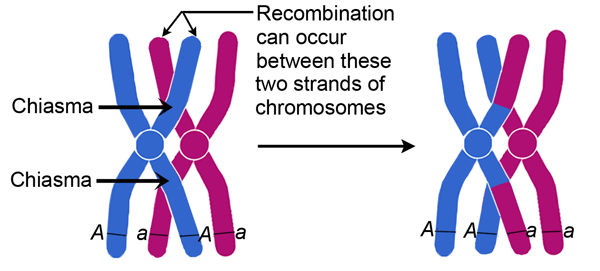
This image shows chromosomes during Prophase 1. Which of the following correctly describes the process shown?
a)
segregation of sister chromatids
b)
condensation and segregation of alleles
c)
mutationin which the DNA content of the gene is altered
d)
crossing - over in which alleles are exchanged
40.
What process, and which type of resulting cells are represented?
a)
mitosis, gametes
b)
mitosis, body cells
c)
meiosis, gametes
d)
meiosis, body cells
41.

A human body (somatic) cell usually has how many chromosomes?

a)

6

b)

22

c)

4

d)

46

42.
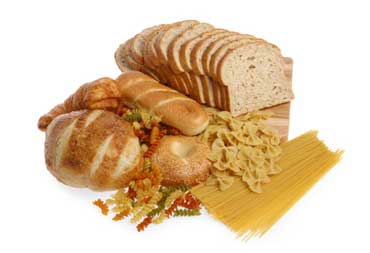
Which biomolecule is found in pasta and bread?
a)
Lipid
b)
Protein
c)
Nucleic Acid
d)
Carbohydrate
43.
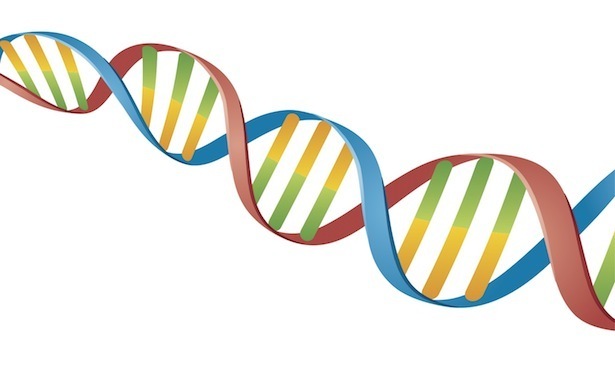
What is the function of a nucleic acid?
a)
Stores genetic information
b)
Stores energy
c)
Quick source of energy
d)
Builds structures
44.
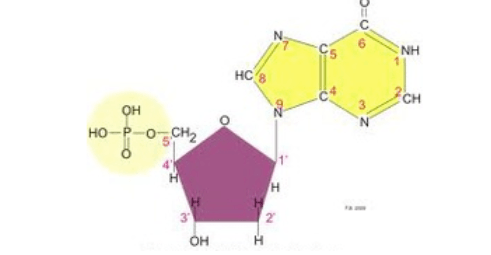
Which biomolecule is this a picture of?
a)
Protein
b)
Nucleic Acid
c)
Lipid
d)
Carbohydrate
45.

Which biomolecule helps form muscles?

a)

Nucleic Acid

b)

Carbohydrate

c)

Protein

d)

Lipids

46.
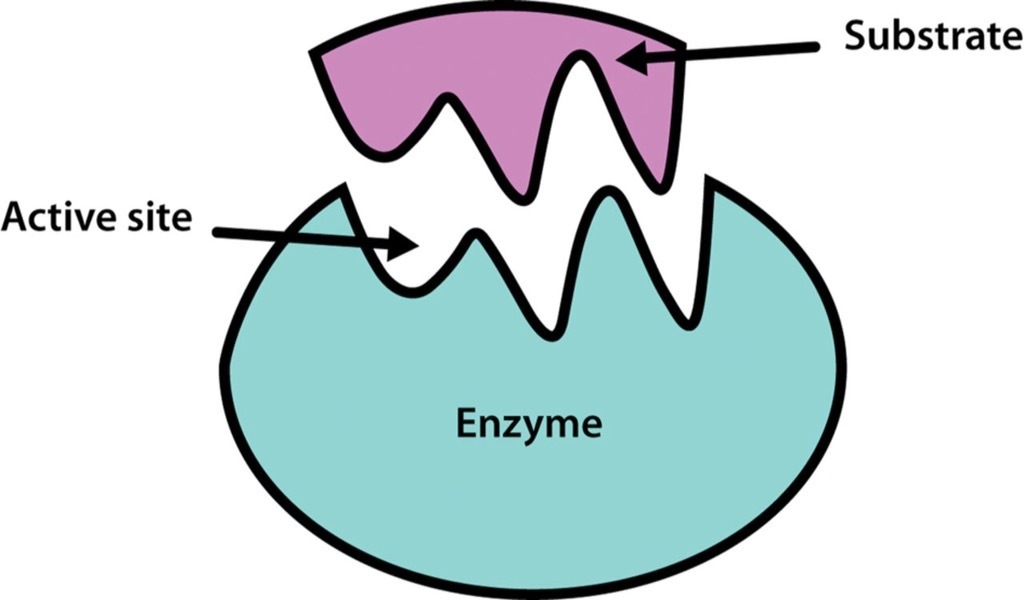
What is the purpose  of an enzyme?
a)
give permission for the reaction
b)
raise activation energy
c)
speed up reactions
d)
control how many reactions occur
47.
A monomer is ...
a)
a single atom
b)
a building block for polymers
c)
a single element
d)
is an inorganic molecule
48.
What is the monomer for a protein?
a)
Monosaccharide
b)
Triglyceride
c)
Amino Acid
d)
Nucleotide
49.
What biomolecule do enzymes belong to? 
a)
Carbohydrate
b)
Lipid
c)
Nucleic Acid
d)
Protein
50.
What suffix is used in the names of most carbohydrates?
a)
-ase
b)
-nic
c)
-ose
d)
-yme
51.
control the cell's activities; contains the cell's DNA
a)
mitochondria
b)
cell membrane
c)
nucleus
d)
golgi body
52.
How does RNA differ from DNA?
a)
RNA contains uracil and deoxyribose
b)
RNA contains ribose and thymine
c)
RNA contains uracil and ribose
d)
RNA contains adenine and ribose
53.
Which of the following describes RNA?
a)
RNA is usually double-stranded and contains the base thymine
b)
RNA is usually single-stranded and contains the base uracil
c)
RNA is longer than DNA and uses five bases to encode information
d)
RNA is made in the nucleus of eukaryotic cells and stays there to carry out its functions
54.

Transcribe the following DNA sequence:


AAT TAG GGC TCG

a)

AAT TAG GGC TCG

b)

TTA ATC CCG AGC

c)

UUA AUC CCG AGC

d)

TTU UTC CCG UGC

55.
Replicate the following strand of DNA: 
AATCATGGA
a)
AATCATGGA
b)
TTAGTACCT
c)
UUAGUACCU
d)
GGATAUCUA
56.
Translation is a process that produces
a)
mRNA
b)
Protein
c)
Polypeptide Chains
d)
tRNA
57.
What process is going on in this photo? 
a)
Transcription 
b)
Translation 
c)
Replication 
d)
All the above 
58.

According to Natural Selection, each of the 14 species of Galapagos finch could have gotten their characteristic beaks because

a)

of the tendency for perfection

b)

they inherited the beaks their parents acquired

c)

they randomly acquired mutations which created variability in the population. This variability allowed for some finches to out-compete others, and therefore survive and reproduce more often.

d)

the environment consciously choose what beaks the birds got

59.

The amino acid sequences of hemoglobin found in two different species of reptile are almost exactly the same. This suggests that the reptiles

a)

Are actually the same species

b)

Share a common ancestor

c)

Live in the same environment

d)

Are evolving into the same species

60.

The amino acid sequence of a _____________, is determined by the sequence of _______________ in DNA

a)

codon, phosphates

b)

protein, nucleotides

c)

polypeptide, codons

d)

nucleic acid, nitrogenous bases

61.

Homologous structures are..

a)

same structure, same function

b)

same structure different function

c)

different structure, same function

d)

different structure, different function

62.
Which of the following is a term for a group of similar organisms that can reproduce fertile offspring?
a)
individual
b)
population
c)
species
d)
fossil
64.
Why are advantageous traits more likely to be passed onto offspring?
a)
Because they are more likely to survive and reproduce.
b)
Because they come from dominant alleles.
c)
Because they come from recessive alleles.
d)
Because the trait is an acquired phenotype.
64.
Why are advantageous traits more likely to be passed onto offspring?
a)
Because they are more likely to survive and reproduce.
b)
Because they come from dominant alleles.
c)
Because they come from recessive alleles.
d)
Because the trait is an acquired phenotype.
65.
Why are advantageous traits more likely to be passed onto offspring?
a)
Because they are more likely to survive and reproduce.
b)
Because they come from dominant alleles.
c)
Because they come from recessive alleles.
d)
Because the trait is an acquired phenotype.
66.
The regulation of steady, life maintaining conditions inside an organism despite changes in the environment.
a)
homeostasis
b)
reflexes
c)
stimulus
d)
neuron
67.
Endocrine glands produce __________ which maintain the body in homeostasis
a)
oils
b)
neurotransmitters 
c)
tears
d)
hormones
68.
All hormones __. 
a)
are produced by endocrine glands.
b)
are carried to target cells in the blood. 
c)
are lipid-soluble molecules.
d)
are protein molecules.
69.

Adaptations are:

a)

physical or behavioral tendencies.

b)

physical or behavioral characteristics that help an organisms survive and reproduce.

c)

physical or behavioral characteristics that do not help the organism in any way.

d)

genetic mutations that have gone wrong.

70.
What is one reason that strawberries are surviving in the winter season?
a)
they have larger leaves
b)
they have genetic variations allowing them to be resistant to cold
c)
they reproduce more
d)
the color is dark
71.
Which of the following DOES NOT increase variation in the next generation?
a)
Independent Assortment
b)
Random Fertilization
c)
Crossing Over
d)
Asexual reproduction
72.
Why would a population with a large amount of genetic variation be more likely to survive a severe climate change in its environment?
a)
Individuals will only create offspring well-suited to the climate change
b)
The individuals would produce more offspring
c)
Individuals better suited to the new climate will help less-suited individuals survive
d)
Some individuals will posses traits better suited to the new climate and be more likely to pass them on
73.

Produces the hormone insulin and glucagon, which controls the level of glucose in the blood.

a)

Thyroid Gland

b)

Pancreas

c)

Thymus Gland

d)

Pituitary Gland

74.
Are chemicals that travel in the blood and cause changes in different parts of the body
a)
Hormones
b)
Glands
c)
Parathyroid 
d)
Adrenal Gland 
75.
The visual representation of an individual's chromosomes is a 
a)
phenotype
b)
genotype
c)
karyotype
d)
stereotype
76.
The visual representation of an individual's chromosomes is a 
a)
phenotype
b)
genotype
c)
karyotype
d)
stereotype
77.
What type of inheritance is determined by multiple genes located at different loci on different chromosomes and there can be a range of traits?
a)
Codominance
b)
Incomplete dominance
c)
Polygenic traits
78.
What type of inheritance is determined by multiple genes located at different loci on different chromosomes and there can be a range of traits?
a)
Codominance
b)
Incomplete dominance
c)
Polygenic traits
79.

Whats the correct order of translation?

a. mRNA leaves nucleus

b. ribosome binds to mRNA at a start codon

c. tRNA brings amino acid next to start codon and the amino acids peptide bond

d. ribosome moves down mRNA, tRNA's continue coming with amino acids

e. ribosome reaches stop codon, protein is released

a)

a, b, c, d, e

b)

a, c, d, b, e

c)

a, b, e, d, c

d)

e, b, d, c, a

80.

What is this image depicting?

a)

Gene flow

b)

Nonrandom mating

c)

Genetic drift

d)

Sexual selection

81.
What do you call all of the genes in a population?
a)
Gene pool
b)
Relative Frequency
c)
Genetic Drift
d)
Allele pool