
 Worksheets
Pre-Thanksgiving Review - Science
Total questions: 56
Worksheet time: 57mins

Who turned wild american plants and animals into domestic foods?
Geneticists
European Pilgrims
Native Americans
DNA Scientists
Where are turkeys originally from?
Turkey
North America
India
Peru
How did archaeologists know ancient americans bred turkeys?
They studied fossil dung.
They found paintings.
They asked Indiana Jones.
They found old cages.
What's the relationship between squashes and pumpkins?
One is the origin of the other.
They are grown together.
They are cooked together.
A squash is a young pumpkin.

About how many turkeys are cooked for Thanksgiving each year?
18 million
46 million
74 million
106 million
Which is one way sound waves are different from light waves?
Sound waves travel through space but light waves cannot.
Sound waves travel at a slower speed than light waves.
Sound waves have shorter wavelengths than light waves.
Sound waves are a source of energy but light waves are not.
In what way are atoms of oxygen most different from atoms of nitrogen?
They have different temperatures.
They have different states of matter.
They have different atomic masses.
They have different colors.
If you placed a hot stone in a beaker of cold water, what would happen to stone and water after 10 minutes of time elapsed?
The stone would get warmer and the water would get cooler.
The stone will get as cold as the water had been.
The water would get as hot as the stone had been.
The stone would get cooler and the water would get warmer.
Why is Earth better able to support life than either Venus or Mars?
because of Earth's axis
because Earth has liquid water
because Earth has soil
because only Earth has seasons

The table below shows the range of particle sizes (in micrometers) that are found in four types of particles which soil is made from.
A scientist studied the soil at a certain location. She determined that most of the soil was made up of particles between 10 micrometers and 18 micrometers. What type or types of particles make up the soil at this location?
Fine sand only
Fine sand and silt
Coarse sand only
Coarse sand and clay only
What is the purpose of photosynthesis occurring in green plants?
it provides protection
it provides food and energy
it provides water for the cells
it provides carbon dioxide and water
Which of these best illustrates the correct order of flow of energy through a food chain?
rabbit -->mouse--> grain --> sun
rabbit --> grain --> mouse--> sun
sun--> grain --> mouse --> rabbit
sun--> mouse--> grain--> rabbit


A compound is a substance with 2 or more type of elements. How many elements are represented in the compound Na2CO3 ?
1
2
3
4
A granular substance is added to a liquid. Which of the following would provide evidence to suggest a chemical change has taken place?
The liquid gives off heat.
The granules dissolve completely.
The volume of the liquid increases.
The granules seem to get smaller.
All of the following are evidence of a chemical change EXCEPT -
change in state of matter.
formation of a gas.
color change.
precipitate forms.
Which of the following would indicate the formation of a new substance?
A liquid turns to a solid
A sample of metal melts
Bubbles and fizzing occur
A solid dissolves in a liquid



You have just turned on a fan.
What type of input energy there is ?
Electric
Radiant
Nuclear
Thermal

Which of the following transforms energy from uranium atoms into electrical energy?
magnetic fields
solar panels
nuclear fission
satellite dish
What is it called when you generate electricity with a dam and running water?
Geothermal Energy
Hydroelectric energy
Radiation energy
Which of the following is one of the disadvantages of geothermal energy?
Geothermal energy only works on windy days.
Geothermal energy doesn't work everywhere since you need a volcano or hot spring (such as a geyser) nearby.
Geothermal does not work if there are no rivers or moving water nearby.
What is one disadvantage of hydroelectric energy?
It does not work if you don't have volcanoes nearby.
It doesn't work if the it is not windy.
It doesn't work if you don't have dams, rivers or moving water nearby.
Fossil fuels such as coal or oil are considered....
Non-renewable
Renewable
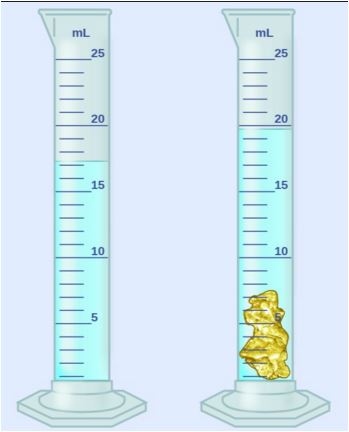
An irregularly shaped piece of gold was lowered into a graduated cylinder holding a volume of water equal to 17 ml. The height of the water rose to 20 ml. If the mass of the gold was 27 g, what was its density? ( remember d= m/V )
9 g/mL
10.5 g/mL
6.5 g/mL
8 g/mL



