

wayground logo

Free Printable Worksheets

Font size

S
M
L
XL
Worksheets

AP Biology: Enzymes, Respiration & Photosynthesis

Total questions: 87

Worksheet time: 50mins

Name
Class
Date
1.
Which of the following are products of the light reactions of photosynthesis that are utilized in the Calvin cycle?
a)
ATP and NADPH
b)
H2O and O2
c)
CO2 and glucose
d)
ADP, Pi, and NADP+
2.
In a plant cell, where are the ATP synthase complexes located?
a)
In a plant cell, where are the ATP synthase complexes located?
b)
thylakoid membrane and plasma membrane
c)
plasma membrane only
d)
thylakoid membrane and inner mitochondrial membrane
3.
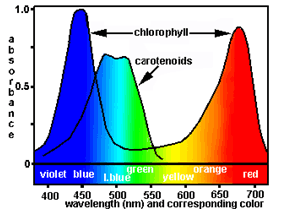
A plant has a unique photosynthetic pigment. The leaves of this plant appear to be reddish yellow. What wavelengths of visible light are being absorbed by this pigment?
a)
green and yellow
b)
blue, green, and red
c)
green, blue, and yellow
d)
blue and violet
4.
In mitochondria, chemiosmosis translocates protons from the matrix into the intermembrane space, whereas in chloroplasts, chemiosmosis translocates protons from
a)
the stroma to the thylakoid space.
b)
the thylakoid space to the stroma.
c)
the matrix to the stroma.
d)
the stroma to the photosystem II.
5.
The splitting of carbon dioxide to form oxygen gas and carbon compounds occurs during
a)
photorespiration
b)
photosynthesis.
c)
respiration.
d)
neither photosynthesis nor respiration.
6.
When oxygen is released as a result of photosynthesis, it is a direct by–product of
a)
chemiosmosis.
b)
splitting water molecules.
c)
the electron transfer system of photosystem II.
d)
the electron transfer system of photosystem I.
7.
Where does the Calvin cycle take place?
a)
interior of the thylakoid (thylakoid space)
b)
outer membrane of the chloroplast
c)
thylakoid membrane
d)
stroma of the chloroplast
8.
In any ecosystem, terrestrial or aquatic, what group(s) is (are) always necessary?
a)
green plants
b)
autotrophs
c)
autotrophs and heterotrophs
d)
photosynthesizers
9.
What is the term for metabolic pathways that release stored energy by breaking down complex molecules?
a)
fermentation pathways
b)
catabolic pathways
c)
bioenergetic pathways
d)
anabolic pathways
10.
Where does glycolysis take place in eukaryotic cells?
a)
cytosol
b)
mitochondrial inner membrane
c)
mitochondrial matrix
d)
mitochondrial intermembrane space
11.
In addition to ATP, what are the end products of glycolysis?
a)
CO2 and H2O
b)
CO2 and NADH
c)
CO2 and pyruvate
d)
NADH and pyruvate
12.
In glycolysis, for each molecule of glucose oxidized to pyruvate
a)
two molecules of ATP are used and six molecules of ATP are produced.
b)
two molecules of ATP are used and four molecules of ATP are produced.
c)
two molecules of ATP are used and two molecules of ATP are produced.
d)
six molecules of ATP are used and six molecules of ATP are produced.
13.
Which of the following intermediary metabolites enters the citric acid cycle and is formed, in part, by the removal of a carbon (CO2) from one molecule of pyruvate?
a)
lactate
b)
oxaloacetate
c)
glyceraldehydes–3–phosphate
d)
acetyl CoA
14.
When a molecule of NAD+ (nicotinamide adenine dinucleotide) gains a hydrogen atom (not a proton), the molecule becomes
a)
oxidized
b)
dehydrogenated.
c)
hydrolyzed
d)
reduced
15.
Which of the following statements describes the results of this reaction?
C6H12O6 + 6 O2 → 6 CO2 + 6 H2O + Energy
a)
C6H12O6 is reduced and CO2 is oxidized.
b)
CO2 is reduced and O2 is oxidized.
c)
C6H12O6 is oxidized and O2 is reduced.
d)
O2 is reduced and CO2 is oxidized.
16.
During aerobic respiration, electrons travel downhill in which sequence?
a)
food → glycolysis → citric acid cycle → NADH → ATP
b)
food → citric acid cycle → ATP → NAD+
c)
glucose → ATP → electron transport chain → NADH
d)
food → NADH → electron transport chain → oxygen
17.
Which of the following is an example of potential rather than kinetic energy?
a)
the flight of an insect foraging for food
b)
the muscle contractions of a person mowing grass
c)
water rushing over Niagara Falls
d)
a molecule of glucose
18.
Which of the following types of reactions would decrease the entropy within a cell?
a)
digestion
b)
catabolic reactions
c)
anabolic reactions
d)
respiration
19.
Which of the following is a statement of the first law of thermodynamics?
a)
The entropy of the universe is constant.
b)
Kinetic energy is stored energy that results from the specific arrangement of matter.
c)
Energy cannot be created or destroyed.
d)
The entropy of the universe is decreasing.
20.
Which term most precisely describes the cellular process of breaking down large molecules into smaller ones?
a)
catabolism
b)
catalysis
c)
metabolism
d)
dehydration
21.
A series of enzymes catalyze the reaction X →Y→ Z →A. Product A binds to the enzyme that converts X to Y at a position remote from its active site. This binding decreases the activity of the enzyme. What is substance X? 
a)
A substrate 
b)
An allosteric inhibitor 
c)
The product
d)
A coenzyme
22.
Succinate dehydrogenase catalyzes the conversion of succinate to fumarate. The reaction is inhibited by malonic acid, which resembles succinate but cannot be acted upon by succinate dehydrogenase. Increasing the ratio of succinate to malonic acid reduces the inhibitory effect of malonic acid. What is malonic acid's role with respect to succinate dehydrogenase?
a)
It is a competitive inhibitor.
b)
It is an allosteric regulator.
c)
It is able to bind to succinate.
d)
It blocks the binding of fumarate.
23.
Which of the following represents the activation energy needed for the noncatalyzed reverse reaction,  C + D → A + B, in Figure 8.1?
a)
A
b)
C
c)
D
d)
E
24.
Which of the following statements describes enzyme cooperativity?
a)
Several substrate molecules can be catalyzed by the same enzyme.
b)
A substrate binds to an active site and inhibits cooperation between enzymes in a pathway.
c)
A substrate molecule bound to an active site of one subunit promotes substrate binding to the active site of other subunits.
d)
A multienzyme complex contains all the enzymes of a metabolic pathway.
25.
Choose the pair of terms that correctly completes this sentence: Catabolism is to anabolism as _____ is to _____.
a)
exergonic; endergonic
b)
free energy; entropy
c)
work; energy
d)
entropy; enthalpy
26.

Glucose is ____________________ during cell respiration

a)

reduced

b)

oxidized

27.

ATP is a more stable molecule than ADP

a)

True

b)

False

28.

During cell respiration, the first step is to USE to ATP

a)

True

b)

False

29.

Glycolysis occurs in the cytoplasm and produces all of the following EXCEPT

a)

ATP

b)

Carbon Dioxide

c)

3 carbon chain (pyruvate)

d)

NADH (electron carrier)

30.

The purpose of the Krebs cycle is to

a)

completely oxidize the remaining glucose chain

b)

produce carbon dioxide

c)

produce water

d)

regenerate NAD+ so glycolysis can continue

31.

Chemiosmosis is the use of energy to _______________________

a)

set up a hydrogen ion gradient

b)

to produce water

c)

oxidize glucose

d)

remove electrons from the ETC using oxygen gas

32.

What is FALSE about ATP synthase

a)

it can be found in the mitochodrion and chloroplast

b)

it is an enzyme with two substrates, ADP and a phosphate

c)

it is a transport protein

d)

it actively transports H+ across membranes

33.

Oxidative phosphorylation uses _______________ to make ATP

a)

electrons energy from glucose

b)

electron energy from oxygen gas

c)

electron energy from water

34.

What makes more ATP

a)

oxidative phosphorylation during ETC and ATP synthase

b)

substrate level phosphorylation during glycolysis and krebs

35.

Oxygen gas is a _____________ of cell respiration because it _______

a)

reactant, replaces lost electrons from glucose

b)

reactant, removes low energy electrons from the ETC chain

c)

product, it the left over after the carbon chain releases its electrons

d)

product, when water splits to give electrons, oxygen gas is the waste product

36.

Purpose of fermentation is to

a)

make NAD+

b)

make carbon dioxide

c)

oxidize glucose

d)

create a proton gradient

37.

All of the follow occur anaerobically EXCEPT

a)

glycolysis

b)

fermentation

c)

Krebs cycle

38.

If the ETC was blocked by cyanide what would happen?

a)

the mitochondrion would over heat

b)

excessive NAD+ would build up in the cells and blood

c)

oxygen levels would decrease

d)

NADH and FADH2 would be in high levels

39.

A mouse at 10 C would use oxygen _______________ than a snake at 10 C (assume same size)

a)

faster

b)

slower

40.

ATP synthase directly uses _____________ to spin in order to connect phosphate onto ADP

a)

diffusion from a proton gradient

b)

diffusion from an electron gradient

c)

active transport of a proton gradient

d)

active transport of an electron gradient

41.
Which of the following are products of the light reactions of photosynthesis that are utilized in the Calvin cycle?
a)
CO2 and glucose
b)
H2O and O2
c)
electrons and H+
d)
ATP and NADPH
42.
Where does the Calvin cycle take place?
a)
stroma of the chloroplast
b)
thylakoid membrane
c)
outer membrane of the chloroplast
d)
interior of the thylakoid membrane
43.
When oxygen is released as a result of photosynthesis, it is a direct by-product of
a)
reducing NADP+
b)
splitting water molecules
c)
chemiosmosis
d)
electron transfer in photosystem II and I
44.
Which of the following events occurs in the light reactions of photosynthesis?
a)
NADP+ is produced
b)
ATP is consumed to yield ADP
c)
carbon dioxide is fixed in organic molecules
d)
light is absorbed and funneled to reaction-center chlorophyll a
45.
Which of the following is directly associated with Photosystem I?
a)
harvesting light energy to make ATP
b)
receiving electrons from the thylakoid membrane ETC
c)
generation of molecular oxygen
d)
extraction of hydrogen electrons from the splitting of water
46.
What is the primary function of cyclic electron flow?
a)
to produce additional NADPH
b)
to produce additional ATP
c)
to produce additional oxygen
d)
to produce additional carbon dioxide
47.
In a plant cell, where are ATP synthase complexes located?
a)
thylakoid membranes only
b)
inner mitochondrial membranes only
c)
thylakoid membrane and inner mitochondrial membranes
d)
thylakoid membrane and plasma membranes
48.
Which of the following statements about the relationship between photosynthesis and cellular respiration is true?
a)
In cellular respiration the biochemical pathways of photosynthesis run in reverse.
b)
In photosynthesis the biochemical pathways of cellular respiration run in reverse.
c)
Cellular respiration occurs only in animals and photosynthesis occurs only in plants.
d)
Cellular respiration is catabolic and photosynthesis is anabolic.
49.
Where are the molecules of the electron transport chain associated with photophosphorylation located in plant cells?
a)
thylakoid membanes of chloroplasts
b)
stroma of chloroplasts
c)
matrix of mitochondria
d)
outer membrane of chloroplasts
50.
In photosynthetic cells, synthesis of ATP by chemiosmosis occurs during
a)
photosynthesis only
b)
cellular respiration only
c)
both photosynthesis and cellular respiration
d)
photophosphorylation only
51.
What is the relationship between wavelength of light and the quantity of energy per photon?
a)
they have a direct, linear relationship
b)
they are inversely related
c)
they are logarithmically related
d)
they are only related in certain parts of the spectrum
52.
What is the primary function of the Calvin cycle?
a)
regenerate ATP for use in the light reactions of photosynthesis
b)
produce carbon dioxide for use in the light reactions of photosynthesis
c)
produce oxygen by oxidizing water
d)
produce simple sugars from carbon dioxide
53.
In C3 photosynthesis, the reactions that require ATP take place in
a)
the light reactions alone
b)
the calvin cycle only
c)
both the light reactions and the calvin cycle
d)
the citric acid cycle
54.
Reactions that consume CO2 take place in
a)
the light reactions of photosynthesis only
b)
the calvin cycle only
c)
the light reactions and the calvin cycle
d)
the calvin cycle and the citric acid cycle
55.
Which of the following statements best represents the relationships between the light reactions and the Calvin cycle?
a)
The light reactions provide ATP and NADPH to the Calvin cycle, and the Calvin cycle returns ADP, ℗i, and NADP+ to the light reactions.
b)
The light reactions provide ATP and NADPH to the carbon fixation step of the Calvin cycle, and the Calvin cycle provides water and electrons to the light reactions.
c)
The light reactions supply the Calvin cycle with CO2 to produce sugars, and the Calvin cycle supplies the light reactions with sugars to produce ATP.
d)
The light reactions provide the Calvin cycle with oxygen for carbon fixation, and the Calvin cycle provides the light reactions with sugars to produce ATP.
56.
CAM plants keep stomata closed in daytime, thus reducing loss of water. They can do this because they
a)
fix CO2 into organic acids during the night when temperatures are cooler.
b)
fix CO2 into by combining it with RuBP in the Calvin cycle.
c)
obtain CO2 through their roots during the day.
d)
fix CO2 into organic acids in the mesophyll cells, which do not rely on stomata.
57.

Compared to C3 plants, C4 plants

a)

have higher rates of photorespiration.

b)

can continue to fix CO2 even at relatively low CO2 concentrations and high oxygen concentrations.

c)

do not use rubisco for carbon fixation.

d)

grow better under cool, moist conditions.
58.
In chemiosmosis in mitochondria, protons flow from the intermembrane space into the matrix, whereas in chemiosmosis in chloroplasts, protons flow from
a)
stroma into the cytosol
b)
stroma to the thylakoid space
c)
thylakoid space to the stroma
d)
intermembrane space to the stroma
59.
In mitochondria, the electron transport chain pumps protons from the matrix into the intermembrane space, whereas in chloroplasts, the electron transport chain pumps protons from
a)
matrix to stroma
b)
stroma to thylakoid space
c)
intermembrane space to stroma
d)
thylakoid space to stroma
60.
What is one function of the other pigments  besides chlorophyll, in the chloroplast?
a)
to block damaging wavelengths of light
b)
to absorb different wavelengths than the chloroplasts
c)
to provide different colors to the leaves
d)
to transfer energy to a separate photosystem beside the one using chlorophyll a and b.
61.
What is the primary function of the light reactions of photosynthesis?
a)
To produce glucose
b)
To produce NADPH and ATP
c)
To use ATP
d)
To produce RuBP
62.
What supplies the electrons that are lost in PS I?
a)
the electrons from PS II
b)
water
c)
glucose
d)
oxygen
63.
What is the function of NADP+?
a)
It absorbs light
b)
It is an electron carrier
c)
It is a light-reflecting pigment
d)
It acts as long-term energy storage
64.
Which of the following molecules is not needed for the Calvin Cycle?
a)
CO2
b)
ATP
c)
NADPH
d)
H2O
65.
Green plants reflect ________ light.
a)
Red
b)
Green
c)
All
d)
Red and Violet
66.
The light reactions occur in the ________ and the dark reactions take place in the ________.
a)
Chloroplast / thylakoid membrane
b)
stroma / thylakoid
c)
mesophyl / stomata
d)
thylakoid membrane / stroma
67.
Where does the carbon come from that is used to form glucose?
a)
The soil
b)
CO2 in the air
c)
From other carbohydrates
d)
Calvin Cycle
68.
Where is glucose synthesized
a)
Photosystem II
b)
Photosystem I
c)
Calvin Cycle
d)
Glycolysis
69.
The H+ concentration gradient is used to 
a)
make NADPH
b)
split a water molecule
c)
generate ATP
d)
form water
70.
When oxygen is released as a result of photosynthesis, it is a direct by-product of____
a)
reducing NADP+
b)
splitting water molecules
c)
chemiosmosis
d)
electron transfer in photosystem 1
71.
What is the main role of the pigment molecules in a light-harvesting complex in the thylakoid membranes?
a)
split water and release oxygen to te reaction-center chloropyll
b)
transfer light energy to the reaction-center chlorophyll
c)
synthesize ATP
d)
transfer electrons to NADPH
72.
T or F: Autotrophs, but not heterotrophs, can nourish themselves beginning with carbon dioxide and other nutrients that are entirely organic
a)
True
b)
False
73.
T or F: Chemiosmosis is unique to noncyclic photophophorylation.
a)
True
b)
False
74.
Which of the following processes is most directly driven by light energy?
a)
carbon fixation in stroma
b)
reduction of NADP molecules
c)
ATP Synthesis
d)
removal of electrons from membrane-bound chlorophyll molecules
75.
T or F: The light reactions of photosynthesis suppley the calvin cyucle with ATP and NADPH
a)
True
b)
False
76.
The splitting of carbon dioxide to form oxygen gas and carbon compounds occurs during ______
a)
photosynthesis
b)
respiration
c)
neither photosynthesis or respiration
d)
both photosynthesis and respiration
77.
What type of macromolecule are enzymes?
a)
Protein
b)
Carbohydrate
c)
Lipid
d)
Nucleic Acid
78.
Which of the following correctly describes how enzymes work?  
a)
they lower the energy of the reactants to increase the rxn rate
b)
they supply energy to the reaction to increase the rxn rate
c)
they lower the energy of the products to increase the rxn rate
d)
they lower the activation energy of the reaction to increase the rxn rate
79.
Enzymes are made up of these repeating monomers.
a)
monosaccharides
b)
amino acids
c)
nucleotides
d)
phospholipids
80.
The part of the enzyme that the substrate bonds to is called the _____.
a)
active site
b)
activation energy
c)
bond site
d)
peptide bond
81.
The energy needed to start a reaction
a)
activation energy
b)
adhesion energy
c)
chemical energy
d)
cohesion energy
82.
Which of these is NOT true?
a)
Enzymes can denature (change shape) when the temperature gets too high.
b)
Enzymes can only be used once in a chemical reaction. 
c)
Extreme pH can denature enzymes.
d)
Enzymes speed up chemical reactions. 
83.

Which of the following is directly responsible for the shape of an enzyme/protein?

a)

The amino acid sequence of the protein and the properties of the amino acids that make up the protein.

b)

The temperature of the surrounding environment.

c)

The pH of the surrounding environment.

d)

The amount of substrate present.

84.
Blocking Active site of an enzyme
a)
competitive inhibition
b)
allosteric inhibition
85.
Which of these is most likely an enzyme?  
a)
Sucrose
b)
Galactose
c)
Fructose
d)
Amylase
86.
Vitamin C
a)
Cofactor
b)
Coenzyme
c)
Competitive inhibitor
87.
Zinc and Iron
a)
Coenzymes
b)
Cofactors
c)
Organic
