
 Worksheets
Biology Semester I Final
Total questions: 95
Worksheet time: 8hrs 55mins
Name
Class
Date
1.
Where in the chloroplast are chlorophyll molecules found?
a)
in the glucose
b)
in the ATP
c)
in the stroma
d)
in the thylakoid membranes
2.
Each of the following statement about prokaryotes and eukaryotes is true EXCEPT:
a)
Prokaryotic cells are considered simpler than eukaryotic cells
b)
an example of a prokaryote is a bacteria; and an example of a eukaryote is a human
c)
prokaryotic cells are generally larger than eukaryotic cells
d)
prokaryotic cells have a nucleus while eukaryotic cells
3.

The graph above shows the absorption spectrum of chlorophyll b. This shows that
a)
A) violet-blue and red wavelengths are absorbed
b)
B) green wavelengths are absorbed
c)
C) green wavelengths are reflected
d)
Both A and C are correct
4.
the cell theory applies to
a)
muticelluar organisms
b)
plants and animals
c)
bacteria
d)
all answers
5.
One difference between prokaryotes and eukaryotes is that
a)
Golgi vesicles are found only in prokaryotes
b)
nucleic acids are found only in prokaryotes
c)
prokaryotes do not have a nucleus
d)
mitochondria are found in larger quantities in eukaryotes
6.

What process does the following equation represent?
a)
cellular respiration
b)
breathing
c)
oxygen
d)
photosynthesis
7.
Which of the following is an example of a prokaryotic cell?
a)
amoeba
b)
virus
c)
bacterium
d)
liver cell
8.

Paramecia are unicellular organisms surrounded by a membrane. The table shows what happens to paramecium placed into different salt solutions. The very high salt solution is __________ to the paramecium.
a)
hypotonic
b)
hypertonic
c)
mesotonic
d)
isotonic
9.
Plants gather the sun's energy with light-absorbing molecules called
a)
chloroplasts
b)
thylakoids
c)
glucose
d)
chlorophyll
10.

The structure shown represents a
a)
nucleus
b)
Golgi apparatus
c)
chloroplast
d)
mitochondrion
11.

The part that can act as a gate to the cell's interior for non-polar molecules is the
a)
lipid bilayer
b)
carbohydrate chains
c)
proteins
d)
protein channel
12.

This picture is a representation of the
a)
nucleosome
b)
ribosome
c)
cell membrane
d)
vacuole
13.

The structure shown above is described by the following model:
a)
soap bubble
b)
cell theory
c)
mosaic tile
d)
fluid mosaic
14.
If carbon dioxide is completely removed from a plant's environment, what would you expect to happen to the plant's production of high-energy sugars?
a)
the same number of sugars will be produced but without carbon dioxide
b)
more sugars will be produced
c)
no sugars will be produced
d)
carbon dioxide does not affect the production of high-energy sugars in plants
15.
Cells use energy for many functions. The main molecule used by cells for its immediate energy needs is
a)
ATP
b)
DNA
c)
water
d)
carbon dioxide
16.
Organisms, such as plants, that make their own food are called
a)
pigments
b)
thylakoids
c)
heterotrophs
d)
autotrophs
17.
The major atmospheric product of photosynthesis is
a)
carbon dioxide
b)
oxygen
c)
nitrogen
d)
water
18.
In cells, which organelle is most closely associated with aerobic respiration?
a)
mitochondrion
b)
lysosome
c)
central vacuole
d)
chloroplast
19.

a)
Structure F is the cell membrane
b)
structure H is the cell membrane
c)
structure N is the cell membrane
d)
structure D is the cell membrane
20.
What is the relationship between photosynthesis and cellular respiration?
a)
they both have the same reactants, but different products
b)
they both have the same products, but different reactants
c)
the reactants of one process are the products of the other process
d)
they are both processes that release large amounts of energy
21.
There are two types of this organelle: smooth and rough
a)
ribosome
b)
cytoplasm
c)
vacuole
d)
endoplasmic reticulum
22.
Which organelle is only found in animal cells
a)
vacuole
b)
cell wall
c)
lysosome
d)
cell membrane
23.
Which type of cell can be described as rectangular with a cell wall?
a)
animal cell
b)
bacteria cell
c)
plant cell
d)
all cells
24.
Which type of particle transport requires an input of energy from the cell?
a)
diffusion
b)
osmosis
c)
facilitated diffusion
d)
active transport
25.
The process that releases energy from food in the presence of oxygen is
a)
synthesis
b)
ATP synthase
c)
cellular respiration
d)
photosynthesis
26.
What is the correct order of organization
a)
tissues-cells-organs-organ systems-organism
b)
cell-tissue-organs-organ systems-organism
c)
organism-cells-tissues-organ systems-organism
d)
tissues-cells-organs-organ sytems-organism
27.
Biology =
a)
The study of living things
b)
The study of the universe
c)
The study of animals
d)
The study of plants
28.
control the cell's activities; contains the cell's DNA
a)
mitochondria
b)
cell membrane
c)
nucleus
d)
golgi body
29.
What is the function of the cell membrane?
a)
To protect and support the cell
b)
To perform different functions in each cell
c)
To control what enters and leaves the cell
d)
To form a hard outer covering for the cell
30.
This organelle makes proteins.
a)
Cell membrane
b)
Nucleus
c)
Ribosome
d)
ER
31.
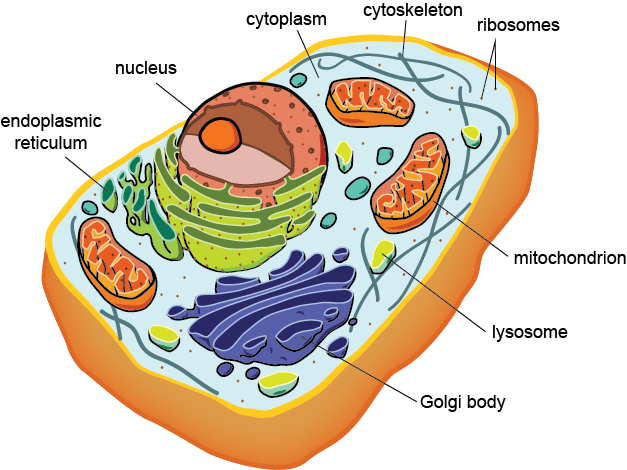
Which of the following statements is not part of the cell theory?
a)
Cells are the basic unit of structure and function in all living things.
b)
All cells are produced from other cells.
c)
Only animal cells are composed of cells.
d)
All living things are composed of cells.
32.
Complex molecule that carries genetic information that defines an organism's traits. It is stored in the nucleus.
a)
DNA
b)
protein
c)
RNA
d)
glucose nucleic acid (GNA)
33.
How many alleles (letters) do each person carry for a trait?
a)
1
b)
2
c)
3
d)
4
34.
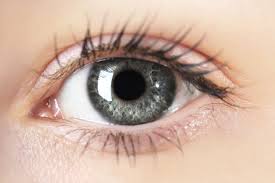
What you see, or the physical appearance.
a)
Genotype
b)
Phenotype
c)
Homozygous
d)
Heterozygous
35.
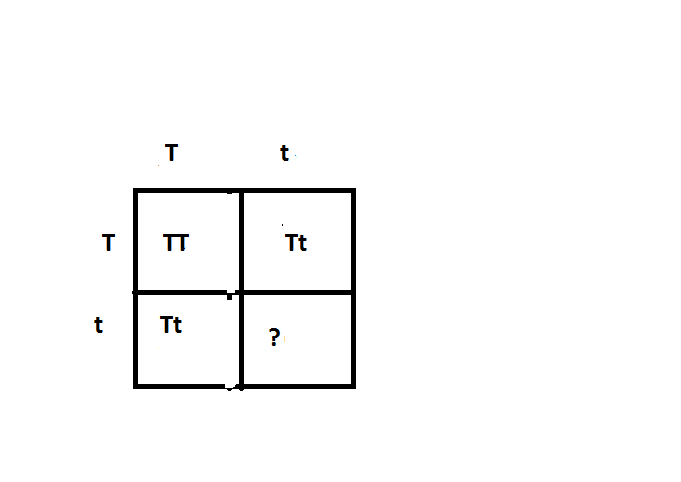
T - tall and t = short
In the punnett square below, what belongs in the missing square
In the punnett square below, what belongs in the missing square
a)
tt
b)
Tt
c)
Bb
d)
TT
36.
What gender has an X and a Y chromosome?
a)
male
b)
female
c)
transgender
d)
all of the above
37.
What is a punnett square?
a)
graph used to predict the possible genotypes of offspring in a given cross
b)
a graph used to predict the possible birth rate of offspring.
c)
a graph used to predict the possible behavioral characteristics an offspring could have
d)
None of the above
38.
Macromolecule which provides insulation, stores energy and cushions internal organs.
a)
Carbohydrates
b)
Proteins
c)
Lipids
d)
Nucleic Acids
39.
DNA and RNA are examples of...
a)
proteins
b)
nucleic acids
c)
carbohydrates
d)
lipids
40.
What is the function of a carbohydrate?
(Why do I need this before a workout?)
(Why do I need this before a workout?)
a)
Quick energy
b)
Movement
c)
Stores genetic information
d)
Speeds up reactions
41.
Which sequence of DNA bases would pair with this partial strand
ATG TGA CAG
ATG TGA CAG
a)
ATG TGA CAG
b)
TAC ACT GTC
c)
GTA AGT GAC
d)
CAT TCA CTG
42.
DNA replication results in two DNA molecules,
a)
each one with two original strands
b)
each one with two new strands
c)
each one with one new strand and one original strand
d)
one with two new strands and the other with two original strands
43.

Fruit fly body cells have 8 chromosomes. After mitosis, you would expect a resulting fruit fly daughter cell to have ...
a)
16 chromosomes.
b)
46 chromosomes.
c)
8 chromosomes.
d)
4 chromosomes.
44.

The stages of mitosis in order
a)
Metaphase, Anaphase, Prophase, Telophase
b)
Prophase, Anaphase, Metaphase, Telophase
c)
Prophase, Metaphase, Anaphase, Telophase
d)
Anaphase, Prophase, Telophase, Metaphase
45.
If a parent cell has 88 chromosomes, following MITOSIS, the daughter cells will have ___ chromosomes.
a)
42
b)
88
c)
Impossible to know
46.
If a parent cell has 88 chromosomes, following MEIOSIS, the daughter cells will have ___ chromosomes.
a)
44
b)
88
c)
Impossible to know
47.
Uncontrollable cell growth is known as _____
a)
obesity
b)
cancer
c)
diabetes
d)
hepatitis
48.
Heredity is the passing of traits from _____________________ to _____________________
a)
predators to prey
b)
water to rain
c)
parents to offspring
d)
fungi to protists
49.

Which best describes the process shown?
a)
mutation in which the DNA content of the gene is ltered
b)
segregation of sister chromatids
c)
condensation and segregation of the alleles
d)
crossing-over which alleles are exchanged
50.
Which biomolecule is made of amino acids?
a)
Nucleic Acid
b)
Carbohydrate
c)
Protein
d)
Lipid
51.
An organism that produces its own food supply from inorganic compounds is called a(an)
a)
heterotroph
b)
consumer
c)
detritivore
d)
autotroph
52.
The basic unit of structure and function in the human body is the....
a)
organ
b)
organ system
c)
cell
d)
tissue
53.
Which of the following units are repeatedly joined together to form a strand of DNA?
a)
amino acids
b)
nucleotides
c)
fatty acids
d)
polysaccharides
54.
The enzyme that unwinds the DNA to prepare for replication
a)
helicase
b)
replicase
c)
polymerase
d)
synthase
55.
A process in which DNA has the unique ability to make an exact copy of itself.
a)
Replication
b)
Translation
c)
Transcription
56.

What will the first four bases of the new DNA strand look like if copying the template strand?
a)
TGGT
b)
ACCA
c)
GTTG
d)
CAAC
57.
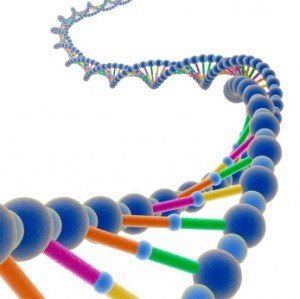
Which of the following best describes a DNA molecule?
a)
double helix
b)
contains ribose
c)
made of amino acids
d)
contains Uracil
58.

In a molecule of double-stranded DNA, the amount of Adenine present is always equal to the amount of
a)
cytosine
b)
guanine
c)
thymine
d)
uracil
59.
Which 2 molecules form the sides (backbone) of the DNA ladder?
a)
deoxyribose sugar and adenine
b)
deoxyribose sugar and a hydrogen bond
c)
deoxyribose sugar and the nucleus
d)
deoxyribose sugar and phosphate
60.
What are the three components of a nucleotide?
a)
sugar, hydrogen, nitrogen base
b)
sugar, oxygen, nitrogen base
c)
sugar, phosphate, nitrogen base
d)
sugar, phosphate, protein
61.

The haploid number of human chromosomes is
a)
11
b)
12
c)
23
d)
46
62.
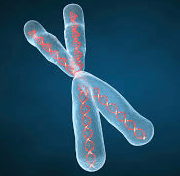
Each identical side of a chromosome is the
a)
centromere
b)
chromatin
c)
centriole
d)
chromatid
63.
Autosomes are
a)
chromosomes found in autotrophs, only
b)
chromosomes that automatically correct all errors in the DNA
c)
chromosomes that determine traits other than sex
d)
chromosomes that determine the sex of the individual
64.
Proteins are made of monomers called ___________
a)
Nucleotides
b)
Monosaccharides
c)
Amino Acids
d)
Glycerol and fatty acids
65.
Monosaccharides are monomers of
a)
Carbohydrates
b)
Lipids
c)
Proteins
d)
Nucleic Acids
66.
Waxes, oils and fats are examples of
a)
Carbohydrates
b)
Lipids
c)
Proteins
d)
Nucleic Acids
67.
What are the four macromolecules?
a)
proteins, nucleic acids, carbohydrates, and lipids
b)
monosaccharides, lipids, polysaccaharides, and proteins
c)
RNA, DNA, proteins, and carbohydrates
d)
proteins, DNA, RNA, and steroids
68.
All polymers are made up of...
a)
monosaccharides
b)
monomers
c)
proteins
d)
None of these
69.
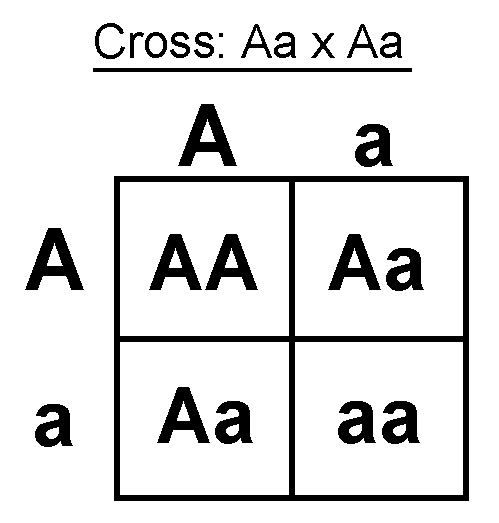
What is the phenotype of the offspring? (A-Brown hair; a-blond hair)
a)
50 % Brown Hair and 50% Blond Hair
b)
25 % Brown Hair and 75% Blond Hair
c)
75 % Brown Hair and 25% Blond Hair
d)
0% Brown Hair and 100% Blond Hair
70.
What is the function of the vacuole?
a)
Sac that stores water, nutrients, and waste products
b)
Sac filled with digestive chemicals
c)
Jelly-like substance within the plasma membrane
d)
stack of membranes that packages chemicals
71.
Where does photosynthesis occur?
a)
mitochondria
b)
stomata
c)
xylem
d)
chloroplast
72.
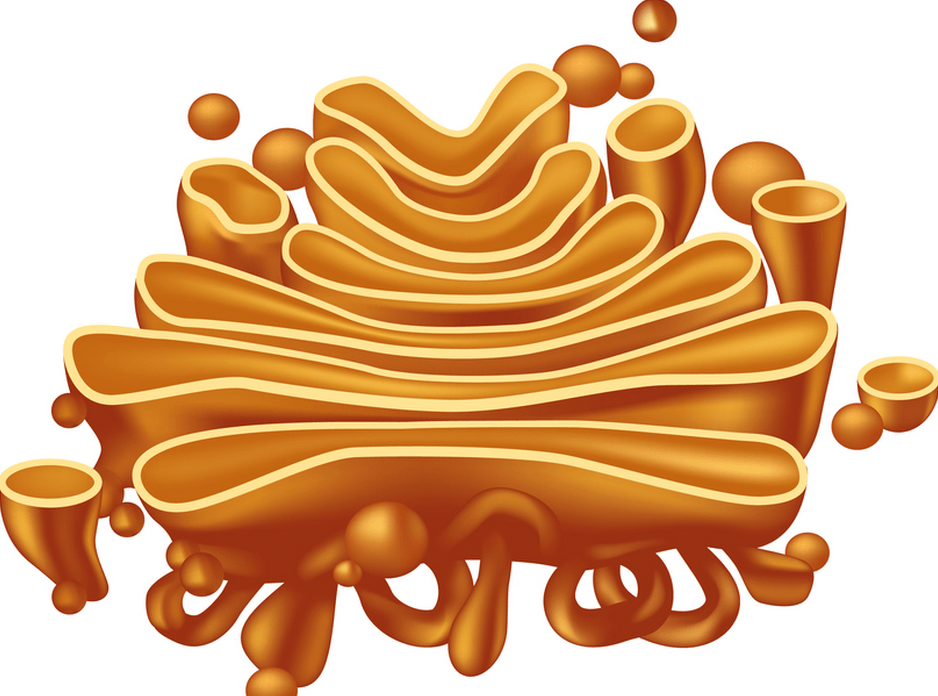
I am a protein packaging and shipping machine! Who am I?
a)
vacuole
b)
ribosome
c)
mitochondrion
d)
golgi apparatus
73.
An organism's appearance is known as its
a)
heredity
b)
phenotype
c)
genotype
d)
pedigree
74.
What are the products of photosynthesis?
a)
water and carbon dioxide
b)
oxygen and glucose
c)
oxygen and carbon dioxide
d)
oxygen and water
75.
What is diffusion?
a)
when molecules move
b)
when molecules move from a high concentration to a low.
c)
no movement
d)
molecules move everywhere
76.
Osmosis is the movement of _____ across a membrane.
a)
food
b)
energy
c)
oxygen
d)
water
77.
Which process is used to make mRNA from the DNA in the nucleus?
a)
transcription
b)
translation
c)
replication
78.
Which is a difference between DNA and RNA
a)
RNA is double stranded
b)
RNA is not made of nucleotides
c)
RNA contains Uracil instead of Thymine
d)
RNA does not contain a sugar
79.
What does mRNA do?
a)
carry info from genes to ribosomes
b)
carry amino acids to ribosomes
c)
help with RNA splicing
d)
make up ribosomes
80.
When the DNA of an organism is altered it is referred to as…
a)
Mutation
b)
Gene Flow
c)
Genetic Drift
d)
Sexual Selection
81.
When respiration occurs with oxygen, it is called _______
a)
anaerobic
b)
aerobic
c)
light-dependent
d)
fermentation
82.
Which of the following is the correct equation for PHOTOSYNTHESIS?
a)
CO2 + light + H2O --> O2 + Sugar
b)
CO2 + sugar + H2O --> O2 + light
c)
O2 + light + H2O --> CO2 + Sugar
d)
CO2 + O2 + H2O --> Light+ Sugar
83.
Plants need ________ for photosynthesis
a)
oxygen
b)
soil
c)
carbon dioxide
d)
sugar
84.
This molecule contains three phosphate groups
a)
ADP
b)
ATP
c)
Mitochondria
d)
Nucleus
85.

What are the monomers for the molecules shown in the diagram?
a)
Amino Acids
b)
Fatty Acids
c)
Nucleotides
d)
Monosaccharides
86.
Which biomolecule includes fats, such as triglycerides, oils, waxes, and steroids (cholesterol); insoluble in water; provides energy storage, insulation, part of cell membrane, and hormones
a)
Nucleic Acid
b)
Lipids
c)
Carbohydrate
d)
Protein
87.

Name the phase:
a)
Anaphase
b)
Telophase
c)
Metaphase
d)
Prophase
88.
What is the first step in protein synthesis?
DNA -> mRNA
DNA -> mRNA
a)
transcription
b)
translation
c)
replication
d)
mutation
89.
During what phase of the cell cycle does DNA replication take place
a)
G1 Phase
b)
S Phase
c)
G2 Phase
d)
Mitosis
90.
What are the 4 nitrogen bases?
a)
adenine, thymine, cytoplasm, and guanine
b)
adenine, thymine cytosine, and guanine
c)
adenine, thymine, cytosine, and gylcerol
d)
adenine, thymine, cytosine, and glucose
91.
Which of the following provide evidence for the hypothesis that prokaryotes evolved before eukaryotes.
a)
prokaryotes are more complex
b)
prokaryotes have no nucleus and fewer genes
c)
eukaryotes are multicellular which makes them simpler
d)
prokaryotes grow into eukaryotes
92.
Which of the polymers below is NOT correctly paired with its monomer building blocks?
a)
proteins: amino acids
b)
lipids: fatty acids
c)
carbohydrates: monosaccharides
d)
nucleic acids: carbonic acids
93.
What is the function of a carbohydrate?
a)
Energy
b)
Movement
c)
Stores genetic information
d)
Speeds up reactions
94.
What is the purpose of the Protein biomolecules?
a)
provide quick energy for a cell
b)
create a waterproofing barrier between the internal and external environment
c)
carry genetic information
d)
perform signaling, motor, transport, and enzymatic processes throughout the cell
95.
What is the purpose of the Carbohydrate biomolecules?
a)
provide quick energy for a cell
b)
create a waterproofing barrier between the internal and external environment
c)
carry genetic information
d)
perform signaling, motor, transport, and enzymatic processes throughout the cell
100 %

