wayground logo

Free Printable Worksheets

Font size

S
M
L
XL
Worksheets

Climate Energy and Systems

Total questions: 150

Worksheet time: 2hrs 28mins

Name
Class
Date
1.
 What is the reference point used to measure elevation?
a)
lake level
b)
sea level
c)
zero
d)
elevation
2.
What are the two main factors that determine the climate of an area?
a)
precipitation and humidity
b)
temperature and air pressure
c)
wind conditions and humidity
d)
temperature and precipitation
3.
What causes winds to form on Earth?
a)
solar energy
b)
ocean currents
c)
elevation differences
d)
uneven heating of the Earth by the sun
4.
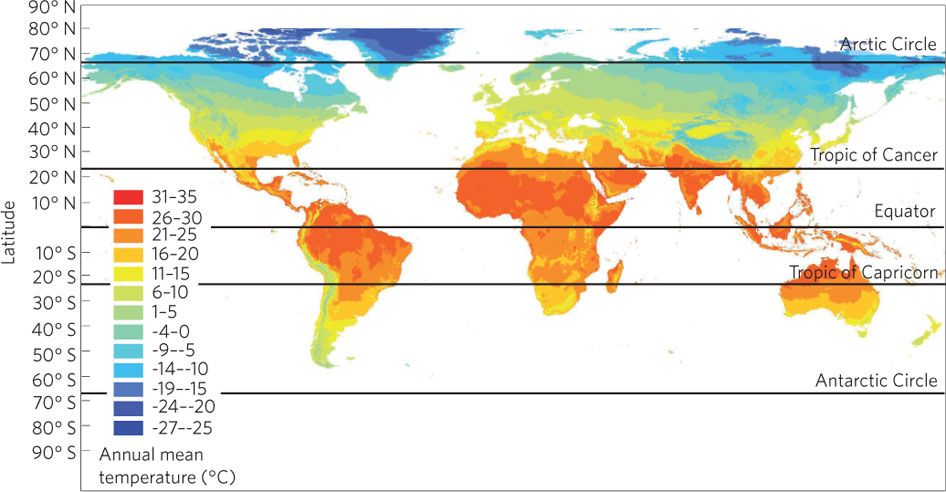
What are the 3 major climate zones in order from equator to the poles?
a)
polar, temperate, tropical
b)
tropical, temperate, polar
c)
temperate, polar, tropical
5.
What is the condition of the Earth's atmosphere at a certain time and place?
a)
climate
b)
temperature
c)
weather
d)
air pressure
6.
Which BEST describes why latitudes closest to the equator have warmer climates?
a)
they are at lower elevations
b)
they receive more solar energy
c)
they are nearer to ocean currents
d)
they get more winds that carry energy in the form of heat
7.
What is the measure of distance in degrees north and south from the equator?
a)
latitude
b)
longitude
c)
elevation
d)
topography
8.
What is the weather conditions in an area over a long period of time?
a)
climate
b)
temperature
c)
elevation
d)
precipitation
9.
What causes some areas of Earth to receive less intense solar energy than others?
a)
the mass of earth
b)
the curve of earth
c)
the density of earth
d)
the elevation of earth
10.
Which of the following does NOT have an affect on a region's climate?
a)
Large bodies of water
b)
Latitude
c)
Mountains
d)
Longitude
11.

How are the processes of evaporation and condensation similar? Both evaporation and condensation –

a)

occur when water is heated by energy from the Sun.

b)

are observed only in areas that have high winds.

c)

occur when water is moved between the ocean and the land.

d)

involve water’s change in state of matter.

12.

A partial concept map for the cycling of water in the Earth system is provided. Which of the following would be a correct labeling of one of the arrows in the concept map?

a)

W = Precipitation

b)

X = Condensation

c)

Y = Transpiration and respiration

d)

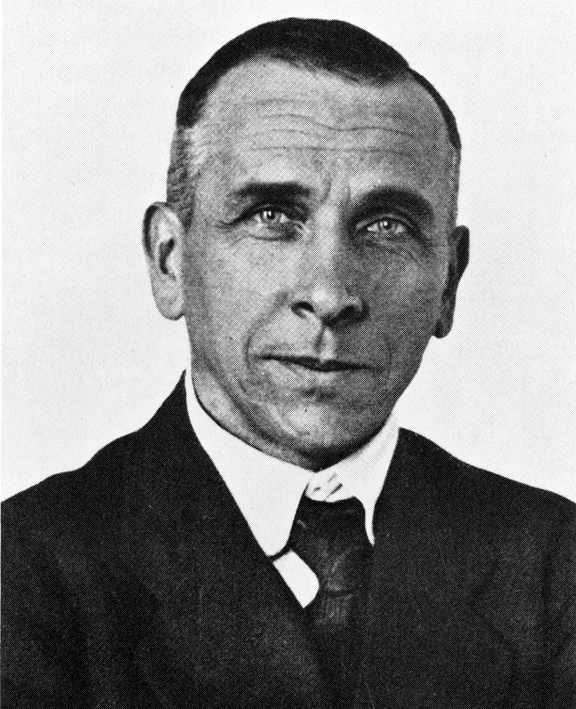
Z = Evaporation

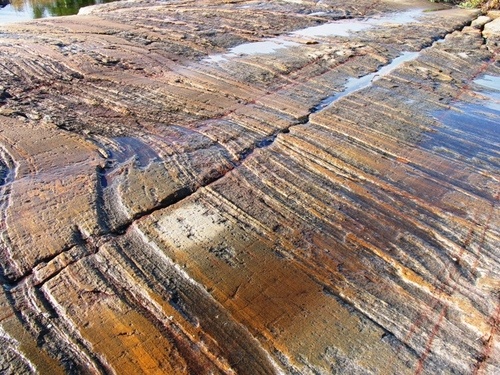
13.

The map of northern California shows some features along with annual rainfall. The information on the map provides evidence that rainfall on land is influenced by –

a)

the temperature of the ocean.

b)

the elevation of the land.

c)

proximity to the Equator.

d)

low pressure systems.

14.

The energy of the Sun drives a general trend in ocean water movement from the Equator outward towards the poles. The actual global pattern of ocean currents, however, is a more complicated series of rotating systems as shown in the map provided. Which of the following describes the features that change the general trend of ocean water movement into the actual pattern we see?

a)

Earth’s rotation and arrangement of continents

b)

Global patterns of fishing and sailing

c)

Gravitational pull of the Sun and Moon

d)

Concentration of dissolved salt and minerals

15.

A map of average sea surface temperatures over the entire Earth is provided. Warm water is less dense than cold water. Based on this information and the map provided, it could be predicted that, as a general trend, ocean water will –

a)

rise at the Equator.

b)

be less dense at the poles.

c)

flow from west to east.

d)

be warmer near the continents.

16.

The Canary Current is an ocean current that moves in a southwesterly direction along the northwest edge of Africa. Based on this information, one can predict that the winds above the ocean in this area blow mostly in what direction?

a)

Towards the northwest

b)

Towards the southwest

c)

Towards the southeast

d)

Towards the northeast

17.

The major patterns of movement of air and water on Earth are the result of –

a)

different densities of seawater and freshwater.

b)

diversities in the height of coastal landforms.

c)

uneven heating and the rotation of Earth.

d)

irregular durations of daytime and nighttime.

18.

These illustrations show the usual wind patterns at the shore during the day and night. What is the most important factor that creates these wind patterns?

a)

Most people visit the shore during the day and are not there at night.

b)

The sea water is capable of having salt dissolved in it, but the land can’t.

c)

The air above the land heats up and cools off more quickly than the air over water.

d)

The shape of the land is constantly being changed by the sea water motion.

19.
What is the name of the thin layer of solid rock that makes up the outermost part of Earth?
a)
core
b)
crust
c)
mantle
d)
biosphere
20.
All living things on earth are part of the....
a)
Biosphere
b)
Geosphere
c)
Hydrosphere
d)
Cryosphere
21.
All frozen water on Earth is...
a)
Hydrosphere
b)
Geosphere
c)
Cryosphere
d)
Atmosphere
22.
The Geosphere is...
a)
All liquid water on Earth
b)
A 100km thick layer of gases
c)
frozen water on earth
d)
Earths entire solid body 
23.
Bio =
a)
Science
b)
Math
c)
Earth
d)
Life
24.
Hydro = 
a)
Sphere
b)
Earth
c)
Life
d)
Water
25.
Geo = 
a)
Earth
b)
Sphere
c)
Life
d)
Water
26.
The geosphere includes all but
a)
rocks
b)
mountains
c)
lava
d)
plants
27.
An earthquake would most affect the
a)
atmosphere
b)
cryosphere
c)
atmosphere
d)
geosphere
28.

All living things on earth are part of the....

a)

Biosphere

b)

Geosphere

c)

Hydrosphere

d)

Cryosphere

29.

What is the hydrosphere's function?

a)

a recycling planet powered by the flow of solar energy to support a network of life.

b)

sustains various life forms and plays an important role in ecosystems and regulating heat on earth.

c)

sustains life forms on the surface of the earth, absorbs and interacts with harmful solar rays.It protects the earth from natural and human-caused space debris.

d)

controls the distribution of minerals, rocks and soils and generates natural hazards that shape the land and impact humans

30.
What is the role of the oceans in the formation of weather systems?
a)
Oceans provide energy for weather systems.
b)
Ocean currents provide wind for storms.
c)
Oceans provide a difference in pressure between air and water.
d)
Oceans provide the temperature differences of weather systems.
31.
Earth's rotation makes global winds curve. This is called the
a)
convection effect
b)
global effect
c)
Coriolis effect
d)
rotational effect
32.
Day and night are created by the earth’s
a)
rotation
b)
revolution
33.
Which latitude belt receives the most heat energy?
a)
low
b)
middle
c)
high
34.
Which of the following continents is in all 3 latitude belts?
a)
Europe
b)
South America
c)
North America
35.
Most of Asia lies in the
a)
middle latitudes.
b)
low latitudes.
36.
The process that traps heat in our atmosphere is
a)
condensation.
b)
the Greenhouse Effect.
c)
Global Energy Systems.
37.
The Sun is the main energy source for the water cycle to take place.
a)
True
b)
False
38.
Ocean surface currents play an enormous role in Earth’s climate.
a)
True
b)
False
39.
The best-known ocean current is the _____________ Stream
a)
Gulf
b)
Equatorial
c)
Polar
d)
Major
40.
The Gulf Stream originates from the
a)
Gulf of Alaska
b)
Gulf of Finland
c)
Gulf of Mexico
d)
Gulf of Maine
41.

The sun's rays are least direct near the equator.

a)

True

b)

False - near the poles

c)

False - at high altitudes

d)

False - far from the ocean

42.

Which of the following has caused repeating 100,000-year cycles of ice ages in the past?

a)

an increase in sun spots

b)

several major volcanic eruptions

c)

changes in Earth's orbit and the tilt of its axis

d)

continental drift

43.

Clues to ancient climates were like come from...

a)

ice cores

b)

fossil tree rings

c)

plant pollens

d)

all of the above

44.

Streams of water called ocean ____________ move warm or cold water, warming the nearby land.

a)

sun spots

b)

currents

c)

carbon dioxide

d)

air masses

45.

Climate changes may be linked to changes in the number of _______________ on the surface of the sun.

a)

sun spots

b)

air masses

c)

seasonal winds

d)

currents

46.

Global warming is known as the gradual increase in _________________ of the atmosphere.

a)

precipitation

b)

sun spots

c)

temperature

d)

ocean currents

47.

The most abundant greenhouse gas in the atmosphere is ___________________.

a)

oxygen

b)

nitrogen

c)

carbon dioxide

d)

argon

48.

Which zones are polar zones?

a)

Zones A and B

b)

Zones A and E

c)

Zones E and D

d)

Zones A, E, and C

49.

Which zones are temperate zones?

a)

Zones B and C

b)

Zones B, C, and D

c)

Zones, D and C

d)

Zones D and B

50.

Which zone is the tropical zone?

a)

Zone B

b)

Zone C

c)

Zone D

d)

Zone E

51.

Possible human solutions for limiting global warming and climate change are...

a)

being more energy-efficient

b)

using renewable sources of energy

c)

removing carbon from fossil fuel emissions

d)

all of the above

52.
Why does this climograph represent a city that would be the most ideal to host a Winter Olympics in January?
a)
summer temperatures and rain in January
b)
winter temperatures and snow in June
c)
winter temperatures and snow in June
d)
winter temperatures and snow in January
53.
Which of the following does NOT occur on or around December 21?
a)
South Pole is in 24 hours of daylight
b)
Winter Solstice in the Northern Hemisphere
c)
Summer in the Southern Hemisphere
d)
Direct rays of sun are on the Equator
54.
Which of the following does NOT occur on or around June 21?
a)
Winter in the Southern Hemisphere
b)
South Pole is in 24 hours of daylight
c)
Direct Rays of the sun are on the Tropic of Cancer
d)
Summer Solstice in the Northern Hemisphere
55.
Which of the following influences on climate determines the amount of heat energy an area receives?
a)
prevailing winds
b)
ocean currents
c)
latitude belts
d)
Relative Location to a Large Body of Water (continentality)
56.

Which answer choice correctly lists environments from most dry to least dry?

a)

desert, tundra, grassland, rainforest

b)

grassland, rainforest, desert, tundra

c)

tundra, rainforest, grassland, desert

d)

rainforest, grassland, tundra, desert
57.
What does this picture show?
a)
weather
b)
climate
58.
In the summer we usually experience high temperatures and very little rain.
a)
weather
b)
climate
59.
The typical weather in the rain forest is warm and rainy.
a)
weather
b)
climate
60.
What does this picture show?
a)
weather
b)
climate
61.
It is raining.
a)
weather
b)
climate
62.
Over the last decade we have had an increase in the amount of rain in our area.
a)
weather
b)
climate
63.
The high temperature today will be near 75 C.
a)
weather
b)
climate
64.
The average winter temperature is 45 C.
a)
weather
b)
climate
65.
I keep watching the news to keep track of the hurricane heading toward the coast of Florida.
a)
weather
b)
climate
66.

Which of these best describes climate rather than weather?

a)

Wind speed is changing as a storm moves through an area.

b)

The temperature is decreasing in a slow-moving cold front.

c)

Annual high temperatuers in the summer have increased over many decades.

d)

The rainfall during one year was greater than the rainfall during the next year.

67.

Which statement below describes climate?

a)

It’s hot outside.

b)

It's normally warm outside.

c)

It’s raining outside.

d)

It’s cold and snowing outside.

68.

Temperatures in the Artic are usually below freezing year round.

a)

weather

b)

climate

69.

Sandra visited her grandma in Florida over Thanksgiving. She noticed that they were selling bathing suits at the stores. Her grandma said they sell bathing suits all year because Florida is warm.

a)

weather

b)

climate

70.
The _________________ climate has cool summers, bitterly cold winters and permafrost.
a)
desert
b)
tropical
c)
marine continental
d)
tundra
71.
As many as four ice ages have occurred on Earth during the past ______________ years.
a)
10,000
b)
200,00
c)
2 million
d)
4 million
72.
Summers are caused by _________________________________.
a)
a combo of longer days and more direct rays from the sun
b)
less direct rays from the sun
c)
longer days and shorter nights
d)
more direct rays and shorter days
73.
Earth's ozone layer is _____________________________.
a)
has been thickening over the past several years
b)
filters harmful ultraviolet radiation from the sun
c)
exists only over Antarctica
d)
traps carbon dioxide in the stratosphere
74.
Because Earth's axis is _________________, the hemispheres receive different amounts of solar energy at different times.
a)
straight
b)
titled
c)
bent
d)
not there
75.
Increased carbon dioxide may cause global warming by trapping more ____________ in the atmosphere.
a)
water
b)
gases
c)
heat
d)
water vapor
76.
Climate changes may be linked to changes in ____________ on the surface of the sun.
a)
sunspots
b)
amount of water
c)
the color
d)
the temperature
77.
Some scientists theorize that continental movements may cause climate changes by
a)
changing patterns of winds and ocean currents
b)
shifting the equatorial and temperate zones
c)
altering the makeup of the troposphere
d)
redistributing Earth's vegetation
78.

What is the direct cause of rising sea levels?

a)

Melting Sea Ice

b)

Melting Land Ice

c)

Climate Change

79.

Floating sea ice melts...

a)

and causes sea levels to rise because it adds water to the ocean.

b)

but does not cause sea levels to rise because the ice displaces the same amount of ocean water as the melted ice would displace.

80.
Which of the following is the best conclusion that can be made from this graph?
a)
atmospheric carbon dioxide levels have been decreasing since 1960
b)
Hawaii has a lot of carbon dioxide
c)
humans have been working hard to decrease carbon dioxide levels
d)
atmospheric carbon dioxide levels have increased steadily since 1960
81.

Which of the following have been changed or altered due to climate change ?

a)

droughts

b)

flooding

c)

melting of polar ice caps

d)

all of the above

82.

The main human activity that releases greenhouse gases is

a)

using public transportation and there by reduce the affects of greenhouse gases.

b)

burning fossil fuels

c)

texting on cellphones

d)

eating meat

83.

Which of the following is contributing to an INCREASE in carbon dioxide in the atmosphere?

a)

deforestation

b)

photosynthesis

c)

oceans

d)

all of the above

e)

the loss of animal species

84.
T/F: Water vapor is a greenhouse gas
a)
True
b)
False
85.
T/F: Some greenhouse gases are naturally present in the Earth's atmosphere
a)
True
b)
False
86.
Which of the following is an example of a greenhouse gas?
a)
Carbon Dioxide
b)
Nitrogen
c)
Oxygen
d)
Neon
87.
Which natural process removes carbon dioxide from the atmosphere?
a)
forest fires
b)
volcanic eruptions
c)
cellular respiration
d)
photosynthesis
88.
Which is a green-house gas?
a)
Methane
b)
Oxygen
c)
Hydrogen
d)
Ammonium
89.
How does the concentration of carbon dioxide in the atmosphere affect climate?
a)
As carbon dioxide concentrations increase, temperatures increase
b)
As carbon dioxide concentration increase, temperatures decrease.
c)
Carbon dioxide concentrations have no affect on climate
d)
As carbon dioxide concentrations increase, temperatures become more random.
90.
What is one way that carbon enters the atmosphere?
a)
Sunlight
b)
Vehicle emissions/Exhaust
c)
Ocean uptake
d)
Rain
91.
Any amount of CO2 (Carbon Dioxide) in the atmosphere is bad for our planet.
a)
True
b)
False
92.
The conditions in an area over a long period of time?
a)
Climate
b)
Weather
93.
Changes from minute-to-minute, hour-to-hour, day-to-day
a)
Climate
b)
Weather
94.
What is climate?
a)
 What's going on with the atmosphere at any particular time
b)
The type of weather that occurs during a particular season
c)
An area's pattern of weather over a long period of time
d)
How much sunshine an area gets 
95.
Which of the following is NOT evidence of global warming?
a)
Sea level rising
b)
Loss of Arctic Sea Ice
c)
Less Water Vapor in the Air
d)
More extreme weather events
96.
Climate change causes extreme weather conditions such as:
a)
Flooding
b)
Heat Waves
c)
Hurricanes
d)
All of the above
97.
If you took away the atmosphere’s natural greenhouse effect, and everything else stayed the same, Earth’s temperature would be   
a)
10-20°F warmer
b)
30-40°F warmer
c)
10-20°F cooler
d)
50-60°F cooler
98.
How do scientists collect evidence about climate?  
a)
using remote sensing from space with satellites
b)
by ground-based measurements of surface temperatures, carbon dioxide concentration and sea level
c)
by collecting “proxy data” from tree rings, ice cores, and historical records
d)
all of the above
99.
Visible light reaches Earth’s surface while infrared light is trapped as heat. Which characteristic of Earth’s atmosphere causes this to happen?
a)
the hole in the ozone
b)
the greenhouse effect
c)
atmospheric pressure
d)
the inversion layer
100.
The average temperature of the surface of Earth has increased approximately 1°C in the past century. Which reason best explains this increase in temperature?
a)
lower levels of ozone in the atmosphere
b)
lower levels of nitrogen in the atmosphere
c)
higher levels of carbon dioxide in the atmosphere
d)
higher levels of oxygen in the atmosphere
101.
Which of the following is the best conclusion that can be made from this graph?
a)
atmospheric carbon dioxide levels have been decreasing since 1960
b)
Hawaii has a lot of carbon dioxide
c)
humans have been working hard to decrease carbon dioxide levels
d)
atmospheric carbon dioxide levels have increased steadily since 1960
102.
Which of the following gases DOES NOT trap heat?
a)
carbon dioxide
b)
nitrogen
c)
water vapor
d)
methane
103.

What causes the seasons?

a)

Earth's rotation

b)

The tilt of the Earth's axis

c)

The moon orbiting Earth

d)

The sun's rotation

104.
Which is true based on the graph?
a)
San Diego and New York have the same temperatures all week.
b)
San Diego and New York have the same rainfall all week.
c)
San Diego is colder than New York most of the week.
d)
New York is colder than San Diego most of the week.
105.

What are the three types of rock?

a)

Igneous, Sediment, Metamorphic

b)

Igneous, Sedimentary, Metamorphic

c)

Magma, Sediment, Lava

d)

Igneous, Sedimentary, Magma

106.

How are metamorphic rocks created?

a)

Melting

b)

Heat and Pressure

c)

Compaction (Pressure)

d)

Weathering and Erosion

107.

How are igneous rocks created?

a)

Heat and Pressure

b)

Weathering and Erosion

c)

Melting and Cooling

d)

Compaction (Pressure)

108.

Which vocabulary word means "to wear away or break down"

a)

Melting

b)

Weathering

c)

Compaction

d)

Frogs

109.

What causes a rock to become magma

a)

Weathering and Erosion

b)

Erosion

c)

Melting

d)

Heat

110.

What causes a rock to become magma

a)

Weathering and Erosion

b)

Erosion

c)

Melting

d)

Heat

111.

What are the three types of plate tectonic boundaries?

a)

Convergent, Division, Sliding

b)

Convergent, Divergent, Transform

c)

Convergent, Divergent, Training

112.

Earthquakes usually occur at ______________ boundaries.

a)

Transform

b)

Divergent

c)

Convergent

d)

None of the above

113.

What type of rock are fossils found in?

(HINT: Think about how each type of rock is made)

a)

Metamorphic

b)

Sedimentary

c)

Igneous

d)

Fossils are not real

114.

What does this fossil tell us about the land it was found in?

a)

This fossil tells us that when this animal was alive the land was probably a desert.

b)

This fossils tells us that when this animal was alive the land was probably an ocean or body of water.

c)

This fossil tells us nothing about the land the animal lived in.

d)

This fossils tells us that when this animal was alive there were probably lots of tall trees to eat from.

115.

Which is a convergent boundary?

a)

Two plates coming together

b)

Two plates seperating

c)

Two plates sliding against one another

116.

Which is a divergent boundary?

a)

Plates coming together

b)

Plates seperating from each other

c)

Plates sliding against each other

117.

Which is a divergent boundary?

a)

Plates coming together

b)

Plates seperating from each other

c)

Plates sliding against each other

118.

Which is a transform boundary?

a)

Two plates seperating from each other

b)

Two plates coming together

c)

Two plates sliding against each other

d)

There is no such thing as a transform boundary

119.

Convergent boundaries can result in ________________


(HINT: There are two answers)

a)

Earthquakes

b)

Mountains

c)

Hurricans

d)

Subduction (one plate going under another plate)
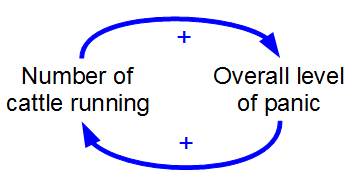
120.
The following is an example of what type of feedback loop?
a)
Negative Feedback Loop
b)
Neutral Feedback Loop
c)
Positive Feedback Loop
d)
Cowboy Feedback Loop
121.
The following is an example of what type of feedback loop?
a)
Negative Feedback Loop
b)
Neutral Feedback Loop
c)
Positive Feedback Loop
d)
Global Warming Feedback Loop
122.
What do we call a feedback that tends to damp down, reduce or counteract any deviation from an equilibrium, and promotes stability
a)
neutral feedback
b)
negative feedback
c)
positive feedback
d)
Can be both positive and negative feedback
123.
A rise in temperatures can cause more evaporation and clouds. These clouds will, in turn, reflect more incoming radiation. Identify this type of feedback 
a)
positive feedback
b)
negative feedback
124.
Rising global temperatures cause snow and ice to melt faster, thus create darker surfaces that will absorb more heat. Identify this type of feedback.
a)
positive feedback
b)
negative feedback
125.
What type of feedback is shown by the image?
a)
open 
b)
closed
c)
positive 
d)
negative
126.

The following is an example of what type of feedback loop?

a)

Negative Feedback Loop

b)

Neutral Feedback Loop

c)

Positive Feedback Loop

d)

Global Warming Feedback Loop

127.
Negative Feedback Loops:
a)
amplify processes
b)
prevent small changes from getting larger
c)
are initiated during childbirth
d)
are found only in plants
128.

Which is an example of a negative feedback loop?

a)

Decreasing temperature ➜increase in ice cover ➜increase in reflection of sunlight ➜decrease in temperature

b)

Decreasing temperature ➜decrease in plant cover ➜decrease in absorption of carbon dioxide ➜increase in temperature

129.

What type of feedback is this?

a)

positive

b)

negative

130.

The increase of the greenhouse gas carbon dioxide(CO2) increases Earth's surface temperature, warming the atmosphere. A warmer atmosphere has been creating conditions for increased pine bark beetle infestations which are killing many trees in Western Forests. The increase of dead trees in a forest reduces the forest's gross primary productivity which means less CO2 is being absorbed from the air for photosynthesis. This increases the amount of CO2in the atmosphere which then increases Earth's surface temperature, warming the atmosphere further. What type of feedback is this?

a)

positive

b)

negative

131.
Who is the person credited with developing the theory of continental drift?
a)
Harry Hess
b)
Galileo
c)
Alfred Wegener
d)
Newton
132.
This is a picture of glacier scars found in Africa.  What are these evidence for?
a)
Africa has always been near the equator
b)
Africa was once in an area of the Earth that had a very cold climate
c)
The continents have not moved
d)
sea floor spreading
133.
What evidence did Wegener use in his theory?
a)
Continents and fossils fitting together/matching-up like puzzle pieces 
b)
glacier scars and evidence from temperature
c)
mountain ranges and coal deposits line up across continents
d)
all of the above
134.
Why did no one believe Wegener's thoery?
a)
He could not explain HOW the continents moved
b)
He didn't have evidence
c)
His data was wrong
d)
He didn't use the right technology to gather data
135.
What two specific continents fit together most noticeably?
a)
Africa and North America
b)
South America and Europe
c)
South America and Africa
d)
Antartica and Africa
136.
What does the theory of continental drift state?
a)
The continents were once joined in a super-continent and have moved over time
b)
Continents are stationary and do not move
c)
The Earth is broken into lithospheric plates that move due to convection currents
d)
none of the above
137.
Which of the following is evidence that supports continental drift?
a)
the presence of penguins at both the equator and Antarctica
b)
fossils of the same plant have been found on several continents
c)
the presence of glacial features in Antarctica
d)
the presence of volcanic rock in Antarctica
138.
A subduction zone is formed....
a)
when one tectonic plate sinks below another
b)
at all plate boundaries
c)
when plates diverge
d)
at transform boundaries
139.

A deep valley along the ocean floor beneath which oceanic crust slowly sinks toward the mantle.

a)

Sea-Floor Spreading

b)

Deep-Ocean Trench

c)

Mid-Ocean Ridge

d)

Subduction

140.

The process by which molten material adds new oceanic crust to the ocean floor.

a)

Sea-Floor Spreading

b)

Deep-Ocean Trench

c)

Mid-Ocean Ridge

d)

Subduction

141.

The process by which molten material adds new oceanic crust to the ocean floor.

a)

Sea-Floor Spreading

b)

Deep-Ocean Trench

c)

Mid-Ocean Ridge

d)

Subduction

142.

An undersea mountain chain where new ocean floor is produced is called

a)

Sea-Floor Spreading

b)

Deep-Ocean Trench

c)

A Mid-Ocean Ridge

d)

A Subduction zone

143.

The process by which molten material adds new oceanic crust to the ocean floor.

a)

Sea-Floor Spreading

b)

Deep-Ocean Trench

c)

Mid-Ocean Ridge

d)

Subduction

144.

The outer layer of the Earth where tectonic plates occur, made up of the crust and upper mantle, is called the

a)

Lithosphere

b)

Crust

c)

Mantle

d)

Plates

145.

The outer layer of the Earth is the

a)

Crust

b)

Mantle

c)

Inner core

d)

Outer core

146.

The portion of the Earth between the crust and the core is the

a)

Mantle

b)

Plates

c)

Lithosphere

d)

Crust

147.

Which type of Earth's crust is older?

a)

oceanic

b)

continental

148.

The supercontinent that once existed was called

a)

Pangaea

b)

Laurasia

c)

Gondwana

d)

South America

149.

Tectonic plates move at a rate of about

a)

5 cm per year

b)

1 foot per month

c)

5 meters per second

d)

5 km per year

150.

Which type of crust is constantly being recycled into the mantle and reformed due to seafloor spreading?

a)

oceanic

b)

continental