wayground logo

Free Printable Worksheets

NEW

Font size

S
M
L
XL
Worksheets

States of matter

Total questions: 75

Worksheet time: 48mins
Name
Class
Date
1.

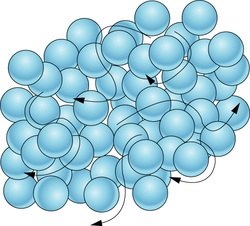
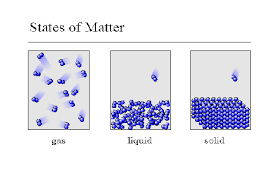
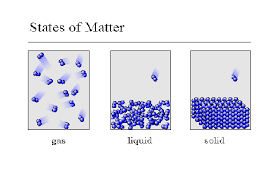
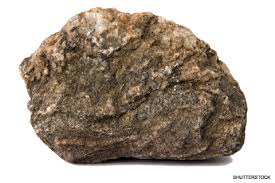
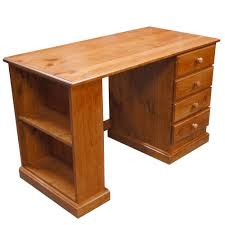
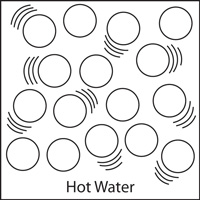
Which state of matter does this picture show?

a)

Solid

b)

Liquid

c)

Gas

2.

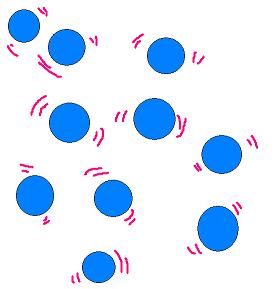
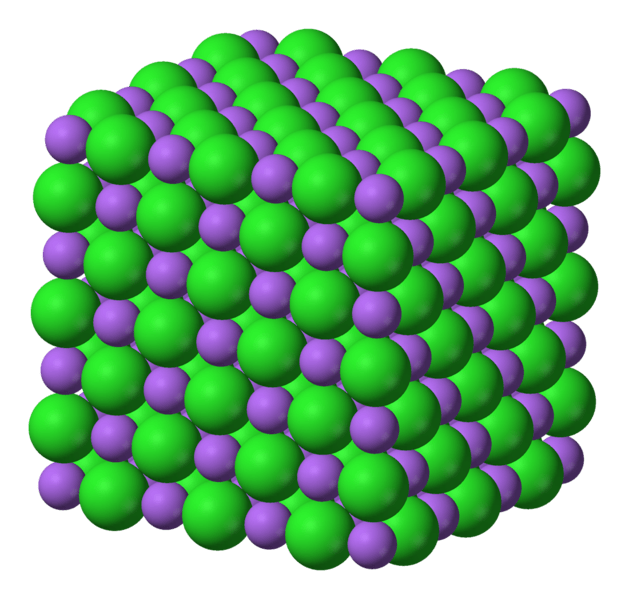
What state of matter does this picture show?

a)

Solid

b)

Liquid

c)

Gas

3.

Which state of matter does this picture show?

a)

Solid

b)

Liquid

c)

Gas

4.

What is the best definition of temperature?

a)

How hot or cold something is

b)

A measure of how fast the molecules are moving in a substance

c)

How hot or cold something feels to a person

5.

As temperature decreases, what happens to particles?

a)

They speed up

b)

They slow down

6.

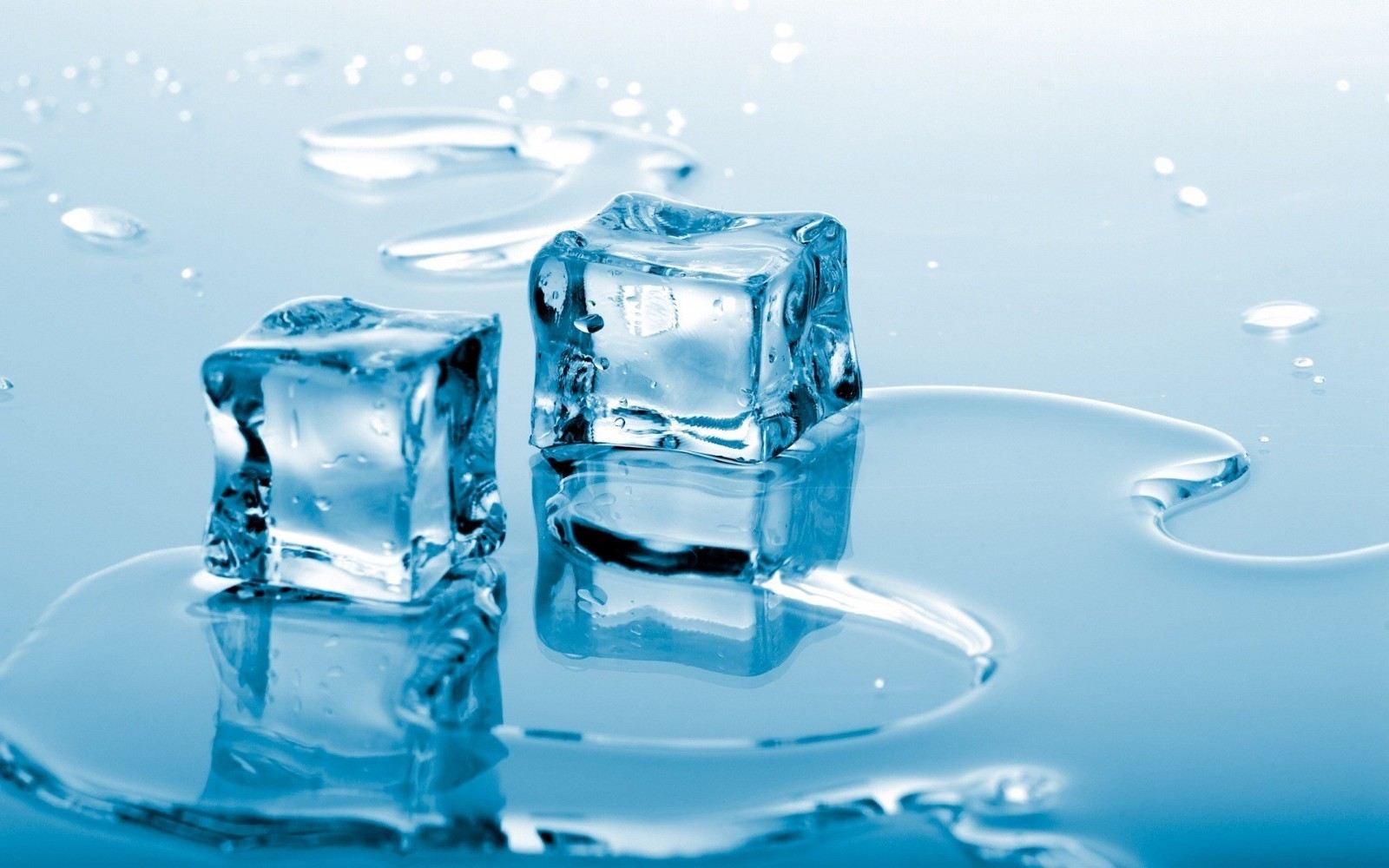
What is happening in this picture of ice melting?

a)

Molecules are speeding up

b)

Molecules are slowing down

7.

What is happening in this picture of water boiling?

a)

Molecules are speeding up

b)

Molecules are slowing down

8.

What is happening in this picture of this lake freezing?

a)

Molecules are speeding up

b)

Molecules are slowing down

9.

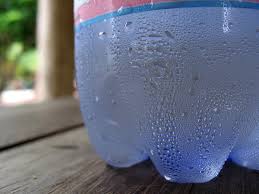
What is happening to the outside of this water bottle?

a)

Molecules are speeding up

b)

Molecules are slowing down

10.
At higher temperatures
a)
particles in an object have less energy
b)
particles in an object move faster
c)
a gas contracts
11.
A gas
a)
has a definite shape but no definite volume
b)
has a definite volume but no definite shape
c)
has fast-moving particles
12.
Freezing
a)
Solid to gas
b)
Liquid to solid
c)
Gas to solid
d)
Liquid to gas
13.
Boiling
a)
liquid to gas
b)
gas to solid
c)
gas to liquid
d)
solid to liquid
14.
Which state of matter has tightly packed molecules?
a)
solid
b)
liquid
c)
gas
15.
Which state of matter has a definite shape?
a)
solid
b)
liquid
c)
gas
16.
What is happening when my ice cream changes from a solid to a liquid?
a)
freezing
b)
melting
c)
burning
d)
evaporation
17.
Define a liquid.
a)
Indefinite shape, indefinite volume
b)
Definite shape, definite volume
c)
Found in stars
d)
Definite volume, indefinite shape
18.
The state of matter that has no definite size or shape is
a)
Solid
b)
Liquid
c)
Gas
19.
Particles (molecules) in a ______________________ have more energy than the other states of matter.
a)
gas
b)
solid
c)
liquid
20.
Particles of a liquid
a)
are tightly packed together and stay in a fixed position.
b)
have no viscosity.
c)
decrease in volume with increasing temperature.
d)
are free to move around one another but still touch.
21.
Particles (molecules) in a ______________________ have more energy than the other states of matter.
a)
gas
b)
solid
c)
liquid
22.
What is condensation?
a)
gas to solid
b)
gas to liquid
c)
liquid to solid 
d)
solid to liquid 
23.
The speed of the molecules determines the _____.
a)
volume
b)
density
c)
pressure
d)
temperature
24.
Which has a greater distance between particles?
a)
Solid
b)
Liquid
25.
The slower the particles in a substance move,
a)
the colder it is.
b)
the warmer it is.
c)
the more energy it has.
d)
the less energy it has.
26.
Thermal energy is...
a)
heat energy.
b)
the energy of motion
c)
energy of nuclear processes.
d)
an indication of physical change.
27.
A chemical change
a)
doesn't really change much.
b)
creates a new substance
c)
is a change in the state of matter
28.
What happens when my glass of water is sitting in the sun and disappears into a gas?
a)
evaporation
b)
burning
c)
melting
d)
freezing
29.
Which form of matter does not take the shape of its container?
a)
liquid
b)
gas
c)
solid
d)
air
30.
How is a gas defined?
a)
Indefinite shape, indefinite volume
b)
Definite shape, definite volume
c)
Found in stars
d)
Definite volume, indefinite shape
31.
What term describes a solid changing to a gas?
a)
Deposition
b)
Sublimation
c)
Evaporation
d)
Freezing
32.
What term describes a liquid changing to a solid?
a)
Deposition
b)
Sublimation
c)
Evaporation
d)
Freezing
33.
Particles of a liquid
a)
are tightly packed together and stay in a fixed position.
b)
have no viscosity.
c)
decrease in volume with increasing temperature.
d)
are free to move around one another but still touch.
34.
Particles (molecules) in a ______________________ have more energy than the other states of matter.
a)
gas
b)
solid
c)
liquid
35.
______________________ takes place when a liquid changes to a solid.
a)
freezing
b)
melting
c)
boiling
d)
sublimation
36.
Molecules are closest together in a 
a)
Solid
b)
Liquid
c)
Gas
37.
The state of matter that has no definite size or shape is
a)
Solid
b)
Liquid
c)
Gas
38.
Which state of matter has the lowest compressibility?
a)
Solid
b)
Liquid
c)
Gas
d)
Plasma
39.
Water can be a solid, liquid, and a gas.
a)
True
b)
False
liquid
40.
Define a liquid.
a)
Indefinite shape, indefinite volume
b)
Definite shape, definite volume
c)
Found in stars
d)
Definite volume, indefinite shape
41.
Which is needed for both boiling and melting to occur?
a)
solids
b)
gases
c)
heat
d)
pressure
42.
Which of these is an example of water changing from water vapor to liquid?
a)
moisture forming on a mirror when you breathe on it
b)
sweat forming on your body when you exercise
c)
ice cubes melting when you put them in a warm liquid
d)
rivers drying up during a very hot summer
43.
The teacher heats a pot of water. Once the water reaches 100°C, which point has the water reached?
a)
Boiling
b)
Melting
c)
Freezing
d)
Evaporating
44.
Jonathan places a pot of water on a stove. As the water boils, how does the state of the water change?
a)
from gas to liquid
b)
from liquid to gas
c)
from liquid to solid
d)
from solid to liquid
45.
Molecules have energy and _________ stop moving
a)
rarely
b)
always
c)
never
d)
sometimes
46.
Matter changes state when...
a)
energy is added or removed
b)
energy is added
c)
energy is removed
d)
there is no energy
47.
As molecules bump into each other, they push each other ________ until they are equally spread out. 
a)
together
b)
apart
48.
+Energy(heat)
a)
solid to gas
b)
liquid to solid
c)
gas to liquid
d)
gas to solid
49.
-Energy(heat)
a)
gas to solid
b)
solid to liquid
c)
solid to gas
d)
liquid to gas
50.
Molecules are made up of ____________. 
a)
atoms
b)
mass
c)
matter
d)
molecules
51.
Molecules are made up of ____________. 
a)
atoms
b)
mass
c)
matter
d)
molecules
52.
As temperature decreases, the molecules collide more, move faster, and spread out. 
a)
true
b)
false
53.
Matter will change state when enough energy (heat) is added to , or removed from, the molecules. 
a)
true
b)
false
54.
 The process where water vapor changes from a gas to a liquid is called:
a)
sublimation
b)
precipitation
c)
evaporation
d)
condensation
55.
Which of the following statements correctly identifies the relationship between evaporation rate and temperature?
a)
The evaporation rate is not affected by temperature.
b)
The evaporation rate increases as temperature rises.
c)
The evaporation rate decreases as temperature rises.
d)
Evaporation will stop if the temperature rises.
56.
 If a gas is cooled to just below its boiling point, it will:
a)
freeze
b)
melt
c)
evaporate
d)
condense
57.
If you want to change liquid water into a gas you must:
a)
remove heat from the water
b)
apply pressure to the water
c)
add heat to the water
d)
add chemicals to the water
58.
Suppose you pour a glass of ice water and set it on the kitchen table. After a few minutes, the outside of the glass will be covered with drops of water. Why did this happen?
a)
Oxygen in the air cooled and condensed onto the cold glass.
b)
Water vapor in the air cooled and condensed onto the cold glass.
c)
Water vapor in the air cooled and evaporated onto the cold glass.
d)
Water seeped through pores in the glass.
59.
Alex noticed that a metal door that sticks on hot days does not stick when it cools off at night. This is because the metal contracts as it cools. The reason for this is that, as the metal cools, the atoms:
a)
become smaller and take up less space
b)
 slow down and move closer together
c)
merge together to form fewer atoms
d)
speed up and move farther apart
60.
What happens to a substance when it changes from a liquid to a solid?
a)
it gains mass
b)
it gains energy
c)
it loses mass
d)
it loses energy
61.
 Rachel placed an alcohol thermometer in a beaker of hot water and noticed that the alcohol level in the thermometer rose. This happened because the molecules of alcohol:
a)
tried to move away from the heat
b)
 became larger
c)
changed state
d)
moved apart
62.
If a substance is heated, what happens to its molecules?
a)
 they slow down and move closer together
b)
the speed up and move closer together
c)
they slow down and move farther apart
d)
they speed up and move farther apart
63.
Pressure decreases when the surface area over which a force is applied increases
a)
True
b)
False
64.
Atmospheric pressure increases as you move towards lower elevations and decreases as you move into higher elevations.
a)
True
b)
False
65.
What is the instrument that measures air pressure called?
a)
Graduated cylinder
b)
Barometer
c)
Force scale
d)
Anemometer
66.
As you climb up a mountain what happens to the air pressure?
a)
decreases
b)
increases
c)
stays the same
67.
What happens to the oxygen molecules as altitude increases?
a)
fewer molecules
b)
more molecules
c)
same amount of molecules
d)
nothing happens to the molecules
68.
Heat transfer between two substances that are in contact with each other is called
a)
conduction
b)
convention
c)
convection
d)
radiation
69.
Convection takes place because
a)
warm air is more dense than humid air
b)
warm and cold air have the same density
c)
cold air is less dense than warm air
d)
cold air is more dense than warm air
70.
The __, or elevation of a mountaintop is its distance above sea level.
a)
greenhouse effect
b)
altitude
c)
convection
d)
weather
71.
Pressure is the effect of
a)
the weight of all the air above pressing down
b)
water vapor in the atmosphere
c)
greenhouse gases
d)
solar radiation
72.
A student opens the top window and the bottom window in a hot room. What statement best describes the heat transfer occurring in the room?
a)
conduction
b)
radiation
c)
convection
d)
evaporation
73.
How does air travel?
a)
they don't travel
b)
hot to cold
c)
cold to hot
d)
All of the above
74.
How do molecules at warm temperatures differ from molecules at cool temperatures? 
a)
a.  At warm temperatures, molecules move around more
b)
b.  At warm temperatures, molecules grow in siz
c)
c.  At warm temperatures, molecules exchange electrons more easil
d)
d.  At warm temperatures, molecules combine with each other more easil
75.
What is the difference between heat and temperature?    
a)
a.  Temperature measures the motion of molecules, and heat is the energy of that motion
b)
b.  Temperature is measured by a thermometer, and heat is measured by a barometer
c)
c.  Heat is measured in calories, and temperature is measured in joules
d)
d.  Heat is caused by the sun, and temperature is caused by conditions in the atmosphere