wayground logo

Free Printable Worksheets

Font size

S
M
L
XL
Worksheets

Bonding, Nomenclature, VSEPR Theory

Total questions: 66

Worksheet time: 1hrs 21mins

Name
Class
Date
1.
Magnesium bromide is an ionic compound with the chemical formula MgBr₂.  What does the "2" tell you?
a)
There are 2 bromide ions for every magnesium ion
b)
Bromide has a 2- charge
c)
Bromide has a 2+ charge
d)
There are 2 magnesium ions to every bromide ion
2.
What is the formula of Sodium oxide?
a)
Na2O
b)
NaO2
c)
Na2O2
d)
Na2O
3.

What is the formula for calcium carbonate?

a)

Ca3CO2

b)

CaCO2

c)

CaCO3

d)

Ca2(CO3)2

4.
The name of P₄S₁₀ is
a)
phosphorous sulfide
b)
phosphorus sulfide
c)
tetraphosphorus decasulfide
d)
phosphorus (X) sulfide
5.
What is the formula for dichlorine heptaoxide?
a)
Cl2O5
b)
Cl7O2
c)
Cl2O6
d)
Cl2O7
6.
Nitrogen will ____ electrons when forming an ionic bond.
a)
gain 1
b)
lose 1
c)
gain 3
d)
lose 3
7.
which types of elements become cations?
a)
nonmetals
b)
all metals
c)
only transition metals
d)
some metals and some metalloids
8.
What type of elements will form an ionic bond?
a)
Metals + Metals
b)
Nonmetals + Nonmetals
c)
Metals + Nonmetals
d)
None of the above
9.
Covalent bonds are generally formed between _.
a)
metals and nonmetals
b)
nonmetals
c)
metals
d)
metalloids
10.
How many electrons are shared in a double bond?
a)
1
b)
2
c)
4
d)
6
11.

Which of the following has covalent bonding?

a)

MgS

b)

NaCl

c)

CH4

d)

LiBr

12.
Naming a compound that starts with a transition metal requires us to use...
a)
Prefixes
b)
Roman Numeral
c)
Nothing, just name it
13.
Naming a compound of two non-metals requires us to use..
a)
Prefixes
b)
Roman Numerals
c)
Nothing, just name it
14.
Name the prefix associate with:
7
a)
septa
b)
hexa
c)
octa
d)
hepta
15.
 A lone pair is defined as
a)
A pair of bonding electrons
b)
One non-bonding electron
c)
A pair of non-bonding electrons
d)
A pair of electrons on the central atom
16.
What is the VSEPR theory used to predict?
a)
Bond Strength
b)
Polarity
c)
Molecular Shape
d)
Electronegativity
17.

What molecular geometry would PH3 have?

a)

Trigonal Pyramidal

b)

Trigonal planar

c)

Bent

d)

Linear

18.
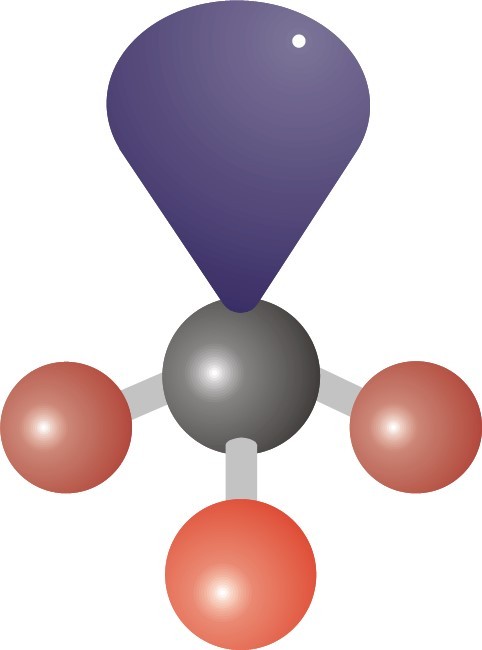
What molecular shape is the structure shown here? (BCl3)
a)
linear
b)
trigonal planar
c)
tetrahedral
d)
trigonal pyramidal
19.
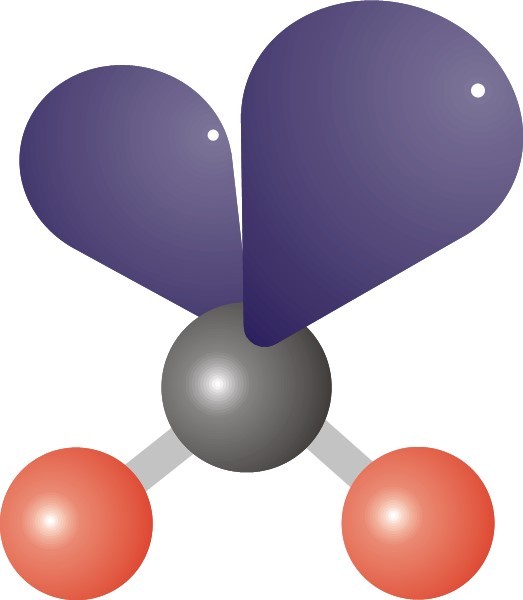
What molecular shape is the structure shown here? (H2O)
a)
tetrahedral
b)
trigonal planar
c)
bent
d)
trigonal pyramidal
20.
Determine the molecular shape of carbon tetrafluoride.
a)
linear
b)
trigonal planar
c)
bent
d)
tetrahedral
21.

3 atoms bonded and 0 lone pairs

a)

linear

b)

trigonal planar

c)

bent

d)

tetrahedral

e)

trigonal pyramidal

22.
Phosphorous trichloride
a)
PCl3
b)
P3Cl
c)
P3Cl3
d)
PCL
23.
The shape of Carbon Dioxide is called ______. 
a)
tetrahedral
b)
square
c)
planar
d)
linear
24.

HCN is a linear molecular geometry. What is the polarity of HCN molecule?

a)

Polar molecule

b)

Non-polar molecule

25.

Symmetrical molecular shapes are typically

a)

Polar

b)

Nonpolar

26.

Is the following compound ionic or covalent?

A material with a high melting point

a)

Ionic

b)

Covalent

27.

Is the following compound ionic or covalent?

A material that has a low boiling point

a)

Ionic

b)

Covalent

28.
N2, Cl2, and O2 are all 
a)
diatomic molecules.
b)
ionic bonds.
c)
of equal mass.
d)
solids.
29.

Name this formula:

Fe3(PO4)2

a)

Iron Phosphide

b)

Iron (III) Phosphide

c)

Iron (II) Phosphate

d)

Iron Phosphate

30.

Which of the following shapes has unshared pairs of electrons on the central atom?

a)

Linear

b)

Bent

c)

Trigonal Planar

d)

Tetrahedral

31.

With the addition of lone pairs on the central atom, what happens to the bond angle?

a)

It increases

b)

It decreases

c)

it stays the same

d)

it triples

32.
What is the proper name for S2O2?
a)
Sulfur oxide
b)
Sulfur dioxide
c)
sulfur (II) oxide
d)
disulfur dioxide
33.
The bond between Na & F.   Ionic or covalent?
a)
Ionic
b)
Covalent
34.
The bond between N & H.   Ionic or covalent?
a)
Ionic
b)
Covalent
35.
What is the correct chemical name for the ionic compound:  Na2O
a)
Sodium oxide
b)
Sodium (II) oxide
c)
Disodium monoxide
d)
Disodium oxide
36.
What is the correct chemical name for the ionic compound: Fe3N2
a)
Iron nitride
b)
Iron (III) nitride
c)
Iron (II) nitride
d)
TriIron dinitride
37.
What is the correct chemical name for the ionic compound: CuS
a)
copper sulfide
b)
copper (I) sulfide
c)
copper (II) sulfide
d)
copper monosulfide
38.
What is the correct chemical name for the molecular compound:  CS2
a)
Carbon Sulfide
b)
Carbon diSulfide
c)
diCarbide diSulfide
d)
Carbon (II) Sulfide
39.
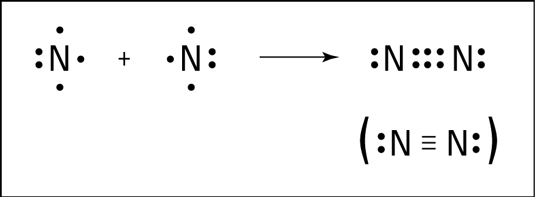
Given the picture, what type of bond is  holding the atoms together in this molecule?
a)
polar covalent bond
b)
nonpolar covalent bond
c)
ionic bond
d)
metallic bond
40.

Which of the following is NOT a property of ionic compounds?

a)

They conduct electricity when molten

b)

They conduct electricity when in solution

c)

They have high boiling points

d)

They are insoluble in water

41.
In the chemical formula for an ionic compound, which item is written first?
a)
positive ion
b)
negative ion
c)
subscript
d)
the female
42.
Elements in Group 1 lose one electron to form ions with a _________________ charge.
a)
1+
b)
2+
c)
0
d)
1-
43.
Which of the following is NOT formed by a covalent bond?
a)
K2S
b)
H2O
c)
I2
d)
CO2
44.
What do we call a covalent bond where electrons are shared UNEVENLY or UNEQUALLY?
a)
Ionic
b)
Polar Covalent
c)
Nonpolar Covalent
d)
Van der Waals Force
45.
What is the basis of a metallic bond?
a)
the attraction of neutral metal atoms.
b)
the attraction between protons and neutrons.
c)
the attraction between positive metal ions and interlocking electrons.
d)
the attraction between positive metal ions and free floating electrons.
46.

What is the correct formula for lead (IV) oxide?

a)

PbO

b)

Pb4O2

c)

PbO2

d)

Pb2O4

47.
When adding a subscript to a polyatomic ion, you should...
a)
multiply any subscripts on the polyatomic ion by the subscript you are adding
b)
put parentheses around the polyatomic ion before adding a subscript
c)
write the new subscript next to any subscripts on the polyatomic ion
d)
put the polyatomic ion in square brackets before adding the subscript
48.

The name of SO₃ compound is

a)

sulfite

b)

sulfur oxide

c)

sulfur trioxide

d)

monosulfur trioxide

49.
Choose the correct shape for this molecule:
a)
Trigonal planar
b)
Trigonal pyramidal
c)
Bent
d)
Linear
50.
Choose the correct shape for this molecule:
a)
Bent
b)
Trigonal pyramidal
c)
Trigonal planar
d)
Linear
51.
Choose the correct shape for this molecule:
a)
linear
b)
Trigonal pyramidal
c)
Bent
d)
Tetrahedral
52.

Will this molecule be polar or nonpolar? Soluble or insoluble?

a)

polar

b)

nonpolar

c)

insoluble

d)

soluble

53.

Which list of number for the atoms in magnesium nitrate is right?

a)

Mg = 1, N = 6, O = 6

b)

Mg = 1, N = 6, O = 2

c)

Mg = 2, N = 2, O = 6

d)

Mg = 1, N = 2, O = 6

54.

What compound could this be?

a)

H2O

b)

NH3

c)

CO2

d)

CH4

55.

What compound could this be?

a)

CO2

b)

NH3

c)

H2S

d)

CH4

56.

How many lone pairs of electrons are on the P atom in PF3?

a)

1

b)

2

c)

3

d)

0

57.

Is this molecule polar?

a)

No

b)

Yes

58.

What is the formula for iron (II) carbonate?

a)

Fe2CO3

b)

FeCO3

c)

Fe2CO2

d)

FeCO4

59.
Because the overall charge in a compound must be ____________, the charge of iron in Fe2O3 can be calculated as 3+.
a)
2+
b)
1+
c)
0
d)
1-
60.
Name this compound:
NiPO4
a)
Nickel (I) phosphate
b)
Nickel (II) phosphate
c)
Nickel (IV) phosphate
d)
Nickel (III) phosphate
61.
Name the Compound:
SnO2
a)
tin(II) oxide
b)
tin(IV)oxide
c)
tin(II)oxegen 
d)
tin oxide
62.
Name this compound: 
KF
a)
Potassium fluoride
b)
Potassium fluorite
c)
Fluorine potasside 
d)
Potassium fluorate
63.
What would be the proper chemical formula for combining Al3+ and Cl- :
a)
AlCl3
b)
Al3Cl
c)
AlCl
d)
Al3Cl3
64.
Which of the following combinations would need roman numerals in the name?
a)
potassium + fluorine
b)
beryllium + oxygen
c)
boron + iodine
d)
silver + oxygen
65.
What is the formula for copper (II) hydroxide?
a)
CuOH
b)
Cu(OH)2
c)
Cu2OH
d)
Cu2O
66.
CaO 
a)
Calcium monoxide
b)
Monocalcium monoxide
c)
Calcium oxide