
 Worksheets
Properties and Changes of Matter
Total questions: 50
Worksheet time: 27mins
What type of mixture is air (with smog) ?
Homogeneous
Heterogeneous
What type of mixture is chocolate chip ice cream?
Homogeneous
Heterogeneous
Which of the following are pure substances?
Carbon dioxide (CO2)
Milk
Salt water
Nitrogen (N2)
Which of the following are mixtures?
Sodium bicarbonate (NaHCO3)
Steel (Fe + C)
Salt water (NaCl + H2O)
Gold (Au)
Which of the following are compounds?
Silver nitrate (AgNO3)
Bronze (Cu + Sn)
Sugar (C12H22O11)
Blood
Which of the following is an element?
Lead metal
Iron rust
Aluminum foil
Silver sulfate

What type of matter is this?
Compound
Element
Mixture of elements
Mixture of compounds

What type of matter is this?
Element
Compound
Mixture of elements
Mixture of compounds

How do you identify a compound?
Same type of atoms and molecules
Same type of atoms different type of molecules
Different type of atoms same type of molecules
Different type of atoms and molecules
Which of the following are evidences or a chemical change?
Change of color (unintended)
Change of shape
Change of size
Change of odor
What is the main evidence that a chemical change has occured?
Change of color
Production of Bubbles
Production of Fire
A new substance is produced
Which of the following are evidences of a physical change?
Change of size
Change of color
Change of state of matter
Change of odor
Which of the following are examples of chemical properties?
Conductivity
Flammability
Reactivity
Malleability
Which of the following are physical changes?
Cutting your hair
Fruit rotting
Water boiling
Dropping an alka-seltzer in water
Which of the following are examples of chemical changes?
Burning paper
Cutting paper
Iron rusting
Wrinking paper
How do you identify an element?
It is made of only one type of atoms
It is made of different type of atoms
It can be found on the Periodic Table
It is represented by a chemical symbol


volume
liquid


The temperature at which a gas turns into a liquid
Melting point
Freeing point
Boiling point
Condensation point
The temperature at which a substance changes from a liquid to a gas
Melting point
Boiling point
Freezing point
Condensation point
What is the state of matter that has a fixed volume but not a fixed shape?
Solid
Liquid
Gas
What is water in a gas form called?
Water vapor
Ice
liquid water
Kool-aid
Color is what type of property?
Physical
Chemical
Reactivity is what type of property?
Physical
Chemical
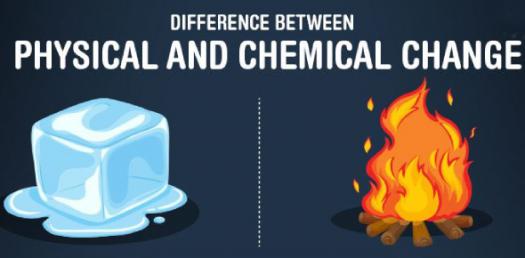
What is a sign of a physical change?
Bubbles forming
Color changing
Stretching
Producing heat

What is a sign of a chemical change?
Stretching
Tearing
Compressing
Bubbles
Which of the following changes is a physical change of matter?
water evaporating
paper burning
a nail rusting
a silver spoon tarnishing
Which of these observations would likely be an indication of a chemical change?
A change in odor when two substances are mixed
A change in temperature when a hot substance is left standing in air
A change in volume as a substance is heated
The disappearance of a liquid as it boils

You mixed two liquids and a precipitate formed, what kind of change occured?
Physical
Chemical
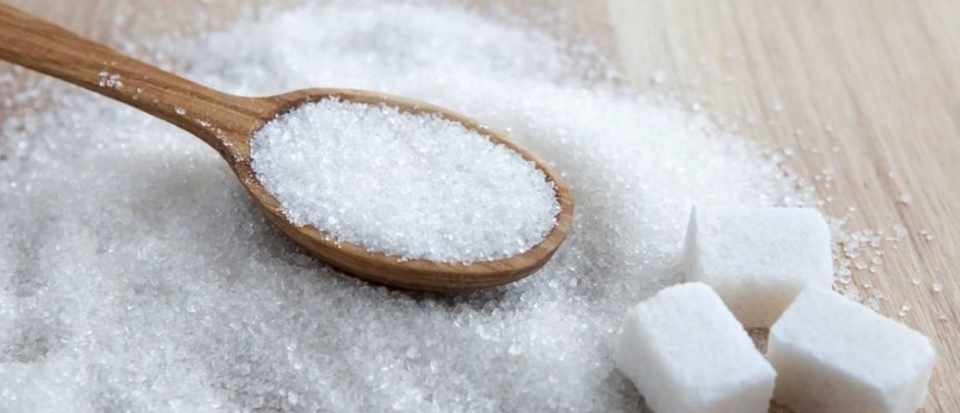
What happens when sugar dissolves in water?
Physical change because a new substance is formed
Chemical change because a new substance is formed
Physical change because the sugar is just getting smaller
Chemical change because the sugar is just getting smaller
Signs of a chemical change:
Precipitate
Light
Heat
Shatter
Signs of a physical change:
Compress
Shatter
Tear
Precipitate
A flask with vinegar in it has a mass of 160 grams. A balloon with baking soda in it has a mass of 40 grams. The balloon is attached to the flask to seal the opening and the vinegar and baking soda mixes. The balloon inflates to a large volume. What will the total mass of the balloon and flask be after the balloon inflates? Explain.
Less than 200 grams because gases such as the one in the balloon are lighter than solids and liquids
More than 200 grams because the size of the balloon is so much larger
200 grams, because all the atoms remain in the balloon or flask
Less than 200 grams because the solid baking soda disappears.
Mass is measured in ____________, and weight is measured in ______________.
kilograms, grams
grams, kilograms
newtons, kelvin
grams, newtons
The periodic table is organized by
atomic mass
atomic size
atomic number
atomic periodicity
Energy + 6CO2 + 6H2O → 6O2 + C6H12O6
During photosynthesis, sugar C6H12O6 is produced from carbon dioxide, water, and sunlight. Which statement BEST explains what happens during photosynthesis?
Atoms are gained when sugar is formed.
Single atoms are converted into molecules
Atoms from compounds are lost when sugar is formed
Atoms of compounds are rearranged to form new compounds

