Wayground logo

Free Printable Worksheets

Font size

S
M
L
XL
Worksheets

PhySci S1 Final Review

Total questions: 72

Worksheet time: 2hrs 57mins

Name
Class
Date
1.

The SI unit for length is ___________

a)

liter

b)

meter

c)

kilogram

d)

second

e)

grams/ cm3cm^3

2.

The SI unit for mass is ___________

a)

liter

b)

meter

c)

kilogram

d)

second

e)

grams/ cm3cm^3

3.

The part of an experiment that the scientist ADDs to or changes the conditions. This is what is done to an experiment.

a)

control

b)

constant

c)

dependent variable

d)

independent variable

e)

model

4.

Energy changes from chemical to thermal when....

a)

steam makes a piston move

b)

coal burns and heats up water

c)

glow sticks light up

d)

liquid water converts into steam

5.

Temperature measures __________ energy of particles.

a)

thermal

b)

kinetic

c)

potential

d)

electrical

6.

What type of heat transfer comes from the sun?

a)

convection

b)

conduction

c)

radiation

d)

transverse

7.
How could the strength of an electromagnet be increased?
a)
by reducing the length of the core of the electromagnet
b)
by using rubber material as the core for the electromagnet
c)
by decreasing the amount of current in the electromagnet
d)
by increasing the number of coils in the wires of the electromagnet
8.
Term
The top-most portion of a transverse wave is called the wave's ...
a)
crest
b)
trough
c)
compression
9.
Term
The bottom-most portion of a transverse wave is called the wave's ...
a)
crest
b)
trough
c)
compression
10.
Term
The most compressed portion of a longitudinal wave is called the wave's ...
a)
rarefaction
b)
trough
c)
compression
11.
Term
A disturbance in space where the disturbance moves parallel to the way it transfers energy from one place to another is classified as being...
a)
impulsive
b)
longitudinal
c)
transverse
12.
Term
A regular repeating collection of disturbances that transfer energy from one place to another is called a...
a)
pulse
b)
wave
c)
impulse
13.

Forces can be applied in different directions.

a)

TRUE

b)

FALSE

14.
If these boys are pulling with the same amount of force.  What will happen?
a)
The boy in blue will win.
b)
They will not move at all.
c)
The boy in red will win.
d)
Both will fall down.
15.
What pulls a ball back to earth?
a)
Gas
b)
Gravity
c)
Friction
d)
Molecules
16.
A measure of how fast something moves over a certain distance is ________________.
a)
motion
b)
speed
c)
work
d)
force
17.
The measure of the pull of gravity on an object is ___________________.
a)
motion
b)
weight
c)
speed
d)
friction
18.
if you have balanced forces on a ball what happens
a)
It stays still
b)
Keeps going
c)
:(
d)
:)
19.
Which direction will the object move?
a)
Up
b)
Down
c)
Right
d)
Left
20.
Which term means "the ability to cause change?"
a)
Matter
b)
Heat
c)
Energy
d)
physical change
21.
The sun shines down on this family as the play on the beach.
a)
conduction
b)
convection
c)
radiation
22.
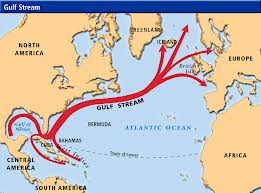
The Gulf Stream is a current that brings warm ocean water from the south to the north.
a)
conduction
b)
convection
c)
radiation
23.
Walking on the warm sand sand with your bare feet.
a)
conduction
b)
convection
c)
radiation
24.
Blow drying your wet hair.
a)
conduction
b)
convection
c)
radiation
25.
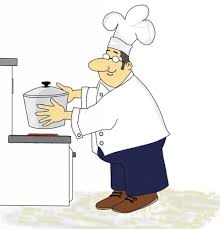
The man goes to take the hot pot off the stove with his bare hands.
a)
conduction
b)
convection
c)
radiation
26.
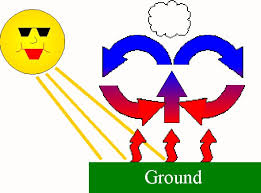
Warm air rises and the cool air sinks.
a)
conduction
b)
convection
c)
radiation
27.
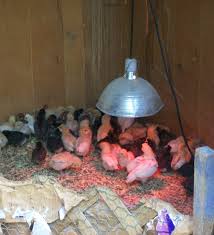
The baby chickens are kept warm from the heat lamps.
a)
conduction
b)
convection
c)
radiation
28.

A spoon in a cup of hot soup becomes warmer

a)

Convection

b)

Conduction

c)

Radiation

29.
When one energy form is changed into another it is called a
a)
transformation
b)
transfer
c)
translocation
d)
transcription
30.

What two factors affect an object's kinetic energy?

a)

area and volume

b)

mass and weight

c)

weight and height

d)

mass and speed

31.

Increasing an object's speed will increase its kinetic energy.

a)

false

b)

true

32.

Increasing an object's mass will increase its kinetic energy.

a)

true

b)

false

33.
The faster an object moves, the ________ kinetic energy it has. 
a)
more
b)
less
c)
none of the above
d)
all of the above 
34.
The ability or tendency to float.
a)
viscosity
b)
buoyancy
c)
kinetic theory
35.
As a material is heated, it's particles....
a)
get smaller
b)
slow down
c)
get cooler
d)
move more quickly
36.
A measure of the average kinetic energy of the particles in a sample of matter.
a)
temperature
b)
meter
c)
second
37.
What is potential energy? (PE)
a)
energy in motion
b)
energy that is created
c)
energy that is lost
d)
energy that is stored
38.
A laptop sitting on a table has potential energy because of the gravitational pull of the Earth. Which of the following would increase the potential energy of the laptop?
a)
Closing the laptop
b)
Placing it in a higher place
c)
Placing it in a lower place
d)
Sliding it across the table
39.
At which position does the pendulum below have the greatest potential energy?
a)
3
b)
2 and 4
c)
there is no potential energy
d)
1 and 5
40.
Which diving board has the least potential energy?
a)
The highest one
b)
The lowest one
c)
The middle one
d)
The all have the same amount of potential energy
41.

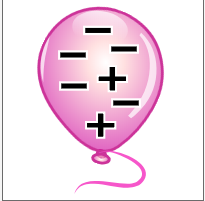
This model of the balloon shows ______ positive charges than negative charges. So this balloon is _____ charged.

a)

fewer/positively

b)

more/positively

c)

fewer/negatively

d)

more/negatively

42.
Energy in motion is called:
a)
Potential Energy
b)
Kinetic Energy
43.
When you stretch a rubber band, you are storing __________ energy. 
a)
kinetic 
b)
potential
c)
none of the above
d)
all of the above 
44.
At which point is potential energy greatest?
a)
W
b)
X
c)
Y
d)
Z
45.
What is a closed path for electrons to flow through?
a)
static electricity
b)
circuit
c)
amperes
46.
Identify the insulator below.
a)
aluminum foil
b)
paperclip
c)
rubber eraser
47.
Identify the conductor below.
a)
cloth rag
b)
plastic bottle
c)
gold ring
48.
Electricity is the flow of _________.
a)
protons
b)
neutrons
c)
electrons
49.
What type of circuit is pictured?
a)
series
b)
Parallel
50.
A circuit that has more than one path for electricity to follow is a...
a)
series
b)
static
c)
broken
d)
parallel
51.
a)
Series circuit
b)
Incomplete circuit
c)
Parallel circuit
d)
Power source
52.
What is a power source?
a)
Battery
b)
A battery or other device which provides energy for a curcuit
c)
Current
d)
Conductor
53.
The flow of electricity in a circuit-
a)
current
b)
flow
c)
circuit
54.
To complete a circuit the switch must be
a)
unattached
b)
open
c)
closed
55.
this is the symbol for a _____?
a)
switch
b)
light 
c)
battery
d)
wires
56.
what is this symbol for?
a)
light bulb
b)
cell
c)
battery
d)
resistor
57.
This is the symbol for a ...
a)
Wire
b)
Battery
c)
Buzzer
d)
Fuse
58.

What is the following symbol represent?

a)

Wire

b)

Resistor

c)

Battery

d)

Switch

59.
Which box has a higher density?  
a)
Box A
b)
Box B
c)
cannot be determined
d)
they are the same
60.
If an object sinks in a fluid, _____.
a)
the density of the fluid is greater than the density of the object
b)
the density of the fluid is less than the density of the object
c)
the density of the fluid is equal to the density of the object
d)
density has nothing to do with whether an object sinks or floats, only which state of matter the object is
61.

What do we call the the amount of force exerted on a certain area?

a)

fluid

b)

pressure

c)

buoyant force

d)

normal force

62.

The upward force exerted by a fluid is called the...

a)

buoyancy force

b)

density force

c)

fluidity force

d)

normal force

63.

In which direction is fluid pressure directed?

a)

Up

b)

Down

c)

Sideways

d)

In all directions

64.

Materials that can flow and take the shape of their containers include…

a)

Both gases & liquids

b)

Liquids

c)

Gases

d)

Neither gases nor liquid

65.

Fluids flow from areas of high pressure to areas of low pressure.

a)

True

b)

False

66.

Buoyant force is caused by differences in fluid pressure.

a)

True

b)

False

67.

The variable that responds to the changes in the other variable is the ___ variable.

a)

Independent

b)

Dependent

c)

Constant

d)

Control

68.

What is the independent variable on this graph?

a)

Year

b)

Number of Visitors

c)

Visitors to a Park

d)

none of these

69.

What is the dependent variable on this graph?

a)

Year

b)

Number of Visitors

c)

none of these

70.

What is the independent variable?

a)

Months

b)

Temperature

c)

Highs

d)

Lows

71.
What was the dependent variable in this experiment?
a)
Force
b)
Stretch Distance
c)
Type of Spring Used
72.
On a graph, which axis shows the dependent variable?
a)
x-axis
b)
y-axis
c)
neither
d)
it changes