wayground logo

Free Printable Worksheets

NEW

Font size

S
M
L
XL
Worksheets

DC Chemistry Fall Final Chem 1411 Review 1

Total questions: 50

Worksheet time: 1hrs 13mins

Name
Class
Date
1.
Oxygen always has an oxidation number of...
a)
-1
b)
1
c)
2
d)
-2
2.
Is calcium oxidized or reduced in the following reaction? 
2CaO--> 2Ca + O2
a)
Oxidized
b)
Reduced
3.
In the reaction
2Ca(s) + O2(g) --> 2CaO(s), calcium is __________
a)
Reduced
b)
Synthesized
c)
Oxidized
d)
None of the above
4.
What substance is oxidized in the following reaction?
4Fe + 3O2 --> 2Fe2O3
a)
Iron
b)
Fluorine
c)
Oxygen
5.
What is the oxidation number of N in NO2-1?
a)
-3
b)
+4
c)
-2
d)
+3
6.
CH4  +  2O2  →  CO2  +  2H2O
24 grams of CH4 was added to the above reaction. Calculate the theoretical yield of CO2.
a)
66 grams
b)
132 grams
c)
33 grams
d)
8.72
7.
The ______________ yield is the maximum amount of product possible in a reaction. This determines the amount of product that should be produced in a perfect setting
a)
Percent
b)
actual
c)
stoichiometry
d)
theoretical
8.
When reacting Na with Cl2, we calculated that the theoretical yield should be 12.5 grams. Our actual yield was 13.0 grams. What is the percent yield?
a)
100%
b)
104%
c)
96%
d)
1.04
9.
What does percent yield indicate?
a)
The amount of product we should get
b)
The efficiency of the lab
c)
The amount of product we actually got
d)
nothing
10.
Zn  +  CuCl2​​  →  ZnCl2​  ​Cu
How many moles of ZnCl2 will be produced from 23.0 g of Zn
a)
0.354 moles
b)
1495 moles
c)
47.76 g
11.
A compound consists of 72.2% magnesium(Mg) and 27.8% nitrogen(N) by mass. What is the empirical formula?
a)
Mg4N3
b)
MgN2
c)
Mg3N
d)
MgN
12.
You are given the following percentages: 40.05% S and 59.95% O. Find the empirical formula for these elements.
a)
SO
b)
SO2
c)
SO3
d)
SO4
13.

How many molecules are in 2.5 mol of NaCl?

a)

1.5 x 1024 molecules

b)

1.5 molecules

c)

4.15 molecules

d)

1.5 x 10²³ molecules

14.
A compound consists of 72.2% magnesium(Mg) and 27.8% nitrogen(N) by mass. What is the empirical formula?
a)
Mg4N3
b)
MgN2
c)
Mg3N
d)
MgN
15.
Glycerol has a molar mass of 92.09g/mol. Its percent composition is: 39.12% C, 8.75% H, and 51.12% O. What is the molecular formula for glycerol?
a)
C2H3O2
b)
CH2O
c)
C2H4O2
d)
C3H8O3
16.
Which pair has the same empirical formula?
a)
NaCrO4 and Na2Cr2O7
b)
C2H4O2 and C6H12O6
c)
C3H6Oand C2H6O2
d)
CH4 and C2H6
17.
What is the molecular formula for a compound with the empirical formula: K2SOand a molecular mass of 696g.
a)
K2SO
b)
K8SO16
c)
K8S4O
d)
K8S4O16 
18.
An empirical formula:
a)
is a formula that calculates the coefficients of a compound in a balanced equation.
b)
is the simplest whole-number ratio of moles of elements in the compound.
19.
What is the percent by mass of fluorine in CaF2 (gram-formula mass = 78 g/mol)?
a)
24%
b)
49%
c)
51%
d)
65%
20.
What is the percent by mass of sodium in NaCl?
a)
39%
b)
61%
c)
35%
d)
65%
21.
Which of the following would increase the (gas) pressure of a system?
a)
Increase the Temperature
b)
Pump in more gas
c)
Decrease the volume
d)
All of these
22.
You have a gas that has a pressure of 2 ATM and a volume of 10L.  What would be the new volume if the pressure was changed to 1 ATM?
a)
5 L
b)
20 L
c)
It would stay at 10L
d)
1 L
23.
Which container will have lower pressure?
a)
left
b)
right
c)
they both have the same pressure
24.
Consider a sample of oxygen gas at 27° C with a volume of 9.55L at a pressure if 2.97 atm.  The pressure is changed to 8.25 atm and the gas is heated to 125° C.  What’s the new volume? 
a)
4.56 L
b)
4.6 L
c)
15.9 L
d)
16 L
25.
What is the pressure exerted by 5.00 moles of nitrogen gas contained in a 30.0 Liter container at 25.0 °C?
a)
3670 atm
b)
0.245 atm
c)
4.08 atm
d)
605 atm
26.
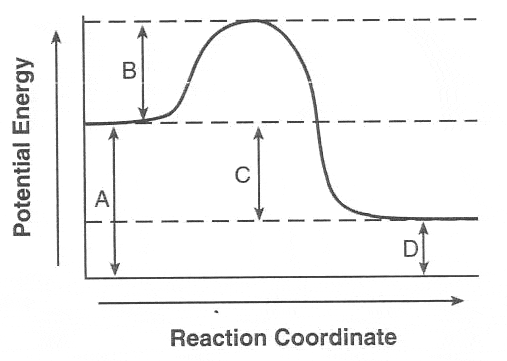
What letter represents the energy of the products?
a)
A
b)
B
c)
C
d)
D
27.
What type of reaction is this?
a)
Endothermic
b)
Exothermic
28.
What letter represents the activation energy?
a)
A
b)
B
c)
C
d)
D
29.
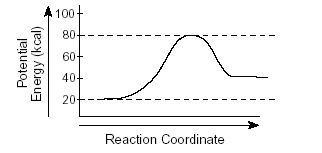
What is the ΔH of this reaction?
a)
40 kJ
b)
20 kJ
c)
80 kJ
d)
60 kJ
30.
Which of the following reactions would NOT be representative of this graph?
a)
cellular respiration
b)
burning gasoline
c)
photosynthesis
d)
adding Zn to HCl
31.
Which has the greater EN: 
Cl or Al?
a)
Cl
b)
Al
32.
Which of the following will have a lower ionization energy than Scandium (Sc)?
a)
Helium (He)
b)
Titanium (Ti)
c)
Calcium (Ca)
d)
Magnesium (Mg)
33.
Which statement correctly and completely identifies a trend?
a)
Atomic radius decreases across a period and increases down a group.
b)
Electronegativity decreases across a period and decreases down a group.
c)
Ionization energy increases across a period and increases down a group.
d)
Ionic radius increases across a period and increases down a group.
34.

The element with the lowest electronegativity in Period 3 is -

a)

Na

b)

Cl

c)

Ar

d)

Mg

35.
Which periodic group has the smallest atomic radius?
a)
Alkali metals
b)
Halogens
c)
Noble Gases
d)
Transition metals
36.
The specific heat(c) of copper is 0.39 J/g °C. What is the temperature change(∆t) when 100 Joules of heat(Q) is added to 20 grams?
a)
12.82 °C
b)
24.12°C
c)
351 °C
37.
A slower particle has a lower energy than an identical, faster particle.
a)
True
b)
False
38.

Calculate ΔH when 2 moles of ethanol (C2H5OH) reacts with excess oxygen according to the following thermochemical equation?

C2H5OH + 3O2 → 2CO2 + 3H2O ΔH = −1366.7 kJ

a)

-2733.4 kJ

b)

-683.35 kJ

c)

-1366.7 kJ

d)

-910.67 kJ

39.

If ΔH is positive, heat would be shown on the _____ side of the thermochemical equation.

a)

Reactant

b)

Product

40.

What is ΔH if 5.5 grams H2O(l) is formed from this reaction?

H2(g) + ½ O2(g) → H2O(l) ∆H = -285.8 kJ

a)

-8600 kJ

b)

-420 kJ

c)

-87 kJ

d)

-98 kJ

41.
Which of the following shapes has an unshared pairs of electrons on the central atom? 
a)
Bipyramidal
b)
Bent
c)
Trigonal Planar
d)
Tetrahedral
42.
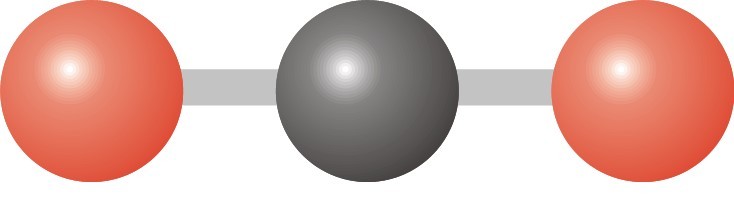
Which molecule would have this molecular geometry?
a)
BF3
b)
CH4
c)
PCl5
d)
CO2
43.
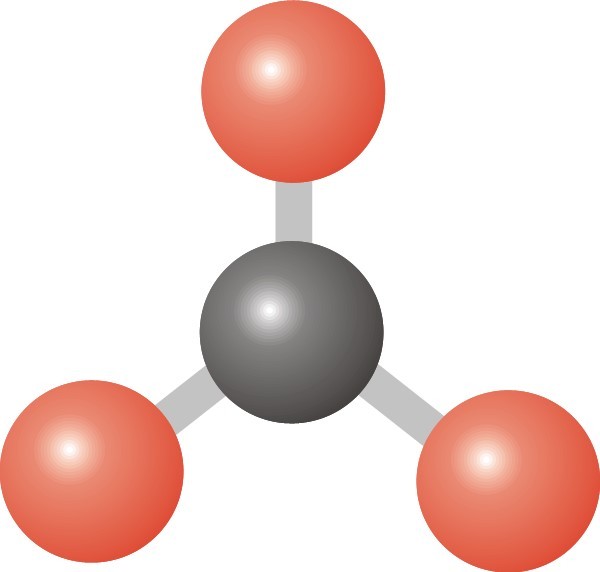
What molecule could this be? 
a)
BF3
b)
CH4
c)
H2O
d)
CO2
44.
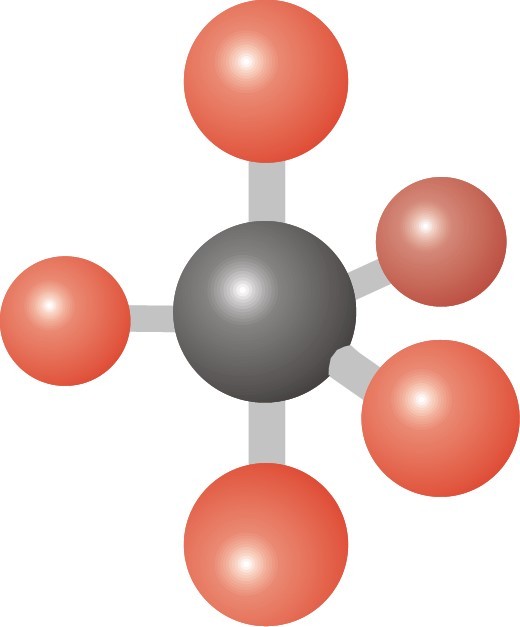
What molecule could this be? 
a)
H2O
b)
CCl4
c)
PCl5
d)
NaCl
45.
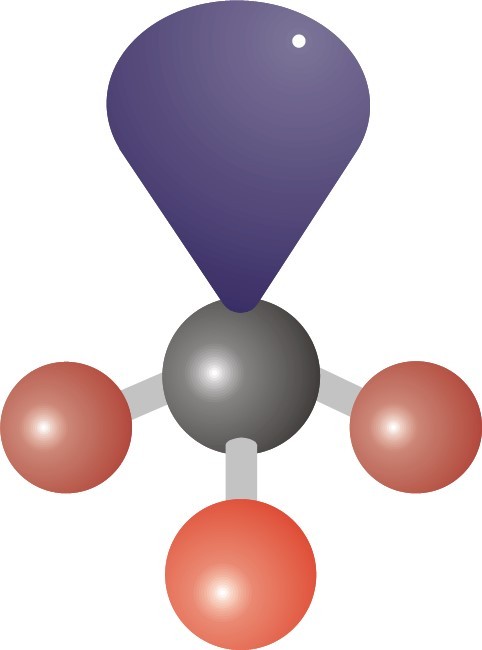
Who could this be?
a)
H2O
b)
NH3
c)
CO2
d)
CH4
46.
Determine the electron geometry (eg) and molecular geometry (mg) of XeF4 (Lewis structure is shown) .
a)
eg = tetrahedral, mg = tetrahedral
b)
eg = linear, mg = linear
c)
eg = octahedral, mg = square planar
d)
eg = trigonal bipyramidal, mg = tetrahedral
47.

Is this molecule polar?

a)

No

b)

Yes

48.

CO2 has polar bonds but is a NON POLAR molecule. Why?

a)

it has an asymmetrical shape

b)

bond polarity or dipole moment between C and O atoms cancel

c)

there is net dipole moment between C and O atoms in molecule

d)

bond polarity does not exist between C+ and O- atoms

49.

Is this molecule polar or nonpolar?

a)

polar

b)

nonpolar

50.

Determine Polarity:

a)

Polar

b)

Nonpolar