

wayground logo

Free Printable Worksheets

NEW

Font size

S
M
L
XL
Worksheets

Semester 1 Exam Prep A

Total questions: 70

Worksheet time: 3580secs
Name
Class
Date
1.
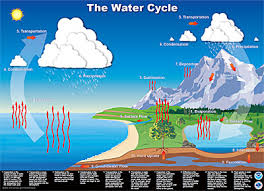
Which stages does liquid water from the ocean turn into water vapor?
a)
condesantion
b)
evaporation
c)
precipitation
d)
run off
2.
What is C?
a)
Evaporation
b)
Condensation
c)
Precipitation
d)
Runoff
3.
What is B?
a)
Evaporation
b)
Condensation
c)
Precipitation
d)
Runoff
4.
What is      D?
a)
Evaporation
b)
Condensation
c)
Precipitation
d)
Runoff
5.
How much of the earth's water is freshwater?
a)
50 %
b)
3 %
c)
97 %
d)
93 %
6.
Which reservoir in the water cycle contains the most water?
a)
Ice Caps
b)
Lakes
c)
Groundwater
d)
Oceans
7.
The hydrologic cycle is a continuous process driven by energy from the ...
a)
Moon.
b)
Sun.
c)
gravity.
d)
Earth's interior.
8.
The hydrologic cycle continuously recycles _______ through Earth's systems.
a)
rocks
b)
water
c)
oxygen
d)
carbon dioxide 
9.
97% of the water on earth is _________, making it undrinkable for humans.
a)
fresh water
b)
ground water
c)
salt water
d)
surface water
10.
The supply of freshwater under the Earth's surface.
a)
watershed
b)
mouth
c)
headwaters
d)
groundwater
11.
Two thirds of the Earth's fresh water  is stored where?
a)
Oceans
b)
Seas
c)
Lakes
d)
Ice
12.
What is it called when plants give off water vapor as a waste product?
a)
condensation
b)
evaporation
c)
sublimation
d)
transpiration
13.
What is the hydrosphere?
a)
Water on the earth's surface
b)
Oceans of the Earth
c)
Rivers, oceans and lakes of the Earth
d)
None of the above
14.
From where does most water evaporate?
a)
puddles
b)
lakes
c)
rivers
d)
oceans
15.

____________________ is the process by which water on the ground surface enters the soil. ________________ rate in soil science is a measure of the rate at which soil is able to absorb rainfall or irrigation.

a)

Infiltration

b)

Percolation

c)

Deposition

d)

Condensation

16.

What is the best definition of aquifer?

a)

empty space

b)

a space below the water table

c)

a measure of how well a material absorbs water

d)

an underground layer of permeable (that is, water-bearing) rock

17.
Which would increase the amount of runoff you get?
a)
Vegetation
b)
More plants
c)
Urban Development
18.
An area of permeable layer of rock or soil that holds a large amount of water in the saturated zone is called what?
a)
Aquifer
b)
Spring
c)
Well
d)
Reservoir
19.
Water stored  in cracks and pores below the Earth's surface is called:
a)
Groundwater
b)
Bogs
c)
Water in the ground
d)
surface water
20.

What letter symbolizes a continental slope

a)

A

b)

E

c)

F

d)

H

21.

What letter symbolizes a continental shelf?

a)

A

b)

C

c)

G

d)

F

22.

What letter symbolizes a mid-ocean ridge?

a)

H

b)

G

c)

E

d)

B

23.

What letter symbolizes a seamount?

a)

B

b)

E

c)

G

d)

D

24.

What letter symbolizes a rift valley

a)

G

b)

D

c)

A

d)

F

25.

What letter symbolizes a volcanic island?

a)

B

b)

A

c)

E

d)

F

26.

What letter symbolizes an abyssal plain?

a)

H

b)

A

c)

C

d)

F

27.

What letter symbolizes a trench?

a)

G

b)

D

c)

A

d)

H

28.

Which ocean floor feature would take a sonar signal the longest time to

return?

a)

Trench

b)

Continental Shelf

c)

Abyssal Plain

d)

Mid-Ocean Ridge

29.

Which is NOT a factor of wave size?

a)

Length of time the wind blows

b)

Temperature of the wind

c)

Distance the wind blows

d)

Speed of the wind

30.

What ocean floor feature is closest to the coast?

a)

Continental Slope

b)

Mid-Ocean Ridge

c)

Trench

d)

Continental Shelf

31.

What ocean floor feature has the least amount of life?

a)

Seamount

b)

Continental Shelf

c)

Trench

d)

Mid-Ocean Ridge

32.

What is the main cause of Ocean Waves?

a)

Sunlight

b)

Density differences

c)

Wind

d)

Canon Balls

33.

Where is the flat part of the topography

that is in the Deep Ocean Basin?

a)

Continental Shelf

b)

Abyssal Plain

c)

Volcanic Island

d)

Mid-Ocean Ridge

34.
The place where new ocean floor forms is called the...
a)
mid ocean ridge
b)
abyssal plain
c)
trench
d)
continental shelf
35.
The continental slope is located at the end of the...
a)
shoreline
b)
continental shelf
c)
mid ocean ridge
d)
abyssal plain
36.

A volcanic mountain that rises above the surface of the water is called ____________

a)

trench

b)

volcanic island

c)

mid-ocean ridge

d)

seamount

37.
The shallowest(least deep) part of the ocean is the ____________________
a)
trench
b)
abyssal plain
c)
continental shelf
d)
continental slope
38.
the gently sloping shallow sea bed surrounding a continent
a)
abyssal
b)
bathyal
c)
littoral
d)
continental shelf
39.

Our Earth, the water planet, has _______% of salt water.

a)

3

b)

97

c)

75

40.

Our Earth, the water planet, has ____% of fresh water.

a)

3

b)

75

c)

97

41.

Most visible light is in the ____ Zone.

a)

Sunlight

b)

Midnight

c)

Twilight

42.

The ocean gets colder as you go _____.

a)

closer to the Equator.

b)

lower in latitude.

c)

deeper.

43.

The trench zone is found at point:

a)

G

b)

D

c)

F

d)

E

44.

What is the uppermost zone of the ocean called?

a)

Sunlight

b)

Midnight

c)

Trench

d)

Twilight

45.

What is the deepest zone of the ocean called?

a)

Sunlight

b)

Twilight

c)

Abyss

d)

Trench

46.

What is the second zone of the ocean called?

a)

Sunlight

b)

Trench

c)

Midnight

d)

Twilight

47.

What is the fourth zone of the ocean called?

a)

Midnight

b)

Sunlight

c)

Abyss

d)

Trench

48.

What is the third zone of the ocean called?

a)

Midnight

b)

Trench

c)

Sunlight

d)

Abyss

49.

The top of the tsunami is called a

a)

high

b)

peak

c)

crest

d)

ceiling

50.

The bottom of a tsunami is called a

a)

trough

b)

floor

c)

hole

d)

cellar

51.

3. How far can a tsunami travel?

a. Less than 1 mile

b. 10 miles

c. 100 miles

d. 500 miles

e. Over 1000 miles

a)

a

b)

b

c)

c

d)

d

e)

e

52.

6. Tsunamis are caused by ___________.

a. Wind traveling over the surface of the ocean

b. The rotation of the Earth

c. The gravitational pull of the Moon

d. A large displacement of water

e. All of the above

a)

a

b)

b

c)

c

d)

d

e)

e

53.
Deep Ocean currents are a result of
a)
Global Wind Patterns
b)
Earth's Rotation
c)
Density
d)
All of the above
54.
The Coriolis Effect is caused by
a)
Earth rotating around the sun
b)
Earth rotating on its axis
c)
The tides
d)
Gravity
55.
The Gulf stream carries _____________ water from the east coast of The United States to the West coast of Europe.
a)
Cold
b)
Warm 
c)
Freezing
d)
Fresh
56.
A strong surface current that runs along the east coast of the United States and carries warm water to Europe.
a)
California Current
b)
Global Conveyor Belt
c)
Gulf Stream
d)
Surface Current
57.
Constantly moving system of deep-ocean circulation driven by temperature and salinity. It moves water around the globe.
a)
California Current
b)
Global Conveyor Belt
c)
Surface Currents
d)
Gulf Stream
58.
There is only about 1% of freshwater available for use on Earth.
a)
True
b)
False
59.
There is about 2% of the Earth's freshwater frozen in icebergs.
a)
True
b)
False
60.
Which represents the distribution of water on Earth?
a)
3% freshwater, 97% salt water
b)
97% freshwater, 3% salt water
c)
71% freshwater, 29% salt water
d)
29% freshwater, 71% salt water
61.
The energy for the water cycle originally comes from the
a)
sun
b)
clouds
c)
salinity
d)
ice
62.

Pretty dark, but some fish live here

a)

Midnight Zone

b)

Twilight Zone

c)

Shore

d)

Sunlight Zone

63.

Where coral and fish live

a)

Midnight Zone

b)

Twilight Zone

c)

Ocean floor

d)

Sunlight Zone

64.

Which zone is completely dark, very cold, has little life and immense pressure?

a)

sunlight

b)

twilight

c)

midnight

65.
Rain soaks into the ground
a)
Infiltration
b)
Condensation
c)
Throughflow
d)
Surface runoff
66.
What causes waves?
a)
ice and wind
b)
winds and currents
c)
currents and tides
d)
wind and tide changes
67.

The area around the continent that has many features.

a)

Continental Margin

b)

Continental Slope

c)

Continental Rise

d)

Continental Shelf

68.

This forms the top of an unconfined aquifer.

a)

aqua well

b)

zone of aeration

c)

zone of saturation

d)

water table

69.

In this underground structure, all spaces are filled with water.

a)

zone of saturation

b)

zone of aeration

70.

This type of material does not allow water to penetrate through it.

a)

permeable

b)

impermeable
