wayground logo

Free Printable Worksheets

Font size

S
M
L
XL
Worksheets

Semester 1 Exam Prep B

Total questions: 86

Worksheet time: 1hrs 16mins

Name
Class
Date
1.

Why does the troposphere experience (have) the greatest amount of atmospheric pressure compared to the other atmospheric layers?

a)

It produces the ozone layer.

b)

It has the highest temperatures.

c)

It contains a high concentration of gas particles.

d)

It is the region in which weather occurs.

2.

Which of these statements BEST describes (explains) temperature as elevation in the atmosphere increases?

a)

Temperature remains constant with elevation in the thermosphere.

b)

Temperature remains constant with elevation in the mesosphere.

c)

Temperature generally decreases with elevation in the stratosphere.

d)

Temperature generally decreases with elevation in the troposphere.

3.

The BEST description of the troposphere is the layer of the atmosphere with the

a)

most ozone.

b)

greatest density.

c)

highest altitude.

d)

coldest temperature.

4.

In which layer of Earth’s atmosphere does weather occur?

a)

mesosphere

b)

stratosphere

c)

thermosphere

d)

troposphere

5.

The temperature of the stratosphere increases (goes up) with altitude because of the presence of

a)

nitrogen

b)

water vapor

c)

ozone

d)

carbon monoxide

6.

A weather balloon is about 2 meters wide when it is near the ground. It grows to about 6 meters wide at higher altitudes. Which change MOST likely makes the balloon become wider at higher altitudes?

a)

More gases enter the balloon.

b)

The gas inside the balloon gets much hotter.

c)

The air pressure surrounding the balloon decreases.

d)

Sunlight breaks down the material of the balloon.

7.

Some jet airplanes fly in a layer of the atmosphere where temperature generally (mostly) increases with altitude. What is this layer of the atmosphere?

a)

mesosphere

b)

stratosphere

c)

thermosphere

d)

troposphere

8.
What is the outer most main layer of Earth's atmosphere?
a)
Thermosphere
b)
Troposphere
c)
Stratosphere
d)
Mesosphere
9.
Which of the following is the correct order of the atmosphere layers from Earth to space?
a)
troposphere, stratosphere, mesosphere, thermosphere, exosphere
b)
troposphere, mesosphere, thermosphere, exosphere, stratosphere
c)
thermosphere, stratosphere, mesosphere, troposphere, exosphere
d)
troposphere, stratosphere, mesosphere, exosphere, thermosphere
10.
Which layer protects the earth from meteors?
a)
Troposphere
b)
Stratosphere
c)
Mesosphere
d)
Thermosphere
11.
Emily made a cup of tea and stirred it with a spoon. The spoon became warm, How was the heat from the tea transferred to the spoon?
a)
Convection
b)
Radiation
c)
Conduction
d)
Evaporation
12.
A hot rock is dropped into a pail of cool water. Heat energy transferred from the rock to the water by
a)
Boiling
b)
Evaporation
c)
Conduction
d)
Radiation
13.
The best example of heat transfer by convection is when
a)
Sunlight warms soil
b)
A ceiling fan blows air
c)
Flames heat up a pan
d)
Heat rises in a chimney
14.
A pan of soup is being heated on an electric stove. A metal spoon is used to occasionally stir the soup. Which of the following is an example of heat being transferred by convection?
a)
Heating the pan
b)
Heating the soup
c)
Heating the spoon
d)
Heating the burner
15.
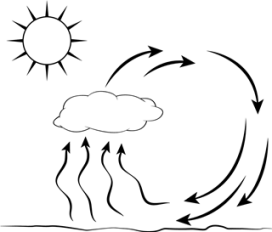
What causes the circulation of air in the atmosphere?
a)
Air in the atmosphere is heated by the sun and sinks to the ground.
b)
The ground is heated by the sun and then heats the air, causing the air to rise.
c)
Air loses heat to the ground and then rises upward to obtain more energy.
d)
The sun heats the clouds which forces the cooler air to move away and sink.
16.
What causes your skin to feel warm when it is in the sun on a summer day?
a)
Particles in the atmosphere reflect energy from the sun downward.
b)
Hot particles from the sun still carry some heat when they reach your skin.
c)
The solar wind carries heated air from the sun's atmosphere to earth's surface.
d)
The sun radiates energy that passes through space and the atmosphere to your skin.
17.
What heat transfer happens when you burn your hand by touching a fire?
a)
Radiation
b)
Conduction
c)
Convectio
d)
I don't know!!!!!!!!!!!
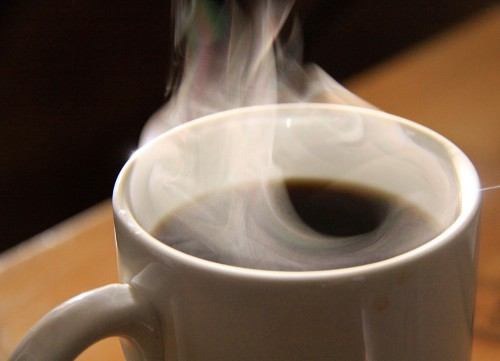
18.
The way the heat is moving from the hot coffee is called...
a)
convection
b)
radiation
c)
insulation
d)
conduction
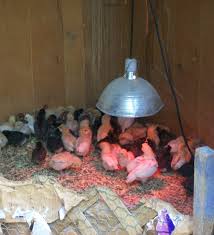
19.
The baby chickens are kept warm from the heat lamps demonstrates this type of heat transfer. 
a)
conduction
b)
convection
c)
radiation
20.
How does the Coriolis Effect influence hurricanes and cyclones
a)
determines how powerful they will be
b)
determines where they will go
c)
determines where they form
d)
determines the direction of the wind rotation
21.
If the Earth did not rotate, air at the Equator would simply
a)
Sink and move toward the poles.
b)
Rise and move toward the poles.
c)
Stay stationary.
d)
None of the above.
22.
Uneven heating of Earth's surface by the sun causes which of these?
a)
wind patterns
b)
cloud formation
c)
volcanic activity
d)
nutrient cycling
23.
The Coriolis Effect is caused by
a)
Earth rotating around the sun
b)
Earth rotating on its axis
c)
The tides
d)
Gravity
24.
What is the Coriolis Effect and how does it effect global winds?
a)
Curving of winds due to rotation of earth curves wind counterclockwise in Northern Hemisphere and clockwise in the Southern Hemisphere
b)
Movement of ocean currents caused by earth rotation' counterclockwise in Northern Hemisphere and clockwise in Southern Hemisphere
c)
curve of global winds caused by global rotation clockwise in Northern Hemisphere and counterclockwise in Southern Hemisphere
25.
a)
Low Clouds
b)
Low Temperatures
c)
Light Wind
d)
Low Air Pressure
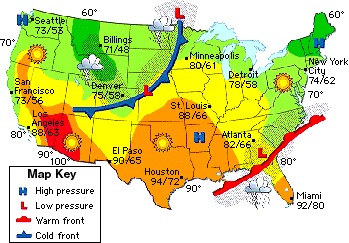
26.
a)
High Air Pressure
b)
High Temperatures
c)
Heavy Rain
d)
Hail
27.
High Pressure is associated with this type of weather...
a)
Cloudy/Overcast Weather
b)
Cold Weather
c)
Warm Weather
d)
Fair Weather
28.
Low Pressure is associated with this type of weather...
a)
Cloudy/Overcast Weather
b)
Cold Weather
c)
Warm Weather
d)
Fair Weather
29.
Which weather tool measures air pressure?
a)
thermometer
b)
barometer
c)
anemometer
d)
psychrometer
30.
This weather tool measures wind speed and direction
a)
thermometer
b)
barometer
c)
anemometer
d)
psychrometer
31.
The amount of water vapor present in the air is called ________________.
a)
weather
b)
humidity
c)
air mass
d)
dew point
32.
Air pressure is greatest:
a)
closer to Earth
b)
farther from Earth
33.
What causes warm air to rise?
a)
the fact that it's less dense than cold air 
b)
The fact that it weighs more than cold air 
c)
The fact that it has higher pressure than cold
d)
the fact that its more dense than cold air 
34.
The center of a hurricane is called the ______.
a)
center
b)
brain
c)
eye
d)
circle
35.
Wind direction is measured by 
a)
wind (weather) vane
b)
anemometer
c)
barometer
d)
Rain gauge
36.
A scientist who measures and predicts weather conditions is known as 
a)
an astronomer
b)
a geologist
c)
a meterologist
d)
a weatherologist
37.
A low pressure system is located over Georgia. What type of weather will they have?
a)
clear, sunny skies
b)
cloudy and rainy
38.
A high pressure system is located north of New York City. What type of weather will be experienced there?
a)
clear, sunny skies
b)
cloudy and rainy
39.
This weather tool will help measure temperature degrees in Fahrenheit and Celsius  
a)
Anemometer
b)
Thermometer
c)
Weather Vane
d)
Barometer
40.
Name this instrument that measure air temperature.
a)
barometer
b)
thermometer
c)
psychrometer
d)
hygrometer
41.
This instrument uses mercury to measure air pressure.
a)
thermometer
b)
anemometer
c)
barometer
d)
rain gauge
42.
This instrument measures wind speed.
a)
thermometer
b)
barometer
c)
anemometer
d)
hygrometer
43.

This instrument measures humidity.

a)

hygrometer

b)

thermomete

c)

rain gauge

d)

barometer

44.
A barometer measures ___.
a)
amount of rain
b)
temperature
c)
air pressure
d)
amount of snow
45.

A hygrometer measures ___.

a)

amount of rain

b)

temperature

c)

air pressure

d)

humidity

46.

This extreme weather event forms over warm oceans and weakens when it hits land.

a)

Hurricane

b)

Tornado

c)

Thunderstorms

47.

This extreme weather event forms over flat land mainly in the Central United States.

a)

Hurricane

b)

Tornado

c)

Thunderstorms

48.

This extreme weather event can be hundreds of miles wide.

a)

Hurricane

b)

Tornado

c)

Thunderstorms

49.

This extreme weather event is usually not more than 1/4 mile wide.

a)

Hurricane

b)

Tornado

c)

Thunderstorms

50.

This extreme weather event can last 3 weeks.

a)

Hurricane

b)

Tornado

c)

Thunderstorms

51.

This extreme weather event usually lasts from 3 minutes to one hour.

a)

Hurricane

b)

Tornado

c)

Thunderstorms

52.

This extreme weather event has winds from 75mph - 180mph that slow down once they hit land.

a)

Hurricane

b)

Tornado

c)

Thunderstorms

53.

This extreme weather event has winds that can reach 300 mph.

a)

Hurricane

b)

Tornado

c)

Thunderstorms

54.

There are usually around ten of these every year in the Atlantic Ocean.

a)

Hurricane

b)

Tornado

c)

Thunderstorms

55.

There are usually around 800 - 1,000 of these in the United States each year. Most of them form in the great plains.

a)

Hurricane

b)

Tornado

c)

Thunderstorms

56.

You have several days to prepare for this extreme weather event.

a)

Hurricane

b)

Tornado

c)

Thunderstorms

57.

You usually have 1-10 minutes to prepare for this extreme weather event.

a)

Hurricane

b)

Tornado

c)

Thunderstorms

58.
 Where do tropical storms start? 
a)
northpole
b)
on the coast
c)
in the ocean, near the equator
d)
in the ocean, near land
59.
"A tropical cyclone is a very strong tropical storm that starts in the ocean waters near the equator. The storm moves its way toward where the air is cooler, which is usually away from the equator. The wind gets stronger, and the rain gets heavier." What can be concluded about a tropical storm as it moves away from the equator? 
a)
It disappears.
b)
Its strength does not change. 
c)
It gets stronger.
d)
It gets weaker.
60.

a vortex of violently rotating winds

a)

delicious

b)

tornado

c)

Baton Rouge

d)

knock

61.

Which of the following is true about EVERY hurricane, thunderstorm, and tornado?

a)

Once they run out of moisture, they disappear

b)

They all have a calm center known as an eye

c)

Their circular winds are caused by warm air rising and cool air sinking

d)

They use the same measurement scale

62.
Which of the following is needed for a tornado to form?
a)
Moisture
b)
A supercell
c)
An unknown variable
d)
All of the above
63.
What causes a tornado to disappear?
a)
Adding in warm air
b)
Losing too much moisture
c)
A thunderstorm
d)
A large obstacle
64.
How do the conditions for a tornado differ from the conditions for a hurricane?
a)
Tornadoes never form when there is rain, while hurricanes always form with rain.
b)
Tornadoes form under low pressure, while hurricanes form under high pressure
c)
Tornadoes form in a stable atmosphere, while hurricanes form in an unstable atmosphere 
d)
Tornadoes form over land, while hurricanes form over bodies of water
65.
What storm is a funnel shaped cloud?
a)
tornado
b)
hurricane
c)
thunderstorm
66.
What are tornadoes?
a)
a storm with thunder and lighting and typically also heavy rain or hail
b)
a storm that can be the same as thunderstorms, but can be even more dangerous
c)
a mobile, destructive vortex of violently rotating winds having the appearance of a funnel shaped cloud and beneath a large storm system.
d)
a huge storm with strong winds and storm surges
67.
A severe storm which involves a funnel cloud forming over land is:
a)
hurricane
b)
tornado
c)
thunderstorm
d)
blizzard
68.
These can be produced by thunderstorms
a)
stationary fronts
b)
tornadoes
c)
volcanoes
d)
tsunamis
69.

How many categories are there for a hurricane?

a)

10 categories

b)

5 categories

c)

None

d)

6 categories

70.
What do hurricanes feed on?
a)
warm tropical water
b)
hot water
c)
cold artic water
d)
rain
71.
Where is Tornado Alley located?
a)
Near the equator of the Earth
b)
Near the North Pole
c)
South Central Los Angeles
d)
Middle states of United States
72.
What is the scale that is used to measure tornadoes?
a)
Mohs Scale
b)
Enhanced Fujita Scale
c)
Saffir Simpson Scale
d)
McDonalds Scale
73.
What are the effects of a thunderstorm?
a)
destruction of property, storm surge, tidal flooding, high winds, possible tornadoes, heavy rain, flooding and loss of life.
b)
Major destruction of property, loss of life, lightning and hail. 
c)
produces lightning, Strong winds, hail, and possible tornadoes.
d)
saturated soil, mud-slides, property damage and loss of life.
74.

What happens if a hurricane moves over land or cold ocean water?

a)

it will get stronger

b)

it will get weaker

c)

it will upgrade its category

d)

it will morph into a typhoon

75.

What type of storm forms from updrafts and downdrafts?

a)

Hurricanes

b)

Tornadoes

c)

Thunderstorms

76.

This extreme weather event usually lasts from 30 minutes to several hours.

a)

Hurricane

b)

Tornado

c)

Thunderstorms

77.

There are usually around 2,000 of these happening everyday in the world.

a)

Hurricanes

b)

Tornadoes

c)

Thunderstorms

78.

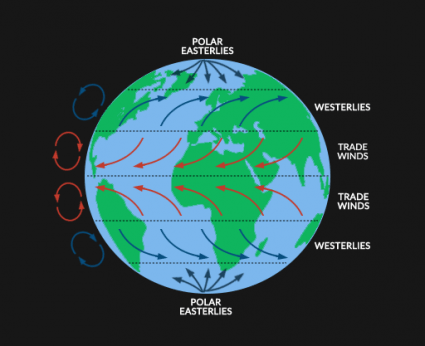
Westerlies blow in which direction?

a)

West to East

b)

North to South

c)

South to North

d)

East to West

79.

Easterlies blow in which direction?

a)

East to West

b)

North to South

c)

South to North

d)

West to East

80.

The Coriolis Effect is caused by what?

a)

The wind blowing

b)

Earth's gravity pulling things down

c)

The rotation of the Earth

d)

The pull of the Moon

81.

Winds blow from areas of what to what?

a)

High temperature to high pressure

b)

Low temperature to high pressure

c)

High pressure to low temperature

d)

Low temperature to high temperature

82.

what is the coriolis effect?

a)

change in location of warm and cold surface water every 2-7 years

b)

tendency of objects moving large distances on Earth’s surface to bend to the right in the northern hemisphere & to the left in the southern hemisphere

c)

winds in northern Indian ocean that blow from the southwest in the summer & from the northeast in winter

d)

two layers of horizontal winds moving in opposite directions

83.

what is the main cause of the coriolis effect?

a)

earth’s rotation

b)

trade winds

c)

the sun and ocean

d)

temperature

84.

westerlies

a)

winds that blow from west to east between 30 and 60 degrees latitude in both hemishpheres

b)

winds that blow from 30 degrees latitude almost to the equator in both hemispheres

c)

area around the equator where there is very little wind ("dull", "sluggish")

d)

area around 30 degrees latitude in both hemispheres where there is very little wind

85.

trade winds

a)

winds that blow from west to east between 30 and 60 degrees latitude in both hemispheres

b)

winds that blow from 30 degrees latitude almost to the equator in both hemispheres

c)

area around the equator where there is very little wind ("dull", "sluggish")

d)

area around 30 degrees where there is very little wind

86.

The windless, rainy zone near the equator is called the what?

a)

Doldrums

b)

Easterlies

c)

Tropics

d)

Jet Stream