Wayground logo

Free Printable Worksheets

Font size

S
M
L
XL
Worksheets

Exam Review

Total questions: 71

Worksheet time: 50mins

Name
Class
Date
1.
What does a waxing moon mean?
a)
when the lit part of the moon increases
b)
when the lit part of the moon decreases
c)
the pathway the earth takes around the sun
d)
all of the planets, moon, and other space objects going around the sun
2.
What describes the earth going around the sun?
a)
rotation
b)
revolution
3.

The HOTTEST stars are usually what color

a)

yellow

b)

orange

c)

blue

d)

pink

4.

What causes day and night here on our Earth?

a)

The different moon phases

b)

Asteroids

c)

The rotation of Earth

d)

Stars

5.

What causes our seasons here on Earth?

a)

Stars in our universe

b)

Our revolution around the moon

c)

Earth's tilted axis and our rotation

d)

The revolution of Earth around the sun and Earth's tilted axis
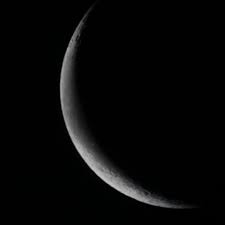
6.
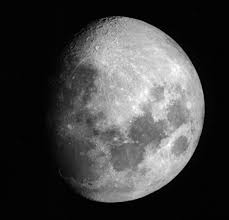
Name the moon phase
a)
waning crescent
b)
waxing crescent
c)
waning gibbous
d)
waxing gibbous
7.
Name the moon phase
a)
waning crescent
b)
waxing crescent
c)
waning gibbous
d)
waxing gibbous
8.
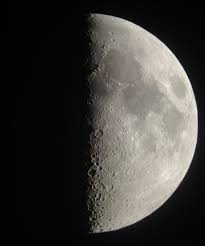
Name the moon phase
a)
First Quarter
b)
Last Quarter
c)
New Moon
d)
Full Moon
9.
Name the moon phase
a)
waning crescent
b)
waxing crescent
c)
waning gibbous
d)
waxing gibbous
10.
Which moon phase is when you can't see the moon at all?
a)
Waning crescent
b)
Full moon
c)
Waxing gibbous
d)
New moon
11.
How many phases does the moon go through?
a)
4
b)
8
c)
10
d)
16
12.
The Moon orbits Earth in a ________________ direction
a)
clockwise
b)
counterclockwise
c)
upwards
d)
downwards
13.
Define Waxing
a)
Moon is increasing and light part appears to be growing
b)
Completely illuminated
c)
dark side is facing earth
d)
Moon is decreasing and light part appears to be shrinking
14.

The Lunar cycle is complete after how much time?

a)

24 hours

b)

24 days

c)

29.5 hours

d)

29.5 days

15.

Most scientists believe the Big Bang Theory explains which of the following questions?

a)

How our planets and moons formed

b)

How our universe began

c)

How the sun turns hydrogen into helium

d)

How fast light travels through space

16.

Which statement is true?

a)

The galaxies are moving toward us.

b)

The galaxies are moving away from us.

c)

The universe remains static or unchanged in motion.

d)

None of the above

17.

Cosmic Microwave Background Radiation is a form of _________.

a)

Matter

b)

Energy

c)

Visible Light

d)

Water

18.

As galaxies move away from our galaxy

a shift on the electromagnetic spectrum

(EMS) is noticed. This phenomena is

called _____________.

a)

redshift

b)

blueshift

c)

unshift

d)

blackshift

19.
The three pieces of evidence for our current theory of the universe are:
a)
blueshift, CMB, moon landing.
b)
redshift, IBM, Andromeda galaxy.
c)
redshift, CMB, distribution of elements.
d)
doppler effect, light spectra, fusion.
20.
The only elements in the universe were hydrogen and helium until:
a)
the big bang.
b)
humans came along.
c)
stars began doing fusion.
d)
the redshift was discovered.
21.
CMB stands for:
a)
Colorful Mystic Background Rehearsal.
b)
Cosmic Mini Butterfly Repellent.
c)
Cosmic Microwave Background Radiation.
d)
Cute Microwave Button Reversal.
22.
The universe is ____________ years old.
a)
8.13 billion
b)
13.8 billion
c)
1.83 billion
d)
381 million
23.
The most abundant element in the universe today is:
a)
water
b)
hydrogen
c)
oxygen
d)
carbon
24.
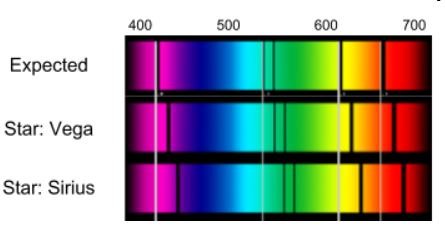
What is true about these stars?
a)
Both of these stars are moving away from us.
b)
Both of these stars are moving towards us.
c)
Both of these stars are blueshifted.
d)
The star Sirius is closer to us.
25.

Natural processes that happen on Earth are called ____ processes.

a)

slow

b)

historic

c)

landmark

d)

Geoscience

26.
The continuous movement of the continents.
a)
geoscience
b)
rain
c)
wind
d)
plate tectonics
27.

Who came up with the theory of continental drift?

a)

Alfred Wegener

b)

Harry Hess

c)

Albert Einstein

28.

What is the name of the super continent that occured 225 million years ago?

a)

Pangaea

b)

Wegener

c)

Plate tectonics

d)

continental crust

29.

Which boundary is most likely to build mountains?

a)

convergent

b)

divergent

c)

transform

30.

What type of boundary is also called a sliding boundary?

a)

convergent

b)

divergent

c)

transform

31.

Where is a rift valley formed?

a)

Diverging continental crust

b)

Converging continental crust

c)

Converging continental and oceanic crust

d)

Transform boundary

32.

Hess' theory that new seafloor is formed when magma is forced upward toward the surface at mid-ocean ridge

a)

seafloor spreading

b)

continental drift

c)

diverge

d)

Pangaea

33.

Which of the Earth's systems contains mountains?

a)

biosphere

b)

geosphere

c)

atmosphere

d)

hydrosphere

34.

In which of these locations is the greatest amount of fresh water stored?

a)

lakes

b)

oceans

c)

glaciers

d)

atmosphere

35.

The ocean is part of which of Earth's systems?

a)

atmosphere

b)

geosphere

c)

biosphere

d)

hydrosphere

36.
The outermost solid layer of the Earth is called the
a)
mantle
b)
outer core
c)
inner core
d)
crust
37.
Is a layer of week of soft mantle that is made of rock that flows slowly.  Tectonic plates move on top of this layer. 
a)
Inner Core
b)
Asthensophere
c)
Lithosphere
d)
Outer Core
38.
Identify the letter in the diagram.  Identify letter A
a)
Lithosphere
b)
Asthenosphere
c)
Mantle
d)
Outer Core
39.
Identify the letter in the diagram.  Identify letter E
a)
Lithosphere
b)
Asthenosphere
c)
Mantle
d)
Outer Core
40.
Identify the letter in the diagram.  Identify letter F
a)
Lithosphere
b)
Asthenosphere
c)
Mantle
d)
Outer Core
41.
Identify the letter in the diagram.  Identify letter B
a)
Crust
b)
Convection Current
c)
Inner Core
d)
Outer Core 
42.
Identify the letter in the diagram.  Identify letter D
a)
Lithosphere
b)
Asthenosphere
c)
Mantle
d)
Outer Core
43.

The movement in the Asthenosphere is caused by what?

a)

Convection currents

b)

Radiation currents

c)

Earth's iron core

d)

Earth's liquid metal outer core

44.
Which letter represents the movement created by the P Wave?  
a)
A
b)
B
c)
C
45.
What is the lag time?  
a)
30 sec
b)
86 sec
c)
56 sec
d)
140 sec
46.
What is directly above the focus?  
a)
Epicenter
b)
Fault
c)
Seismograph Station
47.
Which seismic wave does a seismograph detect first?  
a)
P Wave
b)
S Wave
c)
Surface Wave
48.
Which city is closest to the epicenter?  
a)
A
b)
B
c)
C
49.
Which seismogram represents a city that is far from the epicenter of an earthquake?  
a)
New York, NY
b)
Nome, Alaska
c)
Guadalajara, Mexico
50.
Scientists use radioactive decay to measure...
a)
relative time
b)
absolute time
c)
half-lives
d)
time of day
51.
The length of time required for half of the radioactive atoms in a sample to decay is its...
a)
era
b)
age
c)
half-life
d)
eon
52.
How does absolute age differ from relative age?
a)
only absolute dating indicates which rock is older than another
b)
only absolute dating finds the age in years
c)
only relative dating finds the age in years
53.
If the half-life of a radioactive group of atoms is 100 years, then how old is the rock if there have been two half-lives?
a)
25 years
b)
200 years
c)
400 years
d)
800 years
54.
According to the law of superposition, the oldest fossils are found 
a)
At the top of the rock layers
b)
Near the bottom of the rock layers
c)
In the middle of the rock layers
d)
Somewhat near the surface
55.
Which type of dating method can be used on rock layers by applying the Law of Superposition?
a)
relative dating
b)
absolute dating
c)
radioactive dating
d)
radiometric dating
56.
states that the geologic feature which cuts another is the younger of the two features
a)
law of horizontality
b)
cross cutting relationships
c)
law of superposition
d)
uniformitarianism
57.
What element is usually used to date fossils?
a)
uranium-235
b)
carbon-14
c)
mercury-203
d)
thorium-234
58.
Which of the following correctly lists the layers in order from oldest to youngest?
a)
A, B, C, D, E
b)
E, B, C, D, A
c)
E, D, C, B, A
d)
C, B, A, D, E
59.
How old is the Earth?
a)
4.6 billion years
b)
1.4 billion years
c)
4.6 million years
d)
6000 years
60.
What color of star is the coolest?
a)
Red
b)
Yellow
c)
Blue
d)
White
61.
What is the name of the largest stars?
a)
Protostars
b)
Supergiants
c)
Red Giants
d)
Dwarf Stars
62.
What is the name of baby stars?
a)
Dwarf
b)
Supergiant
c)
Protostars
d)
Nebulas
63.
What is the name of the gas/dust clouds that form stars?
a)
Nebulas
b)
Protostars 
c)
Supernova
d)
Neutron Star
64.
What is the name of the explosion at the death of a massive star?
a)
Supergiant
b)
Supernova
c)
Black Hole
d)
Nebula
65.
A low mass main sequence star is...
a)
the size of our earth.
b)
150 times bigger than our sun.
c)
like our sun.
d)
so dense not even light can escape it.
66.
As the core of the red giant collapses it condenses into a super bright and dense star called...
a)
a brown dwarf.
b)
a red super giant.
c)
a white dwarf.
d)
a black hole.
67.
In the diagram given, what happens as we move to the left?
a)
Stars Get Larger
b)
Stars get Colder
c)
Stars get hotter
68.
Which star is the coldest?
a)
Yellow Star
b)
Red Star
c)
Orange Star
d)
Blue Star
69.
Which category is our Sun located in?
a)
White Dwarfs
b)
Supergiants
c)
Main Sequence
d)
Giants
70.
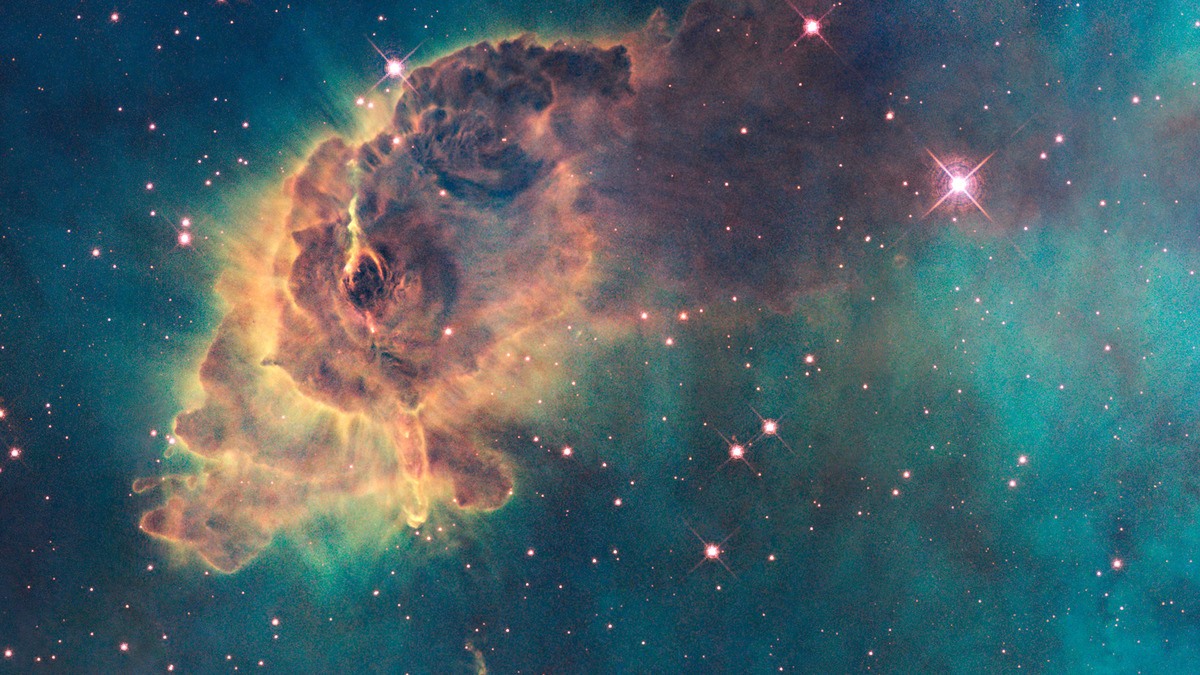
What is the best title for this picture?
a)
Birth of a Star
b)
Birth of a Universe
c)
Life Cycle of a Star
d)
Big Bang Theory
71.
Which star has the lowest temperature?
a)
A
b)
B
c)
C
d)
D