wayground logo

Free Printable Worksheets

Font size

S
M
L
XL
Worksheets

3rd 9 Weeks Exam Study Guide

Total questions: 118

Worksheet time: 3hrs 30mins

Name
Class
Date
1.
An observation that deals with numbers or amounts.
a)
observing
b)
quantitative observation
c)
scientific investigation
2.

When you measure your height or your weight you are making a ___________ observation.

a)

qualitative

b)

quantitative

3.
What is a factor that can change in an experiment?
a)
Claim
b)
Variable
c)
Scientific Inquiry
d)
Hypothesis
4.

The system of measurement based on powers of ten

a)

Metric System

b)

Customary System

c)

Binary System

d)

Rider System

5.

Which of the following is NOT a Metric unit of measurement?

a)

meters

b)

grams

c)

miles

d)

liters

6.

What trait does a graduated cylinder measure?

a)

length

b)

mass

c)

volume

d)

temperature

7.

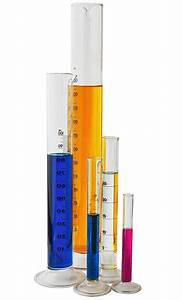
What is the name of this tool of measurement?

a)

scale

b)

beaker

c)

graduated cylinder

d)

triple beam balance

8.

What unit would you use to measure the distance between here and California?

a)

millimeters

b)

centimeters

c)

meters

d)

kilometers

9.

Which would be the best Metric unit for measuring your mass.

a)

pounds

b)

milligrams

c)

grams

d)

tons

10.
The _________ is a set of specific steps that help scientists solve problems. 
a)
Design Process
b)
Scientific Method
c)
Dictionary
d)
Bar graph
11.
Blue Color: Chemical or Physical Property
a)
Chemical Property
b)
Physical Property
12.
Flammability (burns): Chemical or Physical Property
a)
Chemical Property
b)
Physical Property
13.
One cup of water is left outside for two days when it was checked there was only half a cup left. What happened?
a)
evaporation; chemical change
b)
condensation; physical change 
c)
evaporation; physical change
d)
condensation; chemical change
14.
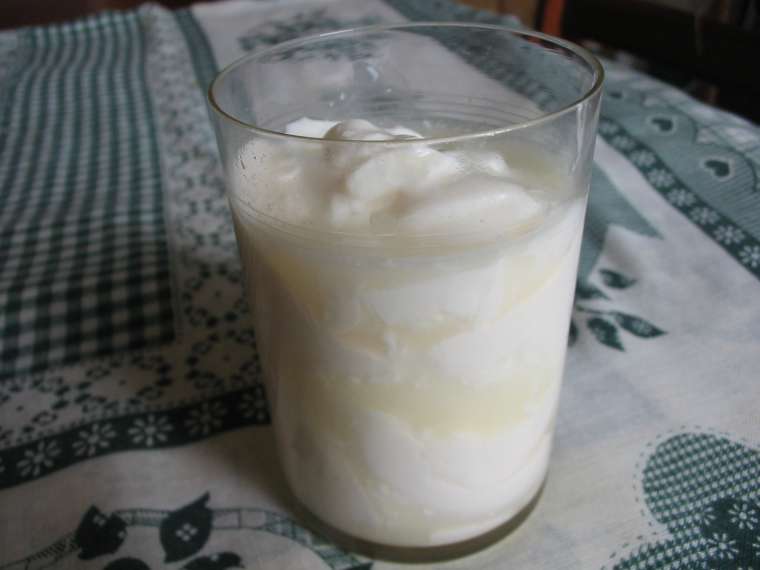
Is milk going sour a physical or chemical change?
a)
Physical 
b)
Chemical
15.

The ability to hammered into a thin sheet or be bent is

a)

Ductility

b)

Solubility

c)

Density

d)

Malleability

16.

When an object has the ability to be stretched into a thin wire this is

a)

Density

b)

Ductility

c)

Dirtability

d)

Dissovility

17.
Is making orange juice a physical or chemical change?
a)
Physical 
b)
Chemical
18.
Which state of matter has molecules that move fastest and spread to fill the space they are in?  They do not form any pattern.
a)
solid 
b)
liquid 
c)
gas
19.
What is matter?
a)
a pure substance
b)
anything that occupies space and possesses mass
c)
an element
d)
a compound
20.
What is the measure of how much space an object takes up?
a)
matter
b)
volume
c)
substance
d)
properties
21.
What kind of properties can only be observed when a substance changes into a different substance?
a)
physical properties
b)
chemical properties
c)
liquid properties
d)
real properties
22.
What is calculated by multiplying
 l x w x h?
a)
mass
b)
weight
c)
volume
d)
grades
23.
Jack has a rock. The rock has a mass of 14g and a volume of 2cm3. What is the density of the rock?
a)
7 mL
b)
7 g/cm3
c)
28 g/cm3
d)
1/7 g/cm3
24.
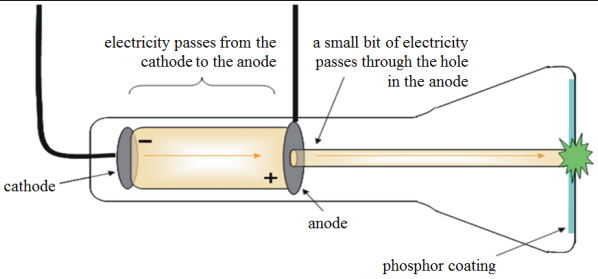
J.J. Thomson provided evidence that an atom...
a)
is the smallest particle of matter
b)
contains negatively charged particles
c)
has an overall negative charge
d)
has an overall positive charge
25.

Isotopes are atoms of the same element, but with a different amount of __________________.

a)

protons

b)

neutrons

c)

electrons

d)

atoms

26.
an element will always have the same number of 
a)
neutrons
b)
protons
c)
isotopes
d)
atoms
27.
An atom has 10 protons and a mass of 18. It has __ neutrons
a)
10
b)
18
c)
28
d)
8
28.
The smallest particle into which an element can be divided and still be the same substance
a)
neutron
b)
atom
c)
electron
29.
How many protons are in an atom with an atomic number of 20, an atomic mass of 45, and a charge of +2?
a)
20
b)
10
c)
2
d)
18
30.
Rutherford's gold foil experiment provided evidence that...
a)
negative and positive charges are spread evenly throughout the atom.
b)
alpha particles have a positive charge.
c)
gold is not a dense as previously thought.
d)
there is a dense positively charged nucleus at the center of an atom.
31.
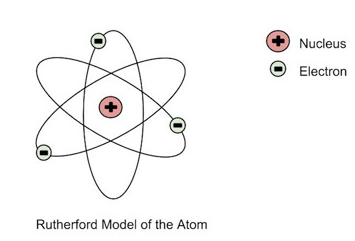
Who came up with the model of an atom pictured?
a)
J.J. Thompson
b)
Ernest Rutherford
c)
Neils Bohr
d)
James Chadwick
32.
Which particle contributes the negative charge to the atom?
a)
proton
b)
electron
c)
neutron
d)
nucleus
33.
The three main subatomic particles are electrons, protons and ____________.
a)
photons
b)
neurons
c)
neutrons
d)
quarks
34.
What is the electrical charge of a proton?
a)
1+
b)
1-
c)
neutral
d)
2-
35.
A mixture that does not look the same throughout:
a)
heterogeneous mixture
b)
homogeneous mixture
c)
the periodic table
d)
water
36.
 A homogeneous mixture has the same composition of particles throughout.
a)
True
b)
False
37.
Chicken soup is an example of what kind of substance?
a)
homogenous
 mixture
b)
solution
c)
heterogeneous
mixture
d)
compound
38.
Ionic bonds are between...
a)
nonmetals and nonmetals
b)
carbon and oxygen
c)
metals and nonmentals
d)
hydrogen and chlorine
39.
Covalent bonds are between...
a)
two or more nonmetals
b)
sodium and chlorine
c)
metals and metals
d)
metals and nonmetals
40.
What is the name for an ion with a positive charge?
a)
cation
b)
anion
c)
onion
d)
union
41.
What is the name for an ion with a negative charge?
a)
cation
b)
anion
c)
onion
d)
union
42.
What are valence electrons?
a)
sum of the protons and neutrons
b)
protons minus electrons
c)
electrons in the inner shells
d)
electrons in the outer shell
43.
If an atom loses two electrons what charge will it have?
a)
-2
b)
-1
c)
+1
d)
+2
44.

If an atom gains one electron, what charge will it have?

a)

-2

b)

-1

c)

+1

d)

+2

45.
If an atom has 7 protons and 7 electrons what charge will it have?
a)
-2
b)
-1
c)
0
d)
+2
46.
How many valence electrons does oxygen have?
a)
2
b)
4
c)
5
d)
6
47.
A ____________is the force that holds atoms together in a compound.
a)
Chemical Formula
b)
Chemical Reaction
c)
Chemical Bond
d)
Synthesis Reaction
48.
Why do elements bond?
a)
To be friends
b)
To create a new element
c)
To become stable
49.
Same repel, opposites
a)
avoid
b)
attract
c)
push
d)
pull
50.
Group numbers on the periodic table help us determine 
a)
The number of valence electrons
b)
Color of the elements
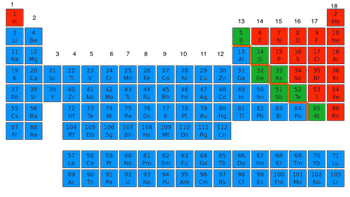
51.
Where are metals located on the periodic table?
a)
Blue
b)
Green
c)
Red
52.
Where are the nonmetals located on the periodic table? 
a)
Blue
b)
Red
c)
Green
53.
Where are the metalloids located on the periodic table?
a)
Blue
b)
Red
c)
Green
54.

All but Hydrogen and Helium want how many valence electrons?

a)

1

b)

2

c)

8

d)

0

55.
What is the correct name for Mg(OH)2?
a)
Magnesium dihydroxide
b)
Magnesium Oxyhydride
c)
Magnesium Oxygen dihydride 
d)
Magnesium hydroxide
56.
What is the proper name for CaCl2?
a)
Calcium dichloride
b)
Monocalcium dichloride
c)
Calcium chloride
d)
Calcium chlorine
57.

Name the ionic compound, LiCl

a)

lithium chlorine

b)

lithium chloride

c)

lithium chlorate

d)

lithium monochloride

58.

Name the molecular compound CO

a)

carbon monoxide

b)

monocarbon monoxide

c)

carbide

d)

oxygen carbide

59.

Name the following compound:

CO2

a)

monocarbon dioxide

b)

carbon oxide

c)

carbon dioxide

d)

oxygen carbonide

60.

What is the correct formula of phosphorus trichloride?

a)

P2Cl3

b)

P3Cl3

c)

PCl3

d)

PCl5

61.
Name this formula: 
Al2O3
a)
Aluminum Oxide
b)
Aluminum Oxygen
c)
Antimony Oxide
d)
Aluminum (VII) Oxide
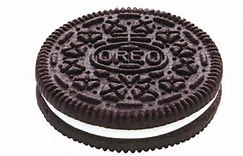
62.
An oreo cookie weighs 20 grams.  It gets crushed into crumbs for a recipe.  How much do its crumbs weigh?
a)
15 grams
b)
25 grams
c)
20 grams
63.
What is the Law of Conservation of mass?
a)
Mass is created in a chemical reaction
b)
Mass is created in a physical change
c)
New chemicals formed from a chemical reaction have a larger overall mass than the original reactants
d)
Mass is never created or destroyed
64.
The coefficient in  3H2O is
a)
6
b)
2
c)
3
d)
5
65.

Which of the following are Subscripts in this Chemical Formula: 3Fe2O4

a)

3,4

b)

3,2

c)

2,4

d)

6

66.
How many nitrogen atoms does NH3 have?
a)
1
b)
2
c)
3
d)
4
67.

Which Chemical Equation is Balanced?

a)

Fe4+O2------4FeO2+O2

b)

2H2+O2-----2H2O

c)

3Cr+4O₂-----2Cr₂O₃

68.
Which statement best explains Newton's Third Law of Motion?
a)
An object at rest tends to stay at rest.
b)
For every action there is an equal and opposite reaction.
c)
The acceleration of an object is based on the force applied.
d)
An object continues its motion until an unbalanced force is applied.
69.
An object is resting motionless on a surface. According to Newton's 1st Law, the object will only start to move if
a)
the net forces on the object equal zero
b)
an unbalanced force is applied to the object
c)
the upward force of the object is equal to its acceleration
d)
two forces that are equal and opposite are applied to the object
70.
A truck that is travelling at a constant speed is carrying some boxes.  If the truck comes to a sudden stop, what will most likely happen to the boxes?
a)
They will stay in the middle of the truck.
b)
They will slide toward the front of the truck.
c)
They will slide toward the back of the truck.
d)
They will fall off the side of the truck.
71.
The force that draws all objects towards Earth.
a)
friction
b)
gravity
c)
mass
d)
acceleration
72.
A rubbing together force that slows things down and stops them.  It works against motion.
a)
acceleration
b)
mass
c)
gravity
d)
friction
73.
Newton's first law that says an object at rest will remain at rest unless acted upon by an unbalanced force is also called the law of 
a)
acceleration
b)
inertia
c)
action and reaction
d)
may the force be with you
74.
A _______ is a push or pull.
a)
Newton
b)
Acceleration
c)
Momentum
d)
Force
75.
Which force produces a change in motion?
a)
Unbalanced force
b)
Balanced force
c)
Gravitational force
d)
Frictional force
76.
What is the standard unit force is measured in?
a)
Newton
b)
Gram
c)
Pound
d)
Meter
77.
A 20 kg bike accelerates at 10 m/s2.  what was the net force
a)
25 Newtons
b)
20 Newtons
c)
200 Newtons
d)
10 Newtons
78.
What is the difference between mass and weight?
a)
mass is how much matter is in an object, and weight is the gravitational pull on that object
b)
mass and weight are the same
c)
weight affects how much mass is in an object
d)
weight is determined by how many atoms make up an object
79.

A student pushes a box to right with a force of 10N while another student pushes the box to the left with a force of 6N. What is the sum of all forces on the box?

a)

4N left

b)

18N right

c)

4N right

d)

2N left

80.
If net force acting on object is 0, then the force is considered to be..
a)
Balanced
b)
Unbalanced
c)
Equal in Direction
d)
Distance/Time
81.
Newton's third law states that any action will have a(n) _______ and ______ reaction
a)
Equal and similar
b)
Equal and opposite
c)
Equal and different
d)
Greater and opposite
82.

F=ma

a)

Newton's

1st

Law of Motion

b)

Newton's

2nd

Law of Motion

c)

Newton's

3rd

Law of Motion

83.

Which one needs a greater net force to move, a kilogram of feathers or a kilogram of iron?

a)

feathers

b)

iron

c)

both require the same force

d)

depends on their friction

84.
When something has speed in a certain direction it is called ___________.
a)
motion
b)
position
c)
velocity
d)
speed
85.
Acceleration of an object happens when things ________
a)
slow down
b)
go faster
c)
change direction (turn)
d)
All of the above
86.
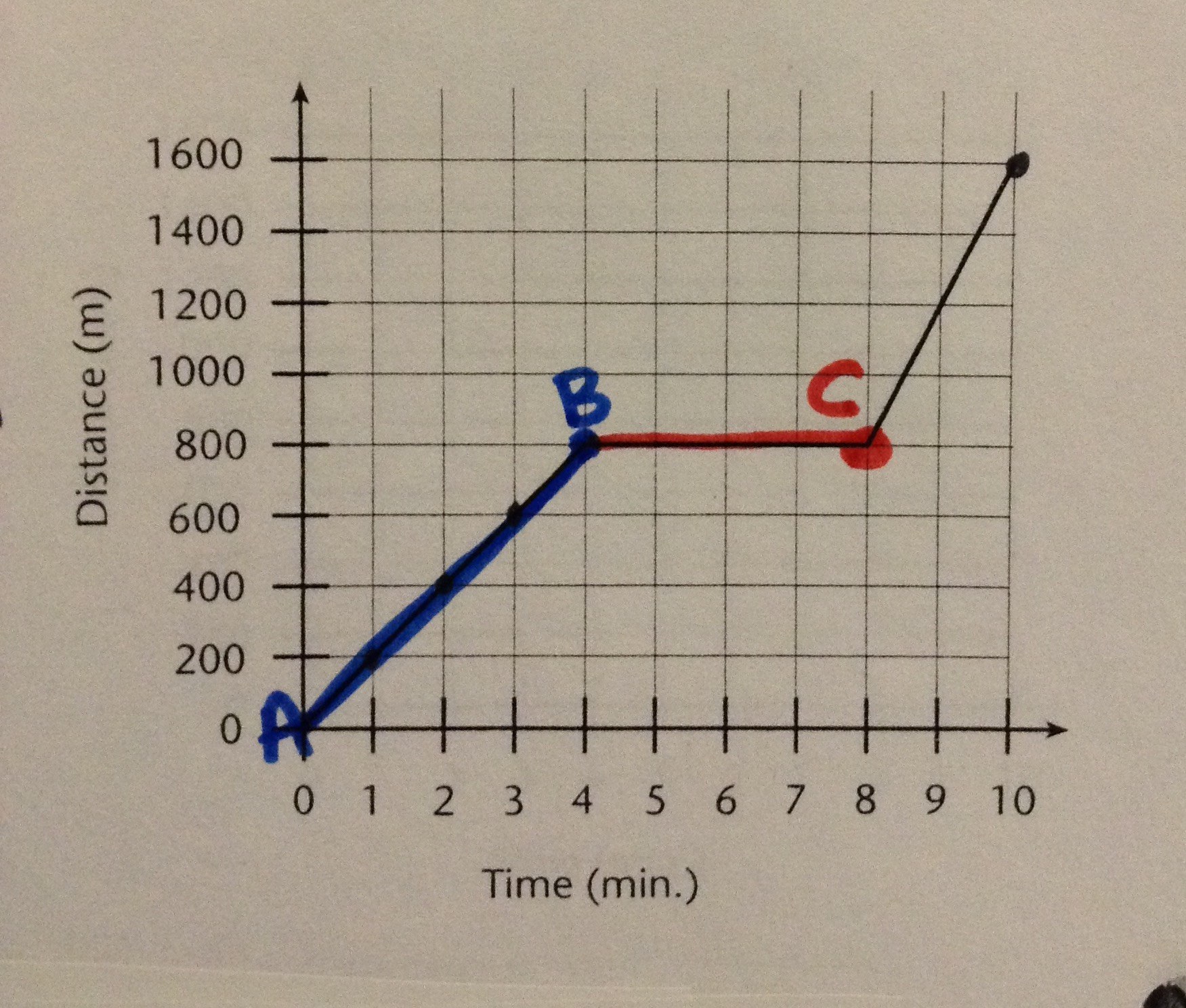
LT4: The graph shows Ashley riding her bike to Maria's house. 
What is occurring from point A to point B?
a)
they are traveling at a constant speed
b)
they are decreasing in speed
c)
they stopped to take a break
87.

The graph represents

a)

no motion

b)

constant velocity

c)

acceleration

d)

negative constant velocity

88.
If a baseball and a cannonball are dropped from the same height at the same time, which ball will hit the ground first?
a)
the cannonball
b)
the baseball
c)
The balls land at the same time.
d)
the ball with the larger volume
89.
Dividing the total distance traveled by the total time is how to calculate
a)
average speed.
b)
average velocity.
c)
average acceleration.
90.
WHICH OF THE FOLLOWING IS NOT AN EXAMPLE OF POTENTIAL ENERGY?
a)
A BALL TRAVELING AT 10 M/S
b)
A COMPRESSED SPRING
c)
WATER BEING STORED AT A WATER DAM
d)
A STRETCHED RUBBER BAND
91.
YOUR BODY OBTAINS ENERGY FROM THE FOOD YOU EAT. WHAT IS THE FORM OF ENERGY IN FOOD?
a)
KINETIC
b)
ELASTIC
c)
GRAVITATIONAL
d)
CHEMICAL
92.

WHAT IS ANOTHER NAME FOR THERMAL ENERGY?

a)

HEAT ENERGY

b)

ITS SIZE

c)

ITS POTENTIAL ENERGY

d)

ITS MECHANICAL ENERGY

93.

WHICH OF THESE BEST DESCRIBES THE LAW OF CONSERVATION OF ENERGY?

a)

NO MACHINE IS 100% EFFICIENT

b)

ENERGY IS NEITHER CREATED OR DESTROYED

c)

THE ENERGY RESOURCES OF EARTH ARE LIMITED

d)

THE ENERGY OF A SYSTEM IS ALWAYS DECREASING

94.

Which of the following is the best description of Solar Energy?

a)

Fossil fuels emitted by the sun.

b)

A non-renewable, air polluting form of energy.

c)

Radiant energy emitted by the sun.

d)

Electrical current that plugs into the sun.

95.

What is energy?

a)

moving energy

b)

stored energy

c)

renewable energy

d)

The ability to do work.

96.

What is potential energy?

a)

moving energy

b)

stored energy

c)

renewable energy

d)

non renewable energy

97.

What is kinetic energy?

a)

energy of motion

b)

potential energy

c)

stored energy

d)

renewable energy

98.

Gas/oil is a renewable or non-renewable source?

a)

Renewable

b)

Non-renewable

99.

The units for work are:

a)

newtons

b)

joules

c)

meters

d)

seconds

100.

At which point of the roller coaster is potential energy the greatest?

a)

W

b)

X

c)

Y

d)

Z

101.

The faster an object moves, the ________ kinetic energy it has.

a)

more

b)

less

102.

Which of the following transforms energy from uranium atoms into electrical energy?

a)

magnetic fields

b)

solar panels

c)

nuclear fission

d)

satellite dish

103.

Which of the following are contentious issues surrounding nuclear energy?

a)

Nuclear power plants generate radioactive waste.

b)

It is expensive and dangerous to store radioactive waste.

c)

Nuclear power plants are fueled by uranium and uranium is a rare metal and is expensive and dangerous to mine.

d)

All of the above.

104.

An energy source that is gone forever once it is used up is called?

a)

renewable

b)

nonrenewable

c)

natural resource

d)

raw material

105.
Energy that comes from natural resources that can be replenished are called ?
a)
nonrenewable
b)
energy in motion
c)
untapped energy
d)
renewable
106.

Cause of pollution in our air and water and the primary cause of global warming is _________

a)

geothermal

b)

fossil fuels

c)

biomass

d)

politics

107.

What causes wind?

a)

Uneven heating of the Earth's surface and the oceans by the sun.

b)

Air sliding down mountains.

c)

Solar storms.

d)

The swaying of trees.

108.
Coal, oil, and natural gas are all are renewable energy sources.
a)
True
b)
False
109.
What kind of energy is in a moving skateboard?
a)
Potential
b)
Kinetic
110.
What kind of energy is in a stretched rubber band?
a)
Potential
b)
Kinetic
111.
At which point is kinetic energy greatest? 
a)
W
b)
X
c)
Y
d)
Z
112.
What would have the greatest kinetic energy?
a)
A car driving down a hill.
b)
A person running down a hill. 
c)
A ball rolling down a hill. 
113.

Is Solar Energy a renewable energy source or a non-renewable energy source?

a)

Non-renewable

b)

Renewable

c)

Neither of the above

114.

Plant photosynthesis and solar panels both depend on what?

a)

Fertilizer

b)

Sun's energy

c)

Silicon ore

d)

microcircuits

115.

What is another name for a solar panel?

a)

photon

b)

heliostat

c)

photovoltaic cells

d)

photon panel

116.

An area of land with a group of energy-producing windmills or wind turbines

a)

Windmills

b)

Wind Farm

c)

Wind Turbines

d)

Generators

117.

What changes wind energy into electricity?

a)

Windmill

b)

Windsock

c)

Wind Turbine

118.
Where does the initial source of energy come from that creates winds?
a)
the moon
b)
the sun
c)
the Earth's surface
d)
the rotation of the Earth