wayground logo

Free Printable Worksheets

Font size

S
M
L
XL
Worksheets

Waves review

Total questions: 97

Worksheet time: 2hrs 47mins

Name
Class
Date
1.
Mechanical waves are created when a source of energy causes a medium to...
a)
Move
b)
Expand
c)
Vibrate
d)
Compress
2.
Waves that move the particles of the medium parallel to the direction in which the waves are traveling are called
a)
Surface Waves
b)
Combination Waves
c)
Longitudinal Waves
d)
Transverse Waves
3.
Waves that move the particles of the medium parallel to the direction in which the waves are traveling are called
a)
Surface Waves
b)
Combination Waves
c)
Longitudinal Waves
d)
Transverse Waves
4.
What kind of wave can travel through space?
a)
electromagnetic waves
b)
compressional waves
c)
transverse waves
d)
longitudinal waves
5.
A wave carries...?
a)
energy only
b)
matter only
c)
the matter carries the energy
d)
neither
6.
What is the measure of how many waves pass a point in a certain amount of time?
a)
frequency
b)
wavelength
c)
midpoint
d)
crest and trough
7.
In a longitudinal wave, the particles move...?
a)
back and forth
b)
up and down
c)
vertically
d)
in the direction of the hertz
8.
Which wave has the greatest amplitude?
a)
The blue wave
b)
The red wave
9.
Which of the following is true about waves?
a)
When wavelength increases frequency increases
b)
When wavelength decreases, frequency increases
c)
When wavelength decreases, frequency decreases
10.
When light strikes an object, it can do all of the following, except...
a)
Be reflected
b)
Be refracted
c)
Be produced
d)
Be absorbed 
11.
What does this diagram represent?
a)
Diffraction
b)
Reflection
c)
Interference
d)
Refraction
12.
A wave in which the particles of the medium vibrate parallel to the direction of the wave motion. 
a)
Transverse Wave
b)
Longitudinal Wave 
c)
Rainbow Wave
d)
Ocean Wave
13.
Why do green plants look green?
a)
Reflect blue and yellow wavelengths
b)
Absorb green wavelengths
c)
Transmit green light
d)
They reflect green wavelengths of the visible spectrum
14.
Which of the following would reflect rather than refract? 
a)
Magnifying Glass
b)
Lens
c)
Mirror
d)
Prism
15.
A periodic disturbance in a solid, liquid, or gas as energy is transmitted through a medium.
a)
Longitudinal Wave
b)
Wave
c)
Transverse Wave
d)
Mechanical Wave
16.
What is interference?
a)
The combining of two waves to form a single wave.
b)
The combining of crests.
c)
The combining of troughs. 
17.
A change in frequency of a wave for an observer moving relative to its source?
a)
Doppler Effect
b)
Interfernce
18.
When light, sound, or heat bounces off a surface that does not go through.
a)
Interference
b)
Doppler Effect
c)
Reflection
d)
Refraction
19.
Why do apples appear red?
a)
Red light reflects and all the other colors are absorbed
b)
Red is absorbed and all the other colors are reflected
20.

How is wavelength measured?

a)

From trough to crest (B to D)

b)

From the center line to the crest (B to C)

c)

From the crest of one wave to the crest of the next (B to F)

d)

From one end of the wave to the far end of the wave (A to H)

21.
True or False: 
Frequency is how many waves pass per second. 
a)
True
b)
False
22.
If you increase frequency what happens to the wavelength?
a)
Wavelength increases
b)
Wavelength decreases
c)
Wavelength remains the same
23.
What is really happening when you see white light?
a)
You are seeing white light
b)
You are seeing a rainbow that's been combined
c)
You are seeing equal parts red, green, and blue light
d)
You are only seeing florescent light
24.

Which of these electromagnetic waves has the longest wavelength on the EM spectrum?

a)

Ultraviolet

b)

Visible red light

c)

Microwaves

d)

x-rays

25.
Which of these waves has the longest wavelength?
a)
Orange
b)
Red
c)
Blue
d)
Green
26.

What type of wave is a sound wave?

a)

Transverse wave

b)

Shock wave

c)

Compression wave

d)

Volume wave

27.

True or False: Sound waves always require a medium to travel through.

a)

True

b)

False

28.
Which of these waves has the highest frequency?
a)
Orange
b)
Red
c)
Purple
d)
Green
29.

Which EM wave has the highest frequency and shortest wavelength?

a)

x-rays

b)

Visible light

c)

Gamma waves

d)

Radio Waves

30.

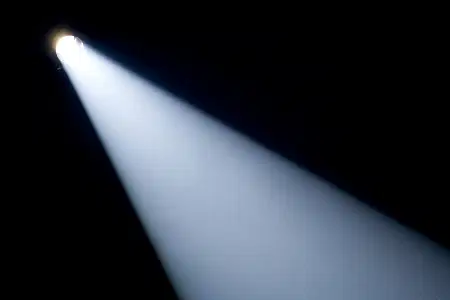
This picture is an example of what kind of wave?

a)

Particle wave

b)

Sound wave

c)

Light wave

d)

Snow wave

31.

Which wave has the highest frequency?

a)

Red (1)

b)

Blue (2)

c)

Green (3)

d)

They are all the same frequency

32.

How are sound waves created?

a)

By certain wavelength being reflected off objects and into our eyes

b)

By vibrations compressing the air in a repeating wave

c)

By tiny vibrations rubbing together

d)

By sound particles traveling in a transverse wave

33.

Requires some medium to travel, and medium is going through phases of compression and rarefaction.

a)

Mechanical Wave

b)

Amplitude

c)

Mechanical and longitudinal wave

d)

Wavelength

34.

When you throw a pebble into a puddle, the point where the ripple is highest is called the _____

a)

apex

b)

trough

c)

crest

d)

maximum point

35.
What do all waves carry?
a)
energy only
b)
matter only
c)
energy and matter
d)
neither
36.
Which answer best explains what causes a wave?
a)
Shaking
b)
Potential energy
c)
Light
d)
Vibrations
37.
A mechanical wave cannot travel through...
a)
a vacuum (outer space)
b)
liquids
c)
gases
d)
media
38.
The number of waves that pass a given point per second is called what?
a)
frequency
b)
wavelength
c)
longitudinal 
d)
transverse wave 
39.

What happens when light is refracted?

a)

It changes direction

b)

It becomes invisible

c)

It releases heat

d)

It moves faster

40.

What happens to the speed of light as it exits the air and enters a glass of water?

a)

It speeds up

b)

It remains constant

c)

It slows down

d)

It first slows down and then speeds up

41.

How do the sound waves of the higher pitch notes compare to the sound waves of the lower pitch notes?

a)

The sound waves of notes with higher pitches have higher amplitudes.

b)

The sound waves of notes with higher pitches travel at higher speed.

c)

The sound waves of notes with higher pitches have higher wavelengths.

d)

The sound waves of notes with higher pitches have figher frequencies.

42.

Which of the following best describes how light waves pass through transparent materials?

a)

They are refracted.

b)

The are reflected.

c)

They are transmitted.

d)

They are diffused.

43.

This illustration best depicts which of the following behaviors?

a)

Reflection

b)

Refraction

c)

Diffraction

d)

Resonance

44.

This image best depicts which of the following wave behaviors?

a)

Reflection

b)

Refraction

c)

Diffraction

d)

Resonance

45.

This image depicts which of the following wave behaviors?

a)

Reflection

b)

Refraction

c)

Diffraction

d)

Resonance

46.
Sound travels FASTEST through which of these materials?
a)
Air
b)
Empty space
c)
Metal
d)
Water
47.

Which object does sound NOT travel through the fastest?

a)

A chair

b)

A table

c)

A football

d)

milk

48.

Sound travels the FASTEST through _____________, SLOWER through ______________ and SLOWEST through _________________.

a)

liquids, solids, gases

b)

solids, gases, liquids

c)

solids, liquids, gases

d)

gases, liquids, solids

49.
What type of wave is shown in the graph?
a)
medium
b)
longitudinal
c)
transverse
d)
electromagnetic
50.
Which runner won the race?
a)
A
b)
B
c)
C
51.
What is accelerating means in speed chart
a)
speed up
b)
slow down
c)
stop
d)
stay the speed 
52.
Which runner had a head start?
a)
A
b)
B
c)
C
53.
What kind of energy is in a moving skateboard?
a)
Potential
b)
Kinetic
54.
What kind of energy is in a rock at the edge of a cliff?
a)
Potential
b)
Kinetic
55.
a)
A
b)
B
c)
C
56.
a)
A & B
b)
B & C
c)
A & C
57.
a)
W
b)
X
c)
Y
d)
Z
58.
a)
At the top of the slide
b)
At the bottom of the slide
59.
a)
At the top of the slide
b)
At the bottom of the slide
60.

What is potential energy?

a)

The amount of energy an object could have if it tried hard enough.

b)

Moving energy

c)

Stored energy

d)

Active energy

61.

A(n) ________ in mass results in a(n) _________ in kinetic energy.

a)

Increase, increase

b)

Increase, decrease

c)

decrease, increase

62.

When a ball rolls down hill, its potential energy _____________ and its kinetic energy ______________.

a)

increases, increases

b)

increases, decreases

c)

decreases, decreases

d)

decreases, increases

63.
a)
Potential
b)
Kinetic
64.

True or False: The Law of Conservation of Energy says that energy cannot be created or destroyed it can only change forms.

a)

True

b)

False

65.
Like poles of a magnet do what?
a)
repel
b)
attract 
c)
nothing 
66.
What device makes a fan plugged into the wall spin?
a)
generator
b)
battery
c)
electromagnet
d)
electric motor
67.
What is a wire in a circuit wrapped around an iron core called?
a)
electromagnet
b)
generator
c)
electric motor
68.
Unlike poles of a magnet do what?
a)
repel
b)
attract
c)
nothing 
69.
A balloon is rubbed all over with wool.  The balloon will now attract wool because the balloon and wool
a)
are magnets
b)
have opposite charges
c)
have like charges
d)
have neutral charges
70.
In a static discharge, which particles move from one object to another?
a)
protons
b)
neutrons
c)
electrons
d)
atoms
71.
Which of these in an insulator?
a)
a copper wire
b)
a silver spoon
c)
a plastic coating on a wire
d)
an aluminum coating on a wire
72.
What is voltage?
a)
a measure of electric current
b)
a kind of static elecricity
c)
a kind of current electricity
d)
a measure of potential energy difference
73.
What is the purpose of a switch in an electric circuit?
a)
to allow the circuit to be opened or closed
b)
to change the direction of the current
c)
to provide a push for the current
d)
to increase the electric power to the load
74.
What size resistor would produce a 3 Amp current flow with a 12 Volt battery
a)
1 Ohm
b)
3 Ohms
c)
4 Ohms
d)
12 Ohms
75.
What is current measured in?
a)
Ω (Ohms)
b)
V (Volts)
c)
A (Amps)
d)
W (Watts)
76.
What is current measured in?
a)
Ω (Ohms)
b)
V (Volts)
c)
A (Amps)
d)
W (Watts)
77.
What is resistance measured in?
a)
Ω (Ohms)
b)
V (Volts)
c)
A (Amps)
d)
W (Watts)
78.
What is current measured in?
a)
Ω (Ohms)
b)
V (Volts)
c)
A (Amps)
d)
W (Watts)
79.
How do you calculate voltage?
a)
Current X Resistance
b)
Resistance ÷ Current
c)
Current ÷ Resistance
d)
Measure it with a ruler
80.

What unit is used to measure voltage?

a)

Ohms

b)

Omega

c)

Volts

d)

Amps

81.

What unit is used to measure current?

a)

Ohms

b)

Omega

c)

Volts

d)

Amps

82.
Batteries and power plants are examples of ______________. 
a)
energy sources
b)
energy conduction
c)
energy transformation
83.
______________ are materials such as rubber that do not allow charges to flow.
a)
conductors
b)
circuits
c)
insulators
d)
amps
84.
A complete, unbroken path that charges can flow through is called an __________________.
a)
conductor
b)
electric circuit
c)
electric current
d)
insulator
85.
The picture shows an electrical circuit. This circuit is a series circuit because: 
a)
It has 3 light bulbs.
b)
The same current flows through all three light bulbs.
c)
It uses a single battery.
d)
The electrical current is divided between the three light bulbs.
86.
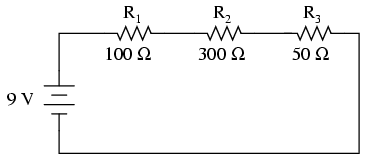
The total resistance in this circuit is 
a)
100 ohms
b)
450 ohms
c)
400 ohms
d)
30 ohms
87.
As the resistance of a circuit increases, the current will...
a)
increase
b)
decrease
c)
stay the same
88.
In a parallel circuit which of the following is the same value throughout the circuit?
a)
Voltage
b)
Current
c)
Resistance
d)
Charge
89.

Define electric current

a)

the total charge, Q flowing through the area per unit time, t.

b)

the total current, I flowing through the area per unit time, t.

c)

the rate of capacitance flow through a conductor.

d)

the rate of current flow through a conductor

90.

1 ampere of current is defined as ......

a)

one coulomb of current passing through the surface area in one second.

b)

one coulomb of charge passing through the conductor in one second

c)

one coulomb of charge passing through the surface area in one second

d)

one coulomb of currrent passing through the conductor in one second.

91.

Resistivity is defined as .....

a)

the capacitance of a unit length per unit cross-sectional area of the material

b)

the resistance of a unit length per unit cross-sectional area of the material

c)

the capacitance of a unit cross-sectional area per unit length of the material

d)

the resistance of a unit cross-sectional area per unit length of the material

92.

State Ohm's Law.

a)

the potential difference across a metallic conductor is proportional to the resistance flowing through it if its temperature is constant.

b)

the resistance across a metallic conductor is proportional to the current flowing through it if its temperature is constant.

c)

the potential difference across a metallic conductor is proportional to the current flowing through it if its temperature is constant.

d)

the current across a metallic conductor is proportional to the potential difference flowing through it if its temperature is constant.

93.

Materials that cut down or resist the flow of charges are called?

a)

conductor

b)

insulator

c)

resistor

d)

circut

94.
A conductor is?
a)
material that current can pass through easily
b)
material that current cannot pass through easily
c)
magnet
d)
electric current
95.
What kind of circuit is this?
a)
series
b)
parallel
c)
solo
d)
circle
96.

A shorthand method to represent the arrangement of the parts in a circuit is known as a(n):

a)

circuit diagram

b)

closed circuit

c)

electric charge

d)

switch

97.

An equation that states current = voltage / resistance is known as:

a)

potentiometer

b)

Kirchoff's current law

c)

Ohm's law

d)

resistor