
 Worksheets
LBC Chap 5 Review
Total questions: 55
Worksheet time: 48mins
Which substance do you predict will dissolve in water?
Al (s)
SiO2 (s)
Cu(s)
CaCl2(s)
Which of these compounds will not dissolve at all in water?
Al (s)
SnF2 (s)
Fe2(SO4)3(s)
CaCl2(s)
Which substance can you predict will conduct electricity based on the formula and physical form described?
C4H10 (l)
AlCl3(aq)
C8H18(aq)
LiCl(s)
Which of these is the best description of a metal?
soluble in water, conductive
soluble in water, nonconductive
insoluble in water, conductive
insoluble in water, nonconductive

What type of bonding holds the atoms of ethanol, C2H6O, together?
ionic
metallic
network covalent
molecular covalent
Based on their chemical structures, which of these materials is likely to be soluble in water?
C (s) (diamond)
C20H42(s)
Fe(s)
Ba(NO3)2(s)
What does the term soluble mean?
Can dissolve into something else
Can not dissolve into something else
To disperse evenly into another substance.
A property that describes how well a substance transmits electricity.

What type of bonding has the following properties:
Can dissolve in water.
Tend to be solids.
Can conduct electricity when dissolved in water.
Metallic
Ionic
Molecular Covalent
Network Covalent
Which of the following substances will dissolve in water?
Ca
NO2
Si
CH4
CuSO4
Select which of the following statements are true.
Copper(II) sulfate, CuSO4, does not dissolve in water.
Glass, made of silicon dioxide, SiO2, does not dissolve in water.
Ethanol, C2H6O, dissolves in water but does not conduct electricity.
Brass, also called copper zinc, CuZn, conducts electricity.
Pure iron, Fe, dissolves in water.

A substances does not dissolve in water, and doesn't conduct electricity. What kind of bonding is present in it?
Ionic
Molecular Covalent
Metallic
Network Covalent

What kind of bonding is represented by this picture?
Ionic
Molecular Covalent
Metallic
Network Covalent
Which statement is true about aqueous (it has been dissolved in water) aluminum chloride?
Aqueous aluminum chloride is a substance containing nonmetal atoms only. When dissolved in water, aluminum chloride will conduct electricity.
Aqueous aluminum chloride is a substance containing metal and nonmetal atoms. When dissolved in water, aluminum chloride will not conduct electricity.
Aqueous aluminum chloride is a substance containing nonmetal atoms only. When dissolved in water, aluminum chloride will not conduct electricity.
Aqueous aluminum chloride is a substance containing metal and nonmetal atoms. When dissolved in water, aluminum chloride will conduct electricity.

What type of bonding is found in ammonia, NH3(s)?
Ionic
Metallic
Molecular covalent
Network covalent
Sugar is an example of a compound that is held together by molecular covalent bonding. Therefore, sugar is _____.
bendable and malleable
durable, rigid, and difficult to break
relatively easy to separate into smaller pieces
hard but brittle, fracturing along planes
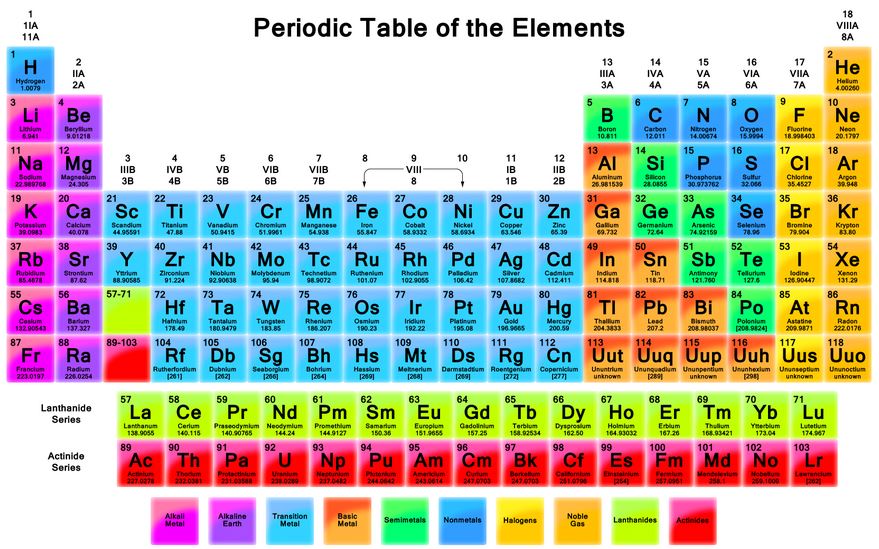
Elements on the LEFT side of the periodic table will most likely form:
Positive ions
Negative ions
Neutral Ions
None of these
An ionic bond forms when atoms ___________ electrons.
gain
share
increase
transfer
Which type of bond has an equal sharing of electrons?
Coordinate Hybrid
Non Polar Covalent
Ionic
Metallic
Which type of bond has a transfer of an electron from on atom to another?
Polar Covalent
Non Polar Covalent
Ionic
Metallic
Bonds that form between two metals are called ______________ bonds.
ionic
covalent
metallic
pervasive
If an atom loses two electrons what charge will it have?
+ 2
- 2
+1
-1
Which type of bond creates a "pool" of electrons between atoms?
Ionic Bonds
Covalent Bonds
Metallic Bonds
Saving Bonds

Which of the following is an example of an IONIC COMPOUND?
NaCl
H2O
CO2
NO

Which of the following is an example of a COVALENT COMPOUND?
H2S
KI
CaCl2
MgO
Which category of elements have the property of being malleable and ductile?
gases
metals
metalloids
nonmetals
Alloys include a "sea" of free moving _______.
electrons
atoms
molecules
protons
Ionic bonds are between _______ and ________.
nonmetals and nonmetals
metals and metals
metals and nonmetals
none of these options
In covalent bonding, electrons are
shared
transferred
wiped out
Outer shell electrons are called
outer electrons
valence electrons
negatives

The compound formed between lithium and chlorine is _________.
ionic
covalent
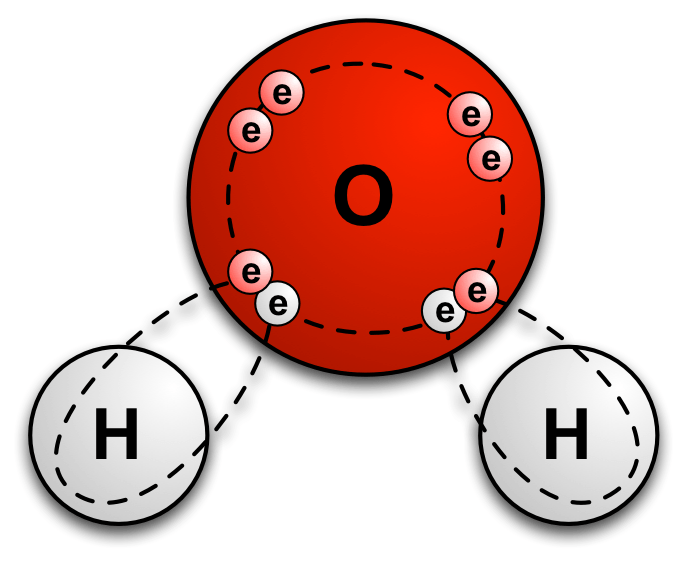
What would be the formula for this molecule?
SNa3
H3O
NaCl
H2O

What if the formula for this molecule ?
CO
CO2
C2O
C2O2
What is the basis of a metallic bond?
the attraction of neutral metal atoms.
the attraction between protons and neutrons.
the attraction between positive metal ions and interlocking electrons.
the attraction between positive metal ions and free floating electrons.
Typically, atoms are more stable when they are
bonded together
apart from each other
Covalent bonding is between a
nonmetal and nonmetal
metal and nonmetal
metal and metal
It depends on the situation

Which bond does this picture best represent?
Metallic bond
ionic bond
covalent bond
James Bond
What do positive ions tend to do?
lose electrons
gain electrons
lose protons
gain protons
Which category of elements usually form negative ions?
metals
nonmetals
metalloids
noble gases
What category of element usually forms a positive ion?
Metals
Nonmetals
metalloids
Noble gases
Electrons in the outermost shell are called
Space Cadets
I do not know and do not want to guess.
Valence Electrons
Orbital Electrons
What type of charge will an atom have if it gains electrons?
Positive
Negative
Neutral
I do not know and do not want to guess.
What type of charge will an atom have if it loses electrons?
Positive
Negative
Neutral
I do not know and do not want to guess.
All atoms in the same group or family on the periodic table share the same
number of protons
number of valence electrons
I do not know and do not want to guess.
number of electrons
An element located in Group 5A (15) of the periodic table will have how many valence electrons?
15
I do not know and do not want to guess.
1
5
The bond between Na & F. Ionic or covalent?
Ionic
Covalent
The bond between N & H. Ionic or covalent?
Ionic
Covalent
What type of bond forms when electrons are transferred from one atom to another?
ionic bond
atomic bond
covalent bond
metallic bond

This animation is showing which of the following?
A conductive compound
A soluble compound
An insoluble compound
A nonconducting compound

This animation is showing which of the following?
A conductive compound
A malleable compound
An insoluble compound
A nonconducting compound

This animation is showing which of the following?
A conductive compound
A soluble compound
An insoluble compound
A nonconducting compound
Do you predict that aqueous lithium sulfate, Li2SO4(aq), will conduct electricity? Explain your reasoning.
Do you predict that octane, C8H18(l) will conduct electricity? Explain your reasoning.
Select all of the substances that contain ionic bonding
LiBr (s)
Fe (s)
CO2 (g)
NI3 (s)
Hg2(NO3)2 (s)

