wayground logo

Free Printable Worksheets

Font size

S
M
L
XL
Worksheets

APES Semester 1 Final Review

Total questions: 143

Worksheet time: 3hrs 55mins

Name
Class
Date
1.
What type of symbiosis?
  * Hummingbirds feed on nectar from flowers.
 * 
Flowers are pollinated by hummingbirds as they move from flower to flower.
a)
commensalism
b)
mutualism
c)
parasitism
d)
predation
2.
What type of symbiosis?
*
The tick lives on dog and feeds on its blood and tissue.
*
  The dog gets skin irritation and can pick up diseases carried by tick.
a)
commensalism
b)
mutualism
c)
parasitism
d)
predfation
3.
What type of symbiosis?
*
  The Red-Chested cuckoo birds find an unattended robin nest, push out the robin eggs, and lay their eggs in the robin’s nest, and leave.
*
 Robin babies die and robin parents feed  and take care of the cuckoo babies.
a)
commensalism
b)
mutualism
c)
parasitism
d)
predation
4.

Chemical process that animals and plants use to obtain energy.

a)

Transpiration

b)

Respiration

c)

Photosynthesis

d)

Percolation

e)

Denitrification

5.

One of the nutrient cycles moves from an atmospheric gaseous form to the soil through both abiotic and biotic processes, moves through the food web, then is returned to the soil or to the atmosphere. Which cycle fits this description?

a)

Nitrogen

b)

Carbon

c)

Phosphorus

d)

Water

6.

What organism is responsible for nitrogen fixation?

a)

plants

b)

humans

c)

bacteria

d)

viruses

e)

mice

7.

Which cycle is shown in this diagram?

a)

Nitrogen

b)

Carbon

c)

Phosphorus

d)

Water

e)

Oxygen

8.

The slow settling of water through rocks and minerals in the soil.

a)

Transpiration

b)

Respiration

c)

Photosynthesis

d)

Percolation

e)

Evaporation

9.

The "Tragedy of The Commons" is...

a)

An economic issue where people do not have enough money to buy basic needs so they resort to stealing and breaking the law.

b)

A type of play where someone tragically dies or gets killed.

c)

Economic issue where individuals tend to take advantage of the natural resource and it becomes unavailable for everyone.

10.

Sustainability

a)

The process of maintaining resources so they are not depleted or permanently damaged.

b)

The ability to read minds

c)

The ability to save resources for years and years

11.

Why does a Tragedy of the Commons happen?

a)

A person values growing their resource

b)

A person has a really bad day

c)

A person benefits by using the commons more

12.
Where you will find the ozone layer.
a)
stratosphere
b)
thermosphere
c)
exosphere
d)
mesosphere
13.
Where weather occurs.
a)
stratosphere
b)
thermosphere
c)
troposphere
d)
mesosphere
14.
Where we live.
a)
stratosphere
b)
thermosphere
c)
troposphere
d)
mesosphere
15.
The most common gas in the atmosphere.
a)
Nitrogen
b)
Oxygen
c)
Carbon Dioxide
d)
Trace gases
16.
As you go higher in the troposphere, the temperature _______________.
a)
decreases
b)
increases
c)
stays the same
d)
gets very hot
17.
This is the layer where most commercial jet airliners fly.
a)
Troposphere
b)
Stratosphere
c)
Mesosphere
d)
Thermosphere
18.
Biotic factors in a biome
a)
sand
b)
water
c)
kinds of birds
d)
air
19.
Abiotic factor in a marine biome
a)
seaweed
b)
water depth
c)
coral
d)
dolphin
20.
Found above the tree line of mountains
a)
polar tundra
b)
alpine tundra
c)
taiga
d)
desert
21.
Has permafrost; in the Arctic or Antarctic
a)
alpine tundra
b)
savanna
c)
desert
d)
polar tundra
22.

Has clumps of trees and seasonal rains

a)

temperate deciduous forest

b)

coniferous forest

c)

savanna

23.
The tropical rain forest & tropical savanna biomes are similar in ___________, but ________________________________.
a)
temperature / the savannah doesn't receive enough rainfall to be a forest
b)
precipitation / the rain forest is hotter
c)
precipitation / the savanna is cooler
d)
temperature / the rain forest doesn't receive enough sunlight to be a savanna
24.
The farther a biome is from the equator, the more we would expect it to be 
a)
warmer & wetter
b)
warmer & drier
c)
cooler & wetter
d)
cooler & drier
25.
The closer a biome is to the equator, the more we would expect it to be
a)
warmer & wetter
b)
warmer & drier
c)
cooler & wetter
d)
cooler & drier
26.
Abiotic factors: hot and wet year-round; thin, nutrient-poor soils • Dominant plants: broad-leaved evergreen trees; ferns; large woody vines and climbing plants;  orchids and bromeliads
a)
Taiga 
b)
Temperate Rain Forest
c)
Temperate Deciduous Forest
d)
Tropical Rain forest
27.
Abiotic factors: low precipitation, variable temperatures; soils rich in minerals but poor in organic material • Dominant plants: cacti and other succulents; creosote bush and other plants with short growth cycles
a)
Desert
b)
Tundra
c)
Tropical grassland
d)
Temperate grassland
28.
The biome known for trees with broad leaves that fall off the trees in the winter.
a)
Coniferous Forests
b)
Temperate Deciduous Forests
c)
Deserts
d)
Tundra
29.
What aquatic biome is characterized by flowing fresh water?
a)
Lakes/Ponds
b)
Mangroves Swamps
c)
Rivers/Streams
d)
Coral Reefs
30.
Which of the following is considered a wetland?
a)
Swamps
b)
Marshes
c)
Bogs
d)
All of the above.
31.
Which of the following is the best definition for estuary?
a)
Narrow band of coastline that exists between high and low tide.
b)
Areas along the coast where fresh water from rivers mixes with salt water from the ocean.
c)
Flowing fresh water containing rapids.
d)
Freshwater aquatic areas that are saturated by water for at least part of the year.
32.
Which brackish watery biome has some areas that are salty, and some areas that are freshwater?
a)
freshwater
b)
coral reef
c)
estuary
d)
ocean
33.
Which watery biome has the highest concentration of salt?
a)
estuary
b)
wetland
c)
freshwater
d)
coral reef
34.
The intertidal zone of oceans
a)
surrounds continents
b)
is on the coastline
c)
has tides that rise and fall each day
d)
is the open ocean
35.
Aquatic biomes cover roughly how much of the Earth's surface
a)
10%
b)
25%
c)
50%
d)
75%
36.
This is a smaller stream or river that feeds into larger rivers and streams
a)
oxbow lake
b)
watershed
c)
tributary
d)
pond
37.
Which biome is pictured below?
a)
ocean
b)
freshwater
c)
coral reef 
d)
wetland
38.
In which biome do these plants (water lily trees/cattails) survive?
a)
ocean
b)
coral reef
c)
wetland
39.
The efficiency of energy transfer from a lower trophic level to the next highest level is roughly
a)
1%
b)
10%
c)
100%
d)
1000%
40.
Trophic levels are represented by 
a)
squares
b)
circles
c)
pyramids
d)
lines
41.
Which animal is the apex predator?
a)
hawk
b)
lizard
c)
snake
d)
grass
42.
In the energy pyramid here, how much of the energy in each level gets lost as heat or used by the organism for survival?
a)
80%
b)
90%
c)
10%
d)
20%
43.
The arrows in a food chain or web represents what?
a)
They point to the organism that is being eaten.
b)
It shows how sunlight flows within an ecosystem.
c)
They show what direction the energy is flowing between organisms. 
d)
They represent how water is transferred within a habitat.
44.
An organism that gets energy from breaking down dead organisms, non-living material or waste is a(an) ___________.
a)
producer
b)
consumer
c)
decomposer
d)
autotroph
45.
__________ primary productivity is the total amount of energy that producers convert to chemical energy in organic molecules per unit of time.   
a)
Net
b)
Total
c)
Gross
d)
None of the above
46.
To measure primary productivity, you can measure carbon dioxide consumption, total carbohydrates produced or ________________.
a)
dissolved oxygen
b)
total proteins produced
c)
light energy entering system
47.
Which environment would have a greater amount of dissolved oxygen, warm water (31degrees C) or cool water (18 degrees C)?
a)
warm
b)
cool
c)
they would be the same
48.
__________productivity = the organic materials that remain after photosynthetic organisms in the ecosystem have used some of these compounds for their cellular energy needs (cellular respiration).
a)
Gross
b)
Primary
c)
Net
d)
Secondary
49.
What term describes the variety of different organisms found in an ecosystem?
a)
population
b)
biodiversity
c)
ecosystem services
50.
What term describes the positive benefits that wildlife or ecosystems provides to people?
a)
ecosystem services
b)
ecosystem
c)
biodiversity
51.
A rainforest has an abundance of different plant an animal species.  This is an example of what?
a)
population
b)
biodiversity
c)
conservation strategies
52.

Ecosystems provide the conditions for growing food. This best illustrates which ecosystem service?

a)

Provisioning

b)

Regulating

c)

Supporting

d)

Cultural

53.

Ecosystems and biodiversity play an important role for many kinds of tourism which in turn provides considerable economic benefits and is a vital source of income for many countries. This best illustrates which ecosystem service?

a)

Provisioning

b)

Regulating

c)

Supporting

d)

Cultural

54.

Ecosystems and living organisms create buffers against natural disasters, thereby preventing possible damage. This best illustrates which ecosystem service? This best illustrates which ecosystem service?

a)

Provisioning

b)

Regulating

c)

Supporting

d)

Cultural

55.

Biodiversity, ecosystems and natural landscapes have been the source of inspiration for much of our art, culture and increasingly for science. This best illustrates which ecosystem service?

a)

Provisioning

b)

Regulating

c)

Supporting

d)

Cultural

56.

Erosion prevention and maintenance of soil fertility: Soil erosion is a key factor in the process of land degradation and desertification. This best illustrates which ecosystem service?

a)

Provisioning

b)

Regulating

c)

Supporting

d)

Cultural

57.

As trees and plants grow, they remove carbon dioxide from the atmosphere and effectively lock it away in their tissues.This best illustrates which ecosystem service?

a)

Provisioning

b)

Regulating

c)

Supporting

d)

Cultural

58.

Each ecosystem provides different habitats that can be essential for a species’ lifecycle. Migratory species including birds, fish, mammals and insects all depend upon different ecosystems during their movements. This best illustrates which ecosystem service?

a)

Provisioning

b)

Regulating

c)

Supporting

d)

Cultural

59.
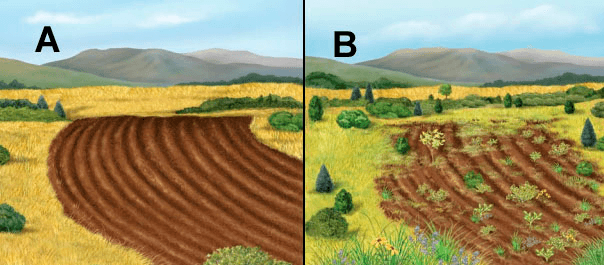
What type of succession is shown going from figure A to figure B?
a)
primary succession
b)
ecological succession
c)
secondary succession
d)
intermediate
60.
What is the goal of the pioneer species in Primary Succession?
a)
To kill the dead materials after a disaster
b)
To rebuild soil
c)
To feed Johnny
d)
To put fresh oxygen into the air
61.
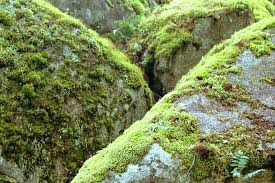
What are examples of pioneer species in a primary succession?
a)
Bushes and Shrubs
b)
Oak trees
c)
Mossess and Lichens 
d)
A rose Bush
62.
After a volcanic eruption, lava covers the land. What is the order that plants grow to repopulate the area?
a)
Lichens → Shrubs → Grasses → Trees
b)
Lichens → tree → shrubs→Grasses
c)
Grasses → Lichens → Shrubs → Trees
d)
Lichens → Grasses → Shrubs → Trees
63.
Reaches a climax community quicker because soil is already present
a)
primary succession 
b)
secondary succession
c)
both types of succession
64.

What type of species/community is a redwood forest?

a)

Climax Community

b)

Pioneer Species

c)

Intermediate Species

d)

Tertiary Community

65.

These animals are not choosy about what they eat or where they live

a)

Endangered

b)

Specialists

c)

Extinct

d)

Generalists

66.

These animals have specific diet and climate requirements

a)

Extinct

b)

Generalists

c)

Specialists

d)

Endangered

67.

Based on the description, the house sparrow is a

a)

generalist

b)

specialist

68.

Based on the description, the raccoon is a

a)

generalist

b)

specialist

69.

Based on the description, the black-footed ferret is a

a)

generalist

b)

specialist

70.

These animals are protected by the government

a)

Specialists

b)

Generalists

c)

Endangered

d)

Extinct

71.

These animals might be in trouble if their habitat changes

a)

Generalists

b)

Specialists

c)

Endangered

d)

Extinct

72.

Long life span

a)

K-selected

b)

r-selected

73.

many years to reach reproductive maturity

a)

K-selected

b)

r-selected

74.

many reproductive events

a)

K-selected

b)

r-selected

75.

substantial parental care is given

a)

K-selected

b)

r-selected

76.

population growth rate is fast

a)

K-selected

b)

r-selected

77.

population growth rate is slow

a)

K-selected

b)

r-selected

78.

mice

a)

K-selected

b)

r-selected

79.

mosquitos

a)

K-selected

b)

r-selected

80.

bald eagles

a)

K-selected

b)

r-selected

81.
Name that population pyramid...
a)
Exponential
b)
Declining
c)
Rapid Growth
d)
Stable Growth
82.
Name that population pyramid...
a)
Developed Country
b)
Developing Country
c)
Unindustrialized Country
d)
Country with Poor Medical Care
83.
Name that population pyramid...
a)
Industrialized Country
b)
Country with Clean Water
c)
Developing Country
d)
Logistic Growth
84.
Name that population pyramid...
a)
Rapid Growth
b)
Industrialized Country
c)
Declining Growth
d)
Stable Growth
85.
Name that population pyramid...
a)
Declining Growth
b)
Rapid Growth
c)
Stable Growth
86.
To measure population density, you must divide the number of individuals living in a defined space by the
a)
area of the space
b)
birth and death rates
c)
carrying capacity
d)
height of the space
87.
Nesting birds often space themselves evenly from other nests. This pattern is called
a)
clumped dispersion.
b)
uniform dispersion.
c)
random dispersion
d)
scatter dispersion
88.
Which of the following will increase the size of a population?
a)
emigration and births
b)
immigration and deaths
c)
immigration and births
d)
emigration and deaths
89.
Which of the following is a density-dependent limiting factor?
a)
human activities 
b)
unusual weather
c)
competition
d)
natural disaster
90.
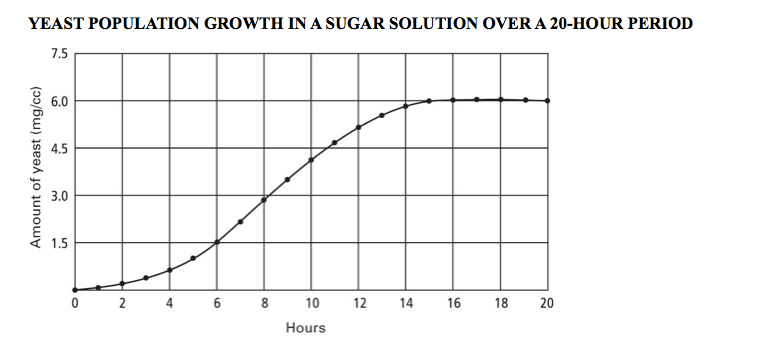
What type of growth is shown on this graph?
a)
logistic
b)
exponential
c)
average
d)
density-independent
91.
Which of the following is a density-independent limiting factor?
a)
natural disaster
b)
predation
c)
disease
d)
parasitism
92.

Which of the following leads to a decrease in birthrates among women?

a)

Higher Education

b)

High Infant Mortality Rate

c)

No Prenatal Care

d)

No contraceptives

93.

What type of growth is the human population experiencing today?

a)

Exponential growth

b)

Zero population growth

c)

Slight decreases in growth

d)

Slight increases in growth

94.

Which of the following statements about survivorship curves is correct?

a)

Germany has a mortality pattern that matches the Type II survivorship curve.

b)

People that have a Type I survivorship curve are likely to die early in life, but if they live past

the early life stage, they are likely to live for a long time.

c)

People that have a Type II survivorship curve are likely to survive infancy and live until a

certain advanced age.

d)

A survivorship curve indicates the likelihood of survival at different stages of life.

95.
Soil is made of
a)
weathered rocks and minerals
b)
dead plants and animals
c)
air and water
d)
all of the above
96.
What do we call the layers of soil?
a)
Deposits
b)
Horizons
c)
Minerals
d)
Rocks
97.
The very top layer of soil is mostly made of
a)
Solid rock 
b)
Clay and mineral deposits
c)
A mixture of minerals and organic material
d)
Mostly organic material (humus)
98.
Which layer of soil is on the bottom?
a)
topsoil
b)
subsoil
c)
bedrock
d)
bottomsoil
99.
Decayed organic material in soil is called______.
a)
Litter
b)
Silt
c)
Humus
d)
Clay
100.
There is an unlimited supply of fertile soil.
a)
True
b)
False
101.
Which of the following is the largest particle in soil?
a)
sand
b)
silt
c)
humus
d)
clay
102.

What is a tool to determine soil texture using 3 percentages?

a)

Ribbon Test

b)

Texture Triangle

c)

pH Test

d)

Jar Test

103.

What is a mixture of sand, silt and clay called?

a)

Loam

b)

Humus

c)

Sandy Clay

d)

Silty Sand

104.
Where do hurricanes form?
a)
in the ocean near warm areas
b)
in the ocean near cold areas
c)
in large lakes near cold areas
d)
in small lakes near warm areas
105.

Air moves from areas of _____ pressure to areas of ____ pressure.

a)

high, low

b)

low, high

106.

Cold air is _______ dense than warm air.

a)

more

b)

less

c)

the same as

107.

Winds move in a curved pattern called

a)

Tradewinds

b)

The doldrums

c)

The Coriolis Effect

d)

Easterlies

108.

Winds that blow steadily from specific directions over long distances are called

a)

Sea breezes

b)

Land breezes

c)

Jet streams

d)

Global Winds

109.

Three types of global winds are:

a)

Tradewinds

b)

Sea Breezes

c)

Polar Easterlies

d)

Prevailing Westerlies

e)

Land breezes

110.
Why do we experience the changing of the season on the earth?
a)
distance from the sun
b)
rotation of the earth
c)
change in solar output
d)
tilt of the earth's axix
111.
El Nino occurs when the tropical ocean waters are warmer in which ocean?
a)
Atlantic
b)
Indian
c)
Pacific
d)
Arctic
112.
Which factor does NOT influence temperature of an area
a)
altitude
b)
latitude
c)
seasonal winds
d)
distance to water
113.
The cutting down of selected trees in a forest so the growth of other trees is not affected.
a)
Selective Cutting
b)
Controlled Burn 
c)
Thinning
d)
Clear Cutting
114.
Removal of all marketable trees from an area.
a)
Selective Cutting
b)
Controlled Burn 
c)
Thinning
d)
Clear Cutting
115.
Environmental causes of land degradation include...
a)
poverty, urban sprawl, deforestation
b)
deforestation, bio-industries, poverty
c)
overgrazing, deforestation, agriculture
d)
agriculture, urban sprawl, poverty
116.
The 3 main grain crops (in any order) grown in the US are:
a)
rice, kale, and corn
b)
wheat, barley, and hops
c)
corn, wheat, and rice
d)
hemp, corn, and rice
117.

A large area of cropland seeded with one crop is a(n)

a)

monocultre

b)

polyculture

c)

organic practice

d)

traditional farming technique

118.

Your friend tells you she’s decided not to use pesticides or synthetic chemicals on her farm; instead she’ll rely on composting and biological pest control. She is practicing

a)

industrial agriculture

b)

monoculture

c)

organic agriculture

d)

sustainable agriculture

119.

What qualifies a forest as an old growth forest?

a)

All the trees qualify for medicare

b)

It hasn't been disturbed for hundred of years

c)

It's home to species like pines, beech, and other conifers

d)

all the trees are at least 75 years old

120.
Which is a negative of mining?
a)
Increased chances for erosion
b)
Obtaining valuable resources
c)
Getting rich
d)
Making energy and electricity
121.
People moving from the rural areas to cities is called...
a)
Ruralization
b)
Urbanization
c)
Colonization
d)
None of these
122.
Which of the following forestry methods causes the LEAST harm to the environment? 
a)
clear cutting
b)
selective cutting
c)
slash and burn
123.
The process of returning the land back to its original state after mining is called...
a)
subsidence
b)
reclamation
c)
solar evaporation
d)
slash and burn
124.
What creates heat islands in cities? 
a)
too much concrete
b)
too many trees
c)
people breathing
d)
urban crisis
125.

Which mining method is most likely to destroy the habitats of wildlife?

a)

Placer mining

b)

Strip mining

c)

Fracking

d)

Subsurface mining

126.

What type of mining would most likely be used if a resource is found in pockets deep in the ground?

a)

Strip mining

b)

Placer mining

c)

Subsurface mining

d)

Mountaintop removal

127.

A mineral that is found in shallow horizontal deposits near the surface is likely to be mined by...

a)

Open pit mining

b)

Mountain top removal

c)

Strip mining

d)

Placer mining

128.

The process of heating an ore beyond its melting point and combining it with other substances is called...

a)

Dredging

b)

Frothing

c)

Tailing

d)

Smelting

129.

What is one of the key benefits to incinerating waste?

a)

Zero pollution

b)

Waste completely disappears

c)

The weight and volume of the waste is reduced

d)

There are no benefits

130.

Discarded electronic devices are considered hazardous waste because they...

a)

Contain heavy metals

b)

Are not recyclable

c)

are ignitable

d)

Are used to watch kitten videos on YouTube

131.

Which of the following categories includes all of the others?

a)

fungicides

b)

pesticides

c)

insecticides

d)

herbicides

132.

The ideal pesticide

a)

would kill only the target pest species

b)

would persist in the environment after its job is done

c)

would cost as much as the damage the pest would have caused

d)

would allow the pest to develop genetic resistance

133.

The pesticide treadmill occurs when

a)

constantly increasing doses of pesticides are needed to control pests

b)

predators of the pest species are killed by broadcast spraying

c)

constantly decreasing doses of pesticides are needed to control pests

d)

a virus transfers pesticide resistance to a new species

134.

Integrated pest management (IPM)

a)

is less complicated and easier to apply than conventional pest management methods

b)

is strictly a program of biological controls

c)

emphasizes the use of chemical agents such as pesticides

d)

requires expert knowledge of insect life cycles and individual pest-crop situations

135.

Which of the following statements is FALSE?

a)

Integrated pest management must involve multiple pest control methods

b)

The goal of integrated pest management is the complete eradication of the pest

c)

In integrated pest management, small amounts of pesticides are used at critical times

d)

Integrated pest management must involve multiple pest control methods

136.

Why might an insect population grow over time even after pesticides are applied monthly?

a)

an increase in the population of insect predators

b)

increased soil erosion

c)

the survival of increasing numbers of insects resistant to the pesticide

d)

an increase in soil and nutrients and soil microorganisms

137.

Biological control

a)

The use of special equipment to remove pests or destroy them; fly swatter

b)

Controlling pests by using other organisms through predation or parasitism

c)

A change that disrupts the normal relationship between a pest and host; tilling soil

d)

The use of pesticides to suppress the pest population

138.

Mechanical control

a)

The use of pesticides to suppress pest population

b)

Using components of the environment--temperature and wind, to control pests

c)

The use of special equipment to remove pests or destroy them; fly swatter

d)

Controlling pests by using other organisms through predation or parasitism

139.

The cultivation of a variety of crops in a given area

a)

monoculture

b)

resistance

c)

broad-spectrum pesticide

d)

polyculture

140.

Known as selective pesticides because they target only one specific type of insect

a)

organic pesticide

b)

inorganic pesticide

c)

broad-spectrum pesticide

d)

narrow-spectrum pesticide

141.

All-natural farming practice-no pesticides used

a)

inorganic farming

b)

organic farming

c)

monoculture farming

d)

polyculture farming

142.
The transfer from the handy-craft system to machine technology and factories is called:
a)
Urbanization
b)
Revolution
c)
Industrialization
d)
Civilization
143.

How can a the effects of a heat island be lessened?

a)

planting shade trees

b)

adding more pavement

c)

constructing larger buildings

d)

attracting more people