wayground logo

Free Printable Worksheets

Font size

S
M
L
XL
Worksheets

Review (90?'s) - 2nd Nine Week Exam

Total questions: 90

Worksheet time: 2hrs 48mins

Name
Class
Date
1.
A set of data are all close to each other, but they are not close to the actual value.  This set of data can be described as...
a)
accurate
b)
precise
c)
both precise and accurate
2.
A set of data are not close to each other, but the average of the data is very close to the actual value.  This set of data can be described as...
a)
accurate
b)
precise
c)
both precise and accurate
3.

3.85 hg = _____ cg

a)

38,500

b)

3,850

c)

38.5

d)

0.000385

4.
What is the density of a liquid that has a mass of 27g and a volume of 30ml?
a)
0.9 g/ml
b)
3 g/ml
c)
57 g/ml
d)
810 g/ml
5.

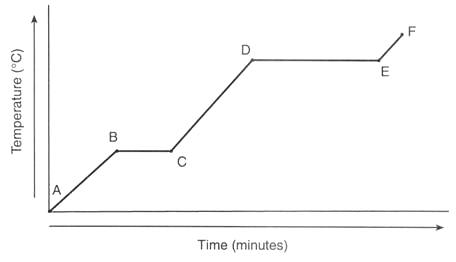
Between which points is the temperature of the substance remaining constant? (Diagram F)

a)

A-B only.

b)

A-B, C-D, E-F

c)

B-C only.

d)

B-C, D-E

6.

A substance's heating curve is shown in the graph. What is its boiling point? (Diagram B)

a)

100 C

b)

60 C

c)

80 C

d)

20 C

7.

Is the substance gaining or losing energy? (Diagram D)

a)

Gaining

b)

Losing

8.

What phase change is occurring at line segment from B-C if the graph is exothermic? (Diagram E)

a)

melting

b)

freezing

c)

boiling

d)

condensation

9.
A series of steps used by scientists to solve a problem or answer a question. 
a)
scientific method
b)
recipe
c)
data collection
d)
metric system
10.
Information gathered using your 5 senses.
a)
Observation
b)
Inference
11.
Mini conclusion used to explain what you see, hear, or experience.
a)
Observation
b)
Inference
12.

A scientific ____________ is a statement that describes WHAT always happens under certain conditions in nature.

a)

law

b)

theory

c)

method

d)

variable

13.

A scientific theory...

a)

explains why and is based on lots of evidence

b)

is not valid

c)

is not reliable

d)

has not been tested many times

14.

Theory or Law? Kepler's ______ of Planetary Motion: how planets orbit the sun.

a)

Theory

b)

Law

15.

Einstein's _______ of General Relativity: gravity curves space and time. Tries to explain why starlight bends.

a)

Theory

b)

Law

16.
The leaf is 5mm wide.
a)
Qualitative
b)
Quantitative
17.
It makes a loud crackling sound.
a)
Qualitative
b)
Quantitative
18.

Classify the following statement as science or not science: The moon orbits the Earth.

a)

science

b)

not science

19.

Classify the following statement as science or not science: All diseases and ailments are the results of sorcery.

a)

science

b)

not science

20.

Some teachers think that students learn best in rooms with music. They teach the same lesson, but one class plays music in the background and the other is not. They give a test and compare the results. which is the experimental group?

a)

group with music playing

b)

group with high test scores

c)

group with no music playing

21.
Sarah wanted to find out if the size of a car tire made it a smoother ride over bumps. What is the dependent variable?
a)
Size of tire
b)
How smooth the ride was over bumps
c)
Type of car
22.
Robert wanted to know if the type of phone you used gave you better or worse service. What is the independent variable. 
a)
Location of phone call
b)
Type of phone
c)
How good the service was
23.

2.7 L = _____ mL

a)

0.27 mL

b)

270 mL

c)

2,700 mL

d)

27 mL

24.

Write in scientific notation. 0.000024

a)

2.4 x 10⁴

b)

2.4 x 10⁵

c)

2.4 x 10⁻⁴

d)

2.4 x 10⁻⁵

25.

Write in scientific notation. 59000

a)

5.9 x 10⁴

b)

5.9 x 10⁻⁴

c)

5.9 x 10³

d)

5.9 x 10⁵

26.
Matter that has no definite shape, but has a definite volume.
a)
Solid
b)
Liquid
c)
Gas
27.
Matter that has a definite shape, and a definite volume.
a)
Solid
b)
Liquid
c)
Gas
28.
Matter that has no definite shape, nor volume.
a)
Solid
b)
Liquid
c)
Gas
29.
Exothermic phase changes include
a)
conduction, convection and radiation
b)
freezing and condensation
c)
vaporization and condensation
d)
melting, boiling, evaporation and sublimation
30.
Endothermic phase changes include
a)
conduction, convection and radiation
b)
freezing and condensation
c)
vaporization and condensation
d)
melting, boiling, evaporation and sublimation
31.
The sand burning your feet while walking on the beach on a hot day
a)
Conduction
b)
Convection
c)
Radiation
32.
The movement of liquid in a lava lamp
a)
Conduction
b)
Convection
c)
Radiation
33.
Getting a sunburn on while spending the day on the beach
a)
Conduction
b)
Convection
c)
Radiation
34.
During a phase change, the temperature
a)
increases
b)
decreases
c)
fluctuates
d)
stays the same
35.

What happens to the movement of the particles in a substance when the thermal energy is increased?

a)

Speed Up

b)

Slow Down

36.
Which of the following substances increase solubility at the slowest rate with increasing temperature?
a)
SO2
b)
NaCl
c)
KCl
d)
KNO3
37.
What is the maximum temperature where at least 60 g of HCl can dissolve?
a)
45 ⁰C
b)
55 ⁰C
c)
35 ⁰C
d)
65 ⁰C
38.
How many more grams of KNOdissolve at 50 ⁰C compared to 0 ⁰C?
a)
85 g
b)
15 g
c)
70 g
d)
100 g
39.

Chicken noodle soup

a)

Homogeneous mixture

b)

Heterogeneous mixture

40.

Air

a)

Homogeneous mixture

b)

Heterogeneous mixture

41.

What is this?

a)

Element

b)

Compound

c)

Homogeneous Mixture

d)

Heterogeneous Mixture

42.

___ and ___ are considered to be pure substances.

a)

mixtures and elements

b)

compounds and mixtures

c)

mixtures only

d)

elements and compounds

43.
When 50 grams of KCl is dissolved in 100 grams of water at 50 ºC, the solution can be correctly described as:
a)
supersaturated
b)
unsaturated
c)
saturated
44.
Kool-Aid - Powder, sugar, and water
Identify the solvent 
a)
water
b)
powder
c)
sugar
d)
powder and sugar
45.
What is a solvent?
a)
The substance that does the dissolving in a solution.
b)
The substance that is being dissolved in a solution.
c)
The mixing of different substances.
d)
The process in which neutral molecules lose or gain electrons
46.
What is atomic number?
a)
Number of protons in an atoms 
b)
Number of neutrons in an atom
c)
Mass of an atom
d)
Charge on an atom
47.
Which subatomic particles are found in the nucleus of an atom?
a)
Protons and Electrons
b)
Protons and Neutrons
c)
Neutrons and Electrons
d)
Protons, Neutrons and Electrons
48.
What electrical charge does a proton have?
a)
+1
b)
0
c)
-1
d)
+2
49.
The total number of protons and neutrons in an atom is called the...
a)
Atomic number
b)
Proton number
c)
Mass number
d)
Weight number
50.
Atoms of the same element must always have the same number of _________
a)
electrons
b)
neutrons
c)
isotopes
d)
protons
51.
The mass number of an element that has18 protons, 18 electrons, and 19 neutrons is _____.
a)
12.5
b)
13
c)
25
d)
37
52.
Which particle is negatively charged?
a)
proton
b)
atom
c)
neutron
d)
electron
53.
An atom is electrically neutral when
a)
protons and neutrons are the same
b)
protons and electrons are the same
c)
neutrons and electrons are the same
d)
neutrons balance the protons and electrons
54.
Ions are: 
a)
atoms with a positive or negative charge
b)
atoms with no charge
c)
atoms with ONLY a positive charge
d)
atoms with ONLY a negative charge
55.
How many electrons are in an atom that has an atomic number of 34, an atomic mass of 74 and a charge of -2?
a)
34
b)
36
c)
2
d)
40
56.
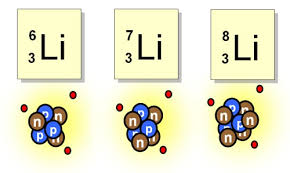
which atom has  4 neutrons?
a)
Li-6
b)
Li-7
c)
Li-8
d)
they have the same # of neutrons
57.
What quantities vary between isotopes of an element?
a)
protons, electrons, and atomic mass
b)
protons, electrons, and atomic number
c)
neutrons and electrons
d)
neutrons and atomic mass
58.
What is the location of the electron?
a)
the free floating negatively charged electron cloud
b)
the free floating positively charged electron cloud
c)
the very dense positively charged electron orbital
d)
the positively charged very dense nucleus
59.
How many valence electrons are found in atoms of group 14?
a)
4
b)
3
c)
14
d)
16
60.

What are valence electrons?

a)

The total number of electrons in an atom

b)

The number of electrons in the outermost shell

c)

The number of electrons in the second shell

d)

The number of protons in the outermost shell

61.

On the periodic table, Groups are

a)

Horizontal rows

b)

Vertical columns

62.

On the periodic table, Periods are

a)

Horizontal rows

b)

Vertical columns

63.

What does the Bohr Model represent?

a)

The structure of molecules

b)

The structure of the Solar System

c)

The structure of an atom

d)

The structure of East Hills

64.

What is the mass number of this atom?

a)

1

b)

3

c)

4

d)

7

65.

What is the atomic number of this atom?

a)

2

b)

4

c)

6

d)

8

66.
SILVER
a)
Au
b)
Ag
c)
Al
d)
Ar
67.

found in group one of the periodic table; highly reactive

a)

Non-metals

b)

Transition Metals (Groups 3-12)

c)

alkali metals (group 1)

d)

metalloids (semimetals)

68.

Halogens (Group 17)

a)

gas at room temperature, low boiling point.

b)

most reactive nonmetals

c)

The electrons in the outermost shell (main energy level) of an atom; these are the electrons involved in forming bonds

d)

Number of protons and neutrons

69.

Which of the following is not a compound?

a)

HCl

b)

Cl2

c)

NaCl

d)

CO2

70.
Which of the following chemical formulas represents a compound? 
a)
C3
b)
O2
c)
CH3CHO
d)
H2
71.
Which statement best describes an element?
a)
made from mixture 
b)
thousands in the world
c)
pure, made of only one atom
d)
can be separated 
72.

How many atoms are in the following compound... C6H12O2?

a)

2

b)

3

c)

20

d)

18

73.

How many elements are in the following compound... C2H4?

a)

2

b)

4

c)

6

d)

8

74.
If an aluminum atom has 13 protons (+) and 10 electrons (-), what is it's charge?
a)
Al3+
b)
Al13+
c)
Al10+
d)
Al10-
75.
What are ionic bonds?
a)
valence electrons transferred between atoms
b)
Inner most electrons transferred between atoms
76.
What elements generally make an ionic bond?
a)
metal and nonmetal
b)
2 nonmetals
c)
metal
d)
none of the above
77.
In chemical compounds, covalent bonds form when
a)
the electronegativity difference between two atoms is very large.
b)
electrons are completely transferred between two metals.
c)
pairs of electrons are shared between two nonmetal atoms.
d)
two nonmetal atoms are attracted to each other by opposite charges.
78.

Predict the bond that will form between N and Cl

a)

Ionic

b)

Covalent

79.
Predict the bond that will form between Be and F.
a)
Ionic
b)
Covalent
80.
If an oxygen atom has 8 protons (+) and 10 electrons (-), what is it's charge?
a)
O10-
b)
O8+
c)
O2-
d)
O10+
81.

What is the chemical formula for Lithium Nitride?

a)

Li3N

b)

LiN3

c)

NLi3

d)

N3Li

82.
How many valence electrons does nitrogen have?
a)
3
b)
2
c)
5
d)
1
83.
What can be generalized about covalent bonds?
a)
Electrons will be exchanged.
b)
Electrons will be transferred.
c)
Electrons will be given and taken.
d)
Electrons will be shared.
84.

What is it called if there are three-pairs of electrons being shared?

a)

Triple Bond

b)

Three Single Bonds

c)

Tribond

d)

Double and Single Bond Combo

85.

Which formula is for phosphorus trichloride?

a)

KCl3

b)

PCl3

c)

K3Cl

d)

P3Cl

86.
What is the correct name for NO?
a)
Mononitrogen Monoxide
b)
Nitrogen Monoxide
c)
Mononitrogen Dioxide
d)
Nitrogen Oxide
87.
This could be the dot diagram of
a)
Mg
b)
Cl
c)
C
d)
O
88.
This could be the dot diagram of 
a)
Ne
b)
Si
c)
Al
d)
Be
89.
This is a correct dot diagram for nitrogen (N)
a)
true
b)
false
90.
This is a correct dot diagram for oxygen (O)
a)
true
b)
false