
 Worksheets
Science 1st 9 weeks Review
Total questions: 99
Worksheet time: 1hrs 15mins
Name
Class
Date
1.
Mrs. White put five cups, each containing a different liquid, on a table. She told her students to find the mass of each liquid. Which tool will the students need to complete this task?
a)
ruler
b)
balance
c)
beaker
d)
thermometer
2.

These rocks were broken apart from the continuous freeze/thaw of water in the cracks of the rocks. This is an example of:
a)
ice wedging
b)
acid rain
c)
permeability
d)
abrasion
3.
Which units of measurement are used for volume?
a)
grams
b)
centimeters
c)
grams/milliliter
d)
milliliter
4.
In a parallel circuit, if one connection is broken, all of the connections stop working.
a)
True
b)
False
5.

All matter can be classified by their physical properties. Which substance can be classified as being soluble in water?
a)
Sand
b)
Pepper
c)
Iron fillings
d)
salt
6.

Students sort materials into two groups. Group 1 contains a metal fork, a safety pin, and metal nail clippers. Group 2 contains a penny, a compact disc, and a soda can.
Which physical property of matter did the class use to sort the materials?
Which physical property of matter did the class use to sort the materials?
a)
Sinking and floating
b)
Magnetic and not magnetic
c)
Conductors and insulators
d)
Solids and liquids
7.
Which units of measurement are used for volume?
a)
grams
b)
centimeters
c)
grams/milliliter
d)
milliliter
8.
Which units of measurement are used for volume?
a)
grams
b)
centimeters
c)
grams/milliliter
d)
milliliter
9.
In a parallel circuit, if one connection is broken, all of the connections stop working.
a)
True
b)
False
10.
All matter can be classified by their physical properties. Which substance can be classified as being soluble in water?
a)
Sand
b)
Pepper
c)
Iron fillings
d)
salt
11.
Students sort materials into two groups. Group 1 contains a metal fork, a safety pin, and metal nail clippers. Group 2 contains a penny, a compact disc, and a soda can.
Which physical property of matter did the class use to sort the materials?
Which physical property of matter did the class use to sort the materials?
a)
Sinking and floating
b)
Magnetic and not magnetic
c)
Conductors and insulators
d)
Solids and liquids
12.
In a parallel circuit, if one connection is broken, all of the connections stop working.
a)
True
b)
False
13.
Which of these objects is an insulator?
a)
Copper Wire
b)
Paper Clip
c)
Steel Pole
d)
Rubber Gloves
14.
An object through which electrons can easily flow is called a(n) ___________.
a)
Conductor
b)
Insulator
15.

Which statement is true?
a)
The light bulb will light up because the circuit is complete.
b)
The light bulb will light up because the circuit is broken.
c)
The light bulb will not light up because the circuit is complete.
d)
The light bulb will not light up because the circuit is broken.
16.
Which one is a conductor?
a)
wood
b)
iron
c)
plastic spoon
d)
paper
17.

What would best complete this circuit?
a)
A wire
b)
A switch
c)
A battery
d)
A light bulb
18.

If you replace the paper clip with a plastic spoon, what happens?
a)
The bulb doesn't light
b)
The bulb is dimmer
c)
The wires get hot
d)
There is no change
19.

If you replace the paper clip with a plastic spoon, what is the plastic spoon acting as?
a)
A conductor
b)
A diode
c)
An insulator
d)
A switch
20.

What kind of circuit is this?
a)
Series
b)
Consecutive
c)
Parallel
d)
Training
21.

What kind of circuit is this?
a)
series
b)
parallel
22.
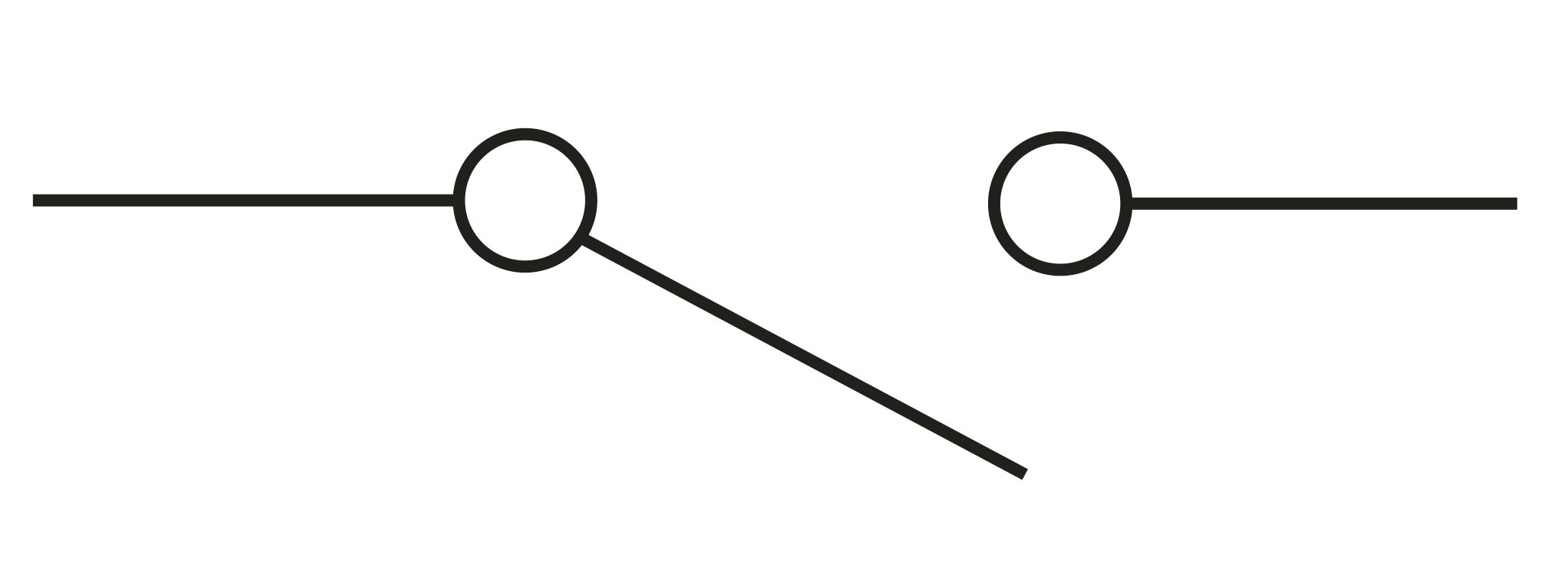
this is the symbol for a _____?
a)
switch
b)
light
c)
battery
d)
wires
23.
Levi is wanting to light a bulb. What does he need to get the bulb to light?
a)
A battery and a paper clip
b)
A battery and a wire
c)
A paper clip and a wire
d)
A switch and a wire
24.
Electricity is the flow of _________.
a)
Protons
b)
Neutrons
c)
Electrons
25.
Which tool would you use to measure the mass of an eraser?
a)
thermometer
b)
graduated cylinder
c)
magnet
d)
balance
26.
If you break a thermometer in the lab, you should...
a)
run away
b)
tell the teacher
c)
clean it up
d)
work on the lab
27.
You should wear goggles to protect your...
a)
ears
b)
face
c)
eyes
d)
hands
28.
Length is measured in...
a)
grams
b)
milliliters
c)
celsius
d)
centimeters
29.
What unit of measurement is used when measuring temperature?
a)
gallons and liters
b)
inches and centimeters
c)
seconds and hours
d)
celsius and fahrenheit
30.
Which one of these is a scientific question?
a)
What color is the sky?
b)
How long did it take for the ice to melt?
c)
Is my hair pretty?
d)
Do you have a brother or sister?
31.
Greater mass...
a)
more matter
b)
less matter
32.
The teacher has cookies on a plate sitting at your table. You should...
a)
eat the cookies
b)
throw the cookies away
c)
wait for directions
d)
start investigating the cookies
33.
You can use a ruler to measure...
a)
a grain of sand
b)
a pencil
c)
a road
d)
a hallway
34.
What is the correct order of the scientific process?
a)
Question, Hypothesis, Experiment, Conclusion
b)
Hypothesis, Conclusion, Question, Experiment
c)
Experiment, Hypothesis, Question, Conclusion
d)
Conclusion, Experiment, Hypothesis, Question
35.
How do you test a hypothesis?
a)
tell your teacher
b)
make a guess
c)
do an experiment
d)
write your conclusion
36.
Which tool would you use to measure the temperature of water?
a)
balance
b)
magnet
c)
thermometer
d)
beaker
37.
When you move a ball from one container to another...
a)
it changes its shape
b)
it keeps its shape
c)
it melts into a liquid
d)
it evaporates into the air
38.
When you pour milk from the carton into a glass...
a)
it keeps its shape
b)
it loses mass and volume
c)
it melts and evaporates
d)
it takes the shape of the glass
39.
How do you get ice cream to melt?
a)
put it in the freezer
b)
add chocolate syrup
c)
take it outside in the sun
d)
smell it
40.
I left my crayons in the hot car. What will happen?
a)
adding heat will change them from a gas to a liquid
b)
taking away heat will change them from a liquid to a solid
c)
adding heat will change them from a solid to a liquid
d)
taking away heat will change them from a liquid to a gas
41.
Which lab tool might you use to measure the volume of a liquid?
a)
electric scale
b)
bunsen burner
c)
test tube
d)
graduated cylinder
42.

What is the volume of Object X?
a)
10.0 cm3
b)
15.0 cm3
c)
20.0 cm3
d)
25.0 cm3
43.
True or False: The density of a specific type of material never changes.
a)
True
b)
False
44.
If an object is more dense than water it __________ and if the object is less dense than water it _____________.
a)
floats, sinks
b)
sinks, floats
c)
moves, stays
d)
burns, disappears
45.

I have two objects with the same volume but different masses. Which object will be more dense?
a)
The object with less weight.
b)
The object with more weight.
c)
The object with more mass.
d)
The object with less mass.
46.
The tool used to measure the mass of a substance or object is a ______________.
a)
triple beam balance
b)
graduated cylinder
c)
ruler
d)
thermometer
47.
Which units of measurement are used for mass?
a)
centimeters
b)
grams
c)
liters
d)
millititers
48.
True or False: The mass of a substance does NOT change when the substance changes from a liquid to a solid or solid to liquid state of matter.
a)
True
b)
False
49.
What is the freezing point of water?
a)
100°C
b)
32°C
c)
50°C
d)
0°C
50.
What is the melting point of water?
a)
100°C
b)
32°C
c)
50°C
d)
0°C
51.
What is the boiling point of water?
a)
100°C
b)
32°C
c)
50°C
d)
0°C
52.
What happens when water starts to boil?
a)
Changes from gas to liquid.
b)
Changes from liquid to gas.
c)
Changes from solid to gas.
d)
Its' temperature is 0°C.
53.
The movement of weathered material (sediment) is called?
a)
weathering
b)
erosion
c)
deposition
54.
Sedimentary rocks may contain fossils
a)
True
b)
False
55.
How does freezing water cause the weathering of rocks? The freezing water—
a)
keeps the rocks in place
b)
makes the rocks last longer
c)
expands cracks and breaks rocks
d)
causes rocks to fall in landslides
56.
What is the process that presses sediments together?
a)
Erosion
b)
Deposition
c)
Compaction
d)
Cementation
57.
What is the process in which dissolved minerals crystallize and glue particles of sediment together?
a)
Erosion
b)
Deposition
c)
Compaction
d)
Cementation
58.

Rock made of layers of compressed sediments
a)
metamorphic rock
b)
igneous rock
c)
sedimentary rock
d)
school house rock
59.

Decay or decomposition means to
a)
break into smaller parts
b)
make into larger parts
c)
destroy something
d)
fix something
60.

Preserved parts or traces of animals and plants that lived in the past
a)
natural gas
b)
imprints
c)
photos
d)
fossils
61.

Sedimentary rocks form in layers near or under ______________!
a)
time
b)
heat
c)
water
d)
ice
62.
Fossils give clues about the past.
a)
True
b)
False
63.

What are the remains of once living things called?
a)
amber
b)
fossils
c)
species
d)
extinct
64.

The waste and remains of plants and animals
a)
organic matter
b)
fossil fuels
c)
fossils
65.
Small pieces of rock are also called
a)
sediment
b)
coal
c)
organic matter
d)
erosion
66.

The breakdown of rock into smaller particles from the effects of wind, water and ice
a)
erosion
b)
cementation
c)
pressure
d)
weathering
67.

Wind, water, ice and gravity carry sediments away
a)
weathering
b)
deposition
c)
erosion
d)
cementation
68.

Sediments are left behind in rivers lakes and oceans
a)
weathering
b)
erosion
c)
cementation
d)
deposition
69.

When the pressure of new sediment layers is deposited on top of older layers
a)
erosion
b)
compaction
c)
pressure
d)
weathering
70.
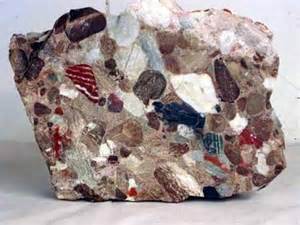
The process in which dissolved minerals glue sediments together is called
a)
sticking
b)
pressuring
c)
cementation
d)
deposition
71.
Sedimentary rocks are formed by
a)
Cooling of lava or magma
b)
Heat and pressure
c)
Compacting and cementing
d)
Fossil fuels
72.
What is deposition?
a)
Pieces of sediment come to rest on a surface
b)
Movement of sediment
c)
Breaking down of sediment
d)
The gluing of sediments
73.

Fossils are made by
a)
Plants dying
b)
Animals or plants are imprinted on a layer of sedimentary rock
c)
Breaking down of rocks
d)
Heat
74.
The process by which water, ice, wind or gravity moves weathered rock and soil from one place to another.
a)
weathering
b)
erosion
c)
deposition
d)
dumptruck
75.
If scientists found this fossil, what could they infer?
a)
What fish are like today
b)
That this fish lacked oxygen
c)
What kind of animal ate this fish
d)
that water once covered the area
76.
A fossil animal has a mouth full of sharp, pointed teeth. What can you infer about the animal?
a)
The animal ate fruits and vegetables.
b)
The animal is closely related to a shark.
c)
The animal did not live on land.
d)
The animal ate meat.
77.
Which agents break down earth materials?
a)
wind only
b)
earthquakes and gravity
c)
ice and 007
d)
wind, water, and ice
78.
Weathering, Erosion, Deposition, ___________ and ____________
a)
cementation, compaction
b)
compaction, cementation
c)
layers, compaction
d)
water, heat
79.
During Science class, students combined 50 g of iron filings with 50 g of fine sand to create a mixture. Which of the following would be the best method for separating the mixture.
a)
Stir the mixture into hot water to dissolve the sand
b)
Stain the mixture though a paper filter to collect the sand
c)
Drag a magnet through the mixture to attract the iron filings
d)
Shake the mixture to cause the iron filings to settle to the bottom of the container
80.
If the mass of a cup of water is 350 grams and the mass of the empty cup is 50 grams, what is the mass of the water?
a)
50 grams
b)
350 grams
c)
300 grams
d)
400 grams
81.

What is the volume of liquid?
a)
66 mL
b)
7.6 mL
c)
6.6 mL
d)
6.5 mL
82.
Which of the following tools measures volume?
a)
triple beam balance
b)
graduated cylinder
c)
ruler
d)
spring scale
83.
Why does a penny sink in water?
a)
It is more dense than water
b)
It is less dense than water
c)
It has the same density as water.
84.
What is happening when water changes to ice cubes?
a)
Solid to a gas
b)
Liquid to gas
c)
Liquid to solid
d)
gas to solid
85.

Which of the following occurs when a liquid becomes a gas?
a)
the particles slow down
b)
the particles beak away from one another and move more rapidly
c)
the particles move closer together
86.
On a hot summer day chocolate candy can melt in your pocket. How can you get the chocolate to return to a solid?
a)
add heat
b)
leave it in your pocket
c)
cool it in the refrigerator
d)
leave it outside
87.

A glass beaker contains 100 milliliters of water into which 5 grams of salt was stirred. Which item should be used to separate this particular mixture?
a)
triple beam balance
b)
hot plate
c)
paper filter
d)
magnet
88.

A fifth grade class has collected empty cans for recycling. They have several large bins with aluminum and steel cans, all mixed together. The two types of cans must be separated. Which of the following techniques could the students use to separate the two types of cans?
a)
Place the cans in water, and the aluminum cans will float
b)
Crush the cans to make them easier to carry
c)
Test the cans for their ability to conduct electricity
d)
Use a magnet to find and remove the steel cans
89.

Students collected data on the appearance of four substances and how they reacted when mixed with water. Which substances are not soluble when mixed with water?
a)
A and B
b)
B and C
c)
A and D
d)
C and D
90.

Sugar is added to water and stirred until it completely dissolves. Which of the following correctly describes something that has happened to the sugar?
a)
the mass of the sugar increased
b)
the mass of the sugar decreased
c)
the sugar disappeared and no longer exists
d)
the sugar is evenly distributed in the water
91.
Which of the following is a solution?
a)
sweet tea
b)
assorted legos
c)
water and sand
d)
paperclips, erasers, and pencils
92.
Which tools would I use to separate sand, water, and rocks
a)
filter and magnet
b)
magnet and tweezers
c)
you cannot separate them
d)
filter and sieve (strainer)
93.
If I added 15 grams of salt to 100 mL of water and separated the solution with a hot plate, what amount of salt would be left behind?
a)
100 grams
b)
0 grams
c)
15 grams
d)
10 grams
94.
Which list below shows objects in a mixture that could best be separated using the physical property of density?
a)
iron filings and sugar
b)
large plastic beads and small plastic beads
c)
paper clips and marbles
d)
pennies and corks
95.

What kinds of energy are needed in order for the clothes dryer to dry clothing?
a)
Light, Mechanical, and Thermal
b)
Electrical, Mechanical, and Sound
c)
Electrical, Mechanical, and Thermal
d)
Thermal and Mechanical
96.

What kind(s) of energy are needed to change the phase of matter of a snowman?
a)
Light and Mechanical
b)
Electrical and Thermal
c)
Light and Sound
d)
Thermal
97.
A student combines a powdered drink mix and sand in a beaker of water. The powdered drink mix dissolves, but the sand sinks to the bottom of the container. Which of the following is NOT true?
a)
The powdered drink mix is soluble, but the sand is not soluble
b)
Both the drink mix and sand are part of the mixture
c)
Neither material is soluble in water
d)
The powdered drink mix and water form a solution
98.

If one bulb burns out in this simple circuit, neither bulb will light because-
a)
It has tow light bulbs but only one battery
b)
the current has only one pathway to follow
c)
the current has two pathways to flow through
d)
The current is not strong enough to flow through both bulbs if one burns out
99.

When light encounters a prism, light breaks and separates into a rainbow. What happened to light?
a)
Light was reflected
b)
Light was refracted
c)
Light was absorbed
d)
Light traveled in a straight line.
100 %

