
 Worksheets
Chemical Reaction Review
Total questions: 40
Worksheet time: 1hrs 5mins


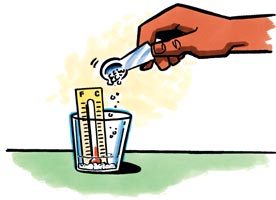
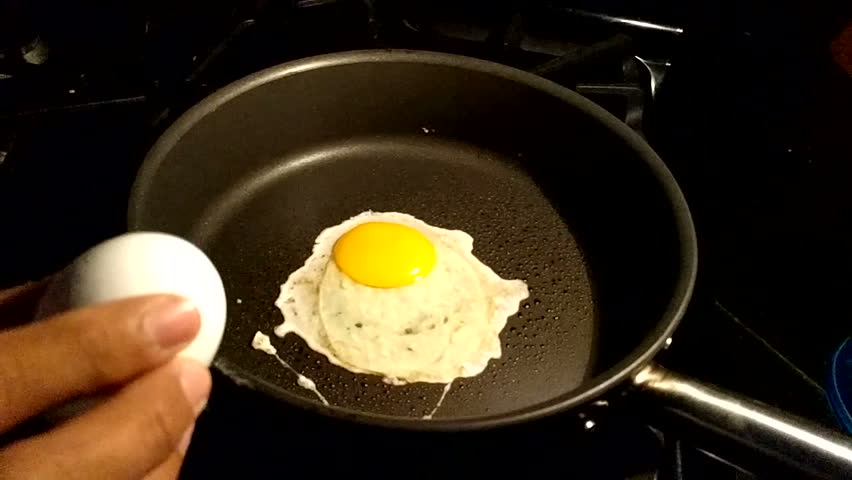
Baking bread and cooking an egg absorb energy and are examples of....?
Endothermic processes
Exothermic processess
None of these

Fe + O2 -> Fe2O3
HgO --> Hg + O2
Fe + S --> FeS
In reactions, the number of atoms in the products must be equal to..
the end of the equation.
the Reactants
the Starters
the Enders
According to the law of conservation of mass, how does the amount of each element on the product side compare to each element on the reactant side?
The amount of atoms on each side is equal
The amount of atoms on the product side is greater
The amount of atoms on the reactant side is greater
Depends on the reaction
Balance the following chemical equation:
____KClO3 → ____KCl + ____O2
2KClO3 → 4KCl + O2
4KClO3 → 2KCl + 3O2
2KClO3 → 2KCl + 3O2
Does this equation show that mass is conserved?
C5H10 + O2 --> CO2 + H2O
yes, it is balanced.
no, it is not balanced.
In chemical reactions, what does the Law of Conservation of Mass mean?
Matter is not created or destroyed.
The total mass of the reactants is greater than the total mass of the products.
The total mass of the reactants is less than the total mass of the products.
Matter is not changed.
According to the law of conservation of energy, how does the energy of the product side compare to energy on the reactant side?
The amount of energy on each side is equal
The amount of energy on the product side is greater
The amount of energy on the reactant side is greater
Depends on the reaction

Look at this image. What type of reaction is this?
endothermic
exothermic

On the right side of the equation is the
reactants
products
yield sign
Coefficient
On the left side of the equation is the
reactants
products
yield sign
Coefficient
The arrow in this equation is the
reactants
products
yield sign
Coefficient
The number 2 that is partially below the chemical formula in this equation is the
reactants
products
subscript
Coefficient
yield sign
The NaCl is an example of
chemical equation
chemical formula
chemical reaction
Coefficient
The process by which one or more substances change to produce one or more different substances.
Evidence
Chemical Reaction
Substance
Reactants
A solid that is deposited from a solution
Exothermic Reaction
Endothermic Reaction
Precipitate
Product
a process or reaction in which the system absorbs energy from its surroundings causing the temperature to decrease.
Endothermic Reaction
Exothermic Reaction
Diffusion
Fission
the number placed in front of a chemical formula in a chemical equation; represents the number of molecules of that substance.
coefficient
subscript
the number written to the right and slightly below an element in a chemical formula; represents the number of atoms of an element present in a chemical formula.
coefficient
subscript


How many Al atoms are in this compound? 4Al2O3
2
8
6
4
How many F atoms are in this compound?
6MgF2
2
6
8
12

The equation below represents a chemical reaction that occurs in living cells. Is this an endothermic or exothermic reaction?
endothermic
exothermic
What is the total number of atoms in this chemical formula? C8H3NaBr12
18
12
25
24
three hydrogen (H)
one sulfur (S)
four oxygen (O)
How many atoms are present if there is no subscript following the element symbol?
0
2
only 1
1 million
Which of these is NOT a sign that a chemical change has occurred?
The substance breaks apart
An unexpected color change
A temperature change
The formation of a precipitate

