wayground logo

Free Printable Worksheets

NEW

Font size

S
M
L
XL
Worksheets

Chemistry FER Day 1-Atoms thru Nuclear

Total questions: 59

Worksheet time: 3hrs 23mins
Name
Class
Date
1.
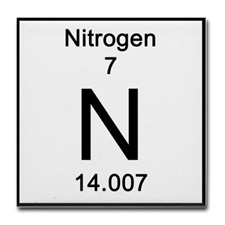
What is the number of protons that the element in this image contain?
a)
14
b)
7
c)
15
d)
18
2.
An element has an atomic number of 76.  The number of protons and electrons in a neutral atom of the element are
a)
152 p+, 76 e-
b)
76 p+, 0 e-
c)
38 p+, 38 e-
d)
76 p+, 76 e-
3.
An atom has 5 protons, 7 neutrons and 5 electrons. What is the mass number of the atom?
a)
5
b)
7
c)
2
d)
12
4.
An atom has 10 protons and a mass of 18. It has __ neutrons
a)
10
b)
18
c)
28
d)
8
5.

What is the charge of a sodium ion?

a)

+2

b)

+1

c)

-1

d)

-2

6.
Group 17 always has ions with a charge of 
a)
+1
b)
+2
c)
-1
d)
-2
7.
If an element has 3 valence electrons, what charge will likely form on its ion ?
a)
+3
b)
+5
c)
-3
d)
-5
8.
Which of the following has a -3 charge?
a)
Boron
b)
Fluorine
c)
Nitrogen
d)
Neon
9.
How many neutrons would Fe-56 have?
a)
56
b)
26
c)
30
d)
33
10.
If an atom of nickel has a charge of +3, how many electrons does the atom have?
a)
28
b)
25
c)
26
d)
31
11.
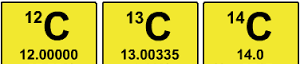
What do these isotopes of carbon all have in common?
a)
neutrons & mass number
b)
atomic number and neutrons
c)
atomic number and electrons
d)
protons, atomic number, and mass number
12.
How many neutrons does the isotope of lithium have?
a)
8
b)
3
c)
4
d)
5
13.
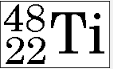
How many protons does this isotope of titanium have?
a)
48
b)
22
c)
26
d)
70
14.

what is the name of group number 1

a)

halogens

b)

noble gases

c)

alkali

d)

alkaline earth

15.

what is the name of group number 2

a)

transition metals

b)

halogens

c)

metaloids

d)

alkaline earth

16.

what is the small group of elements called that include C,N,O

a)

metals

b)

nonmetals

c)

metaloids

d)

noble gases

17.

Which color on the image of the periodic table corresponds with the noble gases.

a)

red

b)

black

c)

blue

d)

orange

18.

USE THE PERIODIC TABLE

How many valence electrons does Phosphorus have?

a)

31

b)

5

c)

15

d)

4

19.

USE THE PERIODIC TABLE

Find the element that has 3 Valence Electrons and 2 energy levels.

a)

Magnesium - Mg

b)

Lithium - Li

c)

Aluminum - Al

d)

Boron - B

20.

USE THE PERIODIC TABLE

Find the element that has 5 Valence Electrons and 4 energy levels.

a)

Arsenic - As

b)

Selenium - Se

c)

Calcium - Ca

d)

Vanadium - V

21.

This could be the dot diagram of

a)

Mg

b)

Cl

c)

C

d)

O

22.

Hydrogen needs _____ electrons in its valence shell to be stable.

a)

4

b)

6

c)

8

d)

2

23.
Which of the following will have a larger radius than Zinc?
a)
Gallium
b)
Aluminum
c)
Magnesium
d)
Strontium
24.
Which of the following will have a higher electronegativity than arsenic (As)?
a)
Carbon (C)
b)
Neon (Ne)
c)
Antimony (Sb)
d)
Germanium (Ge)
25.
Which of the following will have a lower ionization energy than Scandium (Sc)?
a)
Helium (He)
b)
Titanium (Ti)
c)
Calcium (Ca)
d)
Magnesium (Mg)
26.
As you move down the periodic table atoms get bigger.  This is because ____________.
a)
The atoms have more mass.
b)
The atoms have more protons.
c)
The atoms have more energy levels
d)
The atoms have more neutrons
27.
As you move across the periodic table atoms tend to get smaller because, ______________.
a)
the atoms have more mass.
b)
the atoms have less mass
c)
the atoms have more protons.
d)
the atoms have less electrons.
28.
Electronegativity is...
a)
the ability of an atom to attract/ accept electrons
b)
the ability of an atom to lose electrons
c)
the energy required to remove an electron from a specific atom
d)
how easy it is to make friends. 
29.
Ionization energy is...
a)
the energy required to add an electron to a specific atom
b)
how much energy it takes to remove an electron from an atom
c)
the energy required to shield the outer electrons from the nucleus
d)
a measure of the ability of an atom to attract electrons
30.
24.1% of all the isotopes of a an element have a mass of 75.23 amu, 48.7% have a mass of 74.61 amu, and 27.2% have a mass of 75.20 amu.
What is the average mass of this element?
a)
74.92 amu
b)
24.97 amu
c)
75.01 amu
d)
74.51 amu
31.
4.35% of all X atoms have a mass of 39.946 amu. 83.79% have a mass of 41.941 amu, 9.50% have a mass of 42.941 amu, and 2.36% have a mass of 43.939 amu. What is the average atomic mass of atom X?
a)
41.97 amu
b)
42.19 amu
c)
10.43 amu
d)
40.04 amu
32.
What is the noble gas shorthand electron for Sulfur atom?
a)
[Ar] 3p4
b)
[He] 3s23p4
c)
[Ne] 3s23p4
d)
[Na] 3s23p4
33.
What atom matches this electron configuration?
1s22s22p63s2
a)
Neon
b)
Magnesium
c)
Aluminum
d)
Potassium
34.
Which element is depicted from this orbital diagram
a)
Fluorine
b)
Neon
c)
Chlorine
d)
Argon
35.
Which element is pictured?
a)
neon
b)
fluorine
c)
magnesium
d)
argon
36.
What is the electronic configuration of iron?
a)
1s22s22p63s23p64s23d6
b)
1s22s22p63s23p63d8
c)
1s22p63s23p64s23d6
d)
1s22s22p63s23p64s13d6
37.
Name the following ionic compound: BeCl2
a)
beryllium chlorine
b)
beryllium II chloride
c)
beryllium chloride
d)
beryllium dichloride
38.
What is the correct formula for the compound, lithium oxide?
a)
LiO
b)
Li2O
c)
LiO2
d)
Li2O2
39.

Which of the following is NOT an ionic compound?

a)

CaO

b)

NaOH

c)

BaCl2

d)

Br2

40.
What is the formula for manganese(III) oxide?
a)
MgO
b)
Mg2O3
c)
MnO
d)
Mn2O3
41.

Name the following ionic compound: MgSO4

a)

magnesium sulfoxide

b)

magnesium sulfide

c)

magnesium sulfate

d)

magnesium oxide

42.
Name the following ionic compound: Cr(NO2)3
a)
chromium nitrite
b)
chromium nitride
c)
chromium III nitride
d)
chromium III nitrite
43.
When naming ionic compounds with transition metals you need to include roman numerals to show the _____ of the metal..
a)
atomic number
b)
mass number
c)
charge
d)
ionization energy
44.
The formula of calcium phosphate is 
a)
CaPO4
b)
Ca2(PO4)3
c)
Ca3PO4
d)
Ca3(PO4)2
45.
The chemical formula of Iron (III)bromide is
a)
FeBr
b)
Fe(III)Br
c)
FeBr₃
d)
Fe₂Br₃
46.

What type of elements form covalent bonds?

a)

Metals

b)

Non Metals

c)

Metalloids

d)

Nobel Gas

47.
phosphorus trichloride
a)
KCl3
b)
PCl3
c)
K3Cl
d)
P3Cl
48.
silicon dioxide
a)
SO2
b)
NaO2
c)
SiO2
d)
SiO
49.
The chemical formula of sulfur hexabromide is
a)
SBr₆
b)
S₆Br
c)
S(VI)Br
d)
S6Br
50.
The chemical formula of dinitrogen textroxide is
a)
Ni₂O₄
b)
NiO
c)
N₂O₄
d)
NiO₂
51.

A line spectrum is produced when an electron moves from one energy level

a)

To a lower energy level

b)

Into the nucleus

c)

To a higher energy level

d)

To another position in the same sublevel

52.

An electron transitions from n = 6 to n = 3. Which wavelength is released?

a)

410 nm

b)

1875 nm

c)

1282 nm

d)

1094 nm

53.

What color visible light is released when an electron transitions from n = 3 to n = 2?

a)

Red

b)

Blue

c)

Violet

d)

Green

54.

Which wavelength of light has the greatest frequency?

a)

Radio

b)

Visble

c)

Gamma

55.
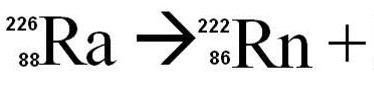
What particle completes this reaction?
a)
alpha particle
b)
beta particle
c)
gamma particle
d)
neutron
56.
Complete the nuclear equation and determine the type of decay that is occurring in this reaction. 
a)
alpha
b)
beta
c)
gamma
d)
none
57.
Solve this equation for alpha decay.
20985At = ___ + 42He
a)
20583Bi
b)
20986Rn
c)
20781Tl
d)
20885At
58.
If 10 mg of iodine 131 is given to a patient, how much is left after 24 days? The half-life of iodine-131 is 8 days.
a)
1.25mg
b)
1.25g
c)
10g
d)
10mg
59.
If the half-life of uranium-232 is 70 years, how many half-lives will it take for 10 g of it to be reduced to 1.25 g?
a)
1 half-life
b)
2 half-lives
c)
3 half-lives
d)
4 half-lives