wayground logo

Free Printable Worksheets

NEW

Font size

S
M
L
XL
Worksheets

Asexual reproduction

Total questions: 48

Worksheet time: 2hrs 55mins

Name
Class
Date
1.
In asexual reproduction, all of the offspring are:
a)
Physically Identical
b)
Genetically Identical
c)
Physically and Genetically Identical
d)
Not Identical
2.
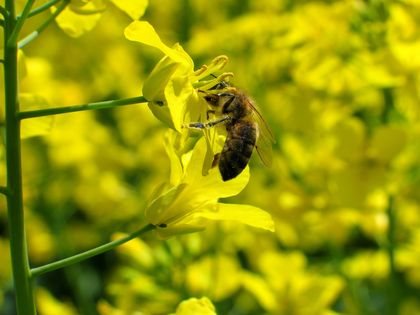
a)
budding
b)
sporulation
c)
vegetative propagation
d)
binary fission
3.

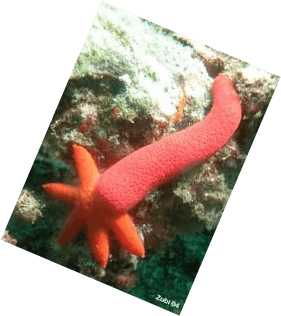
What type of asexual reproduction is taking place?

Fishermen work hard to catch and remove all the starfish that get into their favorite shell fishing beds and the “underwater farms” where they raise clams and oysters. In the past, they put the starfish into their boats, cut them up with knives, and then throw the pieces of starfish overboard. They thought this would kill the starfish. What they did not know was that each piece of starfish will grow into a whole new animal.

a)

Regeneration/Fragmentation

b)

Vegetative propagation

c)

Budding

d)

Fission

4.

How many parent(s)are needed for asexual reproduction?

a)

4

b)

1

c)

9

d)

2

5.
What is organized DNA called?
a)
Genes
b)
Deoxyribonucleic Acid
c)
Chromosomes
d)
Nucleus
6.
Where is all the genetic material inside a cell?
a)
nucleus
b)
vacuole
c)
cell membrane
d)
ribosome
7.
Which of the following describes the main advantages of sexual reproduction
a)
requires lots of time/energy
b)
no new gene combos can arise 
c)
diversity
d)
looks identical to the parent
8.
Passes genetic information
onto future generations
a)
sexual reproduction
b)
asexual reproduction
c)
both
9.
Prokaryotes reproduce asexually through -
a)
Spore formation
b)
Vegetative propagation
c)
Binary fission
10.
In general, asexual reproduction is used by _______ organisms.
a)
simple
b)
extinct
c)
complex
11.

Which of the following is not a benefit of asexual reproduction?

a)

Offspring will be successful in an unchanged environment.

b)

Good at adapting to changing environments.

c)

Only requires one parent to produce offspring.

d)

Can reproduce rapidly.

12.

Asexual reproduction is associated with what type of cell division?

a)

Mitosis

b)

Meiosis

13.

An organism that has been reproduced by asexual means receives ______________ of its chromosomes from its one parent.

a)

3

b)

25%

c)

50%

d)

100%

14.

What is the big advantage of sexual reproduction?

a)

Can quickly grow the population

b)

Offspring are guaranteed to be successful in an unchanged environment.

c)

Only one parent is required to reproduce.

d)

Can adapt to changing environments

15.

During mitosis the parent cell produces:

a)

2 daughter cells with the same number of chromosomes as the parent cell.

b)

2 daughter cells with the half the number of chromosomes as the parents cell.

c)

4 daughter cells with the same number of chromosomes as the parent cell.

d)

4 daughter cells with half the number of chromosomes as the parent cell.

16.

Which type of reproduction results in diversity because the offspring are a combination of the parents and genetically different?

a)

Asexual

b)

Sexual

17.
What phase of mitosis is shown in the picture?
a)
Prophase
b)
Anaphase
c)
Telophase
d)
Metaphase
18.
Chromatid pairs line up in the middle of the cell.
a)
Metaphase
b)
Telophase
c)
Anaphase
d)
Interphase
19.
What phase of mitosis is shown in the picture?
a)
Prophase
b)
Anaphase
c)
Telophase
d)
Metaphase
20.
What phase of mitosis is shown in the picture?
a)
Prophase
b)
Anaphase
c)
Telophase
d)
Metaphase
21.
Chromosomes duplicate, the cell grows and develops
a)
Metaphase
b)
Telophase
c)
Interphase
d)
Anaphase
22.
What phase of mitosis is shown in the picture?
a)
Prophase
b)
Anaphase
c)
Telophase
d)
Metaphase
23.
Results of cell division or mitosis include all of the following EXCEPT?
a)
growth
b)
repair damaged cells
c)
replace damaged cells
d)
dead cells
24.
Chromatid pairs can be seen, spindle fibers form and nuclear membrane disappears
a)
Metaphase
b)
Telophase
c)
Anaphase
d)
Prophase
25.
Two new nuclei form and the cytoplasm splits
a)
Metaphase 
b)
Telophase
c)
Anaphase
d)
Prophase
26.
How many chromosomes does a human cell have?
a)
42
b)
46
c)
24
d)
64
27.
Which of the following lists, in order, the phases of mitosis?
a)
interphase, metaphase, anaphase, telophase
b)
prophase, metaphase, anaphase, telophase
c)
prophase, metaphase, anaphase, interphase
d)
prophase, anaphase, metaphase, telophase
28.

In which phase does a cell spend most of its life?

a)

Interphase

b)

Prophase

c)

Metaphase

d)

Anaphase

e)

Telophase

29.

What phase of Mitosis is the picture showing?

a)

Interphase

b)

Prophase

c)

Telophase

d)

Metaphase

30.

What holds the sister chromatids together?

a)

Centromeres

b)

Centrioles

c)

Chromosomes

31.

The splitting of the cytoplasm and cell membranes is called?

a)

Interphase

b)

Telophase

c)

Centromere

d)

Cytokinesis

32.

What is the image above:

a)

Chromosome

b)

Chromotid

c)

Centromere

d)

Centriole

33.

A chromosome is packaged

a)

DNA

b)

Protein

c)

Carbohydrates

d)

Lipids

34.
The cell cycle is ______________.
a)
the process of cells circling throughout the body
b)
the process of splitting the organelles
c)
a process where one cell gets energy
d)
the sequence of stages of growth and division that a cell undergoes
35.
What does DNA stand for?
a)
DeNatured Acid
b)
DomiNant Acid
c)
DeoxyriboNucleic Acid
d)
DiriboNucleic Acid
36.
Replication is when __________.
a)
the cell makes a copy of its DNA in nucleus 
b)
the cell forms 2 identical cells
c)
the cell produces 2 sets of organelles
d)
the cell continues to complete the same function
37.
Mitosis is made up of how many phases?
a)
4
b)
5
c)
6
d)
7
38.
What is one half or one rod of the condensed chromatin called?
a)
DNA
b)
chromatin
c)
chromatid
d)
chromosome
39.
What is the correct term for "develops in the middle plane of a plant cell separating it into two daughter cells during cell division"?
a)
cell
b)
cell cycle
c)
cell plate
d)
centriole
40.

Where does Mitosis take place?

a)

where growth and repair are happening

b)

in your hair cells only

c)

in your blood cells only

41.
Structure (b) is a ____.
a)
chromosome
b)
chromatid
c)
centromere
42.
Structure (a) is a ____.
a)
chromosome
b)
chromatid
c)
centromere
43.
Structure (c) is a ____.
a)
chromosome
b)
chromatid
c)
centromere
44.
What is the next phase of mitosis?
a)
Prophase
b)
Metaphase
c)
Anaphase
d)
Telophase
45.
What is the next phase of mitosis?
a)
Prophase
b)
Metaphase
c)
Anaphase
d)
Telophase
46.
Name the previous phase.
a)
Prophase
b)
Metaphase
c)
Anaphase
d)
Telophase
47.
Name the phase:
a)
Prophase
b)
Metaphase
c)
Anaphase
d)
Telophase
48.
The organelle that helps in cell division and produces spindle fibers.
a)
Chromosome
b)
Centriole
c)
Cytoplasm
d)
Chloroplast