
 Worksheets
Biology Fall Semester Exam Review - Part 2
Total questions: 76
Worksheet time: 52mins
33.Complete the chart below.
Type of transport: Diffusion
moves from HIGH concentration to LOW concentration
moves from LOW concentration to HIGH concentration
33.Complete the chart below.
Type of transport: Diffusion; Requires ATP?
YES
NO
33.Complete the chart below.
Type of transport: Diffusion
PASSIVE
ACTIVE
33.Complete the chart below.
Type of transport: Facilitated diffusion
moves from HIGH concentration to LOW concentration
moves from LOW concentration to HIGH concentration
33.Complete the chart below.
Type of transport: Facilitated diffusion; Requires ATP?
YES
NO
33.Complete the chart below.
Type of transport: Facilitated diffusion
PASSIVE
ACTIVE
33.Complete the chart below.
Type of transport: Osmosis
moves from HIGH concentration to LOW concentration
moves from LOW concentration to HIGH concentration
33.Complete the chart below.
Type of transport: Osmosis; Requires ATP?
YES
NO
33.Complete the chart below.
Type of transport: Osmosis
PASSIVE
ACTIVE
33.Complete the chart below.
Type of transport: Endocytosis/Exocytosis
moves from HIGH concentration to LOW concentration
moves from LOW concentration to HIGH concentration
33.Complete the chart below.
Type of transport: Endocytosis/Exocytosis; Requires ATP?
YES
NO
33.Complete the chart below.
Type of transport: Endocytosis/Exocytosis
PASSIVE
ACTIVE
34.What does selectively permeable mean?
only allows certain substances into the cell (cell membrane)
protects and prevents any molecule from entering the cell (cell membrane)
only allows large molecules into the cell (cell membrane)
only allows small molecules into the cell (cell membrane)
35.What does active transport mean?
Active does not need ATP (energy) to let molecules pass the cell membrane
Active uses ATP (energy) to let molecules pass the cell membrane
Active stores transport proteins inside the cell
Active uses hormones to let molecules pass the cell membrane
36.What does passive transport mean?
passive uses ATP (energy) to let molecules pass the cell membrane
passive does not need ATP (energy) to let molecules pass the cell membrane
passive stores and releases transport proteins
passive does not use hormones to let molecules pass the cell membrane
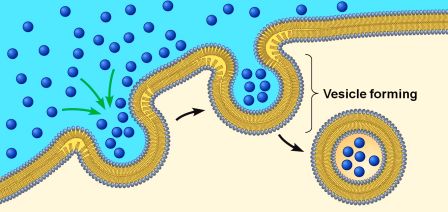
37.What is the difference between Endocytosis and Exocytosis?
endo = takes molecules into the cell by englulfing
endo = takes molecules out of the cell
exo = takes molecules into the cell by englulfing
exo = takes molecules out of the cell
38.What is osmosis?
a process that DIFFUSES water from high to low concentration
large or oddly shaped molecule that can move across a cell membrane
a process that DIFFUSES water with the help of ATP(energy)
the process of building proteins across the cell membrane

38.Describe hypertonic-
Water will move out of the cell, resulting in a smaller cell.
Water will move into the cell, resulting in a larger cell.
Salt will move out of the cell, resulting in a smaller cell.
Salt will move into the cell, resulting in a larger cell.
38.Describe hypertonic-
Water will move out of the cell, resulting in a smaller cell.
Water will move into the cell, resulting in a larger cell.
Salt will move out of the cell, resulting in a smaller cell.
Salt will move into the cell, resulting in a larger cell.
Water will move into and out of the cell at equilibrium.
38. Describe hypotonic-
Water will move out of the cell, resulting in a smaller cell.
Water will move into the cell, resulting in a larger cell.
Salt will move out of the cell, resulting in a smaller cell.
Salt will move into the cell, resulting in a larger cell.
Water will move into and out of the cell at equilibrium.
38. Describe isotonic-
Water will not move into the cell.
Water will not move out of the cell.
Salt will not move into the cell.
Salt will not move out of the cell.
Water will move into and out of the cell at equilibrium.
39.Which type of osmotic pressure will cause a cell to:
a. Burst -
Hypotonic
Hypertonic
Isotonic
39.Which type of osmotic pressure will cause a cell to:
c. Stay the same –
Hypotonic
Hypertonic
Isotonic
40. Which type of osmotic pressure do the following organisms like to be in?
a. Plants –
Hypotonic
Hypertonic
Isotonic
40. Which type of osmotic pressure do the following organisms like to be in?
b. Animals -
Hypotonic
Hypertonic
Isotonic

41. Draw arrows to indicate which direction the WATER will flow for each of the diagrams below. The dots represent a solute (salt). List which type of solution for each diagram below.
arrow in
arrow out
hypotonic
hypertonic
isotonic

41. Draw arrows to indicate which direction the WATER will flow for each of the diagrams below. The dots represent a solute (salt). List which type of solution for each diagram below.
arrow in
arrow out
hypotonic
hypertonic
isotonic

41. Draw arrows to indicate which direction the WATER will flow for each of the diagrams below. The dots represent a solute (salt). List which type of solution for each diagram below.
arrow in
arrow out
hypotonic
hypertonic
isotonic
43. Why would your plants appear firmer in a hypotonic solution?
The central vacuole gives the cell a hypotonic (swelling) effect.
The solution continues to absorb the carbon dioxide to balance out the water.
The solution allows the water to leak back out slowly, causing the water in the stem to plump up.
The solution prevents osmosis, so it maintains a brick-like structure.
44. What type of solution does a plant/animal want to be in?
plant = hypotonic
animal = hypertonic
plant = hypertonic
animal = hypotonic
plant = isotonic
animal = hypertonic
plant = hypotonic
animal = isotonic
45. Write the equation for cellular respiration and label the reactants and products.
6O2 + C6H12O6 -> 6CO2 + 6H2O + Energy
6CO2 + 6H2O -> 6O2 + C6H12O6 + Energy
left of the arrow = reactants
right of the arrow = products
left of the arrow = products
right of the arrow = reactants
46. What macromolecule does Glycolysis break down?
water
glucose
carbon dioxide
oxygen
47. Fill in the chart below describing the 3 steps of cellular respiration.
Stage: Glycolysis. Location within the cell = ?
chloroplasts
nucleus
cytoplasm
mitochondria
47. Fill in the chart below describing the 3 steps of cellular respiration.
Stage: Glycolysis. Is oxygen required?
no
yes
47. Fill in the chart below describing the 3 steps of cellular respiration.
Stage: Glycolysis. Number of ATP (net) = ?
0
2
4
32
47. Fill in the chart below describing the 3 steps of cellular respiration.
Stage: Krebs Cycle & ETC. Location within the cell = ?
chloroplasts
nucleus
cytoplasm
mitochondria
47. Fill in the chart below describing the 3 steps of cellular respiration.
Stage: Krebs Cycle & ETC. Is oxygen required?
no
yes
47. Fill in the chart below describing the 3 steps of cellular respiration.
Stage: Krebs Cycle & ETC. Number of ATP (net) = ?
2
4
32
34
36
48.What is fermentation?
breakdown of oxygen in an aerobic (with oxygen) environment
breakdown of glucose in an anaerobic (no oxygen) environment
breakdown of water in an anaerobic (no oxygen) environment
breakdown of carbon dioxide in an aerobic (with oxygen) environment
49.List the two types of fermentation.
anaerobic
aerobic
alcoholic
lactic acid
50.What industries use alcoholic fermentation?
baking bread
wine
apple juice
running/sprinting
51.What acid makes muscles sore?
carbon dioxide
NADP+
alcoholic
lactic acid
52.What process do our muscle cells use to make this (lactic) acid?
alcoholic fermentation
lactic acid fermentation
cellular respiration
aerobic respiration
53.Is there oxygen present during (the lactic acid fermentation) process?
yes
no
54.Where does cellular respiration take place (organelle)?
chloroplasts
nucleus
cytoplasm
mitochondria
55.What is the difference between aerobic and anaerobic?
Aerobic respiration requires oxygen and anaerobic respiration does not require oxygen
Aerobic respiration happens in the mitochondria and anaerobic respiration happens in the vacuole
Aerobic respiration happens in plants and anaerobic respiration happens in animals
Aerobic respiration does not require oxygen and anaerobic respiration does require oxygen
56.Write the equation for photosynthesis. Label the reactants and products.
6O2 + C6H12O6 -> 6CO2 + 6H2O
6CO2 + 6H2O -> 6O2 + C6H12O6
left of the arrow = reactants
right of the arrow = products
left of the arrow = products
right of the arrow = reactants
57.What would happen if you remove a reactant (CO2) from a plant?
photosynthesis would continue, it would not be affected by the lack of CO2
photosynthesis could not take place
only the Calvin-cycle would occur in the plant
light-dependent reactions would continue, but light-independent reactions would stop
58.How are photosynthesis and cell respiration related?
The reactants of photosynthesis are the reactants of respiration.
The reactants of one are the products of the other, their equations are backwards (reciprocal).
The products of photosynthesis are the products of respiration.
59.What affects the rate of photosynthesis?
availability of raw materials (CO2, water, and nutrients)
amount of oxygen in the atmosphere
temperature
light intensity
60.Autotrophs______ their food.
produce (make)
buy
consume (eat)
compete for
61.Heterotrophs ______ their food.
produce (make)
use the sun as
consume (eat)
buy
62.What is the function of the stomata?
allows water out
allows water in
allows oxygen in and carbon dioxide out
allows carbon dioxide in and oxygen out
63.What structure in the human body performs the same function as stomata?
lungs
stomach
brain
liver
64.What do the guard cells do?
carries water up the plant from roots
carries food (sugar and other nutrients) from the leaves, down the plant
regulates the opening and closing of stomata
absorbs the light energy required for photosynthesis
65.What is xylem?
carries water up the plant from roots (Xy up high)
carries food (sugar and other nutrients) from the leaves, down the plant (Xy down below)
regulates the opening and closing of stomata
absorbs the light energy required for photosynthesis
66.What is phloem?
carries water up the plant from roots (Phlo up high)
carries food (sugar and other nutrients) from the leaves, down the plant (Phlo down low)
regulates the opening and closing of stomata
absorbs the light energy required for photosynthesis
67.Why are plants green (with respect to light)?
green light is absorbed by the leaves
the nutrients absorbed by the roots contain a green pigment that carries toward the plant
green light is reflected off the plant
the carbon dioxide absorbed by the leaves contain a natural green pigment unseen to the human eye
68.What is the pigment that makes (plants) green?
thylakoid
stroma
chloroplast
chlorophyll
69.Plants can turn ____ energy into ______ energy.
light; chemical
chemical; solar
chemical; ATP
ATP; chemical
70. Fill in the chart below for each of the following plant structures.
Structure or organ: Xylem. Function = ?
absorbs water and anchors a plant
pore in the leaf that allows for gas exchange and releases water
carries food (sugar and other nutrients) from the leaves, down the plant
carries water up the plant from the roots
70. Fill in the chart below for each of the following plant structures.
Structure or organ: Phloem. Function = ?
absorbs water and anchors a plant
pore in the leaf that allows for gas exchange and releases water
carries food (sugar and other nutrients) from the leaves, down the plant
reproductive parts of plants
70. Fill in the chart below for each of the following plant structures.
Structure or organ: Stomata. Function = ?
absorbs water and anchors a plant
pore in the leaf that allows for gas exchange and releases water
performs photosynthesis
reproductive parts of plants
70. Fill in the chart below for each of the following plant structures.
Structure or organ: Flower. Function = ?
absorbs water and anchors a plant
pore in the leaf that allows for gas exchange and releases water
performs photosynthesis
reproductive parts of plants
70. Fill in the chart below for each of the following plant structures.
Structure or organ: Leaves. Function = ?
absorbs water and anchors a plant
pore in the leaf that allows for gas exchange and releases water
perform photosynthesis
reproductive parts of plants
70. Fill in the chart below for each of the following plant structures.
Structure or organ: Root. Function = ?
absorbs water and anchors a plant
pore in the leaf that allows for gas exchange and releases water
performs photosynthesis
reproductive parts of plants
71.What cells guard against water loss?
stoma cells
guard cells
chloroplast cells
thylakoid cells
72.What is the function of the circulatory system?
to remove oxygen from the cells
to carry carbon dioxide to the cells
to transport nutrients, oxygen, and carbon dioxide around the body
to transport water throughout the body
73.How does the circulatory system work with the respiratory system?
it removes oxygen from the cells and carries carbon dioxide to the cells
it carries oxygen to the cells and removes carbon dioxide from the cells
it gathers nutrients from the large intestine and carries it to the rest of the body
it gathers urine from the kidneys to carry out of the body

74. What is the function of the nervous system?
provide nutrients for the body
regulate your internal environment with your external environment (stimuli)
circulate oxygen to sells
remove carbon dioxide from blood

75. What is the function of excretory system?
Convert food into nutrients usable by the cells in the body
Send signals in the form of hormones that are created in the large intestine
Filter water and remove liquid waste products from the body (urine)
Exchange gases between the body
76. What is the function of the muscular system?
to help digest food
to help us move
to help us breathe
to help us remove waste

77. Why do muscles have a lot more mitochondria?
because muscles do a lot of work and the mighty mitochondria give them extra energy to perform
because muscles need strength and the mitochondria give them the sugar they need to get strong
because muscles need to remove lots of waste and mitochondria help get rid of digested material
because muscles are red and mitochondria are red too

78. What is the function of the digestive system?
Protect the body from infections
Store nutrients into the bones
Break down food to be absorbed
Support and protect the organs of the body
79. Describe how 2 systems work with the digestive systems.
The muscular and digestive system work together to allow the body to move.
The respiratory and digestive system work together to put oxygen into the body.
The circulatory and digestive system work together to transport nutrients to the body for energy.
the excretory and digestive system work together to break down food into energy and rid the body of the waste produced during this process.

