Wayground logo

Free Printable Worksheets

Font size

S
M
L
XL
Worksheets

Science 7A Midterm Review 2020

Total questions: 107

Worksheet time: 2hrs 48mins

Name
Class
Date
1.
Observation or Inference?
It is a hot summer day
a)
observation
b)
inference
2.
Observation or Inference?
There is a red car at the bottom of a pool
a)
observation
b)
inference
3.
Observation or Inference?
The girl has hurt her knee
a)
observation
b)
inference
4.
Observation or Inference?
A woman is being asked to leave a movie theater
a)
observation
b)
inference
5.
Observation or Inference?
I believe the skateboard is going land on the crack in the sidewalk and he will crash
a)
observation
b)
inference
6.

What measurement is marked on the ruler?

a)

2 1/2"

b)

2 1/4"

c)

3 3/4"

d)

1 5/4"

7.

What measurement is marked on the ruler?

a)

3 5/8"

b)

4 3/8"

c)

3 3/18"

d)

3 1/2"

8.

What measurement is marked on the ruler?

a)

3/16"

b)

3/8"

c)

3/4"

d)

38

9.
What is the mass?
a)
155g
b)
105g
c)
105.6g
d)
105.2g
10.
What is the volume of the battery?
a)
17 cm3
b)
5 cm3
c)
22 cm3
d)
24 ml
11.
Calculate the density of the cube.
a)
.33 g/cm3
b)
.4 g/cm3
c)
.6 g/cm3
d)
.5 g/cm3
12.
How many inches is the blue crayon?
a)
3 inches
b)
2 inches
c)
4 inches
d)
5 inches
13.
How long is the red bar?
a)
2 inches
b)
7 inches
c)
4 inches
d)
3 inches
14.
The density of lead is 11.342 g/mL.  What would be the volume of a 200.0 g sample of this metal?
a)
0.05671 g
b)
17.63 g
c)
2268 g
d)
Not enough information
15.
Helium balloons rise on earth because
a)
helium is less dense than air
b)
helium is more dense than air
c)
helium is cooler than air
d)
helium is warmer than air
16.

True or False: The density of a specific type of material never changes, even if cut into smaller pieces.

a)

True

b)

False

17.

Why does a hot air balloon come back down to the ground?

a)

The air around it pushed it down.

b)

The air inside cooled and became more dense forcing the balloon to descend.

c)

The air inside the balloon heated up and the air was too hot to rise.

d)

The balloon may have had a hole in it.

18.
What is the scale on this graduated cylinder?
a)
.1 mL per line
b)
.2 mL per line
c)
.5 mL per line
d)
1 mL per line
19.
What is the volume of the liquid in this graduated cylinder?
a)
19 mL 
b)
35 mL 
c)
24 mL 
d)
1.9 mL
20.
What is the volume of the liquid in this graduated cylinder?
a)
44 mL 
b)
30.6 mL 
c)
37 mL 
d)
36 mL
21.
What is a large grouping of stars, dust, and gas bound together by gravity?
a)
Nebula
b)
Galaxy
c)
Cosmology
d)
Gravity
22.
The Milky Way Galaxy is most likely 
a)
an irregular galaxy
b)
a spiral galaxy
c)
an elliptical galaxy
d)
a nebula
23.
Place these objects in order from smallest to largest.
a)
Planets, solar system, universe, galaxy
b)
Solar system, planets, galaxy, universe
c)
Planets, solar system, galaxy, universe
d)
Galaxy, solar system, planets, universe
24.
What model is where the earth is in the middle of our universe?
a)
Heliocentric Model
b)
Geocentric Model
c)
Moon phases
d)
Tidal Phases
25.
This image shows the:
a)
Geocentric Solar System
b)
Heliocentric Solar System
26.

What is the name of this model?

a)

Heliocentric Model

b)

Geocentric Model

c)

Circle Model

d)

Aristotle Model

27.

What is the biggest difference between the Geocentric Model and the Heliocentric Model?

a)

the shape of the planets' orbits

b)

the movement of the moon

c)

the center of the solar system

28.
A spinning motion on an axis
a)
rotation
b)
revolution
29.

The Earth completes one of these every 365.25 days

a)

rotation

b)

revolution

30.
This is the reason we experience day and night
a)
rotation
b)
revolution
31.
The seasons change as the Earth orbits around the sun
a)
rotation
b)
revolution
32.
The sun appears to rise in the east and set in the west
a)
rotation
b)
revolution
33.
What causes moon phases?
a)
the rotation of the Moon 
b)
the rotation of the Earth
c)
the revolution of the Moon around the Earth
d)
the tilt of the Earth around the sun
34.
How often does the sun seem to rise in the east and set in the west?
a)
every month
b)
every week
c)
every day
d)
every hour
35.

The day of the year with the most daylight hours is the

a)

spring equinox

b)

fall equinox

c)

summer solstice

d)

winter solstice

36.

In summer, the poles have 6 months of daytime.

a)

True

b)

False

37.

In the winter, the poles have 3 months of night.

a)

True

b)

False

38.

What is the winter solstice?

a)

The day and night are the same length.

b)

We have the longest day and shortest night of the year.

c)

We have the longest day and longest night of the year.

d)

We have the shortest day and longest night of the year.

39.

The day of the year with the most daylight hours is the

a)

spring equinox

b)

fall equinox

c)

summer solstice

d)

winter solstice

40.
What are the days of the year when day and light hours are equal?
a)
Solstices
b)
Seasons
c)
Daylight savings time
d)
Equinoxes
41.

The Earth's axis is tilted _____ degrees.

a)

23.5

b)

25.3

c)

30.2

d)

24

42.
Which planet in our solar system will have the fastest orbital  speed?
a)
Venus 
b)
Earth 
c)
Saturn 
d)
Mercury 
43.
What happens when the area in which you live tilts away from the sun?
a)
It is summer.
b)
It is spring.
c)
It is winter.
d)
It is fall.
44.
Which season is taking place in the Southern Hemisphere in Position 1?
a)
Winter
b)
Spring
c)
Summer
d)
Fall
45.
Which season is taking place in the Northern Hemisphere in Position 3?
a)
Winter
b)
Spring
c)
Summer
d)
Fall
46.

This model is showing us a...

a)

lunar eclipse

b)

solar eclipse

c)

phases of the moon

d)

earth eclipse

47.

This image is showing us a.....

a)

solar eclipse

b)

lunar eclipse

c)

phases of the moon

d)

earth eclipse

48.

When the moon passes between the earth and the sun, this results in a.....

a)

Waxing moon

b)

lunar eclipse

c)

solar eclipse

d)

sun rise

49.

When the earth is between the sun and the moon, this results in a...

a)

waxing moon

b)

solar eclipse

c)

lunar eclipse

d)

sun rise

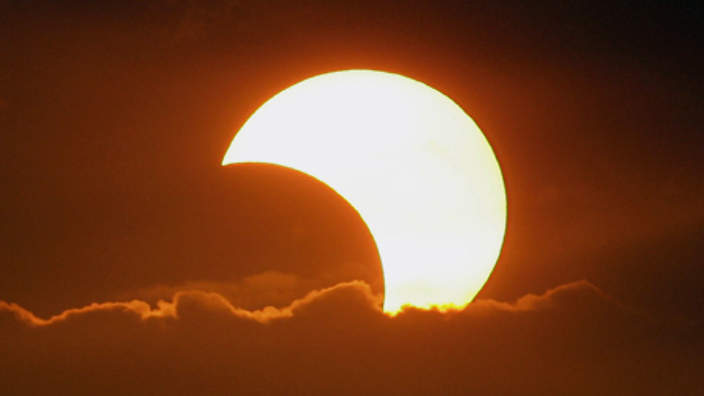
50.

If you are looking up at the sky and see this, you are looking at a....

a)

solar eclipse

b)

total eclipse

c)

lunar eclipse

d)

jupiter

51.

This image is an example of

a)

Lunar Eclipse

b)

Full Moon

c)

New Moon

d)

Solar Eclipse

52.
Small pieces of rock are also called
a)
sediment
b)
coal
c)
organic matter
d)
erosion
53.
When the weight of new  sediment layers is deposited on top of older layers
a)
erosion
b)
compaction
c)
pressure
d)
weathering
54.
The process of layers become stuck together forming sedimentary rocks
a)
sticking
b)
pressuring
c)
cementation
d)
deposition
55.
The waste and remains of plants and animals
a)
organic matter
b)
fossil fuels
c)
fossils
56.
Preserved parts or traces of animals and plants that lived in the past
a)
natural gas
b)
imprints
c)
photos
d)
fossils
57.
Coal is formed from dead plants and other organisms?
a)
True
b)
False
58.
Fossils are only found in sedimentary rocks.
a)
True
b)
False
59.

What is the point on the surface of the earth directly above the focus of an earthquake?

a)

epicenter

b)

fault

c)

focus

d)

intensity

60.

What is the location where the rupture of an earthquake begins and energy is released called?

a)

epicenter

b)

focus

c)

intensity

d)

S wave

61.

What is a wave generated by earthquake vibrations called?

a)

seismogram

b)

surface wave

c)

seismic wave

d)

seismology

62.
The huge pieces of the earth's crust are called ____________________________. 
a)
crust
b)
plates
c)
directions
d)
seismos
63.
A giant landmass that existed 200 million years ago
a)
Wegener
b)
Pangaea
c)
Archyopteryx
d)
Ammonite
64.
What is this a picture of?
a)
plate tectonics
b)
continental drift
c)
pangea
d)
glacier scaring
65.
What does the theory of continental drift state?
a)
The continents were once joined in a super-continent and have moved over time
b)
Continents are stationary and do not move
c)
The Earth is broken into lithospheric plates that move due to convection currents
d)
none of the above
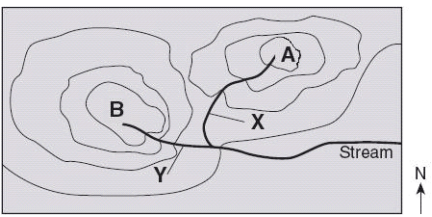
66.
Which direction is the stream flowing?
a)
northward
b)
southward
c)
westward
d)
eastward
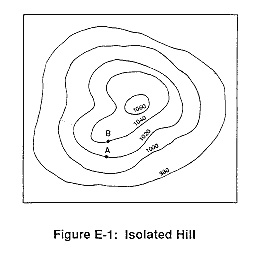
67.
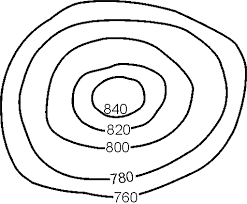
What is the highest elevation this hill could possibly have? (might not be labeled)
a)
1040
b)
1060
c)
1079
d)
1009
68.
What is the contour interval on this map?
a)
100
b)
10
c)
15
d)
20
69.
It is steep on a topographic map where __________.
a)
lines are closest together
b)
a river flows into a lake
c)
contours bend
d)
contours are far apart
70.

In which direction is Mill River flowing?

a)

Southeast

b)

Southwest

c)

Northeast

d)

Northwest

71.
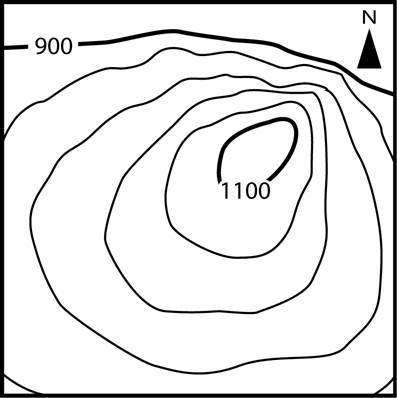
Determine the contour interval:
a)
5 m
b)
10 m
c)
15 m
d)
20 m
72.
Provided is a topographic map of a hill with contour lines drawn showing elevation in meters.
The steepest slope on this hill can be found on the side that is facing which direction?
a)
Southwest
b)
Northeast
c)
Northwest
d)
Southeast
73.
The color of a mineral in powder form is called the mineral's 
a)
hardness
b)
specific gravity
c)
luster
d)
streak
74.
How light reflects off of a mineral is called the mineral's 
a)
luster
b)
streak
c)
cleavage
d)
fracture
75.
Which test is not reliable in identifying minerals
a)
streak
b)
luster
c)
specific gravity
d)
color
76.
A mineral's resistance to being scratched is called?
a)
streak
b)
luster
c)
hardness
d)
heft
77.
Breakage along smooth, flat planes
a)
fracture
b)
cleavage
c)
streak
d)
ore
78.
A mineral breaks into pieces like are shown in the picture. How would you describe its breakage?
a)
Fracture
b)
Cleavage
c)
Glassy
d)
Waxy
79.
A mineral breaks into pieces like are shown in the picture. How would you describe its breakage?
a)
Fracture
b)
Cleavage
c)
Glassy
d)
Waxy
80.
Which mineral property is being shown here?
a)
luster
b)
hardness
c)
cleavage
d)
streak
81.
Fossils are only found in
a)
Sedimentary rocks
b)
Foliated Metamorphic rocks
c)
Igneous Rocks
d)
Nonfoliated Metamorphic rocks
82.
The three groups of rocks are classified by
a)
How they form
b)
Color
c)
Grain size
d)
Chemical Composition
83.
This rock started as molten magma. What type of rock is this?
a)
Sedimentary
b)
Igneous
c)
Metamorphic
84.
The process by which metamorphic rocks are formed...
a)
heat and pressure
b)
erosion and deposition
c)
melting and cooling
85.

Which type of rock is made from lava or magma cooling?

a)

igneous

b)

sedimentary

c)

metamorphic

86.
Which type of metamorphic rock has minerals in bands or stripes?
a)
Nonfoliated
b)
Coarse grained
c)
Fine grained
d)
Foliated
87.
Each rock type can follow only one pathway of the rock cycle.
a)
True
b)
False
88.
How do we characterize an air mass that forms over land?
a)
Dry
b)
Wet
c)
Cold
d)
Warm
89.
What's the humidity and temperature of a continental tropical air mass?
a)
Wet and cold
b)
Dry and warm
c)
Wet and warm
d)
Dry and cold
90.
What's the humidity and temperature of a maritime tropical air mass?
a)
Wet and cold
b)
Dry and warm
c)
Wet and warm
d)
Dry and cold
91.
What types of air masses form over oceans?
a)
Maritime
b)
Continental
c)
Polar
d)
Tropical
92.
A dry and cold air mass would be...
a)
Maritime polar
b)
Continental polar
c)
Maritime tropical
d)
Continental tropical
93.
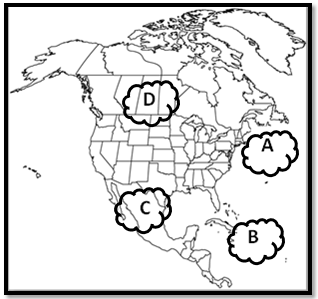
Which type of air would you find at air mass B?
a)
cold, dry
b)
warm, humid
c)
warm, dry
d)
cold, humid
94.
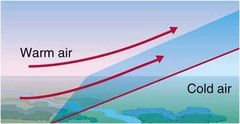
Which type of front is displayed?
a)
Cold
b)
Warm
c)
Stationary
d)
Occluded
95.
Which type of front is displayed?
a)
Cold
b)
Warm
c)
Stationary
d)
Occluded
96.
The boundary between two air masses is called a/an - 
a)
flood
b)
front
c)
climate
d)
storm
97.
Our weather generally moves in this direction...
a)
West to East
b)
East to West
c)
North to South
d)
South to North
98.
A cold front moving into an area can bring this type of weather...
a)
Warmer Temperatures, Clear Skies
b)
Colder Temperatures, Clear Skies
c)
Warmer Temperatures, Clouds
d)
Colder Temperatures, Clouds, and Precipitation
99.
A warm front moving into an area can bring this type of weather...
a)
Warmer Temperatures, Clear Skies
b)
Colder Temperatures, Clear Skies
c)
Warmer Temperatures, Clouds, and steady precipitation
d)
Colder Temperatures, Clouds, and Precipitation
100.
Choose the statement that is TRUE
a)
Oceanic crust is thinner than Continental Crust and  denser than Continental Crust
b)
OOceanic crust is thicker than Continental Crust and  denser than Continental Crust
c)
Continential  crust is thinner than OceanicCrust and  denser than Oceanic Crust
d)
Continential crust is thicker than Oceanic Crust and  denser than Oceanic Crust
101.

How do scientists know the Earth has layers?

a)

Drilling into the mantle

b)

Volcanoes

c)

Seismic waves data

d)

ocean waves

102.
In order for a hurricane to form, the water must be ________.
a)
Cool
b)
Warm
c)
Cold
d)
Hot
103.

What are 2 items you should have/buy when preparing for a hurricane?

a)

bottled water

b)

frozen food

c)

batteries

d)

candy

104.
a good way to be prepared for an emergency is:
a)
having a plan and not sharing it with anyone 
b)
keeping an emergency kit somewhere easily accessible
c)
keeping original documents somewhere hidden so well, even you cannot find it. 
d)
Ignore weather reports. They are usually wrong anyways. 
105.
Why do emergency kits need to be restocked, if they have not been used in a while.
a)
they do not need to be restocked
b)
to make sure you still like the food you have in it
c)
because i said so 
d)
food can expire, and some electronics might not work
106.
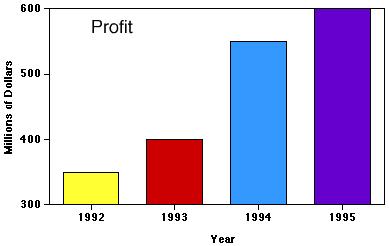
What is the best summary statement for this graph?
a)
Profits decreased in later years.
b)
Profits remained the same through the years.
c)
Profits increased through the years
107.
How many seals were present in 2011?
a)
25
b)
30
c)
40
d)
50