

Wayground logo

Free Printable Worksheets

Font size

S
M
L
XL
Worksheets

Midterm Review - Unit 4

Total questions: 39

Worksheet time: 22mins
Name
Class
Date
1.
What type of cell has a nucleus? 
a)
eukaryotic
b)
prokaryotic 
2.
a)
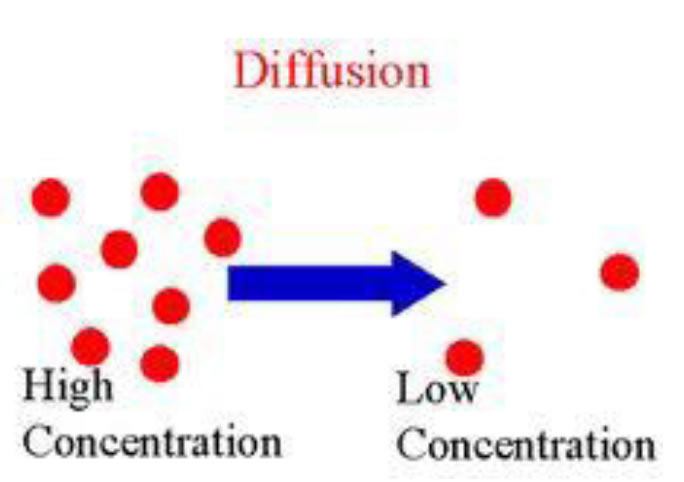
Passive Transport
b)
Active Transport
3.
Which of the following uses energy (Is active transport)? 
a)
Diffusion 
b)
Osmosis 
c)
Facilitated diffusion
d)
Exocytosis
4.
The lipid bilayer is nonpolar, so nonpolar molecules like Carbon dioxide cross it using: 
a)
Active transport
b)
Endocytosis 
c)
Simple diffusion 
d)
Facilitated diffusion
5.
Which of the following is most likely a prokaryote? 
a)
a
b)
b
c)
c
d)
d
6.
Which cell is in a hypertonic solution?
a)
Right 
b)
center 
c)
left
7.
Which organelle has its own, special DNA
a)
Mitochondria 
b)
Golgi bodies 
c)
Endoplasmic Reticulum 
d)
Ribosome
8.
Which of the following is NOT shared by all cells?
a)
Cytoplasm 
b)
Ribosomes 
c)
Membrane
d)
Flagella
9.
Which is an example of a prokaryote?
a)
Fungus 
b)
Bacteria 
c)
Plants 
d)
Animals
10.
Between the lipid bilayer is a nonpolar region that repels water. Its called: 
a)
Hydrophobic zone
b)
Hydrophilic polar head
c)
Cell Transport 
d)
Protein channel
11.
Immune cells can produce thousands of defensive proteins per second. Which organelle would you expect to be prominent in these cells?
a)
Endoplasmic reticulum 
b)
Nucleus 
c)
Lysosomes 
d)
Centrioles
12.
Ca+ and H+ ions cannot pass through a cell membrane without a channel because: 
a)
They are polar and the cell membrane is non-polar 
b)
They are non-polar and the cell membrane is polar
13.

This structure is found in plants and is made of cellulose.

a)

chloroplast

b)

cell membrane

c)

cell wall

d)

cytoplasm

14.
What are the 2 parts of a phospholipid? 
a)
Hydrophobic head, hydrophilic tails 
b)
Hydrophobic heads, hydrophobic tails 
c)
Hydrophilic heads, hydrophobic tails 
d)
Hydrophilic heads, hydrophilic tails 
15.
What is the definition of  Selective Permeability?
a)
The movement of materials across the cell membrane that requires NO ENERGY from the cell.
b)
The movement of materials through (or across) the cell membrane
c)
The ability of the cell membrane to allow some things to pass through while preventing other things from passing through.
d)
The movement of molecules from an area of high concentration (where the molecules are more crowded together) to a area of low concentration (where molecules are more spread apart)
16.
What type of transport is occurring in Part C of the diagram shown?
a)
Active Transport
b)
Osmosis
c)
Facilitated Diffusion
d)
Diffusion
17.

The basic unit of structure and function in living things is the __.

a)

nucleus

b)

membrane

c)

cell

d)

chloroplast

18.

organelle that makes proteins

a)

mitochondria

b)

nucleus

c)

endoplasmic reticulum

d)

ribosomes

19.

The Golgi apparatus is an organelle that

a)

receives proteins and lipids from the ER.

b)

labels the molecules made in the ER with tags that specify their destination.

c)

releases molecules in vesicles.

d)

all of the above

20.

Which substance passes easily through a plasma membrane?

a)

ions

b)

sugars

c)

water

d)

O2

21.

Which part of the phospholipid is hydrophobic?

a)

A

b)

B

22.

If the concentration of oxygen IN a cell is 5% and OUTSIDE a cell is 10%, which way will oxygen diffuse?

a)

into the cell

b)

out of the cell

c)

it won't diffuse

23.
The function of the nucleus...
a)
Break down food to release energy
b)
Control all cell functions, contains the DNA
c)
Make proteins
d)
Transport proteins
24.
Using this image, what organelle is O?
a)
Cell Membrane
b)
Centrioles
c)
Golgi Apparatus
d)
Mitochondria
25.
Which of the following statements correctly matches a cell part with its function
a)
The cell membrane packages lipids for export
b)
The mitochondria perform photosynthesis
c)
The lysosome digests molecules
d)
The nucleus produces energy
26.

Liver cells are specialized cells that carry out a multitude of tasks, including the synthesis of cholesterol and the breakdown of protein metabolites. These cells would be expected to contain a large proportion of which organelle relative to all others?

a)

smooth ER

b)

rough ER

c)

golgi

d)

nucleolus

27.

Tay-Sachs disease is a human genetic abnormality that results in cells accumulating and becoming clogged with very large and complex lipids. Which cellular organelle must be involved in this condition?

a)

the endoplasmic reticulum

b)

the Golgi apparatus

c)

the lysosome

d)

membrane-bound ribosomes

28.
After a protein is constructed at the ribosome, it can be transported to the Golgi complex for modification. What cellular structure is used in this transport?
a)
Lysosome
b)
Mitochondrion
c)
Nuclear pore
d)
Endoplasmic reticulum
29.
Which of the following is NOT a function of the endomembrane system?
a)
Compartmentalization (creates different areas in the cell which do different things)
b)
Detoxification
c)
Protein modification and transportation of proteins
d)
Creation of ATP (energy)
30.
The long, fiber like part of a neuron which the cell sends information to receiving neurons
a)
axon 
b)
dendrite
c)
axon terminal
d)
gene
31.
This releases neurotransmitters which are sent into the synaptic cleft for receptors on the dendrite to taste
a)
axon
b)
axon terminal
c)
gene
d)
neuron
32.
A network of branches coming from individual cells.  They carry information and electrical signals in the brain and nervous system
a)
axon
b)
axon terminal
c)
dendrite
d)
neuron
33.
This insulating material forms a layer, around the axon of a neuron.  It enables electrical signals to travel down the axon at higher speeds.
a)
neuron
b)
myelin sheath
c)
dendrite
d)
neurotransmitter
34.
A chemical produced by neurons that carries messages to other neurons
a)
myelin sheath
b)
neurotransmitter
c)
axon
d)
axon terminal
35.
The tiny gap between neurons where nerve impulses are sent from one neuron to another.  It is where communication occurs between an axon and dendrite
a)
synapse
b)
axon terminal
c)
impulse
d)
myelin
36.
Which ions are involved in an action potential?
a)
Na; Cl
b)
Na; K
c)
K; Cl
d)
Na; Ca
37.
The sodium potassium pump restores the resting potential. By which process does this work? 
a)
Osmosis
b)
Diffusion
c)
Facilitated diffusion
d)
Active transport
38.

Action potentials run along the ______ from ______ to ________.

a)

axon, dendrites, axon terminals

b)

axon, axon terminals, dendrites

c)

dendrites, axon, axon terminals

d)

axon terminals, axon, dendrites

39.

An action potential is __________ in nature, with the inside of the neuron being more ________.

a)

chemical, negative

b)

electrical, negative

c)

chemical, positive

d)

electrical, positive
