Wayground logo

Free Printable Worksheets

Font size

S
M
L
XL
Worksheets

Aquatics Science Unit 1 Test

Total questions: 76

Worksheet time: 53mins

Name
Class
Date
1.
What are tiny organisms that float near the surface of the water?
a)
plankton
b)
organisms
c)
abiotic factor
d)
insects
2.

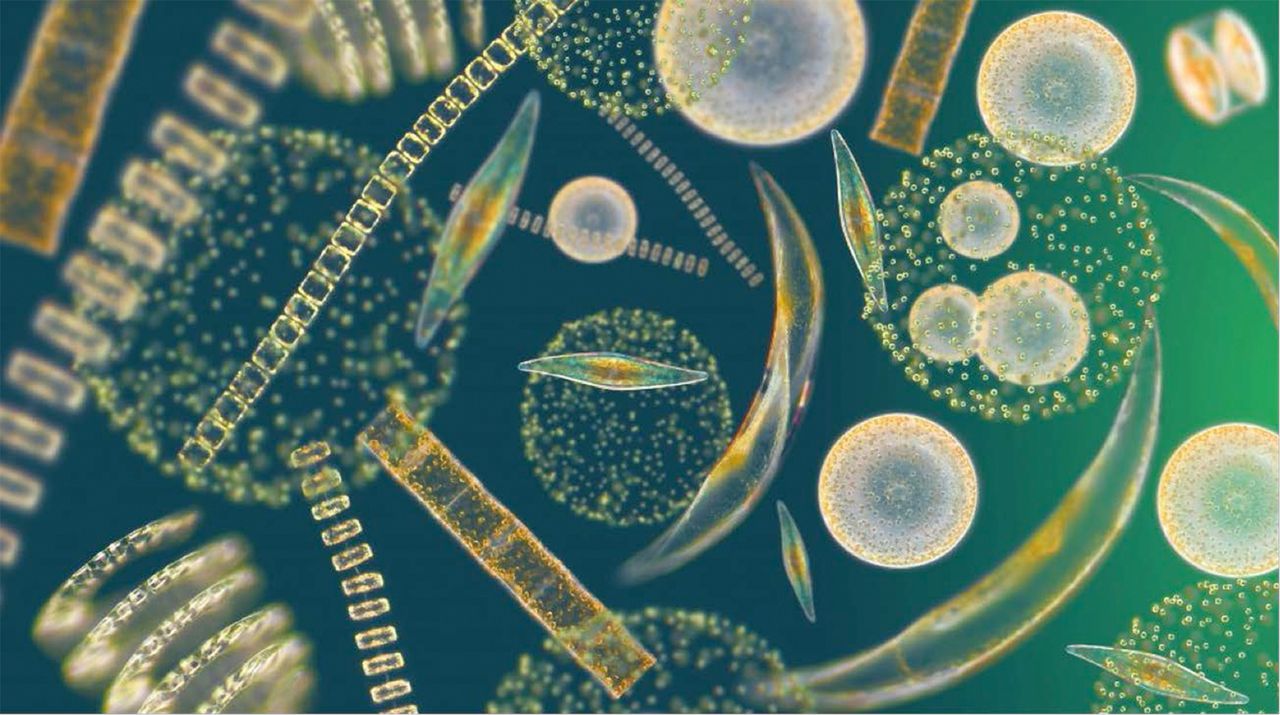
What organism(s) are pictured here?

a)

Diatoms

b)

Dinoflagellates

c)

Zooplankton

d)

Nekton

3.
Which is a kind of phytoplankton?
a)
 lion’s mane jellyfish
b)
sea butterfly 
c)
algae
d)
copepod 
4.
Plankton that uses photosynthesis:
a)
Phytoplankton
b)
Zooplankton
5.
Zooplankton are grouped into which kingdom?
a)
Monera
b)
Protista
c)
Plantae
d)
Animalia
6.
Which best describes the source of oxygen in ocean water?
a)
Oxygen is produced by marine plants in the process of making food.
b)

Oxygen is produced through the exhalations of marine animals.
c)

Oxygen is produced through precipitation falling on the ocean.
d)
Oxygen is produced by nodules on the ocean floor.
7.
Phytoplankton are associated with the photic zone because they rely on the sun for the process of:
a)
Respiration
b)
Photosynthesis
c)
Chemosynthesis
d)
Heterotrophs
8.
Which organism is at the base of a marine food web?
a)
crab
b)
phytoplankton
c)
whale
d)
zooplankton
9.
The larvae of crabs and krill belong to which group of plankton?
a)
Phytoplankton
b)
Meroplankton
c)
Holoplankton
d)
None of the above
10.
Permanent members of the plankton family.
a)
Holoplankton
b)
Meroplankton
c)
Autotroph
d)
Heterotroph
11.
Organisms who are plankton only part of their lives.
a)
holoplankton
b)
microplankton
c)
meroplankton
d)
macroplankton
12.
What is the leaf-like flattened portion of the seaweed?
a)
holdfast
b)
thallus
c)
blade
d)
stipe
13.
Which type of algae lives primarily in freshwater?
a)
Green algae
b)
Red algae
c)
Brown algae
14.
Which type of algae includes sargasso weed and kelp?
a)
Green algae
b)
Red algae
c)
Brown algae
15.
Which part of the seaweed acts as a root-like structure that attaches the seaweed to a hard surface?
a)
stipe
b)
holdfast
c)
blade
d)
thallus
16.
Which part of the seaweed is a stem-like structure that supports the blades?
a)
thallus
b)
stipe
c)
holdfast
d)
pneumatocysts
17.
The copepod eats other plankton its entire life and stays plankton, thus it is termed__________.
a)
nekton
b)
holoplankton
c)
meroplankton
18.
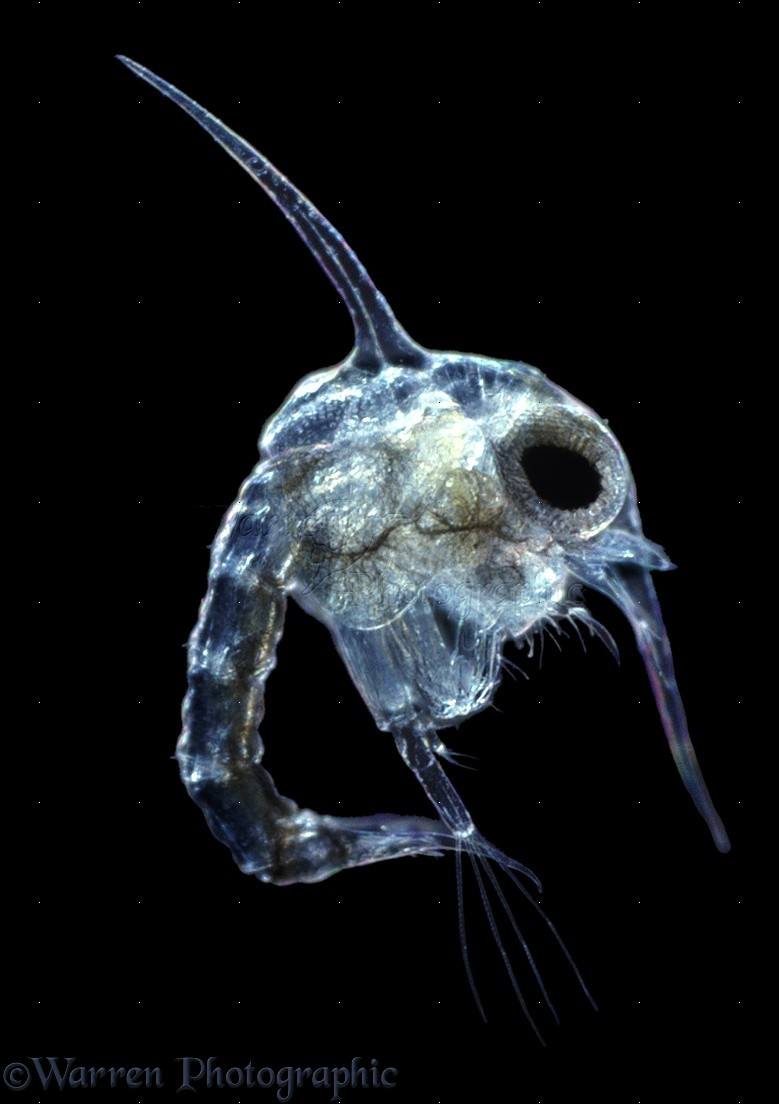
These horseshoe crab larvae are termed_________ since they grow into entirely different adult forms.
a)
nekton
b)
meroplankton
c)
holoplankton
d)
phytoplankton
19.
The laws and principles covering the classification of organisms.
a)
Taxonomy
b)
Dichotomous key
c)
Diel vertical migration
d)
Meroplankton
20.

What eats phytoplankton?

a)

Bacteria

b)

Zooplankton

c)

Mammals

d)

Humans

21.
The scientific name of an organism is made of which two taxonomic groups?
a)
Family & species
b)
Order & Genus
c)
Kingdom & Phylum
d)
Genus & species
22.

Animals that have no backbone are:

a)

Vertebrates

b)

Invertebrates

23.

Which group of zooplankton is plankton for its WHOLE life?

a)

holoplankton

b)

meroplankton

24.

Sponges have what type of symmetry?

a)

Asymmetry

b)

Bilateral

c)

Radial

25.
How long are Holoplankton considered plankton? 
a)
until they learn to swim
b)
until they find a mate
c)
their whole life
d)
until they become an adult
26.

Is this organism a holoplankton or a meroplankton?

a)

holoplankton

b)

meroplankton

27.

Is this organism a holoplankton or a meroplankton?

a)

holoplankton

b)

meroplankton

28.
Identify this seaweed. (image b)
a)
Sea Grass
b)
Sea Lettuce
c)
Irish Moss
d)
Sargassum
29.
Which term refers to the entire body of the seaweed?
a)
blade
b)
thallus
c)
pneumatocyst
d)
stipe
30.
What is the main pigment in green algae?
a)
chlorophyll
b)
phycobilins
c)
fucoxanthins
31.
What type of brown algae is capable of floating in large masses far from shore?
a)
kelp
b)
algal turf
c)
sargasso
32.
These are protists called _____
a)
diatoms
b)
dinoflagellates
c)
green algae
d)
amoeba
33.
The immature stage of an organism
a)
Larva
b)
Nekton
c)
Benthic
d)
Sessile
34.
What are Plankton?
a)
They are small plants and animals.
b)
They are any plants or animals that drift with the currents of the ocean.
c)
They are only microscopic animals.
d)
They are only microscopic plants.
35.
What are the gas-filled bladders that help the blades float near the surface?
a)
thallus
b)
holdfast
c)
stipe
d)
pneumatocysts
36.
What is the newly hatched young of many of the marine animals that look very different for their adult forms?
a)
hatchlings
b)
babies
c)
larva
d)
plankton
37.
This is a larva of
a)
a lobster
b)
a sea slug
c)
a starfish
d)
a sea urchin
38.
This is the larva of a
a)
barnacle
b)
squid
c)
octopus
d)
jellyfish
39.
Larval form of
a)
crab
b)
lobster
c)
sea urchin
d)
barnacle
40.
What kind of algae is this?
a)
brown
b)
red
c)
green
d)
Not enough info answer
41.
Largest of the algae. The_______ grows to up to _______.
a)
bull kelp, 6'
b)
sea lettuce, 100'
c)
giant kelp, 300'
d)
Japanese kelp, 6'
42.
Coconut crabs are the largest land crustaceans. Their larva part of the______.
a)
phytoplankton
b)
zooplankton
c)
holoplankton
d)
nekton
43.
These tiny shrimp are the important source of food for whales among other animals.
a)
brine shrimp
b)
Gulf Coast prawns
c)
krill
d)
Tiger shrimp
44.

Name a type of plankton

a)

holoplankton

b)

meroplankton

c)

phytoplankton

d)

all of the above

45.

How an organism's body is arranged is known as...

a)

symmetry

b)

geometry

c)

shadows

d)

trigonometry

46.

when an organisms body is arranged in a circle

a)

asymmetrical

b)

bilateral

c)

radial

d)

ludacrisacal

47.

when an organisms body has no defined shape

a)

asymmetrical

b)

bilateral

c)

radial

d)

ludacrisacal

48.

when an organisms body is the same on both sides

a)

asymmetrical

b)

bilateral

c)

radial

d)

ludacrisacal

49.

sponges are

a)

asymmetrical

b)

radial

c)

bilateral

50.

how do sponges get their food?

a)

use sharp teeth and claws

b)

filter feed through pores

c)

photosynthesis

d)

use stealthiness and extreme speed

51.

Where would you find a sessile organism?

a)

Swimming through the sea

b)

Drifting on ocean currents

c)

Anchored to a rock

d)

Walking across the seafloor

52.
___________ are tiny hard particles that give a sponge support and can provide protection when they stick out of a sponge.
a)
spongin
b)
bones
c)
buds
d)
spicules
53.
large opening at the top of a sponge where water exits.
a)
ostia
b)
osculum
c)
orifice
d)
opening
54.

The small openings all over a sponge are...

a)

Collar cells

b)

Flagella

c)

Osculum

d)

Pores

55.

The cells inside the sponge that have flagella (and absorb food) are called...

a)

Collar cells

b)

Flagella

c)

Osculum

d)

Pores

56.

This silica (glass) bodied plankton is a

a)

amoeba

b)

flatworm

c)

diatom

d)

nekton

57.

Which of the following is at Kingdom level?

a)

Canidae

b)

Animalia

c)

porosus

d)

Mammalia

58.

Which of these is a Phylum?

a)

alces

b)

Plantae

c)

Reptilia

d)

Porifia

59.

The type of seaweed baby sea turtles live in that drifts at ocean surface ( and all over Surfside Beach :P ).

a)

Giant kelp

b)

sea lettuce

c)

Sargasso seaweed

d)

turtle grass

60.

Which one is a species?

a)

Alces

b)

Carnivora

c)

zerda

d)

Aves

61.

These are

a)

sponges

b)

sea anemones

c)

plankton

62.

Which of these is a genus?

a)

Alces

b)

alces

c)

Cervidae

d)

Animalia

63.

Living organisms that cannot make their own food and must consume other things.

a)

Autotrophic

b)

Heterotrophic

c)

Eutrophic

64.

Which type of organism contains DNA but no nucleus or membrane-bound organelles? ( Lunch box with all the food unwrapped and spilled all over )

a)

Eukaryote

b)

Prokaryote

65.

Think about the taxonomic ranks and pick the one you think has the most species.

a)

Species

b)

Kingdom

c)

Phylum

d)

Class

66.

In the term 'binomial nomenclature', what does nomial refer to?

a)

Two

b)

Name(s)

c)

two non binary organisms

67.

What scientist gave us the system of classification we still use today?

a)

Steve Irwin

b)

Linnaeus

c)

Darwin

d)

Crick

68.
Choose the correct order of taxa from LARGEST to SMALLEST
a)
Species, Genus, Family, Order, Class, Phylum, Kingdom
b)
Family, Kingdom, Order, Phylum, Class, Order, Species, Genus
c)
Kingdom, Phylum, Class, Order, Family, Genus, Species
d)
Phylum, Order, Species, Family, Genus, Kingdom
69.

What is the scientific name for a dog?

a)

Perro

b)

familiarius

c)

Canis lupus familiarius

d)

Canis

70.

Animals that have no backbone are called ______________.

a)

Invertebrates

b)

Vertebrates

c)

Exoskeleton

d)

Endoskeleton

71.

True or False: There are almost 1 million invertebrates and only about 80,000 vertabrates.

a)

True

b)

False

72.

This is the second word of an organism's scientific name.

a)

Class

b)

Order

c)

Genus

d)

Species

73.

Phylum of this wolf

a)

Felis lupus

b)

Canis lupus

c)

Animalia

d)

Chordata

74.

What does it mean to be in the phylum Chordata?

a)

Having a spinal cord ( bones )

b)

to have fur

c)

to have a nerve ganglia

d)

to produce your own food

75.

Which of the following levels would have over a million species?

a)

Phylum Chordata

b)

Family Ursidae

c)

Order Carnivora

d)

Kingdom Animalia

76.

Which of the following would have only one animal?

a)

Kingdom Animalia

b)

Phylum Chordata

c)

Family Homididae

d)

species : mephetis