wayground logo

Free Printable Worksheets

Font size

S
M
L
XL
Worksheets

100 day science challenge

Total questions: 100

Worksheet time: 2hrs 37mins

Name
Class
Date
1.
Which characteristic would most likely be inherited by a baby?
a)
brown hair
b)
crying a lot
c)
ability to jump high
d)
his ability to talk
2.
A dog rolls over and receives a treat. The dog rolls over again. This is an example of...
a)
learned behavior
b)
adaptive behavior
c)
inherited behavior
d)
instinctive behavior
3.
The following are inherited traits of humans EXCEPT...
a)
long hair
b)
blue eyes
c)
long eyelashes
d)
small dimples
4.
Which characteristic is inherited?
a)
hair color
b)
sleeping late
c)
enjoying hiking
d)
loving to read
5.
Which trait does a puppy inherit from its parents?
a)
fur color and pattern
b)
obedience to commands
c)
food brand preference
d)
affection for a specific home
6.
Which is an example of a learned characteristic?
a)
color of a dog's fur
b)
color blindness of a person
c)
the ability of a mouse to run a maze
d)
a person's ability to roll their tongue
7.
A plant leaning towards the sun
a)
inherited trait
b)
learned behavior 
8.
Having blue eyes like mom
a)
learned behavior
b)
inherited trait 
9.
Which is an example of a learned behavior? 
a)
Blue eyes
b)
Being upset
c)
Speaking English 
d)
Having freckles 
10.
Which is an example of an inherited trait? 
a)
Reading
b)
Speaking Spanish
c)
Having stripes
d)
Throwing a baseball 
11.

Which is an example of a single celled organism?

a)

amoeba

b)

insect

c)

fish

d)

worm

12.

Why do multi-cellular organisms need transport systems?

a)

most have cells that are not able to exchange gases with the outside environment

b)

most have cells that are unable to grow and survive in their environment

c)

most have cells that need food from sources outside their environment

d)

most have cells that require more energy to survive than single celled organisms

13.

Which statement best describes a bacterial cell?

a)

It contains more than one cell

b)

It is a complete organism

c)

It is part of a larger organism

d)

It contains different kinds of cells

14.

Which characteristics do single-celled organisms and multi-celled organisms have in common?

a)

Both have cells with specialized functions for each process.

b)

Both perform all life processes within one cell.

c)

Both have a way to get rid of waste materials.

d)

Both are able to make food from sunlight.

15.

A scientist is trying to decide whether an organism is unicellular or multi-cellular. Which information would help the scientist most to make her decision?

a)

size of the cells of the organism

b)

what the organism eats

c)

how many types of cells are in the organism

d)

how fast the organism grows

16.

Which of the following is a multi-cellular organism?

a)

yeast

b)

bacteria

c)

ameoba

d)

human

17.

Knowing how many cells an organism is composed of allows us to classify it into one of which two groups?

a)

plant/animals

b)

carnivore/herbivore

c)

producer/consumer

d)

unicellular/multi-cellular

18.
Which statement best describes one-celled organisms?
a)
they carry out all the basic processes of life
b)
they do not get rid of waste
c)
they do not need to take in nutrients
d)
they work together to do certain jobs
19.
How are the cells in multi-celled organisms different than single-celled organisms?
a)
They perform special functions.
b)
They form tissues, organs, and organ systems.
c)
They come in many different types.
d)
All of the above.
20.
Which best compares bacteria and sharks?
a)
bacteria are unicellular, and sharks are multicellular
b)
bacteria are multicellular, and sharks are unicelluluar
c)
bacteria have transport systems, while sharks do not
d)
bacteria reproduce, while sharks do not 
21.
Which of these is an example of precipitation?
a)
snow
b)
air
c)
clouds
d)
vapor
22.
Which is the opposite of condensation?
a)
runoff
b)
evaporation
c)
precipitation
d)
transpiration
23.
What is it called when plants give off water vapor as a waste product?
a)
condensation
b)
evaporation
c)
sublimation
d)
transpiration
24.
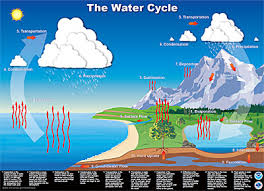
What is the water cycle?
a)
the 3 forms of water
b)
the movement of water on, above, or below the surface of the Earth
c)
when water melts
d)
when clouds form
25.
During which stage do clouds form?
a)
condensation
b)
evaporation
c)
precipitation
26.
What is A?
a)
Evaporation
b)
Condensation
c)
Precipitation
d)
Runoff
27.
What is B?
a)
Evaporation
b)
Condensation
c)
Precipitation
d)
Runoff
28.

When changing from a liquid to a gas, the water molecules are ____________________________.

a)

freezing and moving away from each other.

b)

evaporating and moving away from each other

c)

condensing and moving closer to each other

d)

evaporating and moving closer to each other

29.

Water in its gas form is called ____________________,

a)

water vapor

b)

precipitation

c)

ice

d)

air

30.

This provides the power to keep the water cycle running.

a)

The Sun

b)

The Earth

c)

The wind

d)

living things

31.
A student notices that an inflated balloon gets larger when it is warmed by a lamp. Which best describes the mass of the balloon as a result of this change?
a)
The mass of the balloon increases because the size of the balloon has increased.
b)
The mass of the balloon increases because the temperature of the balloon has increased.
c)
The mass of the balloon stays the same because the gas inside the balloon still has the same mass after it warms up.
32.
A 500-gram block of solid cheese is melted in a pot. Which is most likely the mass of the cheese after it is melted?
a)
500 grams, because the cheese does not gain or lose mass just because it was melted
b)
499 grams, because some of the cheese evaporates as it melts
c)
502 grams, because the cheese absorbs heat as it melts
33.
Luke creates a model to observe the water cycle. He pours water into a clear container and closes the container and weighs it. Two days later, Luke observes about half of the water has evaporated and water droplets have formed on the sides of the container. Which is the weight of the container?
a)
The container weighs the same as it did 2 days ago.
b)
The container weighs much less than it did 2 days ago.
c)
The container weighs half as much as it did 2 days ago.
34.
Jamie weighs a glass of water and observes its weight to be 12 ounces. Jamie then adds 6 ice cubes to the glass of water. Each ice cube weighs one ounce. After all of the ice cubes have melted, what will be theapproximate weight of the glass of water?
a)
b)
12 
c)
18 ounces
35.
A 55-gram egg is placed in a pot. After the egg is boiled, which is most likely the mass of the egg?
a)
50 
b)
55 
36.
Bob puts 200 grams of ice into a pitcher with 900 grams of water. He gets distracted and comes back later to find that the ice has melted in the water. How many grams of water does Bob now have in the pitcher?
a)
200 g
b)
700 g
c)
1,100 g
37.
Rodney tears a piece of paper weighing 1 oz into small pieces. What most likelyhappens to the weight of the sheet of paper after Rodney tears it into pieces?
a)
The 
b)
The weight is cut in half.
c)
The weight stays the same.
38.

When heat is added to an ice cube, it will change to a

a)

liquid

b)

solid

c)

plasma

39.

Burning a piece of paper is an example of a

a)

Physical Change

b)

Chemical change

40.

An example of a liquid changing to a gas is

a)

Wood burning

b)

Paper tearing

c)

A pot of boiling water

d)

A lake freezing in the winter

41.

Scrambling eggs is an example of

a)

A physical change

b)

A chemical change

c)

Solution

42.

Tearing paper into small pieces is an example of a

a)

Mixture

b)

Physical change

c)

Chemical change

43.

Which of the following is a chemical change?

a)

Cutting bread

b)

Slicing carrots

c)

Melting butter

d)

Soured milk

44.

Which of the following is a physical change?

a)

Ice melting

b)

Baking potatoes

c)

Rusty nail

d)

Rotting wood

45.

Which change creates a NEW substance?

a)

Physical change

b)

Chemical Change

46.

When heat is taken away from a container of water, what will happen?

a)

It will become a gas.

b)

It will become a solid

c)

There will be less mass.

47.

Heating a solid until it changes color and produces an odor, and noting the solid cannot be changed back is an example of

a)

Physical Change

b)

Chemical Change

48.

Convection is

a)

The flow of energy through touch.

b)

The flow of energy through heated liquids or gases.

c)

The flow of energy through open space.

49.
What is the definition of CONDUCTION?
a)
When heat is transferred from objects like rays of light or electromagnetically.
b)
a  hot liquid or air that  expands, becomes less dense, and rises or becomes more dense, and sinks.
c)
When heat transfers from objects that are touching.
d)
When heat transfers through the heater or AC in your house.
50.

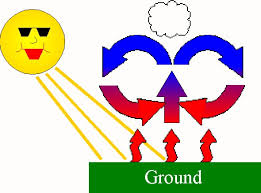
A circular pattern of air rising, air sinking, and wind is

a)

Expand

b)

Convection Cell

c)

Electromagnetic Waves

d)

Radiation

51.

What does contract mean

a)

Get bigger

b)

Get smaller

c)

Radiation

d)

I don't know?

52.

Is metal a conductor?

a)

Yes

b)

No

c)

Maybe

53.

Is plastic a conductor?

a)

Yes

b)

No

c)

Maybe

54.
This is a lava lamp. When the light bulb heats the wax, the wax rises. When the wax cools, it falls. This cycle of rising/falling is an example of:
a)
Conduction.
b)
Convection.
c)
Radiation.
55.
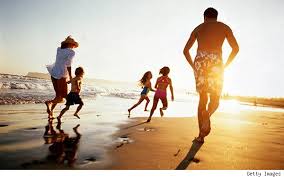
The sun shines down on this family as the play on the beach.
a)
conduction
b)
convection
c)
radiation
56.
What  is the original source of most of the energy that people use?
a)
By radiation from the Sun.
b)
By convection from the Sun.
c)
By radiation from the Earth's core.
d)
Conduction from Earth's core.
57.
Which best describes heat transfer by radiation?
a)
A slice of bacon frying in a pan.
b)
A pot on a stove boiling water.
c)
Cooking a hotdog in a microwave.
d)
A hot air balloon.
58.
Warm air rises and the cool air sinks demonstrates this type of heat transfer. 
a)
conduction
b)
convection
c)
radiation
d)
Insolation 
59.
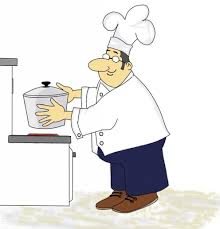
The man takes the hot pot off the stove with his bare hands and his hands get burned.  This is an example of 
a)
conduction
b)
convection
c)
radiation
60.

Which is the best example of convection?

a)

a camp fire

b)

a light bulb

c)

a hot air balloon

d)

a microwave oven

61.

Which best describes the process of conduction?

a)

When two objects touch, the heat is transferred into the air.

b)

When two objects touch, the heat from the hotter object is transferred to the cooler object.

c)

When two objects touch, the cool air from the cooler object is transferred to the hotter object.

62.

On a warm sunny day, a lizard sits on a rock. Which word explains why the lizard feels heat from the sun?

a)

gravity

b)

radiation

63.

A source of heat gives off heat energy. Which heat source transfers heat energy in the form of radiation?

a)
b)
c)
64.
A group of friends gather around a fire to stay warm.
a)
conduction
b)
convection
c)
radiation
65.

Each picture shows a source of heat. Which picture shows heat transfer through convection?

a)
b)
c)
66.

Which best describes the effect of heavy cloud cover on temperatures at night?

a)

Temperatures will be cooler than expected.

b)

Temperatures will be warmer than expected.

c)

Temperature will change frequently throughout the night.

d)

There will be no change in temperature throughout the night

67.

Which type of cloud is associated with days of light, continual rain?

a)

cirrus

b)

stratus

c)

cumulus

d)

cumulonimbus

68.

Which type of weather is usually associated with a cumulus cloud?

a)

fair

b)

humid

c)

foggy

d)

stormy

69.

Which best explains why it is important for people to be able to identify cumulonimbus clouds?

a)

Cumulonimbus clouds can cause mild showers.

b)

Cumulonimbus clouds can cause severe thunderstorms.

c)

Cumulonimbus clouds form near Earth’s surface, causing fog.

d)

Cumulonimbus clouds form when the temperature is below freezing.

70.

Which best explains why it is important for people to be able to identify cumulonimbus clouds?

a)

Cumulonimbus clouds can cause mild showers.

b)

Cumulonimbus clouds can cause severe thunderstorms.

c)

Cumulonimbus clouds form near Earth’s surface, causing fog.

d)

Cumulonimbus clouds form when the temperature is below freezing.

71.

Which characteristics of weather are most important in the formation of cloud cover?

a)

proper wind speeds, presence of other clouds, change in rainfall

b)

proper amount of water vapor, presence of runoff, proper wind speeds

c)

proper amount of runoff, presence of other clouds, proper temperature

d)

proper temperature, proper amount of water vapor, change in air pressure

72.

A scientist is collecting data over time using a barometer. What trends could best be revealed from the data?

a)

changes in cloud cover

b)

changes in temperature

c)

changes in air pressure levels

d)

changes in precipitation levels

73.

Which instrument is used to record average precipitation?

a)

rain gauge

b)

barometer

c)

anemometer

d)

hygrometer

74.

What stage of the water cycle occurs when water falls back to Earth?

a)

condensation

b)

precipitation

c)

evaporation

d)

transpiration

75.

Which best describes the sun’s effect on the water cycle?

a)

The sun causes water to precipitate. The precipitation evaporates and returns to the earth as condensation.

b)

The sun causes water to condense. The condensed water evaporates and returns to the earth as precipitation.

c)

The sun causes water to evaporate. The evaporated water condenses and returns to the earth as precipitation.

d)

The sun causes water to collect on the earth. The collected water precipitates and returns to the earth as condensation.

76.

Which factors would mostly likely help cause precipitation?

a)

decrease in sunlight, decrease in evaporation, increase in condensation

b)

increase in sunlight, decrease in evaporation, decrease in condensation

c)

decrease in sunlight, increase in evaporation, decrease in condensation

d)

increase in sunlight, increase in evaporation, increase in condensation

77.
A strong high level wind found that can reach speeds of 200 mph, usually occurring 6 to 9 miles above the ground; often steer the movement of surface air masses and weather systems.
a)
Gusts
b)
Jet Streams
c)
Prevailing Westerlies
d)
Cold front
78.
Low pressure systems cause...
a)
Sunny weather
b)
Fair weather
c)
Cloudy conditions
d)
Conduction
79.
Evaporation and condensation are similar because...
a)
Caused by changes in heat energy
b)
Caused by changes in wind
c)
Caused by precipitaion
d)
Caused by run-off
80.
A puddle disappears after a very sunny day because of ...
a)
Condensation
b)
Precipitation
c)
Transpiration
d)
Evaporation
81.
High pressure systems bring...
a)
Rainy weather
b)
Sunny weather
c)
Snowy weather
d)
Windy weather
82.
Puffy white clouds associated with good weather are...
a)
Cirrus Clouds
b)
Stratus Clouds
c)
Cumulus clouds
d)
Cumulonimbus clouds
83.
Tall, dark clouds associated with thunderstorms
a)
Cumulonimbus
b)
Cumulus
c)
Cirrus
d)
Stratus
84.
What season occurs in the Southern Hemisphere in August?
a)
Summer
b)
Winter
c)
Spring
d)
Fall
85.
The uneven heating of the air in the atmosphere is...
a)
Conduction
b)
Evaporation
c)
Convection
d)
Condensation
86.
Air that moves from West to East across the United States are know as...
a)
Prevailing Easterlies
b)
Bands of Wind
c)
Gusts of Wind
d)
Prevailing Westerlies
87.
What type of front is most often associated with stormy weather?
a)
a cold front
b)
a warm front
c)
a stationary front
d)
an occluded front
88.
A student states the weather is the same as climate. Which response best tells the student the difference between weather and climate?
a)
Weather is about the wind and rain, but climate is about the clouds.
b)
Weather is the conditions for one day, but the climate is the conditions over a long time.
c)
Weather is measured with tools like thermometers, but climate is measured with tools like forecasts.
d)
Weather is recorded on charts, but climate is recorded on world maps.
89.
What impact does the Gulf Stream have on North Carolina's coastal climate?
a)
The cold water from the Gulf Stream current cools the land.
b)
The warm water from the Gulf Stream current warms the land
c)
The cold water from the Gulf Stream current decreases inland wind speeds.
d)
The warm water from the Gulf Stream current increases inland wind speed.
90.
Which best explains why weather across the United States continually changes?
a)
The movement of air from the Atlantic Ocean.
b)
The movement of high and low air pressure masses.
c)
The distance between the United States and Equator.
d)
The distance between the Arctic Circle and the United States.
91.
Mrs. Baltazar is giving her class an ice cream party. She needs to keep the ice cream cold until lunchtime. Which would be the best container for storage?
a)
a white fabric bag
b)
brown paper bag
c)
covered foam box
d)
uncovered aluminum pot
92.
Jasir noticed that when he put ice in his glass of water, the ice floated. Which best explains why this happens?
a)
When water freezes it contracts, making the ice lighter than the water.
b)
When water freezes particles break down, making the ice lighter than the water.
c)
When the water freezes, it turns into a solid, and all solids are lighter than liquids,
d)
When water freezes it expands, making it a less dense mass that is lighter than water.
93.
Gwen took a 1 ounce slice of bread and cut it into 2 pieces. On one side, she put 2 ounces of peanut butter. On the other side she put 1 ounce of jelly. Which will most likely be the weight of the finished sandwich?
a)
7 ounces
b)
3 ounces
c)
6 ounces
d)
4 ounces
94.
Leslie placed 20 grams each of water, grape juice, orange juice, and coffee in an ice cube tray. Laura wanted to see what the mass of each liquid would be after freezing. Which is most likely Leslie's conclusion when she weighs the frozen samples?
a)
Each sample will weigh 40 grams
b)
Each sample will weigh 25 grams
c)
Each sample will weigh 20 grams
d)
Each sample will weigh 15 grams.
95.
Which are examples of inherited traits? 
a)
specific beliefs
b)
finger prints
c)
memories
d)
nose shape
96.
A litter of kittens have traits that are similar to both the mother cat and the father cat. Which best explains this situation? 
a)
The kittens are provided the same kind of milk from their mother as they grow. 
b)
The kittens inherit some of their traits from their mother and some from their father. 
c)
The kittens are kept at the same temperatures by their mother when they are first born. 
d)
The kittens are taught by their parents to have similar traits. 
97.
What must occur before clouds can form? 
a)
Water vapor must get warmer. 
b)
Water vapor must lose heat energy.
c)
Precipitation must begin to fall and run off.
d)
Transpiration must add water vapor to the atmosphere.
98.
Which process allows green plants to control the amount of water stored in their leaves? 
a)
photosynthesis
b)
condensation
c)
respiration
d)
transpiration
99.
One morning, Jane notices drops of water on the outside of a window. Later in the day, she notices that the drops have disappeared. What most likely caused the drops to disappear?
a)
The water condensed on the plants around the house. 
b)
Energy from the sun caused the water to evaporate. 
c)
The water cooled enough to turn into water vapor. 
d)
Wind blowing on the window turned the water into vapor. 
100.
What happens to metal railroad tracks during the heat of a summer day?
a)
decrease in weight 
b)
increase in weight 
c)
decrease in length 
d)
increase in length