
NEW
Font size
 Worksheets
BIO 204 Exam #5
Total questions: 69
Worksheet time: 1hrs 4mins
Which of these is solely endocrine
thymus
thyroid
pituitary
hypothalamus
What is the function of the Thyroid gland
Hormones that are used to change the metabolic rate of a person's body
Hormones that are used to help you run
Hormones to help you swallow
Penguin
The Adrenal gland secretes the following except:
cortisol
ADH
epinephrine
aldosterone
The Adrenal gland is located:
in the throat
in the brain
inferior to the uterus
on top of the kidneys
Which of the following is NOT true of the pancreas?
It is located in the abdominal cavity
It contains the Islet of Langerhans
It is found superior to the thyroid
It produces insulin and glucagon
Glucagon targets:
the pancreas
all cells of the body
the liver
mostly fat cells
How many hormones pancreas produced
1
2
3
4
Which hormone regulates water balance by reducing the amount of water leaving the body
aldosterone
antidiuretic hormone
growth hormone
thyroxine
Calcitonin decreases calcium in the blood while Parathyroid hormone works antagonistically. What is the function of PTH (Parathyroid Hormone)?
To increase the amount of calcium in the blood so that it is available for the bones
To decrease the amount of calcium in the blood so that it is available for the bones
To break down bones to release calcium into the blood
To build up bones


The thickets layer of the adrenal glands is
zona glomerulosa
zona fasciulata
zona reticularis
zona automata
In the pancreas, the islets of langerhans conduct _________ hormone deliverance.
endocrine
exocrine
From the anterior pitutiary, GH (growth hormone ) goes to the ....
liver
gull bladder
kidneys
heart
The patrol agents in the blood are
hormones and enzymes
albumins and globulins
white blood cells and antibodies
plasma and formed elements
The function of hemoglobin is to
carry oxygen
protect the body against infection
produce the spleen
all the above

The proteins found on the surface of RBCs that allow us to type blood as A, B, O or AB are called
antigens
antibodies
aggluntates
Rh factors


Oxygenated blood from the lungs re-enters this chamber:
Right atrium
Right ventricle
Left atrium
Left ventricle
Deoxygenated blood travels from the right atrium to the right ventricle through this valve:
Mitral Valve
Aortic Valve
Pulmonary Valve
Tricuspid Valve
The semi-lunar valves include:
The bicuspid and the tricuspid
The tricuspid and the aortic valve
The aortic valve and the bicuspid
The aortic valve and the pulmonary valve
The largest artery in the body is the:
Aorta
Pulmonary Artery
Carotid Artery
Brachiocephalic Artery
Which structure separates the right and the left ventricles?
Interatrial Septum
Nasal Septum
Interventricular Septum
Fossa ovalis

Which blood vessel goes from the aorta to the liver?
Renal Artery
Hepatic Portal Vein
Hepatic Artery
Pulmonary Artery
Principal artery located in the upper arm and elbow
Renal
Axillary
Brachial
Radial
What are the tiny air sacs that allow for diffusion between oxygen and carbon dioxide
Bronchi
Bronchioles
Trachea
Alveoli
What is the name of the passages that enables air to pass into the Alveoli?
Bronchi
Trachea
Pharynx
Bronchioles
Please choose the correct pathway air travels though into the lungs
Nasal passage, pharynx, larynx, trachea, bronchiole, bronchi, alveoli
Nasal passage, pharynx, larynx, trachea, bronchi, bronchiole, alveoli
Nasal passage, pharynx, larynx, trachea, bronchi, alveoli, bronchiole
Nasal passage, trachea, pharynx, larynx, bronchi, bronchiole, alveoli
Which sequence correctly indicates the branching pattern of the human respiratory system?
trachea -> bronchi -> bronchioles -> alveoli
trachea -> bronchioles -> bronchi -> alveoli
alveoli -> trachea -> bronchioles -> bronchi
alveoli -> bronchioles -> trachea -> bronchi
Which part of the human respiratory system is a thin, moist membranous structure where gas exchange occurs?
trachea
bronchus
epiglottis
alveolus


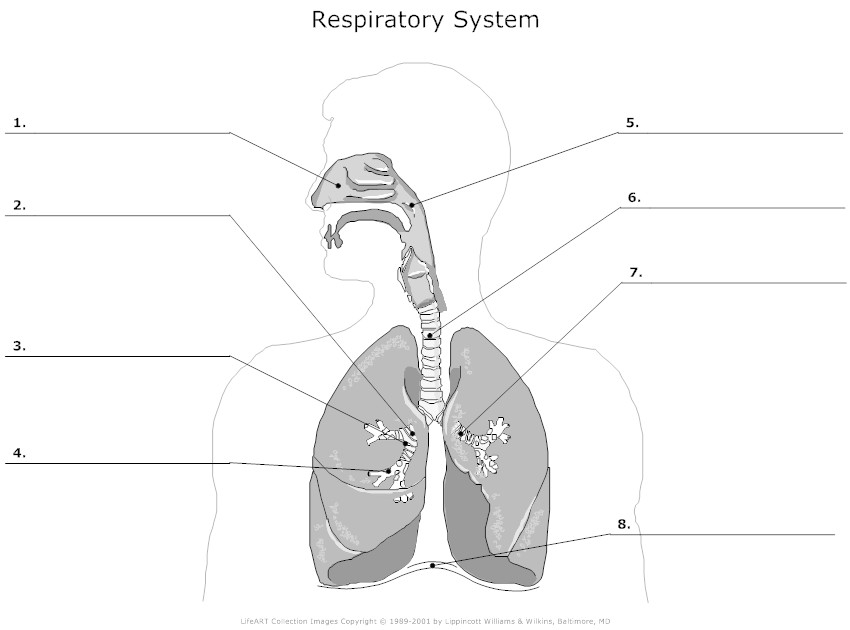
The passageway that is shared by both the digestive and respiratory system is the:
larynx
pharynx
trachea
nose

Flap of tissue that covers the opening to the windpipe during swallowing
Pharynx
Trachea
Epiglottis
Originating from hematopoietic stem cells __________.
erythropoiesis
hematopoiesis
eeriethroposies
The "3 phils" are which kind of leukocyte?
Granular
Agranular
Another name for Thrombocyte is
erythrocyte
leukocyte
platelet
prothrombin
Which blood type is considered the "Universal" recipient?
A-
B+
AB+
O+
Which blood type is considered the "Universal" donor?
A-
B=
AB+
O-

Which artery travels up into the head from the neck? (highlighted in green)
Brachial
Pulmonary
Carotid
Iliac

Which artery is located in the proximal part of the arm?
Anterior Tibial Artery
Radial Artery
Brachial Artery
Femoral Artery

Which artery is located in the proximal part of the leg? (Highlighted in green).
Radial Artery
Renal Artery
Pulmonary Artery
Femoral Artery

Which artery is connected directly to the kidneys? (Highlighted in green).
Renal Artery
Femoral Artery
Anterior Tibial Artery
Aorta

Which artery is located in the distal portion of the arm? (Highlighted in green).
Brachial Artery
Iliac Artery
Radial Artery
Pulmonary Artery

Which arteries are located in the distal front portion of the leg? (Highlighted in Green).
Femoral Artery
Anterior Tibial Artery
Aorta
Brachial Artery

Which vein delivers blood to the superior part of the heart? (Highlighted in green)
Inferior Vena Cava
Superior Vena Cava
Jugular Vein
Portal Vein

Which vein delivers blood from the head to the heart? (Highlighted in green).
Superior Vena Cava
Renal Vein
Jugular Vein
Hepatic Vein

Which vein takes blood from the distal portion of the arm to the heart? (Highlighted in green).
Antebrachial Vein
Hepatic Vein
Inferior Vena Cava
Pulmonary Vein

Which veins take blood from the pelvis area and brings it to the heart?
Hepatic Vein
Jugular Vein
Iliac Vein
Femoral Vein

Which vein takes blood away from the digestive system (intestines, spleen, etc) and brings it to the heart?
Portal Vein
Hepatic Vein
Mesenteric Vein
Femoral Vein

Which vein takes blood from the intestines and delivers it to the liver? (Highlighted in green)
Hepatic Vein
Mesenteric Vein
Portal Vein
Iliac Vein


