wayground logo

Free Printable Worksheets

Font size

S
M
L
XL
Worksheets

mitosis/meiosis

Total questions: 115

Worksheet time: 1hrs 27mins

Name
Class
Date
1.
In mitosis, the two resulting cells are
a)
different from the starting cell and identical to each other.
b)
different from the starting cell and different from each other.
c)
identical to the starting cell and different from each other.
d)
identical to the starting cell and identical to each other.
2.
Fruit fly body cells have 8 chromosomes. After mitosis, you would expect a resulting fruit fly daughter cell to have ...
a)
16 chromosomes.
b)
46 chromosomes.
c)
8 chromosomes.
d)
4 chromosomes.
3.
In which type of cells will mitosis occur?
a)
egg cells
b)
sperm cells
c)
jail cells
d)
Body cells except the sperm and egg cells
4.
After meiosis is complete, the new cells:
a)
are all identical
b)
are all different
c)
are half identical and half different
d)
are all stretched out
5.
How many daughter cells are produced from meiosis ?
a)
10
b)
6
c)
4
d)
2
6.
The female sex cell is called
a)
zygote
b)
sperm
c)
fertilization
d)
egg
7.
The male sex cell is called
a)
egg
b)
zygote
c)
sperm
d)
mitosis
8.
Humans have how may chromosomes ?
a)
112
b)
46
c)
8
d)
67
9.
Most of the cells in the human body are produced by
a)
mitosis
b)
meiosis
10.
Why do we need meiosis?
a)
To double the number of chromosomes going into sex cells
b)
To halve the number of chromosomes going into sex cells
c)
To triple the number of chromosomes going into sex cells
d)
To not change the number of chromosomes going into sex cells
11.
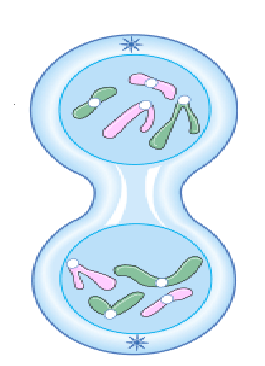
Name that process
a)
Mitosis
b)
Meiosis
c)
Mutation
d)
Cell Cycle
12.
During which phase of the meiotic cell cycle does DNA Replication occur?
a)
Interphase 
b)
Prophase 
c)
Metaphase 
d)
Telophase
13.
In Meiosis if the parent cells has 40 chromosomes, then how many will the daughter cells have 
a)
40
b)
10
c)
20
d)
18
14.
The stages of mitosis in order
a)
Metaphase, Anaphase, Prophase, Telophase
b)
Prophase, Anaphase, Metaphase, Telophase
c)
Prophase, Metaphase, Anaphase, Telophase
d)
Anaphase, Prophase, Telophase, Metaphase
15.
A cat has a total of 38 chromosomes in its body cells.  How many in its gametes?
a)
38
b)
19
c)
76
d)
10
16.
When a cell is not actively dividing, it is in what phase?
a)
interphase
b)
anaphase
c)
prophase
d)
telophase
17.
What portion of the cell cycle involves the actual dividing?
a)
interphase
b)
mitosis
c)
Gap 1
d)
Gap 2
18.
When a cell divides, what do we call the 2 new cells?
a)
mother cells
b)
father cells
c)
daughter cells
d)
son cells
19.
Before a cell can divide, what must happen?
a)
Nothing, it is always ready to divide
b)
The number of chromosomes must be cut in half
c)
The number of chromosomes must double
d)
The number of chromosomes must triple.
20.
What is the name of the process in which DNA (genetic information) is exchanged during meiosis?
a)
crossing under
b)
crossing over
c)
melding
d)
blending
21.
In meiosis, the haploid number of chromosomes in a human sex cell is:
a)
46
b)
92
c)
22
d)
23
22.
What is the diploid number of cells found in a human body cell?
a)
23
b)
46
c)
92
d)
47
23.
Chromosomes that have corresponding traits from the opposite sex parent are called:
a)
Heterogeneous chromosomes
b)
homologous chromosomes
c)
Mother and Father chromosomes
d)
Grandmother and grandfather chromosomes
24.
Another name for a sex cell is a:
a)
gamete
b)
embryo
c)
bone cell
d)
muscle cell
25.
Why is sexual reproduction better than asexual reproduction?
a)
It gives an advantage to organisms to be different than the rest, if the environment changes.
b)
It is better for all organisms to be the same.
c)
It happens faster.
d)
It helps skin cells divide faster to heal wounds.
26.
A is:
B is:
C is:
a)
A: chromatid
B: centromere
C: chromosome
b)
A: chromosome
B: chromatid
C: centromere
c)
A: chromosome
B: centromere
C: chromatid
d)
A: centromere
B: chromosome
C: chromatid
27.
The process on the left is:
The process on the right is:
a)
Left: meiosis
Right: meiosis
b)
Left: meiosis
Right: cloning
c)
Left: mitosis
Right: meiosis
d)
Left: mitosis
Right: mitosis
28.

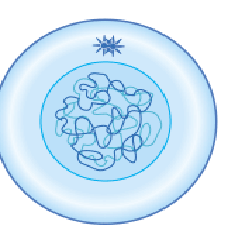
What phase am I?

a)

Interphase

b)

Prophase

c)

Metaphase

d)

Anaphase

e)

Telophase

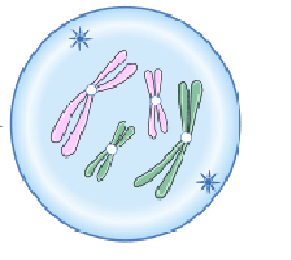
29.

What phase am I?

a)

Interphase

b)

Prophase

c)

Metaphase

d)

Anaphase

e)

Telophase

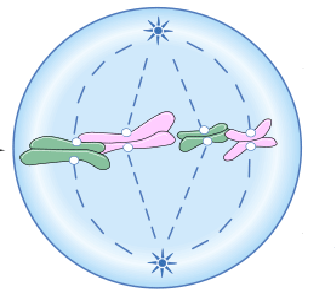
30.

What phase am I?

a)

Interphase

b)

Prophase

c)

Metaphase

d)

Anaphase

e)

Telophase

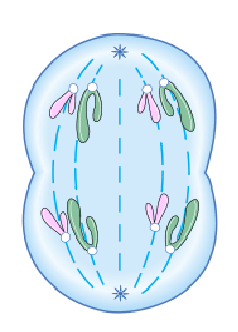
31.

What phase am I?

a)

Interphase

b)

Prophase

c)

Metaphase

d)

Anaphase

e)

Telophase

32.

What phase am I?

a)

Interphase

b)

Prophase

c)

Metaphase

d)

Anaphase

e)

Telophase

33.

When the cells completely split it is call what?

a)

Telophase

b)

Cytokinesis

c)

Anaphase

34.
Stem cells are
a)
cells that grow uncontrollably
b)
undifferentiated and can be any type of cell
c)
never go through cell division
d)
only found in embryos
35.
Stem cells can be obtained from
a)
embryos
b)
some adult tissues
c)
umbilical cord blood
d)
all of the above
36.
What does "pluripotent" mean?
a)
able to divide and make many different types of cells
b)
not able to divide
c)
can only divide and make one cell type 
d)
if it divides, it will make a cancerous tumor
37.
What process best explains how muscle cells and nerve cells can develop from the same fertilized egg?
a)
genetic engineering
b)
survival of the fittest
c)
differentiation
d)
selective breeding
38.
What is the difference between embryonic stem cells and adult stem cells?
a)
Embryonic stem cells can differentiate into more cell types than adult stem cells
b)
Adult stem cells are pluripotent, just like embryonic stem cells
c)
Adult stem cells can differentiate into more cell types than embryonic stem cells
d)
Adult stem cells grow bigger than embryonic stem cells
39.
Which is true about embryonic stem cells?
a)
They no longer divide, their cell type is set and cannot change.
b)
They can develop into only one type of cell.
c)
They can become any cell type in the body.
d)
They are found in adults.
40.
Which type of cell is unspecialized?
a)
skin cell
b)
stem cell
c)
liver cell
d)
muscle cell
41.
what is the role of stem cells in the body 
a)
fight against infection 
b)
provide specialized roles in the body 
c)
used for fertility treatment 
d)
they produce new specialized cells in the body to replace old cells that are used up 
42.

Cancer is...

a)

Uncontrolled cell growth

b)

Normal cell growth

c)

A protein

d)

A cell cycle regulator

43.

Which of these is a tumor that is noncancerous and does not spread?

a)

Malignant

b)

Benign

44.

What is Apoptosis?

a)

A tumor

b)

A protein

c)

Programmed cell death

d)

Cell cycle checkpoints

45.
Which of the following is a type of protein that regulates the cell cycle? 
a)
actin 
b)
myosin 
c)
cyclin 
d)
pepsin 
46.
Which is true about Embryonic Stem Cells.
a)
They no longer do mitosis, their cell type is set and can not change
b)
They are limited to the type of cell they can become
c)
They can become any cell type in the body
d)
They are found in adults
47.
structure B is?
a)
inner cell mass
b)
totipotent cell
c)
 white blood cell
d)
a blastocyst
48.
Adult stem cells are?
a)
mutlipotent
b)
pluripotent
c)
totipotent
d)
isopotent 
49.
Which of the following cells has the ability to form any tissue in the body?
a)
blastoycst 
b)
pluripotent
c)
multipotent
d)
totipotent
50.
Stem cell research is controversial because in involves?
a)
social issues
b)
ethical issues
c)
educational issues
d)
economical issues
51.
Embryonic stem cells are?
a)
mutlipotent
b)
pluripotent
c)
totipotent
d)
isopotent 
52.
The diagram shows the process of cell specialization from a single stem cell. Which of the following statements is true about the process of specialization.
a)
Specilized cells (blood, skin, nervous etc) cannot be produced from a single stem cell
b)
Specilized cells are produced immediately following fertilization
c)
Even though all the cells in an organism come from one single cell, they can specialize into different cell types
d)
Sincce all the cells in an organism come from one single cell, they must all have the same structure and function
53.
What is one goal of cellular differentiation/specialization?
a)
To create specialized cells to help organism maintain homeostasis.
b)
To many cells.
c)
To make stem cells
d)
to make single celled organisms
54.

Which is NOT a phase of the cell cycle?

a)

Interphase

b)

Cytokinesis

c)

Mitosis

d)

Duplication

55.

Select ALL stages of Interphase

a)

G1

b)

S

c)

G2

d)

Mitosis

56.

In which stage of the cell cycle does the cell grow in size?

a)

G1

b)

S

c)

G2

d)

Mitosis

57.

In which stage of the cell cycle does the DNA replicate?

a)

G1

b)

S

c)

G2

d)

Mitosis

58.

A process where one cell forms two identical daughter calls is called...

a)

cell cycle

b)

interphase

c)

meiosis

d)

cytokinesis

59.

The following describes_________________________ during mitosis. The chromatin condenses and spindle fibers form at each side of the cell. The chromosomes begin to form and nuclear membrane disappears.

a)

prophase

b)

anaphase

c)

metaphase

d)

telophase

60.

The following describes_________________________ during mitosis. The chromosomes line up along the middle of the cell and the spindle fibers attach to each chromosome at the centromere.

a)

prophase

b)

metaphase

c)

anaphase

d)

telophase

61.

The three stages of the cell cycle are __________, mitosis, and

cytokinesis.

a)

interphase

b)

anaphase

c)

metaphase

d)

prophase

62.

The ____________ ensures that our body’s grow and repair

themselves.

a)

The cell growth

b)

The cell repair

c)

The cell recycle

d)

The cell cycle

63.

The process by which a cell nucleus divides is called:

a)

interphase

b)

mitosis

c)

cytokinesis

d)

cell cycle

64.

The phase of mitosis where the nuclear membrane forms

is called ________ .

a)

anaphase

b)

prophase

c)

metaphase

d)

telophase

65.

The phase of mitosis when chromosomes align in the

middle is called ________

a)

anaphase

b)

prophase

c)

telophase

d)

metaphase

66.

The final stage of the cell cycle is called:

a)

Interphase

b)

mitosis

c)

cytokinesis

d)

daughter cells

67.

The first phase of mitosis is called _______________ .

a)

telophase

b)

metaphase

c)

anaphase

d)

prophase

68.

A copy a chromosome made during cell division are called:

a)

daughter chromatids

b)

sister chromatids

c)

cell chromatids

d)

sister chromosome

69.

The stage of mitosis where the sister chromatids separate:

a)

prophase

b)

anaphase

c)

telophase

d)

metaphase

70.

During mitosis chromosomes meet in the middle to get divided into two daughter cells in a phase called:

a)

prophase

b)

anaphase

c)

metaphase

d)

telophase

71.

The cell cycle consists of the G1, S, G2, and the _____ phase.

a)

G3

b)

M

c)

G4

d)

A

72.
During the ___ phase, DNA is replicated.
a)
G1
b)
S
c)
G2
d)
M
73.

Chromosomes are made up of two identical sister _____________.

a)

chloroplasts

b)

nuclei

c)

chromatids

d)

genes

74.
Sister chromatids are joined together at the ___________.
a)
equator
b)
chromosome
c)
centromere
d)
ends
75.
What is this phase of mitosis?
a)
prophase
b)
metaphase
c)
anaphase
d)
telophase
76.
What is this phase of mitosis?
a)
prophase
b)
metaphase
c)
anaphase
d)
telophase
77.

An abnormal mass/group of cancer cells is called a

a)

tumor

b)

cyst

c)

lesion

d)

polyp

78.
What is cancer?
a)
The heart does not receive enough blood.
b)
Sudden disruption of blood flow to part of the brain.
c)
Blood filled weak spot.
d)
Uncontrolled growth and spread of abnormal cells.
79.

Which type of tumor is being described:


Slow growing Not dangerous Does not spread

a)

Malignant

b)

Benign

80.

Which type of tumor is being described below:


Spreads Dangerous Grows quickly

a)

Benign

b)

Malignant

81.

These are examples of:

  • chemicals in cigarette smoke
  • radiation
  • nitrates in processed foods
  • artificial sweeter
  • Heavy metals such as mercury and lead
a)

Carcinogens

b)

Predispositions

c)

Mutations

d)

Tumors

82.
Cancer can cause mutations of DNA
a)
True
b)
False
83.

Asexual reproduction like mitosis produces

a)

Two offspring cells with the same genetic material as the parent cell.

b)

Two offspring cells with half genetic material as the parent cell.

c)

Four offspring cells with the same genetic material as the parent cell.

d)

Four offspring cells with half the genetic material as the parent cell.

84.

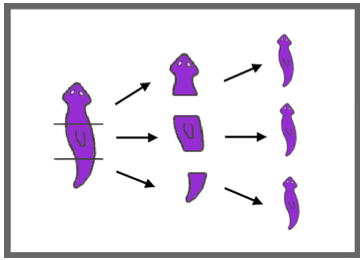
A mode of reproduction by which an organism arises from a single organism and inherit the identical genes of that parent

a)

Asexual Reproduction

b)

Sexual Reproduction

c)

Genetic Variation

d)

Alleles

85.
The offspring from asexually reproduced organisms are?
a)
Different than their parents
b)
Identical to parents
c)
Like a combination from both parents
d)
A different species
86.

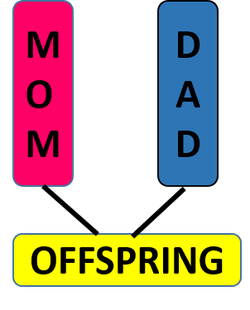
A mode of reproduction in which an organism arises from two organisms and inherits half of its DNA from each parent

a)

Sexual Reproduction

b)

Asexual Reproduction

c)

Cloning

d)

Fragmentation

87.

Requires only one parent

a)

sexual

b)

asexual

88.

Requires two parents

a)

sexual

b)

asexual

89.
If two organisms reproduce sexually, then their offspring will exhibit a genetic makeup that is -
a)
identical to only one parent
b)
identical to all of its siblings
c)
a unique combination of traits
d)
the recessive traits of each parent
90.
When comparing the offspring of sexually and asexually reproducing organisms, we would expect the genetic material (DNA) of the sexually reproducing organism to -
a)
contain fewer mutations
b)
be lesser in quantity
c)
be simpler overall
d)
show more variation
91.

Which is a type of Asexual Reproduction

a)

Sexual

b)

Binary fission

c)

Cells

d)

organism

92.
Which cells are more efficient at obtaining nutrients?
a)
Small Cells
b)
Medium Size Cells
c)
Large Cells
d)
X-Large Cells
93.
The absorption of nutrients is determined by...
a)
The cell's volume
b)
The cell's surface area
c)
The cell's ribosomes
d)
The cell's DNA
94.
The amount of nutrients needed is determined by...
a)
The cell's volume
b)
The cell's surface area
c)
The cell's Rough ER
d)
The cell's Smooth ER
95.
What does not grow with the cell?
a)
DNA
b)
Vacoules
c)
Mitochondria
d)
None of the above
96.
Which type of cell will make greater demands for DNA?
a)
small cell
b)
large cell
97.
Which type of reproduction makes a Diverse offspring
a)
Sexual
b)
Asexual
98.
Which type of reproduction increases genetic diversity?
a)
Sexual
b)
Asexual
c)
A and B
d)
None of the above
99.
The larger a cell is, the more difficult it is for the cell to move enough nutrients and wastes across its cell membrane to maintain its normal functions.
a)
True
b)
False
100.
Which of the following are problems that growth causes for cells:
a)
more demands on DNA
b)
obtaining enough food.
c)
expelling wastes
d)
Duh, all of these
101.
An advantage of asexual reproduction over sexual reproduction is that asexual reproduction is 
a)
Quick
b)
Creates Genetic Diversity 
102.
Compared to small cells, large cells have more trouble
a)
dividing
b)
storing needed materials and waste products.
c)
moving needed materials in and waste products out.
103.

What is cell differentiation?

a)

The process where unspecialized cells become different in structure and function.

b)

When DNA controls the cell cycle.

c)

The ability of cells to make more cells.

d)

The ability of cells to maintain homeostasis.

104.
Identify the phase:
a)
Metaphase I
b)
Metaphase II
c)
Anaphase I
d)
Anaphase II
105.
Identify the phase.
a)
Metaphase I
b)
Metaphase II
c)
Anaphase I
d)
Anaphase II
106.
Which of the following cells is a gamete?
a)
egg
b)
bone
c)
heart
d)
muscle
107.
The pair of chromosomes that contain the same genes (but may be coded differently) and are inherited from a male and female parent are termed ___.
a)
gametes
b)
alleles
c)
zygote
d)
homologs
108.
The fertilized egg is termed a/an _____.
a)
gamete
b)
allele
c)
homolog
d)
zygote
109.
In mitosis cells are genetically _______, but in meiosis cells are genetically ______.
a)
diverse, identical
b)
identical, diverse/different
110.

Is the following cell diploid or haploid?

a)

Diploid

b)

Haploid

111.
When does replication of chromosomes occur in animal cell meiosis?
a)
Before Meiosis I and Meiosis II
b)
Before Meiosis II Only
c)
Before Meiosis I Only
d)
During Prophase I and Prophase II
112.
Identify the phase.
a)
Telophase I
b)
Telophase II
c)
Metaphase I
d)
Metaphase II
113.
In sexual reproduction, chromosome reduction is necessary to ___.
a)
ensure that all offspring have the correct diploid number of chromosomes
b)
ensure that all offspring have the correct haploid number of chromosomes
c)
ensure that all daughter cells are identical
114.

1n indicates that the cell is ____.

a)

Diploid

b)

Haploid

115.

Mitosis makes sure that all daughter cells are _____.

a)

genetically identical, diploid

b)

genetically identical, haploid

c)

genetically diverse, diploid

d)

genetically diverse, haploid