wayground logo

Free Printable Worksheets

Font size

S
M
L
XL
Worksheets

Biology midterm review #2

Total questions: 110

Worksheet time: 2hrs 36mins

Name
Class
Date
1.

Which is a primary consumer?

a)

The Squirrel

b)

The cougar

c)

The wolf

2.

The plants in this picture are:

a)

Producers

b)

Consumers

3.

If water were to move through one of the large proteins in this cell membrane, that would be considered which form of transport?

a)

Osmosis

b)

Facilitated diffusion

4.

When water moves across the semipermeable membrane, it is considered:

a)

Osmosis

b)

Active transport

5.

What solution must you put a plant cell into for it to look like the picture on the left? (extra water)

a)

Hypertonic

b)

Hypotonic

6.

What type of solution would make this plant cell low on water?

a)

Hypertonic

b)

Hypotonic

7.

Which is true about passive transport in a cell?

a)

It does not require energy

b)

It requires ATP

8.

Which type of cell would have a rough endoplasmic reticulum?

a)

Eukaryotic

b)

Prokaryotic

9.

What best describes the green and blue shapes?

a)

Substrates

b)

Enzymes

10.

What would likely effect the population of snakes?

a)

Less eagles

b)

More chipmunks

11.

Which is a way to remove carbon dioxide from the atmosphere?

a)

More plants and more photosynthesis

b)

More cows and cattle ranching

12.
All living organisms are made up of ____.
a)
Cells
b)
Bacteria
c)
Organs
d)
Tissue
13.
Rocks, water, air, sun, and soil are...
a)
living
b)
nonliving
14.
Any living thing is called an
a)
organ
b)
organization
c)
organism
d)
cell
15.
What is an organism whose entire body is only 1 cell known as?
a)
unicellular
b)
multicellular
c)
cell
d)
Homeostasis
16.
Which one of these is NOT one of the characteristics of living things?
a)
All living things are made of cells
b)
All living things reproduce
c)
All living things eat
d)
All living things evolve
17.

Animals eat food and plants use sunlight, both are examples of obtaining what?

a)

A full stomach

b)

Cells

c)

Energy

d)

headache

18.
An organism that makes their own food, usually through photosynthesis
a)
autotroph
b)
heterotroph
c)
metabolism
d)
multicelluar
19.

Fats are specialized lipid molecules, and enzymes are specialized protein molecules. How do the functions of fats and enzymes differ?

a)

Fats are structural building materials, while enzymes are transportation molecules.

b)

Fats provide support for cells, while enzymes lower the pH of gastric fluids.

c)

Fats regulate body functions, while enzymes denature invasive bacteria.

d)

Fats are storage molecules, while enzymes are catalytic molecules.

20.

Which organic molecule is paired with its basic building block?

a)

carbohydrate : amino acids

b)

nucleic acid : nucleotides

c)

lipid : monosaccharides

d)

protein : fatty acids

21.

To which class of organic compounds do enzymes belong?

a)

proteins

b)

fatty acids

c)

nucleic acids

d)

monosaccharides

22.

Why is the “lock and key” analogy often used to describe enzyme function?

a)

Each enzyme is the same as its substrate.

b)

Each enzyme will fit with only one specific kind of substrate.

c)

Each enzyme can only be used once in a reaction and cannot be used again.

d)

Each enzyme has its own active site that will not fit with other active sites.

23.

Which of these is found in both prokaryotic and eukaryotic cells?

a)

vacuole

b)

nucleoid

c)

mitochondrion

d)

cytoplasm

24.

A student identifies the following parts of a cell.


1.cell wall

2.RNA

3.mitochondrion

4.ribosome


The presence of which structure allows the student to conclude that this is a eukaryotic cell?

a)

1

b)

2

c)

3

d)

4

25.

Where are proteins synthesized?

a)

mitochondria

b)

ribosomes

c)

centrioles

d)

lysosomes

26.

Chloroplasts absorb light energy. The function of the chloroplast is to

a)

synthesize sugars.

b)

synthesize proteins.

c)

transform sugar into cellular energy.

d)

transform sugar into cellular energy.

27.

Which cellular structure in an animal cell helps maintain homeostasis by controlling the transportation of substances into and out of the cell?

a)

vacuole

b)

cell wall

c)

mitochondrion

d)

cell membrane

28.

Which is true of phospholipids located in the plasma membrane?

a)

They have hydrophobic heads and hydrophilic tails.

b)

They have hydrophobic tails and hydrophilic heads.

c)

They are composed of glucose molecules.

d)

They are composed of amino acids.

29.

Which organelle is responsible for the direction of all cellular functions?

a)

chromosome

b)

mitochondrion

c)

nucleolus

d)

nucleus

30.

How are phospholipids arranged in the plasma membrane?

a)

a single layer, hydrophobic tails facing each other

b)

a double layer, hydrophobic tails facing each other

c)

a double layer, hydrophillic heads facing each other

d)

a single layer, hydrophillic heads facing each other

31.

Which organelle is responsible for generating energy for the plasma membrane to perform active transport?

a)

ATP

b)

nucleus

c)

ribosome

d)

mitochondrion

32.

Which process moves an ion across a cell membrane against the concentration gradient?

a)

diffusion

b)

exocytosis

c)

facilitated diffusion

d)

active transport

33.

During strenuous exercise, body temperature increases. The body responds to the increase in temperature by sweating, which helps to reduce the body temperature. Which is demonstrated in this situation?

a)

excretion

b)

metabolism

c)

homeostasis

d)

synthesis

34.

Which is a difference between active and passive transport?

a)

Eukaryotes are capable of active transport, while prokaryotes are capable of passive transport.

b)

Cells only carry out active transport when they need to move, while passive transport occurs constantly.

c)

Active transport requires ATP, while passive transport does not.

d)

Cells with mitochondria carry out active transport, while cells without mitochondria carry out passive transport.

35.
How are covalent bonds explained?
a)
When one atom takes the other atom's electron
b)
When the atom shares an electron with an another atom
c)
When the two nucleus merge
d)
When the neutrons leave the nucleus
36.

Which type of bond has an unequal sharing of electrons between two atoms?

a)

nonpolar covalent

b)

polar covalent

c)

ionic

d)

mettalic

37.
Ionic Bonding involves...
a)
The transfer of protons
b)
The transfer of nuetrons 
c)
The transfer of electrons
d)
None Of the above
38.
What word describes when water is attracted to other substances?
a)
cohesion
b)
adhesion
c)
capillary action
d)
surface tension
39.
Which characteristic of water will allow a paperclip to remain floating on water when the paperclip is gently placed on top of the water?
a)
adhesion
b)
surface tension
c)
solvent properties
d)
nonpolar
40.
When water molecules stick easily to other water molecules, this is called what?
a)
cohesion
b)
adhesion
c)
solution
d)
polar molecule
41.
The energy needed to raise water to a specific temperature is called: 
a)
Specific Heat
b)
Heat of Vaporization
c)
Density
d)
Polarity
42.

A group of tissues that come together to perform a specific function are a/an

a)

cell

b)

tissue

c)

organ system

d)

organ

43.
Provides long term energy and insulation,
a)
lipids
b)
carbohydrates
c)
nucleic acids
d)
proteins
44.
Contains a phosphate, sugar and nitrogen base
a)
nucleic acid
b)
lipid
c)
carbohydrate
d)
protein
45.
Is found in the cell membrane as a bilayer. 
a)
lipids
b)
protein
c)
nucleic acid
d)
carbohydrate
46.
Identify the macromolecule in the picture
*GLUCOSE
a)
lipid
b)
protein
c)
nucleic acid
d)
carbohydrate
47.
Identify the macromolecule in the picture
* cholesterol and triglycerides
a)
carbohydrate
b)
protein
c)
lipid
d)
nucleic acid
48.
Proteins are made of monomers called ___________
a)
Nucleotides
b)
Monosaccharides
c)
Amino Acids
d)
Glycerol and fatty acids
49.

How do enzymes speed up chemical reaction?

a)

Increasing activation energy

b)

Decreasing activation energy

c)

Increasing deactivation energy

d)

Decreasing deactivation energy

50.
What is a substance called if it speeds up a chemical reaction?
a)
reusable
b)
catalyst
c)
specific
d)
fragile
51.
What happens when enzymes are heated to a high temperature?
a)
The enzymes die.
b)
The shapes of the enzyme are altered denature
c)
The enzymes' amino acid sequence changes.
d)
The enzymes remain the same
52.
Which structures are found in every living cell?
a)
cell membrane and cytoplasm
b)
chloroplasts and mitochondria
c)
a cell wall and nucleus
d)
chloroplasts and cell wall
53.
What is the function of the cell nucleus found in both plant and animal cells?
a)
to produce energy
b)
to control cell activity
c)
to remove waste products
d)
to allow molecules to enter the cell
54.
Cell organelles that are responsible for digesting food, worn out organelles and other cellular wastes are called ___________________.
a)
Mitochondria
b)
Vacuoles
c)
Lysosomes
d)
Chlororplasts
55.
Cells with a nucleus and membrane-bound organelles are called ____________________.
a)
prokaryotes
b)
eukaryotes
c)
bacteria
d)
protists
56.
A tiny cell structure that carries out a specific function within a cell.
a)
organelle
b)
cell
c)
nucleus
d)
ribosomes
57.
Which of the following is directly involved in the transportation of materials inside/within the cell?
a)
Endoplasmic Reticulum
b)
Vacuole
c)
Lysosome
d)
Mitochondria
58.
I am a protein packaging and shipping machine! Who am I?
a)
vacuole
b)
ribosome
c)
mitochondrion
d)
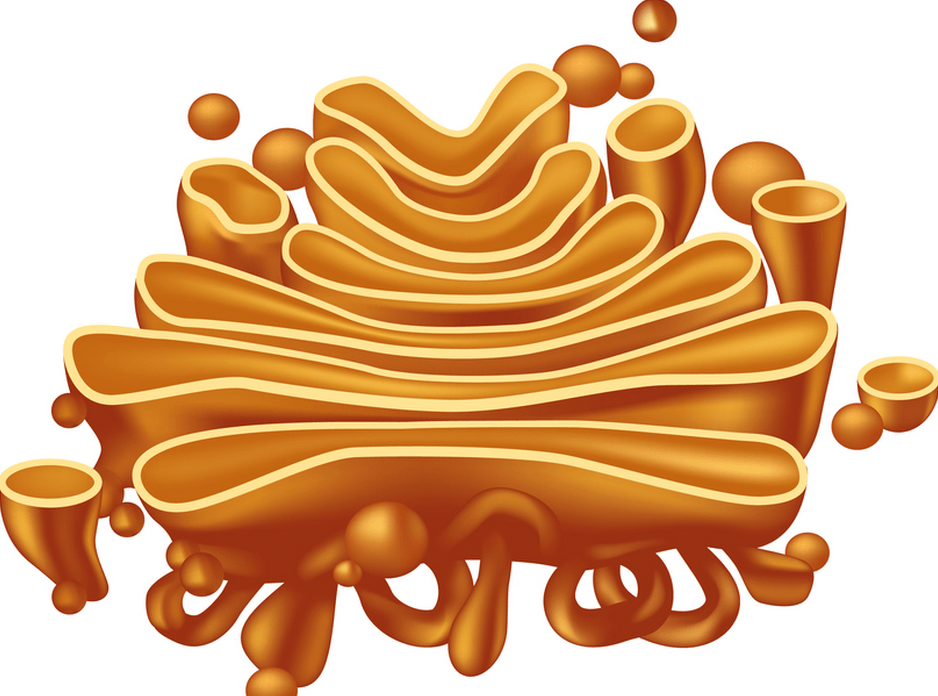
golgi apparatus
59.
Where are proteins made?
a)
Golgi body
b)
Mitoichondria
c)
Chromosomes
d)
Ribosomes
60.
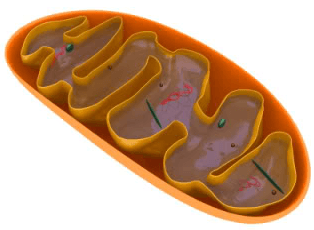
What are tiny organelles that convert glucose into ATP?
a)
Ribosomes
b)
Vesicles
c)
Cytoskeleton
d)
Mitochondria
61.
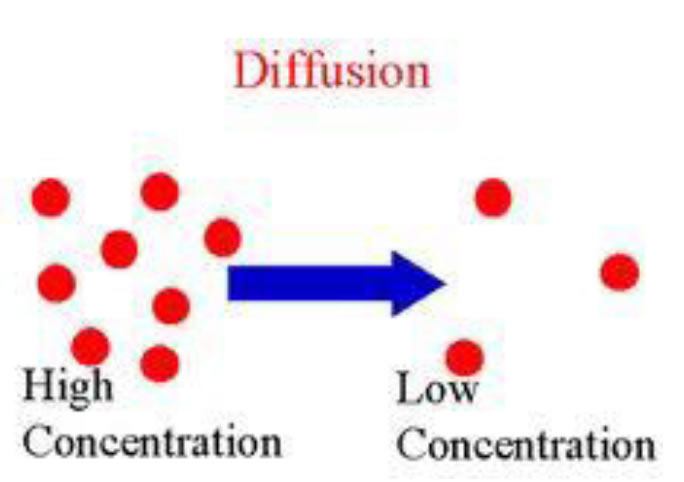
Movement of particles from high to low concentration. 
a)
Passive Transport
b)
Active Transport
62.
Osmosis is a form of ______________. 
a)
Passive Transport
b)
Active Transport
63.
What is it called when molecules move across the cell membrane from an area of high concentration to an area of low concentration through a carrier protein?
a)
Diffusion
b)
Osmosis
c)
Active Transport
d)
Facilitated Diffusion
64.
How does a cell maintain homeostasis?
a)
Regulates what enters and leaves the cell
b)
Flexibility
c)
Protective barrier
d)
Structure and support
65.
When molecules are spread evenly across the cell membrane, ______________________ is reached.
a)
difference
b)
transportation
c)
equilibrium
d)
solution
66.
This picture represents what type of cell transport?
a)
endocytosis
b)
exocytosis
c)
osmosis
d)
passive transport
67.
A cell will _____________________ in a hypertonic solution.
a)
swell
b)
shrink
c)
will not change
d)
will explode
68.
A cell will __________________ in a hypotonic solution.
a)
swell and perhaps burst (lyse)
b)
shrink
c)
the size of the cell will not change
d)
the size of the cell will change from large to small and from small to large
69.
While cleaning a saltwater aquarium, students placed the aquarium plants in a container of distilled water. What effect will this have on the plants? 
a)
The plant cells will swell.
b)
The plant cells will remain the same.
c)
The plant cells will shrink.
d)
The plant cells will seperate.
70.
The cell below is in a _________ solution.
a)
Hypotonic
b)
Hypertonic
c)
Isotonic
71.
Both side of a selectively- permeable membrane are equal. The sides are ______.
a)
isotonic
b)
hypertonic
c)
hypotonic
72.
A testable explanation to a problem that has not yet been tested. 
a)
data
b)
theory
c)
hypothesis
d)
fact
73.
This variable in an experiment is the one being changed by the scientist. 
a)
dependent variable
b)
independent variable
c)
data
d)
control group
74.
What is a factor that changes because of what the experimenter does?
a)
Dependent Variable
b)
Independent Variable
c)
Control Group
d)
Hypothesis
75.
Which of the following is an example of a species?
a)
fungi
b)
plants
c)
blue jays
d)
animals
76.
an organism made of more than 1 cell 
a)
prokaryote
b)
eukaryote
c)
unicellular
d)
multicellular
77.
living 
a)
biotic
b)
abiotic 
c)
binomial nomenclature
d)
taxonomy
78.
The element _______is found in all of the organic compounds.
a)
Iron
b)
Nitrogen
c)
Carbon
d)
Oxygen
79.
_________ are composed out of carbon (C), hydrogen (H), oxygen (O), nitrogen (N), and phosphorus (P)
a)
Carbohydrates
b)
Lipids
c)
Proteins
d)
Nucleic Acids
80.
DNA and RNA are examples of 
a)
Carbohydrates
b)
Lipids
c)
Proteins
d)
Nucleic Acids
81.
Nucleotides are monomers of
a)
Carbohydrates
b)
Lipids
c)
Proteins
d)
Nucleic Acids
82.
Monosaccharides are monomers of
a)
Carbohydrates
b)
Lipids
c)
Proteins
d)
Nucleic Acids
83.
Waxes, oils and fats are examples of
a)
Carbohydrates
b)
Lipids
c)
Proteins
d)
Nucleic Acids
84.
Which macromolecule is shown?
 View Figure 3 (if not visible)
a)
lipid
b)
protein
c)
nucleic acid
d)
carbohydrate
85.
This is one job proteins do NOT have in the body
a)
insulation
b)
structure for tissues and organs
c)
speed up chemical reactions
d)
transport things through cell membrane
86.
Where do substrates bind on an enzyme?
a)
voltage-gated channels
b)
surface receptor
c)
calcium channels
d)
active site
87.
After the enzyme and substrate bind together and perform the reaction, what does the substrate become?
a)
a substrate
b)
an enzyme
c)
a product
d)
an active site
88.
What is cellular respiration?
a)
the breakdown of glucose  to release ATP
b)
the breakdown of glucose to release NADH
c)
the breakdown of glucose to release FADH
d)
the breakdown of glucose to release carbon
89.
What is the correct equation for cellular respiration?
a)
6O2 + C6H12O6 -> 6CO2 + 6H2O + Energy
b)
6O2 + C6H12O6 + Energy -> 6CO2 + 6H2O
c)
6CO2 + 6H2O -> 6O2 + C6H12O6 + Energy
d)
6CO2 + 6H2O + Energy -> 6O2 + C6H12O6
90.
The mitochondria is responsible for ...
a)
photosynthesis
b)
anaerobic respiration
c)
aerobic respiration
d)
fermentation
91.
What is one of the reactants of cellular respiration?
a)
energy
b)
glucose
c)
carbon dioxide
d)
water
92.
Aerobic respiration is different from anaerobic respiration in that aerobic respiration needs...
a)
chlorophyll
b)
carbon dioxide
c)
glucose
d)
oxygen
93.
What is the ultimate ORIGINAL source of energy for living things
a)
Sugar
b)
Sun
c)
Moon
d)
Carbon Dioxide
94.
___________ allow cells to recognize each other and act like ID tags. 
a)
Carbohydrates 
b)
Proteins
c)
Phospholipids 
d)
Cholesterol
95.
___________ strengthens and stabilizes the cell membrane.
a)
Carbohydrates 
b)
Proteins 
c)
Phospholipids 
d)
Cholesterol
96.
___________ form the two layers of the cell membrane. 
a)
Carbohydrates 
b)
Proteins 
c)
Phospholipids 
d)
Cholesterol
97.
Anything that takes up space and has mass is known as _______________.
a)
Matter
b)
Molecules
c)
Compounds
d)
Stuff
98.
What are the building blocks of MATTER?
a)
Atoms
b)
Cells
c)
Protons
d)
Neutrons
99.
What are the positively charged particles in an atom?
a)
Protons
b)
Neutrons
c)
Electrons
100.
Electrons have what charge?
a)
Negative
b)
Positive
c)
Neutral
 (No Charge)
101.
Neutrons have what charge?
a)
Negative
b)
Positive
c)
Neutral
 (No Charge)
102.
The nucleus of an atom is made up of...
a)
Protons and Neutrons
b)
Neutrons and Electrons
c)
Protons and Electrons
103.
A(n) ____________________ is a pure substance made of a single type of atom and cannot be broken down.
a)
Element
b)
Compound
c)
Molecule
d)
Mixture
104.
What holds atoms, molecules, and compounds together?
a)
Chemical Bonds
b)
Electromagnetism
c)
Magnetism
d)
Electricity
105.
Ionic, covalent, van der Waals forces 
a)
are types of atoms
b)
are compounds
c)
hold molecules and atoms together
d)
are of no consequence in life forms
106.
Physical and chemical properties are different from the elements that make them up in
a)
mixtures
b)
compounds
c)
atoms
107.
An atom of iron has atomic number 26, how many protons does it have?
a)
52
b)
26
c)
13
108.
A number of elements have different number of neutrons, these elements are called
a)
compounds
b)
molecules
c)
isotopes
d)
atoms
109.
The unequal sharing of electrons in water makes water a polar molecule leading to the formation of
a)
nano bonds
b)
hydrostatic interactions
c)
molecular initiatives
d)
hydrogen bonds
110.
A substance that helps living systems resist changes in pH is referred to as a
a)
helper T cell
b)
buffer
c)
acid
d)
base