
 Worksheets
Evolution Review
Total questions: 73
Worksheet time: 38mins

What does the figure suggest?
a new species of horse suddenly appeared
Between 55 and 50 million years ago there weren't any animals that could be considered as related to horses.
Horses slowly developed over time
Horses have a common ancestry with other hooved animals

Body parts of organisms that are similar in structure and position but different in function.
analogous structures
homologous structures
vestigial structure

Embryos of chickens, fish and humans look very similar. They all have folds known as gill slits in the neck region. What may this suggest?
they all formed in the ocean
they all evolved from a common ancestor
they are all going extinct

The solidified remain or imprint of a once living thing are called:
Fossils
Homologous Structures
Vestigial Structures
DNA

These limbs provide evidence of common ancestry because they -
are parts of mammals
perform the same function
are the same
have the same basic structure

What type of evidence is shown in the image above?
Fossil Record
Molecular Homology
Anatomical Homology
Developmental Homology

What type of evidence are shown in the picture above?
Fossils
Developmental Homology
Homologous Structures
Vestigial Structures

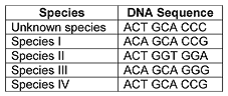


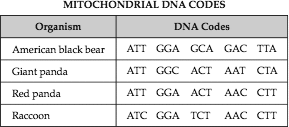
What conclusions can be made based on this table shown?
the American black bear and the giant panda are most closely related
the giant panda and the red panda are most closely related
the red panda and the racoon are the most closely related
the giant panda and the racoon are most closely related


What would we find at 6?

Based on this table, which organism is most closely related to the human?
Rhesus monkey
Mouse
Frog
Gorilla
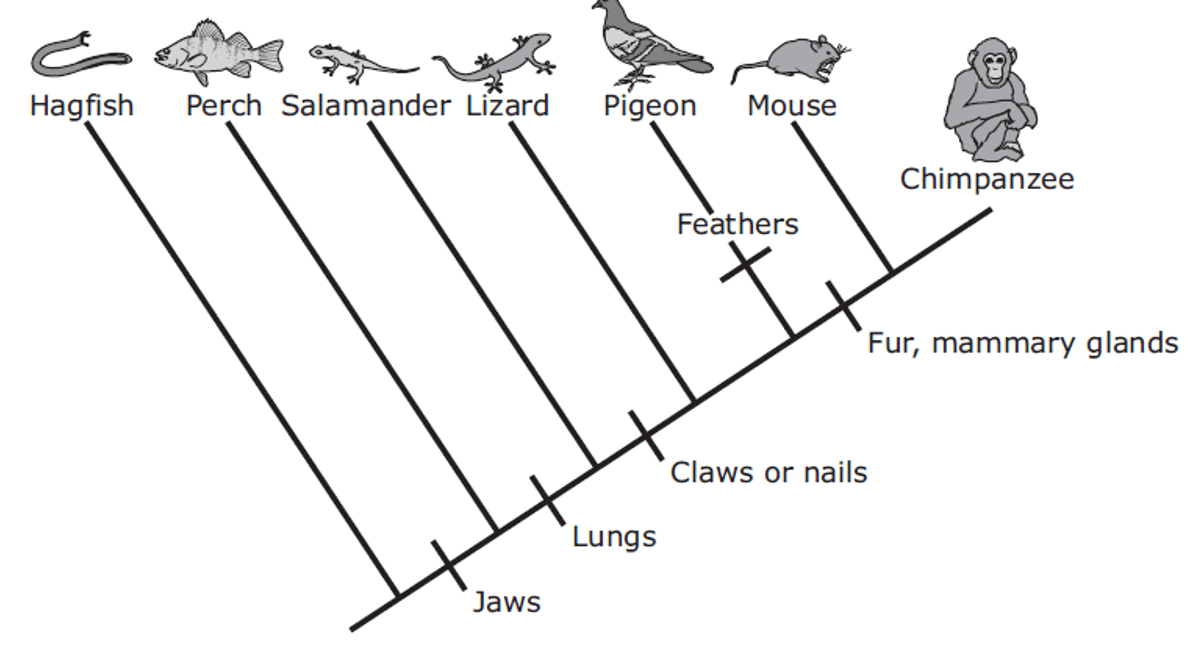

Which organisms are MOST closely related?
Organisms 1 and 2
Organisms 2 and 3
Organisms 3 & 4
Which organism is LEAST related to the other three organisms?
Organisms 1
Organisms 2
Organisms 3
Organism 4

Different species of lizards live on the Galapagos Islands. Where did the lizards originate from?
The lizards originated from South America
The lizards originated from Europe
The lizards originated from Africa
The lizards originated from Alaska

Explain why layers A-C are no longer in the fossil record?
The snails with small shells are found in the present day
The snails with the larger shells are better adapted to the new environment after the rapid change
The snails with small shells are better adapted to the new environment after the rapid change
The snails with the large shells were found in the older rocks

The Opossum, which is native to North America, and the Kangaroo, which is native to Australia, are marsupials.
The fact that both these mammals incubate their immature offspring in a pouch provides evidence that they -
Belong to the same species
Have very similar skeletal structures
Must range great distance to eat
Are descended from a common ancestor

Using the cladogram to the right, flies are most closely related to:
Beetles
Butterflies
Wasps
Ants

The diagram of the whale fossils provided, provides evidence that?
Whales and monkeys are related
Whales have similar embryos with other mammals
Whales have slowly developed (evolved) over time
Whales share a common ancestor with other animals that have fins
What are the mechanisms of Evolution?
DNA, RNA, Protein
Substitution, Insertion, & Deletion
Natural Selection, Gene Flow, Mutations, Recombination, & Genetic Drift
Carbohydrates, Lipids, Protein, & Nucleic Acid
What's another name for Natural Selection?
"Protein Synthesis"
"Survival of the Fittest"
"Biomolecules"
"Monohybrid"
Evolution is a change in frequency over time in -
a population
an individual
a species
a protein

Sea turtles can lay as many as 200+ eggs. Why does the ability of laying 200+ eggs increase the fitness of this species?
Increases the possibility that some offspring will be able to compete for food
It increases the probability that some offspring will survive long enough to reproduce.
It increases the probability that some offspring will mutate their genes
It increases the probability that some offspring will take in more carbohydrates
What are the 3 elements of natural selection (pg 58)
static environment, unlimited resources, non inherited variation
DNA, RNA, Protein
no competition, same species, less offspring
compete for resources, inherited variation, produce more offspring than can survive

A harmless fly and a bee with a stinger have similar band patterns. For the fly, the adaptation of having a similar pattern is known as mimicry. Why is this adaptation important for the fly?
to blend in with its environment
to protect the fly from predators
to blend in with other flies
for gene expression

When millipedes are threathened, they excrete a foul-tasting chemical known as cyanide. Why is this adaptation important for the millipede?
Millipedes DO NOT want to survive and reproduce
They are not able to reproduce
millipedes want to attract a mate
They are not attacked by most predators and are able to reproduce successfully

Deer get pregnant in the fall and give birth in the summer. Why is this adaptation important for their offspring?
Deer meet their mate in the fall
Ensures that offspring are born when food is most available
To ensure their offspring have inherited variation
To produce more offspring than can survive

The image above represents which mechanism of evolution?
Natural Selection
Gene Flow
Mutation
Recombination
Genetic Drift

What increases due to gene flow?
Natural Selection
Genetic Variation
Survival of the Fittest
Genetic Drift

Gene flow is the exchange of genes between two populations. Over time, what will happen to the future offspring?
The future offspring will die
The future offspring will leave
The future offspring will have greater genetic variety
The future offspring will stay the same

Which result is most likely to occur to the mice population due to predation over time?
The light colored mice will move to another rock
The number of dark colored mice population will increase
The number of dark colored mice population will decrease
There will be more light colored mice than dark colored mice

The adaptation that allows some of these animals to run fast would be an example of natural selection if it helps them-
Survive and undergo mutations in their DNA
Lower the mortality rates of the population
Produce offspring that run at average speeds
Reproduce and increase the frequency of their genes in the population

Which statement about the cottontail rabbit in this environment is best supported by the data?
Rabbit B are most fit for the environment because it produces more offspring
Rabbit A is most fit because it runs faster
Rabbit C is most fit because it has a shorter life span
All rabbits are best adapted in the environment

How has the seed dispersal method developed by these plants given them a reproductive advantage?
The method ensures that offspring will be dispersed and reduces competition for resources
The method reduces the chance that herbivores will consume the seeds
The method lengthens the life cycle of each of these plants
The method reduces the plants’ need for water and other nutrients
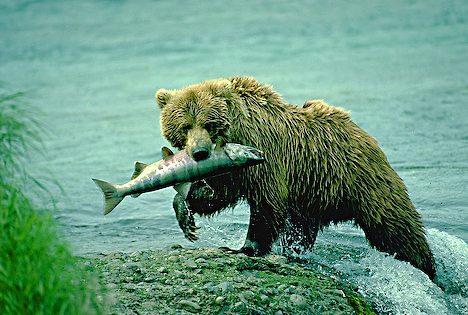
A grizzly bear survives because he is well-adapted to his environment. When he reproduces he passes on those traits to his offspring. this process is called
Natural Selection
Selective Breeding
Random mutations
Variations in a species

The differences among a species, like different bird beaks, are called -
produce more offspring than can survive
inherited variation
gravity
theories

This image above represents which mechanisms of evolution?
Natural Selection - "Adaptation"
Gene Flow - "Movement"
Mutations - "Change in DNA"
Recombination - "Non-Random Mating"
Genetic Drift - "Small Population by Random Event"
This mechanism of evolution occurs when populations migrate (move)
Extinction
Gene flow
Genetic drift
Natural Selection

Yellow toucan birds seek out one another to make babies together and tend to avoid the green toucan birds.
Genetic Drift
Recombination (non-random mating)
Gene flow
Mutation
“the best adapted survive and reproduce”
natural selection
artificial selection
sexual selection
Gene Flow increase -
Genetic Variation (Diversity)
Protein Synthesis
Mutations
Adaptation
Favorable genes means -
Best Adapted Genes
Genes for Extinction
Non-Random Mating
Genes in external environment

During meiosis, a developing male pig had a change in his DNA that resulted in his coat becoming spotted.


What is the purpose of a cladogram?
To map the ancestral relationships and shared traits of different organisms.
To trace the inherited traits of a single species over time.
To check the likelihood of an offspring having a particular trait.
To monitor mutations that arise among different populations.

What do both the squirrel and lion have in common that the other animals do not?
They are both vertebrates
They both have lungs
They are both mammals
They both lose their canine teeth.

What do amphibians, birds, prosimians and humans all have in common? Check all that apply.
Hair
Endothermic
Eukaryotic
Tetrapod
Vertebrate

Which letter represents the most recent common ancestor of sponges and mushrooms?
A
B
C
D
E

What is the common ancestor of Letters A, B, C, D, E?
1
2
3
4

Which group of animals on this tree are most closely related to birds?
Saurischian dinosaurs
Ornithischian dinosaurs
Crocodiles
None of these are related to birds
What is the common ancestor of Letters C and E?
1
2
3
4

The diagram below represents possible genetic relationships between groups of organisms.
Which statement is a valid conclusion that can be drawn from the diagram?
Insects are more complex than mammals.
Earthworms and sea stars have a common ancestor.
Snails appeared on Earth before corals.
Sponges were the last new species to appear on Earth.

Certain species of the coral-like sea organisms called bryozoans first
appeared about 140 million years ago. They remained unchanged for the first 40
million years and then suddenly experienced rapid genetic change.
punctuated equilibrium
gradualism
rapid change in envrionment
punctuated equilibrium
gradualism
where species slowly change over long periods.
punctuated equilibrium
gradualism
A virus killed most of the blue-footed ducks in Japan reducing the
population from 9,000 to 900. In an effort to help preserve the species, 50 blue-
footed ducks were trapped and used to start a new population in England.
Eventually the two blue-footed duck populations could no longer successfully
interbreed. This event would best be described as -
speciation
mutation

