
 Worksheets
Photosynthesis and Trophic Levels
Total questions: 74
Worksheet time: 43mins

An organism that cannot make its own food.
Heterotroph
Autotroph

An organism that makes its own food
Heterotroph
Autotroph

The top predator in an ecosystem
Apex Predator
Prey
Producer
Primary consumer

An organism that can make its own food using chemosynthesis or photosynthesis.
Producer
Consumer
Predator
Omnivore

An organism that obtains energy by feeding on other organisms
Consumer
Producer
Autotroph
Prey

A consumer that eats only plants
Herbivore
Carnivore
Omnivore
Autotroph
A consumer that eats only animals.
Herbivore
Carnivore
Omnivore

Each step in a food chain or food web
Trophic level
Adaptations
Link
Ecological pyramid
Name the Trophic Levels
Producers
Primary Consumer
Secondary Consumer
Tertiary Consumer
Quaternary Consumer

The total mass of living tissue within a trophic level
Biomass
Trophic levels
Ecological pyramid
Biomagnification

A diagram that shows the biomass of organisms at each trophic level
Ecological pyradmid
Food chain
Food web
Carnivores

The organisms that eat producers are called.....
Primary consumers
Producers
Secondary consumers
Tertiary consumers

The organisms that eat the secondary consumers are called.....
Producers
Tertiary consumers
Secondary consumers
Primary consumers

Organisms that can make their own food are called
Consumers
Producers
Omnivores
Decomposers

Producers get their energy from
coffee
the soil
water
the sun

Organisms that have to eat other organisms are called
producers
autotrophs
consumers
prey

Another word for producer is
autotroph
heterotroph
carnivore
decomposer

An organism that cannot make its own food is called a(n)
autotroph
heterotroph
producer

An organism that only eats plants is call a(n)
carnivore
omnivore
herbivore
detritivore

An organism that eats both plants and animals is called a(n)
carnivore
omnivore
herbivore
detritivore

An organism that eats dead material is called a(n)
carnivore
omnivore
herbivore
detritivore

An organism that only eats animals is called a(n)
carnivore
omnivore
herbivore
detritivore

___% of energy is passed from one organism to another.
1
10
100
1000
1.
What are the reactants of cellular respiration in plants?
carbon dioxide and water
glucose and carbon dioxide
the reactants of the electron transport chain
oxygen and glucose
.
In the first stage of photosynthesis,
carbon compounds are produced
the Calvin cycle takes place
sunlight is required to generate ATP
carbon dioxide is utilized
which of the following is a reactant to photosynthesis?
Oxygen
Carbohydrates
Glucose
Water
Why are plants considered autotrophs
They make their own food
They provide food for others
The process of converting carbon dioxide into sugars is called what?
Photosynthesis
Glycolisis
The Calvin Cycle
Cellular Respiration
What are the products of photosynthesis?
Glucose
sunlight
water
What two forms of energy are produced from the light-dependent reaction?
Energy and water
ATP and ADP
ATP and NADPH
NADP and NADPH
Why do some leaves turn from green to red, orange, or yellow in the fall?
Chlorophyll breaks down and its stored
Chlorophyll production increases
Chlorophyll leaks out of the leaves
Chlorophyll changes colors in cool weather
Why does chlorophyll make plants appear green?
Reflecting all colors expect green
Absorbing all colors and reflecting back green
Not absorbing any colors
Leaves aren't green, what do you mean?!
What occurs in the Calvin Cycle of photosynthesis?
nothing happens there is no energy
glucose is synthesized from CO2
Oxygen is being converted into sugar
The main purpose for the process cellular respiration is ATP.
true
false
What are the products of cellular respiration? Choose 3.
water
ATP
Oxygen
Sunlight
Carbon Dioxide
The process in which a cell harvests energy from glucose and makes it into usable energy for the body is called-----
cellular fermentation
anaerobic respiration
aerobic fermentaion
cellular respiration
Cellular respiration occurs in
chloroplasts
mitochondria
golgi aparatus
thylakoid
A plant's goal for photosynthesis is to:
make food (glucose)
make carbon dioxide
make oxygen
make water
What gas is released into the air during photosynthesis?
oxygen
carbon dioxide
water
glucose

What are the reactants of cellular respiration? (Mark all of them!)
oxygen
glucose
carbon dioxide
water
energy
What are the products of cellular respiration? (Mark all of them!)
oxygen
glucose
carbon dioxide
water
energy
What are the reactants of photosynthesis? (Mark all of them!)
oxygen
glucose
carbon dioxide
water
sunlight
What are the products of photosynthesis? (Mark all of them!)
oxygen
glucose
carbon dioxide
water
sunlight

Choose all organisms associated with this trophic cascade.


Which is the keystone species for the jungle ecosystem?


Which of the following show indirect effects of one organism to the next?
Bass to phytoplankton.
Bass to minnows.
Minnows to zooplankton.
Zooplankton to phytoplankton.

Why did the vegetation on the Aleutian islands grow sparse?
indirect negative impact of the fox population on the seabirds
direct negative impact of the fox population on the seabirds
direct positive impact of the seabirds on vegetation
direct negative impact of the seabirds on the foxes

Which of the following did the rinderpest affect the African savannah both directly and indirectly?


Which of the following brought direct negative impacts of the next trophic level?


What did this picture tell James Estes when he dived into the water?
There were no otters.
The urchins ate the otters.
The kelp ate the urchins.

Which of the following was affected by the loss of the otters?


What is true about the sea star species?
it is a keystone species
it has no real effect on the environment
it controls the mussel population
it is found at the top of a trophic cascade
A keystone species is a species on which other species in an ecosystem largely depend, such that if it were removed the ecosystem would change drastically.
Which of the following is/are (a) keystone species?


True or False: Decreasing a population in an ecosystem will affect other populations in the ecosystem.
True
False

Are producers biotic or abiotic factors?
biotic
abiotic

Are consumers biotic or abiotic factors?
biotic
abiotic

Is sunlight a biotic or abiotic factor?
biotic
abiotic
Which three statements correctly describe materials plants need?
Plants need sunlight to grow.
Plants need water to grow.
Plants need soil to photosynthesize.
Plants need carbon dioxide to photosynthesize.
Plants need oxygen to photosynthesize.
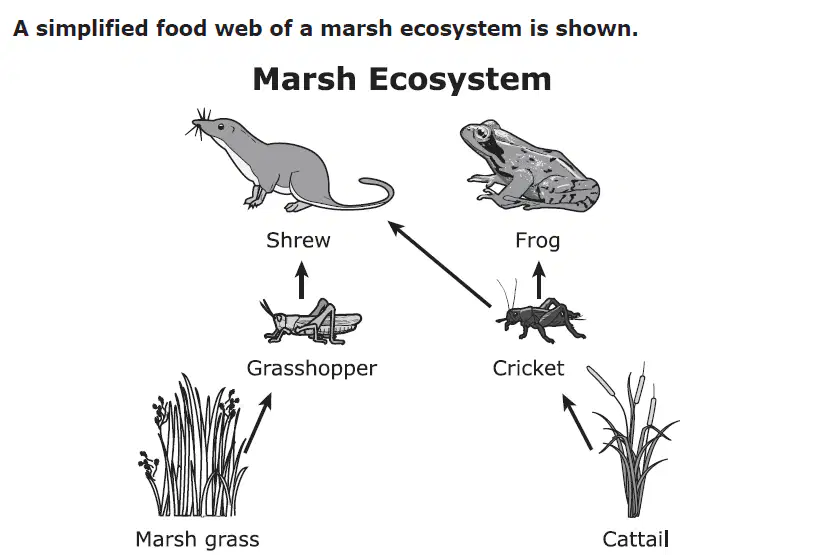
Which organisms get energy from crickets?
cattails and grasshoppers
cattails and frogs
shrews and frogs
grasshoppers and shrews

Which two energy flows are correct based on the students’
classifications?
Plant → Wolf
Plant → Deer
Sun → Deer
Sun → Plant
Earthworm → Wolf
Grade Science
SECURE
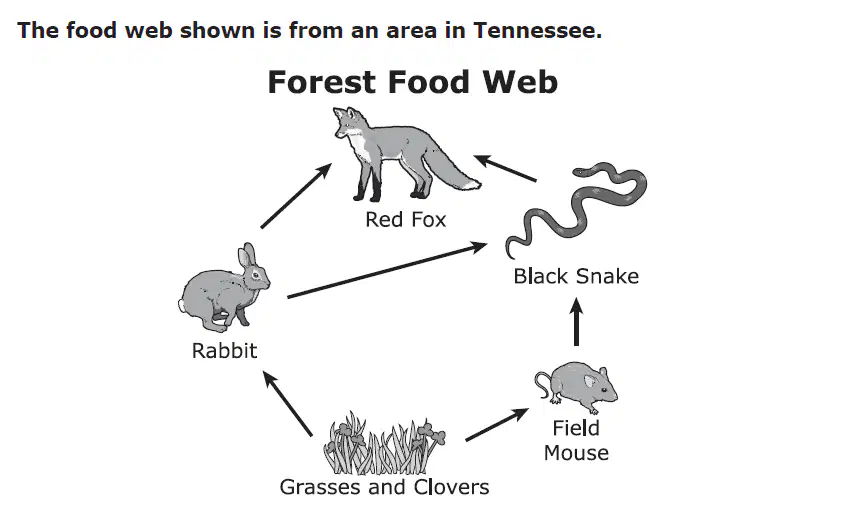
Which organisms are decomposers that should be added to complete the
food web?
Hawk and Earthworm
Tree and Fungi
Earthworm and Fungi
Squirrel and Bacteria
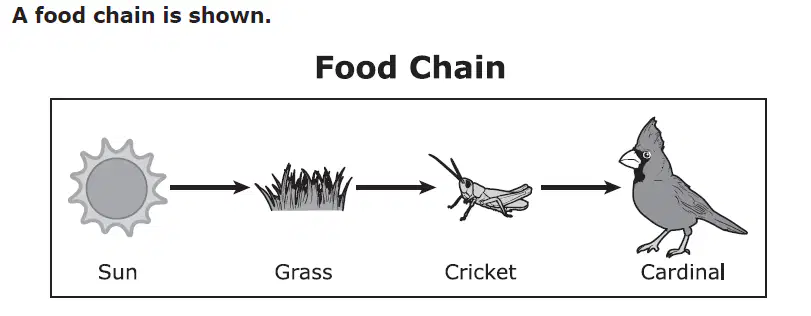
The energy that the organisms in this food chain use for growth began as
energy from the
cardinal.
cricket.
grass.
sun.
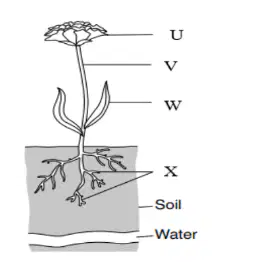
The model below shows a plant. Four of its structures are labeled. Which structure absorbs carbon dioxide during the photosynthesis process?
leaf (W)
stem (V)
roots (X)
petal (U)
A group of students is creating a model of an ecosystem. Which of the following organisms should the students select to act as a consumer?


Which of these correctly describes the relationship between plants and animals in the carbon dioxide-oxygen cycle?
Plants produce and release the oxygen that animals need to breathe
Plants produce and release the carbon dioxide that animals need to breathe
Animals produce and release the oxygen that plants need to make their own food
Animals produce and release the oxygen that plants convert to carbon dioxide
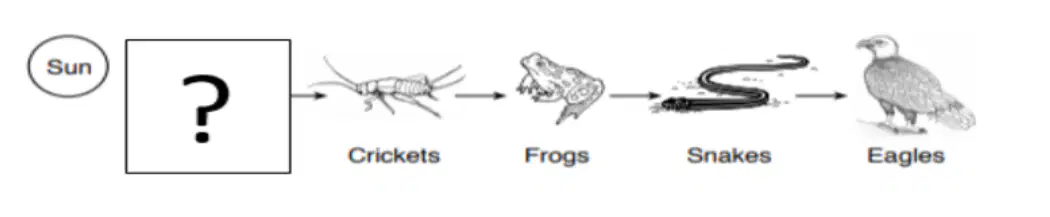
Analyze the model of the food chain below. Which type of organism would complete the food chain?
decomposer
producer
carnivore
herbivore
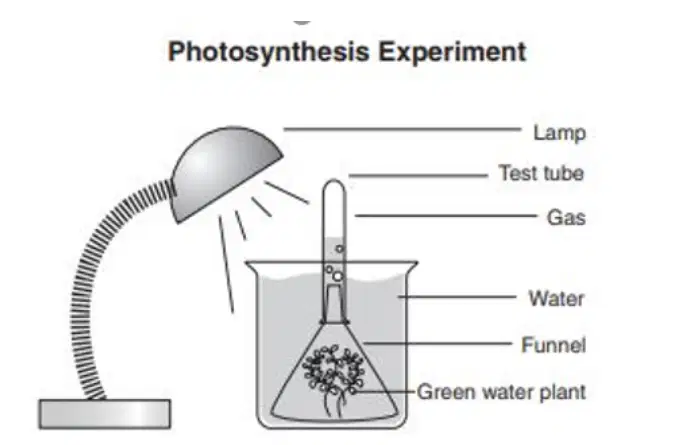
Blake’s fourth grade class is completing a lab on photosynthesis. Below is a model of the investigation.
Which of the following would represent the energy source for photosynthesis to occur?
lamp
gas
test tube
water plant
Decomposers are important in the food chain because they...
break down dead organisms and recycle nutrients into the soil.
stop the flow of energy from one organism to another.
produce their own food using light from the sun
are microscopic and other organisms cannot consume them.
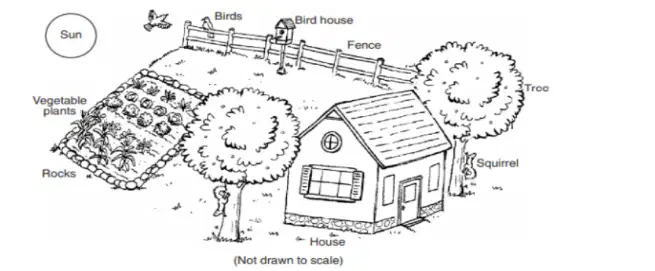
Analyze the model below. Use it to help you answer the question.
Identify one labeled item from the model that uses energy from the sun to produce food.
fence
vegetables
bird
house

If there is a grass fire in this ecosystem, which organism MUST find another source of food energy in order to survive?
tree
beetle
mouse
caterpillar

Which of the following is an example of a food chain within this ecosystem?
Dragonfly nymph → Water flea → Tadpole
Guppy → Tilapia → Dragonfly nymph
Tadpole → Elodea → Guppy
Elodea→ Tadpole → Dragonfly nymph
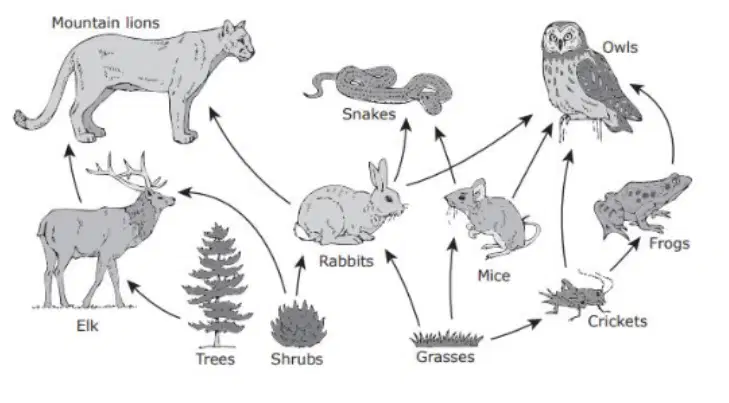
Which statement accurately describes a relationship shown in the food web?
Trees are a producer for mice.
Mice are herbivores that consume (eat) grasses and are preyed on by elk.
Owls prey on rabbits and frogs.
Rabbits get their energy from owls and snakes.

