
 Worksheets
Cambridge Checkpoint Science 8: Light
Total questions: 44
Worksheet time: 1hrs 10mins
The three primary colours of light are
Red, Blue, Yellow
Cyan, Magenta, Yellow
Cyan, Green, Red
Blue, Green, Red
Why does an apple appear red?
All colours are absorbed & none are reflected
All colours are absorbed except for blue, which is reflected
All colours are reflected and none are absorbed
All colours are absorbed except for red, which is reflected
How does light travel?
It curves around corners
Really slow
In a straight line
In circles
"Uber"
Which colour absorbs the most light?
Black
White
Blue
Red
Which of the following is the best reflector of light?
Glass block
Water
Mirror
Prism
Objects that reflect ALL colours will appear _____?
Black
White
Gray
Multi-coloured

If you are using a green colour filter, what colour will you only see?
blue
green
white
red
If you are using a red colour filter, blue objects will appear what colour?
magenta
blue
red
black
What two colours make yellow?
Red and White
Red and Blue
Red and Green
Green and Blue
______ is a copy of the object formed by reflected or refracted rays of light
reflection
refraction
object
image

Which of these provides the best explanation for why the pencil appears broken?
The pencil absorbs the light rays that hit it.
Water reflects light rays away from the pencil.
Light rays are bent by the water in the glass.
The surface of the water reflects the light rays.
The pencil actually breaks when it enters water
Light travels in straight lines until reflected by another object. Which illustration best shows the light being reflected?


Which object refracted the laser beam?
Silver locket
Picture frame
Glass marble
Notebook

Figure 1 demonstrates light travels in
zig zags
circles
a straight line
random bursts
Figure 2 demonstrates
Refraction
Reflection
Light travels in a straight line
Rewind
Figure 3 demonstrates
Refraction
Reflection
Light travels in a straight line
Rewind


states that when a wave is reflected from a surface, the angle of reflection is equal to the angle of incidence
law of refraction
law of dispersion
law of reflection
law of diffraction
law of averages
When a light ray is refracted and its moving from water to air, its speed will ____, and it will bend _______ the normal .
increase, away from
increase, towards
decrease, away from
decrease, towards

What is the speed of light in air?
3 000 m/s
300 000 m/s
300 000 000 m/s
3 000 000 000 m/s
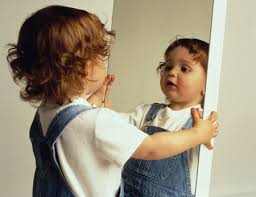
The image formed in a flat mirror is
larger than the object and farther away.
reduced and closer to the mirror.
a real image of the object.
the same size of the object, and same distance from mirror

What is the angle of reflection (θr) in the image?
56o
90o
124o
34o
The angle of the incoming rays of light are called the.....
Angle of reflection
Angle of refraction
Angle of incidence
Wave angle

On the diagram, A is :
The angle of incidence
The reflection ray
The incidence ray
The refraction ray

On the diagram, B is:
The refraction ray
The normal
The angle of incidence
The incidence ray

On the diagram, C is :
The angle of incidence
The angle of reflection
The angle of refraction
The normal

On the diagram, D is:
The reflected ray
The incidence ray
The normal
The refracted ray

On the diagram, E is:
The angle of incidence
The normal
The angle of reflection
The angle of refraction

A ray of white light is incident at a certain angle on a block of glass. What colour can be associated with the refracted rays 𝒓𝟏 and 𝒓𝟐 respectively according to the figure shown below?
r1 = red r2 = blue
r1 = red r2 = violet
r1 = violet r2 = red
r1 = blue r2 = violet

What is happening in this picture?
Reflection
Refraction
Dispersion
Colouring
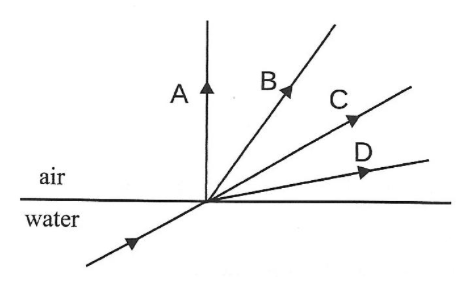
A light ray is incident from water to air. Which of the refracted rays is correct?
A
B
C
D

Referring to what is happening in the diagram, then
na is air, nb is water, nc is glass
na is water, nb is glass, nc is air
na is glass, nb is water, nc is air
na is glass, nb is air, nc is water
na is water, nb is air, nc is glass
When a light ray is refracted and its moving from air to glass, its speed will ____, and it will bend _______ the normal .
increase, away from
increase, towards
decrease, away from
decrease, towards
A shadow is formed whenever
white light is absorbed
white light is reflected
an opaque object blocks light
a shiny object blocks light
On a bright, sunny day, shadows will be the shortest at
in the early morning
at midday
in the early afternoon
in the late afternoon

In order to spear the fish (which is not moving), the fisherman would best
aim directly behind the fish
aim directly at the fish
aim directly in front of the fish
The fisherman sees a stationary fish in the water. The fish appears to the fisherman to be
exactly where the fish actually is
behind where the fish actually is
in front of where the fish actually is
When looking down at a submerged object in water, the object appears ______ because of _____.
closer, refraction
closer, reflection
further away, refraction
further away, reflection
We can see the moon on a clear night because
the moon is a luminous object and reflects light from the sun
the moon is a non-luminous object and gives off it's own light
the moon is a luminous object, and gives off it's own light
the moon is a non-luminous object and reflects light from the sun
the moon is a non-luminous object and reflects light from the Earth

