wayground logo

Free Printable Worksheets

Font size

S
M
L
XL
Worksheets

Cell Division and Mitosis

Total questions: 41

Worksheet time: 25mins

Name
Class
Date
1.
a)

Prophase

b)

Interphase

c)

Anaphase

d)

Telophase

2.
a)
Anaphase
b)
Cytokinesis
c)
Telophase
d)
Metaphase
3.
a)
Cytokinesis
b)
Interphase
c)
Anaphase
d)
Metaphase
4.
a)
Anaphase
b)
Cytonkinesis
c)
Interphase
d)
Prophase
5.
a)
Cytokinesis
b)
Anaphase
c)
Telophase
d)
Prophase
6.
Why would it be important to replicate DNA before a cell divides in mitosis or meiosis?
a)
In order for genetic information to be transferred into daughter cells.
b)
In order for the cell to be able to increase in size.
c)
In order for the DNA to be contained in the nucleus.
d)
In order for the cell to re-order the DNA sequencing in the new cells.
7.
In mitosis, the two resulting cells are
a)
different from the starting cell and identical to each other.
b)
different from the starting cell and different from each other.
c)
identical to the starting cell and different from each other.
d)
identical to the starting cell and identical to each other.
8.
The time between cell divisions in the life cycle of the cell is called
a)
anaphase
b)
interphase
c)
prophase
d)
metaphase
9.
A chromosome is a single, long DNA molecule in a compact formation
a)
True
b)
False
10.

Where does a cell contain it's genetic material?

a)

nucleus

b)

nucleolus

c)

ribosome

d)

mitochondria

11.
What is the first phase of Mitosis?
a)
Prophase
b)
Metaphase
c)
Anaphase
d)
Telophase
12.

In which phase does the cell spend most of it's life?

a)

Interphase

b)

Prophase

c)

Telophase

d)

Mitosis

13.
These structures pull the spindle fibers and attached chromosomes to opposite ends of the cell.
a)
Spindle fiber
b)
Centriole
c)
Nucleus
d)
Centromere
14.

Select all of the events of interphase.

a)

Cell function

b)

Nuclear division

c)

Growth

d)

Cytokinesis

e)

DNA replication

15.

Select the three parts of the cell cycle.

a)

Interphase

b)

Anaphase

c)

Mitosis

d)

Cytokinesis

e)

Telophase

16.

Cells utilize mitosis for the following reasons:

a)

growth

b)

repair

c)

photosynthesis

d)

reproduction

e)

respiration

17.

Bacteria reproduce asexually by a process called

a)

replication

b)

meiosis

c)

mitosis

d)

binary fission

18.

Identify the correct order of the phases of mitosis.

a)

interphase, metaphase, prophase, anaphase

b)

metaphase, prophase, anaphase, telophase

c)

prophase, metaphase, anaphase, telophase

d)

telophase, interphase, metaphase, anaphase

19.

Select all of the statements that are true about mitosis.

a)

Mitosis produces diploid cells.

b)

Mitosis forms two unique cells.

c)

Mitosis includes four phases.

d)

Mitosis occurs only in body cells.

e)

Mitosis is used by prokaryotes.

20.
What structure connects the duplicate halves of sister chromatids?
a)
chromatin
b)
centromere
c)
microtubule
d)
spindle
21.

What is the network of fibers extending from the centrioles - made of microtubules to which chromatids attach and are pulled apart?

a)

centrioles

b)

spindle

c)

chromatids

d)

nucleolus

22.
How many chromosomes does each daughter cell contain compared to the mother cell immediately after cell division?
a)
the same number
b)
half as many
c)
twice as many
d)
four times as many
23.
During which stage of interphase does the cell replicate its DNA?
a)
G!
b)
S
c)
G2
d)
All 3 stages
24.
Fruit fly body cells have 8 chromosomes. After mitosis, you would expect a resulting fruit fly daughter cell to have ...
a)
16 chromosomes.
b)
46 chromosomes.
c)
8 chromosomes.
d)
4 chromosomes.
25.
Structure (b) is a ____.
a)
chromosome
b)
chromatid
c)
centromere
26.
Structure (a) is a ____.
a)
chromosome
b)
chromatid
c)
centromere
27.
Structure (c) is a ____.
a)
chromosome
b)
chromatid
c)
centromere
28.
In asexual reproduction, all of the offspring are:
a)
Physically Identical
b)
Genetically Identical
c)
Physically and Genetically Identical
d)
Not Identical
29.
A hydra reproduces when an outgrowth, or bud, forms and continues to develop until if falls off of the parent. This is an example of:
a)
Binary Fission
b)
Sporulation
c)
Budding
d)
Vegetative Propagation
30.
a)
budding
b)
sporulation
c)
vegetative propagation
d)
binary fission
31.
a)
budding
b)
binary fission
c)
sporulation
d)
regeneration
32.

What type of asexual reproduction is taking place?

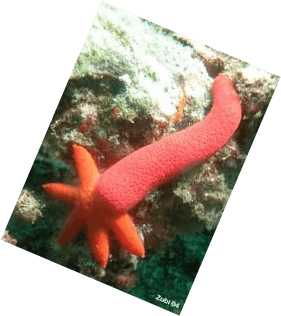
Fishermen work hard to catch and remove all the starfish that get into their favorite shell fishing beds and the “underwater farms” where they raise clams and oysters. In the past, they put the starfish into their boats, cut them up with knives, and then throw the pieces of starfish overboard. They thought this would kill the starfish. What they did not know was that each piece of starfish will grow into a whole new animal.

a)

Fragmentation

b)

Vegetative propagation

c)

Budding

d)

Fission

33.
How many parent(s)are needed for asexual?
a)
4
b)
1
c)
9
d)
100
34.
When a starfish grows a new body off a broken arm, what kind of reproduction is this?
a)
Sexual
b)
Differentiation
c)
Asexual 
d)
Specialization
35.
What are some of the facts about asexual reproduction?
a)
Takes only one mate to reproduce and takes a longer time to reproduce
b)
Takes a shorter amount of time to reproduce and it takes two mates to reproduce
c)
Reproduces diverse offspring and takes a longer time to reproduce
d)
Takes only one mate to reproduce and takes a shorter time to reproduce
36.

Some advantages of sexual reproduction include: (select all that apply)

a)

genetic variation

b)

improves chances of adapting to the environment

c)

helps species survive catastrophes

d)

it doesn't take as much energy as asexual reproduction

37.

What are some disadvantages to sexual reproduction? (select all that apply)

a)

it takes a lot of energy to find a mate

b)

you don't need another mate

c)

it requires a male and a female

d)

more genetic errors can occur

38.

What are some advantages of asexual reproduction are: (select all that apply)

a)

it only requires one organism

b)

it takes less energy than sexual reproduction

c)

offspring are already well-adapted for the environment

d)

there is a lot of genetic variety

39.
Stem cells are
a)
cells that grow uncontrollably
b)
undifferentiated and can be any type of cell
c)
never go through cell division
d)
only found in embryos
40.
Stem cells can be obtained from
a)
embryos
b)
some adult tissues
c)
umbilical cord blood
d)
all of the above
41.
What does "pluripotent" mean?
a)
able to divide and make many different types of cells
b)
not able to divide
c)
can only divide and make one cell type 
d)
if it divides, it will make a cancerous tumor