wayground logo

Free Printable Worksheets

Font size

S
M
L
XL
Worksheets

Atomic Structure Test

Total questions: 50

Worksheet time: 2hrs 46mins

Name
Class
Date
1.
This is how you find the number of neutrons in an atom. 
a)
Subtract the atomic number from the atomic mass
b)
Subtract the atomic mass from the atomic number 
c)
Add the atomic mass to the atomic number 
d)
Divide the atomic mass by the atomic number 
2.

How many protons does indium have?

a)

49

b)

66

c)

114

d)

115

3.
What is the atomic number?
a)
the number of protons
b)
the number of protons and neutrons
c)
the number of neutrons
d)
the number of protons and electrons
4.

What is a cation?

a)

A negatively charged ion

b)

An atom with no charge

c)

A positively charged ion

d)

A stable atom on the periodic table

5.

What is an anion?

a)

A negatively charged particle

b)

An atom with no charge

c)

A positively charged ion

d)

A stable atom found on the periodic table
6.

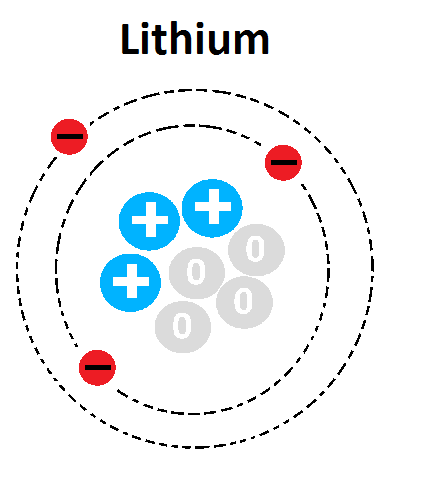
What is the mass number of this atom?

a)

1

b)

3

c)

4

d)

7

7.

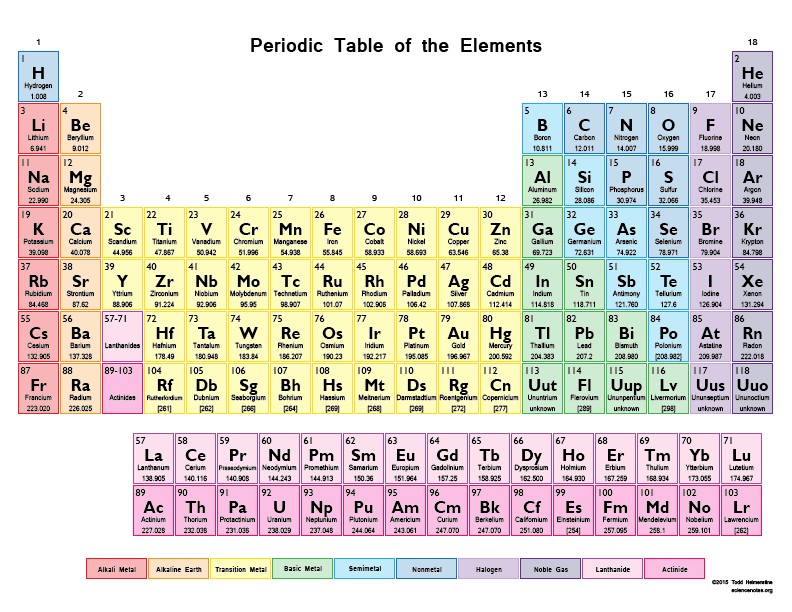
How many protons are in a sodium atom, Na? (tap to enlarge the periodic table)

a)

Sodium has 1 proton.

b)

Sodium has 3 protons.

c)

Sodium has 11 protons

8.

An element has the mass number 12 and atomic number 6. The number of neutrons in it is:

a)

6

b)

10

c)

4

d)

8

9.

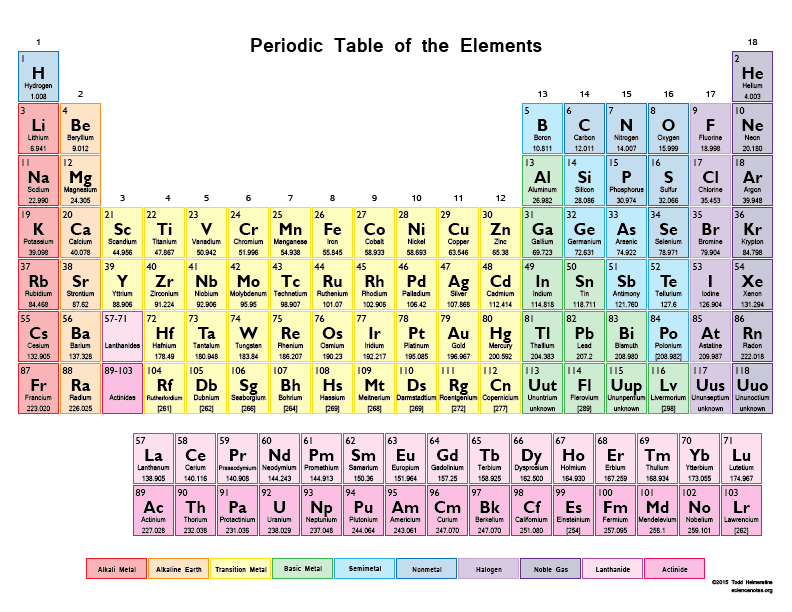
How many neutrons does an atom of the isotope Neon-22 have? (tap to enlarge the image)

a)

12

b)

10

c)

22

d)

20

10.
What is an isotope? 
a)
A charged atom
b)
An atom with different amounts of neutrons
c)
An atom with different amounts of protons
d)
A neutral atom
11.
How many neutrons does a Sulfur-32 isotope have?
a)
15
b)
16
c)
32
d)
12
12.
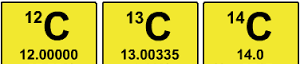
What do these isotopes of carbon all have in common?
a)
neutrons & mass number
b)
atomic number and neutrons
c)
atomic number and electrons
d)
protons, atomic number, and mass number
13.
How many protons does P-30 have?
a)
30
b)
16
c)
12
d)
15
14.
If an atom of nickel has a charge of +3, how many electrons does the atom have?
a)
28
b)
25
c)
26
d)
31
15.

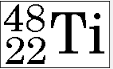
How many protons, electrons, and neutrons does this isotope of titanium have?

a)

48 protons, 22 electrons, 22 neutrons

b)

22 protons, 22 electrons, 24 neutrons

c)

26 protons, 48 electrons, 22 neutrons

d)

70 protons, 48 electrons, 48 neutrons

16.
Can an atom of Hydrogen have 2 protons?
a)
Yes, because it can be an ion
b)
No, because protons identify the atom
c)
Yes, because it can be an isotope
d)
No, because only neutral atoms exist
17.
Can an atom of Helium have 3 electrons?
a)
Yes, because it can be an ion
b)
No, because protons identify the atom
c)
Yes, because it can be an isotope
d)
No, because only neutral atoms exist
18.

Nickel-59 has how many protons?

a)

30

b)

28

c)

59

d)

31

19.

Atoms of the same element which have a different number of neutrons are called _________________.

a)

ions

b)

isotopes

c)

quarks

d)

molecules

20.

Which subatomic particle has a negative charge in the atom?

a)

proton

b)

neutron

c)

electron

d)

quark

21.

Isotopes have different numbers of

a)

protons

b)

neutrons

c)

electron

d)

properties

22.

The number in Kr-84 represents what about Krypton?

a)

The number of electrons

b)

The number of protons

c)

The mass number

23.

If 3 protons and two neutrons are added to the nucleus of a carbon-12, what would have been made?

a)

Fluorine-17

b)

Fluorine-15

c)

Lithium-12

d)

Oxygen-14

24.
How many valence electrons are found in atoms of group 15?
a)
4
b)
5
c)
2
d)
3
25.

What are valence electrons?

a)

The total number of electrons in an atom

b)

The number of electrons in the outermost shell

c)

The number of electrons in the second shell

d)

The number of protons in the outermost shell

26.

How many valence electrons are in an atom of Ba with a charge of +2?

a)

2

b)

8

c)

4

d)

1

27.
Which elements are found on the left to middle of The Periodic Table? 
a)
Metals
b)
Nonmetals
c)
Metalloids
d)
Candles
28.

All of the following would classify an element as a metal except?

a)

Dull

b)

Luster

c)

Malleable

d)

Ductile

29.
If you have a material that can conduct electricity well it is probably a...
a)
Metalloid
b)
Matter
c)
Non-metal
d)
Metal
30.
Which element is a metalloid?
a)
Titanium
b)
Selenium
c)
Potassium
d)
Polonium
31.
A student is given a sample of an unknown substance. He is asked to determine if it is classified as a metal, a metalloid, or a nonmetal. He discovered that the unknown element conducted some heat and electricity, had a shiny luster, and broke easily. This element is most likely a 
a)
metal
b)
nonmetal
c)
metalloid
d)
cannot be determined
32.
A student tested the conductivity of four elements using an incomplete electrical circuit. When the element is placed in the circuit, the bulb lights up brightly, lights up dimly, or does not light up at all based on the element’s ability to conduct electricity. The table below shows the results of her investigation. Based on the results of the conductivity test, which element is classified as a metal? 
a)
Hydrogen
b)
Arsenic
c)
Krypton
d)
Copper
33.

What do valence electrons determine for an atom?

a)

Mass #

b)

Chemical properties

c)

atomic number

d)

isotope name

34.
Elements in the same ________ are more chemically similar.
a)
group
b)
period
c)
club
d)
table
35.

What are the horizontal rows on the periodic table called?

a)

periods

b)

groups

c)

metals

d)

nonmetals

e)

metalloids

36.

What do the horizontal rows on the periodic table tell us?

a)

The number of orbitals

b)

The number of valence electrons (the electrons on the outer most shell)

37.

What group and period does this element belong in? *

a)

period 1 and group 3

b)

period 3 and group 1

c)

period 2 and group 3

d)

period 3 and group 2

38.

What is the name of the element? (Periodic table will be needed)

a)

sodium

b)

magnesium

c)

vanadium

39.
Which of the following is the most reactive in water?
a)
Lithium
b)
Sodium
c)
Potassium
40.
Which of the following is NOT an alkali metal
a)
Li
b)
Cl
c)
K
d)
Cs
41.

Which of the following elements is similar to Arsenic?

a)

Bismuth

b)

Selenium

c)

Magnesium

d)

Sulfur

42.

What do all elements in the same family have in common?

a)

number of valence electrons

b)

classification of metals

c)

electron shells

d)

protons in the nucleus

43.
All elements in the same group have the same number of ___.
a)
protons
b)
neutrons
c)
atomic mass units
d)
valence electrons
44.
Which elements have the most similar chemical properties?
a)
K and Na
b)
K and Ca
c)
K and Cl
d)
K and S
45.
Lithium (Li) is part of the _ family.
a)
alkali metals
b)
alkaline earth metals
c)
halogens
d)
Noble gases
46.
Chlorine (Cl) is part of the _ family.
a)
alkali metals
b)
alkaline earth metals
c)
halogens 
d)
noble gases
47.
Neon is part of the _ family.
a)
alkali metals
b)
alkaline earth metals
c)
halogens
d)
noble gases
48.

Which family on the periodic table is the most reactive metals and is soft?

a)

Alkaline-Earth Metals

b)

Halogens

c)

Alkali Metals

d)

Noble Gases

49.

What does hydrogen have in common with the elements in group 1?

a)

They are all Alkali Metals

b)

They have the same number of valence electrons

c)

They are less reactive than the Alkaline Earth Metals

d)

They are all non-metals

50.

Subatomic particles with a negative charge

a)

Electrons

b)

Neutrons

c)

Protons

d)

Quarks