Wayground logo

Free Printable Worksheets

Font size

S
M
L
XL
Worksheets

Photosynthesis and Cellular Respiration

Total questions: 70

Worksheet time: 35mins

Name
Class
Date
1.
Plants need what to do photosynthesis?
a)
Food absorbed from ground
b)
Sun's energy
c)
Food broken down
d)
Minerals from the soil
2.
What gas goes into the plant before photosynthesis?
a)
Carbon Dioxide
b)
Carbon Monoxide
c)
Oxygen
d)
Nitrogen
3.
What three things are needed for a plant to do photosynthesis?
a)
Glucose, Oxygen, Sunlight
b)
CO2, Oxygen, Sunlight
c)
CO2, Water, Sunlight
d)
Oxygen, Water, Sunlight
4.
What two products does a plant make during photosynthesis?
a)
Water and Glucose
b)
Oxygen and Glucose
c)
Oxygen and Water
d)
CO2 and Glucose
5.
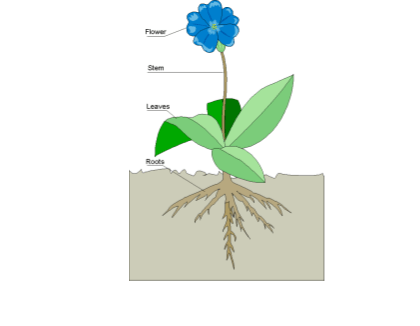
Which plant part absorbs water and nutrients?
a)
Leaf
b)
Stem
c)
Roots
d)
Flower
6.
Which plant part transports water and nutrients to different parts of the plant?
a)
Leaf
b)
Stem
c)
Roots
d)
Flower
7.
Which plant part collects the sun's energy and makes food?
a)
Leaf
b)
Stem
c)
Roots
d)
Flower
8.
What is the name of the green pigment inside plants?
a)
Monophyll
b)
Chlorophyll
c)
Epiphyll
d)
Glorophyll
9.
Which of these is NOT A TRUE statement about why photosynthesis is important:
a)
It captures and makes the sun's energy available to all species
b)
It turns deadly CO2 into Oxygen for us to breath
c)
It helps plants create energy to send to rest of food chain
d)
It makes the water for our planet
10.
Which of these is NOT AN IMPACT photosynthesis has on an ecosystem:
a)
Oxygen for animals and humans to breathe
b)
Food for us to eat
c)
Taking CO2 out of the air
d)
Taking oxygen out of the air
11.
What do plants give off after photosynthesis?
a)
Oxygen
b)
carbon
c)
nitrogen
d)
hydrogen
12.
Plants need ________from the air for photosynthesis
a)
oxygen
b)
soil
c)
carbon dioxide
d)
sugar
13.
What molecule absorbs sunlight during photosynthesis?
a)
Epidermis
b)
thylakoid
c)
the leaf
d)
chlorophyll
14.
Which statement about photosynthesis is correct?
a)
Plants get the energy they need for photosynthesis from water.
b)
Plants get the energy they need for photosynthesis from soil.
c)
Plants get the energy they need for photosynthesis from sunlight.
d)
Plants do not require energy to perform photosynthesis.
15.
The products of photosynthesis are
a)
water and carbon dioxide
b)
oxygen and water
c)
sugar and cabon dioxide
d)
oxygen and sugar (glucose)
16.
Which gas is removed from the atmosphere during photosynthesis?
a)
hydrogen
b)
oxygen
c)
nitrogen
d)
carbon dioxide
17.
The main source of energy for all life comes from ____.
a)
the Earth
b)
the moon
c)
the sun
d)
the food we eat/make
18.
Why are plants important to life on Earth?
a)
They make our world more beautiful
b)
They make the planet look green
c)
They use carbon dioxide and give us oxygen
d)
They provide shade for insects
19.
In what part of the cell does photosynthesis occur?
a)
Nucleus
b)
Chloroplast
c)
Epidermis
d)
Vacuole
20.
After photosynthesis, plants store their energy as _________ .
a)
chlorophyll
b)
pigment
c)
glucose (sugar)
d)
Oxygen
21.

During photosynthesis, the energy from the sun is used to split water molecules into hydrogen and oxygen.

a)

True

b)

False

22.

Which of the following statements best describes the term photosynthesis?

a)

When plants absorb the energy from the sun.

b)

How plants reproduce.

c)

The process by which plants make their own food.

d)

The process by which animals make their own food.

23.

Which of the following is needed for the process of photosynthesis?

a)

Water

b)

Oxygen

c)

Starch

d)

Carbon dioxide

24.

Which of the following is needed for the process of photosynthesis?

a)

Water

b)

Oxygen

c)

Starch

d)

Carbon dioxide

25.

Which of the following is produced by the process of photosynthesis?

a)

Water

b)

Oxygen

c)

Starch

d)

Carbon dioxide

26.

Chlorophyll is:

a)

The substance that makes plants green.

b)

Found inside the chloroplast cells.

c)

Used to absorb energy from the sun.

d)

All of the above.

27.

The openings that are found in the leaves of plants are called:

a)

Stomata

b)

Chlorophyll

c)

Xylem

d)

Chloroplast

28.

The tubes that carry water through the roots and stems are called:

a)

Stomata

b)

Chlorophyll

c)

Xylem

d)

Chloroplast

29.

Which of the following substances are needed to make carbohydrates?

a)

Hydrogen

b)

Oxygen

c)

Carbon

d)

All of the above.

30.

Which of the following substances are needed to make carbohydrates?

a)

Hydrogen

b)

Oxygen

c)

Carbon

d)

All of the above.

31.

Plants store food in:

a)

Leaves

b)

Stems

c)

Roots

d)

All of the above.

32.

The process of photosynthesis takes place in the:

a)

Leaves of the Plant.

b)

Stem of the plant.

c)

Roots of the plant.

d)

All of the above.

33.
What do plants give off after photosynthesis?
a)
Oxygen
b)
carbon
c)
nitrogen
d)
hydrogen
34.
Plants need ________from the air for photosynthesis
a)
oxygen
b)
soil
c)
carbon dioxide
d)
sugar
35.
What molecule absorbs sunlight during photosynthesis?
a)
Epidermis
b)
thylakoid
c)
the leaf
d)
chlorophyll
36.
Which statement about photosynthesis is correct?
a)
Plants get the energy they need for photosynthesis from water.
b)
Plants get the energy they need for photosynthesis from soil.
c)
Plants get the energy they need for photosynthesis from sunlight.
d)
Plants do not require energy to perform photosynthesis.
37.
The products of photosynthesis are
a)
water and carbon dioxide
b)
oxygen and water
c)
sugar and cabon dioxide
d)
oxygen and sugar (glucose)
38.
In what part of the cell does photosynthesis occur?
a)
Nucleus
b)
Chloroplast
c)
Epidermis
d)
Vacuole
39.
After photosynthesis, plants store their energy as _________ .
a)
chlorophyll
b)
pigment
c)
glucose (sugar)
d)
Oxygen
40.

Which of the following statements best describes the term photosynthesis?

a)

When plants absorb the energy from the sun.

b)

How plants reproduce.

c)

The process by which plants make their own food.

d)

The process by which animals make their own food.

41.

Which of the following is needed for the process of photosynthesis?

a)

Water

b)

Oxygen

c)

Starch

d)

Carbon dioxide

42.

The tubes that carry water through the roots and stems are called:

a)

Stomata

b)

Chlorophyll

c)

Xylem

d)

Chloroplast

43.
What three things are needed for a plant to do photosynthesis?
a)
Glucose, Oxygen, Sunlight
b)
CO2, Oxygen, Sunlight
c)
CO2, Water, Sunlight
d)
Oxygen, Water, Sunlight
44.
What two products does a plant make during photosynthesis?
a)
Water and Glucose
b)
Oxygen and Glucose
c)
Oxygen and Water
d)
CO2 and Glucose
45.

Which of the following are reactants of photosynthesis?

a)

CO2 and H2O

b)

O2

c)

H2O and Glucose

d)

None of the above

46.

Which part of a flower is known to attract pollinators?

a)

Stem

b)

Leaf

c)

Pollen

d)

Colorful Petals

47.

Which part of a plant anchors the plant to the ground and soaks up water and minerals?

a)

stem

b)

leaves

c)

roots

d)

petals

48.

Which of the following helps with plant reproduction?

a)

Pollen

b)

Stem

c)

Roots

d)

Leaves

49.

Which part of the plant holds the main networks of xylem and phloem?

a)

leaves

b)

petals

c)

stem

d)

roots

50.

Xylem carries-

a)

water up from the roots

b)

water down from the leaves

c)

Glucose from the roots

d)

Glucose down the stem

51.
Please select who performs cellular respiration: 
a)
Animals 
b)
Both animals and plants 
c)
plants 
52.
Cellular respiration is...
a)
the process by which cells break down glucose into energy. 
b)
the process by which cells break light down into energy. 
c)
the process by which cells communicate with other cells. 
53.
These organisms get their energy from photosynthesis:  
a)
autotroph
b)
heterotroph
54.
Cellular respiration occurs in 
a)
chloroplasts 
b)
mitochondria
c)
golgi aparatus 
d)
thylakoid 
55.
The three stages of cellular respiration include glycolysis, krebs cycle, and the...
a)
carb cycle 
b)
light reaction 
c)
electron transport chain
d)
calvin cycle 
56.
Glycolysis produces.. 
a)
34 ATPs
b)
2 ATPs
c)
17 ATPs 
d)
38 ATPs 
57.
The Krebs cycle produces.. 
a)
34 ATPs 
b)
2 ATPs
c)
17 ATPs
d)
38 ATPs 
58.
The electron transport chain produces...
a)
34 ATPs
b)
2 ATPs 
c)
17 ATPs 
d)
38 ATPs 
59.
In aerobic respiration.... 
a)
oxygen is not used. 
b)
oxygen is used. 
60.
In anaerobic respiration...
a)
oxygen is not used.
b)
oxygen is used. 
61.
Which of the following are NOT waste products of fermentation? 
a)
alcohol
b)
lactic acid 
c)
carbohydrates 
62.
When you do a wall sit and your legs start to burn, what is building up in your muscles? 
a)
alcohol 
b)
lactic acid 
c)
carbohydrates 
d)
water 
63.
The purpose of cellular respiration is to produce ?
a)
energy
b)
oxygen
c)
sugar
d)
protein
64.
What main food group do we get most of our energy from?
a)
proteins
b)
carbs
c)
meats
d)
nucleic acids
65.
What is the sugar that carbs are broken down to?
a)
sucrose
b)
maltose
c)
glucose
d)
lactose
66.
What is the energy molecule?
a)
DNA
b)
ATP
c)
RNA
d)
AAA
67.
What is the energy organelle?
a)
nucleus
b)
mitochondria
c)
ribosomes
d)
lysosomes
68.
The splitting of the glucose molecule is called?
a)
synthesis
b)
denaturalization
c)
glycolysis
d)
dissolving
69.
The two type of fermentation are alcohol and _____________ acid fermentation. 
a)
lactic
b)
sulfuric
c)
hydrochloric
d)
acetic 
70.
To get the most ATP molecules for energy in cellular respiration, you have to have lots of ?
a)
hydrogen
b)
oxygen
c)
carbon dioxide
d)
water