wayground logo

Free Printable Worksheets

NEW

Font size

S
M
L
XL
Worksheets

Geology Review

Total questions: 61

Worksheet time: 2hrs 52mins

Name
Class
Date
1.
Name the four layers of the Earth from the inner most layer to the outer most layer.
a)
crust, mantle, outer core, inner core
b)
mantle, crust, core
c)
Inner core, outer core, mantle, crust
d)
core, crust, mantle
2.
Which is the thinnest layer of the Earth?
a)
crust
b)
mantle
c)
inner core
d)
outer core
3.
Iron and nickel make up the Earth's core. Which part of the core is a solid ball?
a)
crust
b)
mantle
c)
outer core
d)
inner core
4.
How is metamorphic rock formed?
a)
heat and pressure
b)
magma, hardened and crystallized
c)
compaction and cementation
d)
weathering and erosion
5.
How is sedimentary rock formed?
a)
heat and pressure
b)
magma, cooled and hardened
c)
compaction and cementation
d)
weathering and erosion
6.
What can we tell by studying fossils and layers of rock?
a)
what state we are in
b)
how the Earth has changed over time
c)
how animals adapted
d)
we don't study fossils
7.
What makes fossils?
a)
plants
b)
animals
c)
other living organisms
d)
all choices listed
8.
Where are fossils most likely found?
a)
on the surface of dirt
b)
sedimentary rock
c)
igneous rock
d)
rocky soil
9.
This rock started as lava that cooled and then was heated and put under pressure over time. What type of rock is this?
a)
Sedimentar
b)
Igneous
c)
Metamorphic
10.

This rock started as molten magma then cooled. What type of rock is this?

a)

Sedimentary

b)

Igneous

c)

Metamorphic

11.
This rock is made from tiny pieces of other rocks that settled to the bottom of a valley millions of years ago. What type of rock is this?
a)
Sedimentary
b)
Igneous
c)
Metamorphic
12.
Each rock type can follow only one pathway of the rock cycle.
a)
True
b)
False
13.

What is the process of moving sediments from location to another?

a)

Deposition

b)

Erosion

c)

Weathering

d)

Compaction

14.
What is sediment?
a)
the process of rocks being broken down and carried away
b)
bits of rock, sand, and silt caused by the weathering of rocks
c)
the top layer of the soil
d)
decaying plant or animal material 
15.
Which of these is an example of erosion
a)
Light Shinning onto a mountain
b)
Rain breaking down rock 
c)
Wind blowing away sediment
d)
All of the above
16.
What is a large ocean wave that results from an underwater earthquake, landslide, or volcanic eruption?
a)
Aftershock
b)
Liquefaction
c)
Seismic Gap
d)
Tsunami
17.
The process when rocks break into smaller pieces due to exposure to natural elements is called
a)
erosion
b)
weathering
c)
sediments
18.
What are the 3 major types of rocks?
a)
Igneous, Metamorphic, Sedimentary
b)
Metamorphic, Igneous, Cementation
c)
magma, lava, crystals
19.

Which is the process that breaks up rock on Earth’s surface?

a)

deposition

b)

melting

c)

compaction

d)

weathering

20.

Any rock that forms from another rock as a result of changes in heat or pressure (or both) is a:

a)

chemical rock

b)

igneous rock

c)

sedimentary rock

d)

metamorphic rock

21.
The three groups of rocks are classified by
a)
How they form
b)
Color
c)
Grain size
d)
Chemical Composition
22.
Sedimentary and igneous rocks go through _____________________________ to become metamorphic rocks.
a)
weathering and erosion
b)
heat and pressure
c)
compacting and cementing
d)
melting and cooling
23.

what is the rock cycle.

a)

molten rock that is stored underground.

b)

rock material that forms where rocks are broken down into smaller pieces.

c)

a process that changes one type of rock into another type of rock.
24.
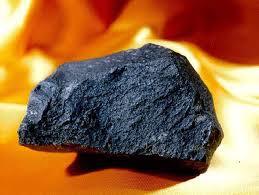
This rock was found near the mouth of a volcano. What type of rock is this?
a)
Sedimentary
b)
Igneous
c)
Metamorphic
25.
This rock cooled on the outside of a volcano and contained air bubbles when it was forming. What type of rock is this?
a)
Sedimentary
b)
Igneous
c)
Metamorphic
26.
This rock was formed by lots of fossils that settled on top of each other over time. What type of rock is this?
a)
Sedimentary
b)
Igneous
c)
Metamorphic
27.
What type of rocks can form on or beneath Earth's surface?
a)
Sedimentary
b)
Igneous
c)
Metamorphic
d)
Granite
28.
What is deposition?
a)
Dropping off sediment
b)
Movement of sediment
c)
Breaking down of sediment 
29.

All of the following cause weathering EXCEPT

a)

water

b)

glaciers

c)

plants

d)

volcano eruptions

30.
Bobby observed that a metal trash can was covered with rust.  What type of weathering caused the rust on the trash can?
a)
Mechanical weathering 
b)
Wind weathering
c)
Chemical weathering
d)
Erosion weathering
31.
These rocks were broken apart from the continuous freeze/thaw of water in the cracks of the rocks. This is an example of:
a)
ice wedging
b)
acid rain
c)
permeability
d)
abrasion
32.
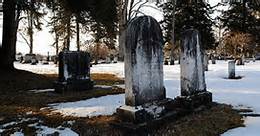
These gravestones have slowly broken down and turned a blackish color due to the action of:
a)
ice wedging
b)
abrasion
c)
acid rain
d)
mechanical weathering
33.

Potholes forming in the road after a cold winter is an example of what type of weather?

a)

mechanical weathering

b)

chemical weathering

34.
Rain washing away soil from a hillside
a)
Weathering
b)
Erosion
c)
Deposition
35.
Waves dropping sand on the beach
a)
Weathering 
b)
Erosion
c)
Deposition
36.

Deltas forming at the mouths of rivers are an example of:

a)

Weathering

b)

Erosion

c)

Deposition

37.
Material from broken down rocks
a)
Sediment
b)
Mass wasting
c)
Deposition
d)
Delta
38.
Triangular deposit of sediment entering a large body of water
a)
Delta
b)
Sediment
c)
Mass wasting
d)
Weathering
39.
Which of the following can cause erosion?
a)
falling leaves
b)
flowing water
c)
warmer temperatures
d)
growing grass
40.

Rocks along a riverbed that are smoothed from continuously moving water and sediment rubbing against them is an example of:

a)

mechanical weathering

b)

chemical weathering

41.

The formation of large cracks in the face of a mountain from ice wedging is an example of:

a)

mechanical weathering

b)

chemical weathering

42.

How does freezing water cause the weathering of rocks? The freezing water—

a)

keeps the rocks in place

b)

makes the rocks last longer

c)

expands cracks and breaks rocks

d)

causes rocks to fall in landslides

43.

How do plants weather rocks?

a)

during photosynthesis

b)

when roots grow into cracks of rocks and expand the rock

c)

when the plant moves water from the roots to the leaves

d)

Plants don't weather rocks

44.
The diagram shows layers of sedimentary rock and examples of the fossils each layer contains, Which layer contains the oldest fossils? 
a)
A. Layer 2
b)
B. Layer 4
c)
C. Layer 1
d)
D. Layer 3
45.
Which fossil layer is the youngest? 
a)
A. Layer A
b)
B. Layer B
c)
C. Layer C
d)
D. Layer D
46.
Which fossil is the youngest?
a)
fossil 1
b)
fossil 2
c)
fossil 3
d)
fossil 4
47.
According to the fossil record, which fossil is the oldest?
a)
fossil 5
b)
fossil 2
c)
fossil 3
d)
fossil 4
48.
According to this fossil record. What type of environment was there first?
a)
land
b)
lava
c)
ocean
d)
forest
49.
Sediments are falling into the layers.  What do the sediments do to make sedimentary rocks?
a)
get eroded more
b)
ice wedging breaks it apart
c)
the sediments do not get compacted
d)
compacted and cemented together
50.
You find shark tooth and fish fossils in an area that is now a forrest. What can you infer about the history of this place?
a)
The area was once a valley
b)
The area was once a desert
c)
The area was once covered in ice
d)
The area was once an ocean
51.
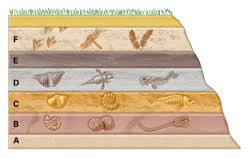
Which rock layer contains the newest fossils?
a)
F
b)
E
c)
B
d)
C
52.

Which rock layer most likely contains fossils of the oldest organisms?

a)

1

b)

2

c)

3

d)

4

53.

Which rock layer contains the newest fossils?

a)

B

b)

C

c)

D

d)

E

e)

F

54.
An organism that no longer exists on Earth is called
a)
Decayed
b)
Evolved
c)
Extinct
d)
Preserved
55.
Which layer formed first?
a)
Rock Layer W
b)
Rock Layer X
c)
Rock Layer Y
d)
Rock Layer Z
56.

The diagram above shows layers of sedimentary rock in the Earth’s crust. In which layer of rock should a scientist expect to find the oldest fossils?

a)

Layer M

b)

Layer N

c)

Layer O

d)

Layer P

57.

This picture shows layers of the earth and the fossils found in each. The youngest fossils would be found in-

a)

top layers of rock

b)

the middle rock layers

c)

the bottom layers of rock

d)

every layer

58.

This diagram represents the layers of the earth and fossils found in each layer. Based on the drawing, which imprint is the oldest?

a)

Freshwater clam shells

b)

Fish bones

c)

Fern imprints

d)

Leaf imprints

59.

This diagrams shows layers of sedimentary rock and the fossils found in each. Which fossil was formed most recently?

a)
b)
c)
d)
60.

The diagram represents the layers found inside a rocky cliff. The rock layers contain fossils. Which of the following layers of rock is most likely the youngest?

a)

The layer containing trilobites.

b)

The layer containing fishes.

c)

The layer containing amphibians.

d)

The layer containing mammals.

61.

The diagram represents the layers found inside a rocky cliff. The rock layers contain fossils. Based on the diagram, which fossil was found in the middle layer?

a)

Mammals

b)

Amphibians

c)

Fishes

d)

Dinosaurs