
 Worksheets
Astronomy Unit Review
Total questions: 60
Worksheet time: 47mins

What is the name of this model?
Heliocentric Model
Geocentric Model
Circle Model
Aristotle Model

Which model is this?
Heliocentric
Geocentric
Which of the models is widely accepted today?
Heliocentric
Geocentric
What is the biggest difference between the Geocentric Model and the Heliocentric Model?
the shape of the planets' orbits
the movement of the moon
the object at the center of the universe
the brightness of the sun
Which of these can change when new evidence is presented?
theory
law
A piece of _________ is an observation that supports an idea or conclusion.
evidence
force
observation
habitat

A theory that says the universe began as a small point that expanded rapidly about 13.7 billion years ago.
Big Bang Theory
Singularity Theory
Galaxy Theory

A large grouping of stars, planets, gas, and dust in space held together by gravity.
Universe
Galaxy
Space
What Galaxy is Earth located?
Andromeda
Milky Way
Sagittarius
Snickers
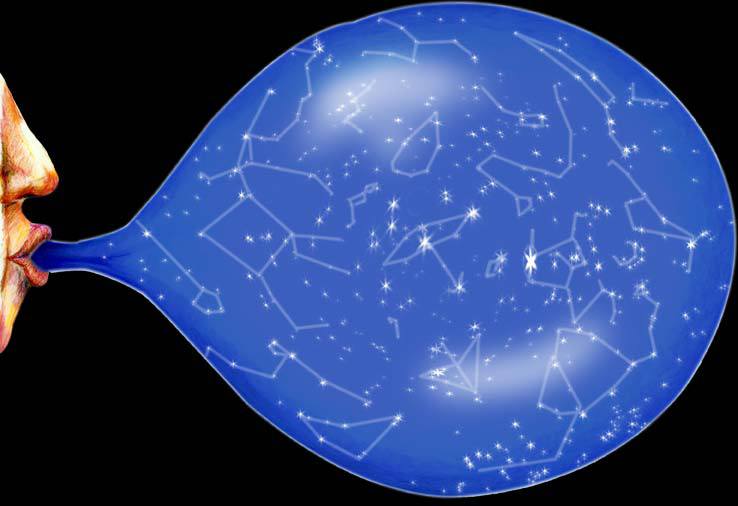
How is a theory different from a guess? Choose the best answer.
a theory cannot be disproven; a guess can be
a theory is backed up by hard evidence; a guess is not
a theory is agreed upon by scientists; a guess is only agreed upon by laypeople
a theory is usually very old; a guess is usually very new
The measurement of the distance from the Earth to the Sun is called an ________________________.
Astronomical Unit
Light Year
Solar Mile
Parsec
Which planet is the largest planet in our solar system
Jupiter
Saturn
Mars
Earth

Where is the asteroid belt located?
between Earth and Mars
between Jupiter and Saturn
between Mars and Mercury
between Mars and Jupiter
Which planet is the only planet to spin on its side?
Earth
Jupiter
Neptune
Uranus

Which of the following best describes the outer planets? Click all the apply
Very large
Made of liquids and gases
Smaller
Further apart

Which planet is known as the "red planet"?
Venus
Mercury
Earth
Mars
Dry, rocky planet covered in toxic clouds
Mercury
Venus
Earth
Mars
What is the correct order of the planets starting from the sun
mars, venus, mercury, earth
venus, mercury, earth, mars
mercury, venus, earth, mars
mercury, earth, venus, mars

The force that causes objects with mass to attract one another.
Weight
Gravity
Mass
Magnetism

Why do planets orbit the Sun?
The Sun is the only celestial object that has a gravitational pull.
The Sun’s chemical composition makes it attract planets.
Only celestial bodies that emit light, like the Sun, can be at the center of an orbit.
The Sun is the most massive object in our solar system, so it exerts the greatest gravitational pull.

The gravitational attraction between two objects would increase if both masses are –
increased, and the distance between them is increased.
increased, and the distance between them is decreased.
decreased, and the distance between them is decreased.
decreased, and the distance between them is increased.

Gravity can be defined as the –
force of attraction between two or more masses.
friction created when two objects are in contact.
energy given off by stars due to nuclear reactions.
path an object follows as it moves through space.
What dwarf planet was downgraded from planetary status in 2006?
Mercury
Uranus
Neptune
Pluto
______ and ______ are two factors that influence in gravity
distance and speed
size and distance
mass (weight) and speed
mass (weight) and distance
Which is found in the belt between Mars and Jupiter
Comets
Asteroids
Meteors
Stars
I am a rock entering a planet's atmosphere.
meteor
moon
asteroid
comet

A meteor when it burns in the atmosphere is also known as a ____.
rock
shooting star
ball of ice

A meteoroid is found
in Space
entering earths atmosphere
impacting earths surface


What is the movement of an object around another object?
Revolution
Rotation
Seasons
What is the Part of the Earth's Surface where Sunlight hits directly and doesn't experience seasons?
North Pole
Equator
South Pole
What an event which the unequal duration between day and night is greatest?
Solstice
Equinox
Seasonal Transition
What event that stands for the day on which the duration of day and night is equal?
Solstice
Equinox
Seasonal Transition

What Season is letter A?
Summer
Spring
Fall
Winter

What season is it in the northern hemisphere?
Fall
Winter
Spring
Summer
What season is it in the southern hemisphere?
Fall
Winter
Spring
Summer

In position 2 what season is it in the northern hemisphere?
Summer
Spring
Winter
Fall
In position 4 what season is it in the southern hemisphere?
Summer
Spring
Winter
Fall

Identify this phase of the moon
new moon
full moon
waxing crescent
third quarter

Identify the phase of the moon that is shown
new moon
first quarter
waning gibbous
third quarter

7. Identify the phase of the moon that is shown
new moon
waxing crescent
full moon
waning crescent

What moon phase comes after this?


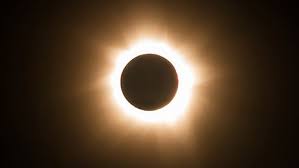
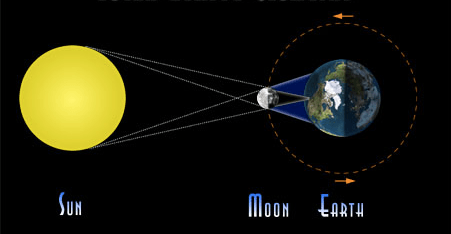
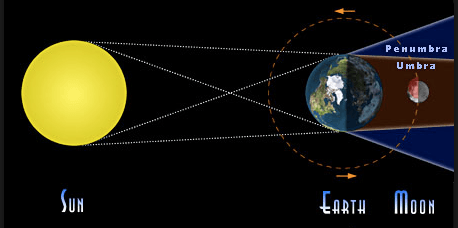

You are less likely to see a total solar eclipse than a total lunar eclipse because...
new moon phases occur less often than full moon phases
only people on the daytime side of Earth can see a solar eclipse
the moon's shadow covers all of Earth during a solar eclipse
the moon's umbra only covers a small area on Earth's surface

