

wayground logo

Free Printable Worksheets

Font size

S
M
L
XL
Worksheets

Standard 2

Total questions: 90

Worksheet time: 52mins

Name
Class
Date
1.

Based on this poster, which is an accurate statement?

a)

Immigrants were encouraged to learn and to speak English

b)

Granite City had laws prohibiting immigrants from moving there

c)

The people in the poster were native-born Americans

d)

Granite City encourged diversity in its immigrant population

2.

The Homestead Act (1862) promoted the development of western lands by -

a)

creating a system of dams for crop irrigation

b)

providing land for $10 to settlers

c)

removing all restrictions on immigration

d)

Moving Native American Indians to reservations

3.

How did passage of the Dawes Act affect Native American Indians?

a)

It supported their existing cultural traditions

b)

It started a series of Indian Wars on the Great Plains

c)

It attempted to assimilate them into mainstream American culture

d)

It forced their removal from areas east of the Mississippi River

4.

Which was a successful example of "Americanization"?

a)

The Dawes Act led to Americanization of the Indians.

b)

The Homestead Act made federal land available to settlers.

c)

The children of New Immigrants learned English in public schools.

d)

Congress prohibited the immigration of Chinese workers.

5.

What is happening in this photo?

a)

The Civil War is being ended

b)

Transcontinental railroad is being finished

c)

Transcontinental railroad is being started

6.

Related to what we have been studying in class what is a Reservation?

a)

To hold or request a spot or item

b)

land set aside for Native American Tribes.

c)

to pause or hesitate about something

d)

To maintain or keep in good condition

7.

How did westward expansion impact Native Americans?

a)

Native Americans and white settlers lived side by side as equals

b)

it destroyed the buffalo and the Native American way of life

c)

Native Americans acquired more lan

d)

it helped the Native Americans prosper

8.

3) What were the effects of the Transcontinental Railroad? (Pick TWO)

a)

It allowed for the rise of the steel industry

b)

It connected the United States by rail from east coast to west coast

c)

It lead to increased the population in western cities

d)

The population in urban centers grew drastically

9.
This act was intended to help Native Americans acquire private land in the reservations, but instead they sold them. It was also intended to have Native Americans assimilate.
a)
Homestead Act
b)
Dawes Act
c)
Interstate Commerce Act
d)
Sherman Anti-Trust
10.
Learning to dress, speak, and act like other Americans is knows as 
a)
Urbanization
b)
Americanization/Assimilation
c)
Immigration
d)
Nativism
11.

Which resource primarily drew pioneers to California?

a)

Wheat

b)

Gold

c)

Corn

d)

Copper

12.

Which of the following was the main reason for the rapid settlement of the Great Plains during the late 1800s?

a)

Native Americans sold most of their tribal lands directly to railroad companies

b)

Speculators bought large parcels of land and then built factory towns to attract new immigrants

c)

Congress passed a law requiring all public lands to be sold at auction

d)

Congress passed a law allowing people to claim public land and convert it to private property through homesteading

13.

Which of the following best summarizes the image depicted?

a)

Native Americans gained new lands

b)

Americans moved west for new opportunities

c)

Americans moved from rural to urban areas

d)

Immigrants moved west to work in factories

14.

Which of the following contributed most to increased settlement of the Great Plains?

a)

The availability of buffalo

b)

The discovery of precious metals

c)

A decrease in agricultural production

d)

A series of federal land grants

15.

-Receive 160 Acres of Land

-Had to live on the land for 5 years

-After 5 years the owner received the land for free


The above characteristics apply to which of the following?

a)

Homestead Act

b)

Dawes Act

c)

Sherman Anti-Trust Act

d)

Morrill Act

16.
A positive incentive for migrating
a)
Push factor
b)
Pull factor
17.

The meat packing industry grew because?

a)

barbed wire, millions of cattle, cities wanted beef

b)

westward expansion, british cattle, vegetarians

c)

demand for fish, alaska becoming a state, pancakes

18.

What does this painting represent?

a)

Pacific Expansion

b)

Manifest Destiny

c)

Heavenly Mandate

d)

The 19th Amendment

19.

Railroads caused what to happen in western cities?

a)

the native americans assimilated

b)

the population went up

c)

the cattle got rounded up

d)

cows got more expensive

20.

Farmers adapted to life on the plains by?

a)

making sod homes of grass and mud

b)

building factories

c)

making a new type of cow

d)

finding cheaper workers

21.

I. Many Americans went westward believing in Manifest Destiny, the idea that-

a)

All Americans had an equal chance making a fortune out west

b)

The United States was destined by God to expand westward

c)

That all who immigrated to the US should be treated equally

d)

That Native Americans could be peacefully assimilated

22.

2) How did the U.S. try and assimilate the Native Americans and immigrants?

a)

They educated the groups in schools before allowing them into the country

b)

They forced them to speak English and adopt American customs

c)

They kidnapped children of these groups and educated them in foster homes

d)

They did not try and assimilate the groups

23.

3) What was the economic impact of the Transcontinental railroad?

a)

It made shipping farmer's goods and traveling across the country cheaper

b)

Conflicts with the Native Americans increased

c)

The US government made millions from the Homestead Act

d)

It caused a decrease in taxes on big business
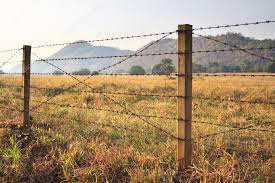
24.

Identify the invention in the image. This invention helped to close off the open range making cattle drives dangerous and contributing to the Open Range War.

a)

Barbed Wire

b)

Wooden Fence

c)

Metal Fence

d)

Wooden Post

25.
connected east and west, caused economic boom
a)
Immigration
b)
Transcontinental Railroad
c)
Gilded Age
d)
Urbanization
26.
How did the cowboys move large heard of cattle from Texas to the East?
a)
By the Transcontinental Railroad
b)
By  the Pony Express
c)
By a Cattle Drive
27.
What was the name of the African American pioneers who moved to the Great Plains after the Civil War?
a)
The Reservationists
b)
The Exodusters
c)
The Sodbusters
d)
The Pioneers
28.
__________________ was land set aside for Native Americans.
a)
sodbuster
b)
vaquero
c)
reservation
d)
granger
29.
The Indian Removal Act of 1830 forced Indians to move
a)
to Oklahoma
b)
to Florida
c)
to the Louisiana Purchase
d)
to Canada
30.
What was the true purpose of the Indian Boarding Schools?
a)
The teach Native Americans how to farm and work in a factory
b)
To "civilize" Native Americans
c)
To  give willing Native Americans a chance to learn English
d)
To teach Native Americans how to preserve their cultural heritage
31.
Which best describes the living conditions of most immigrants during the Industrial Revolution? 
a)
Most immigrants lived in rural areas with few other people around
b)
Most immigrants lived in cities in extremely crowded buildings
c)
Most immigrants lived in single-family homes
d)
Most immigrants lived in homeless shelters year-round
32.
Which best describes the working conditions of most immigrants during the Industrial Revolution? 
a)
Most immigrants worked long hours in low-paying industrial jobs
b)
Most immigrants worked as farmers in rural areas
c)
Most immigrants worked as bookkeepers or other professional jobs
d)
Most immigrants worked as tailors or other skilled jobs
33.
How did the Industrial Revolution affect the cities?
a)
Made the crime rate decrease
b)
Led to an increase in farm workers
c)
Make the cities cleaner and safer
d)
Led to an increase in population in the cities
34.
Wal-Mart is opening in the small town of Vado, New Mexico. This is creating over 400 jobs in the area. Population is quickly increasing. This is an example of...
a)
Urbanization
b)
Inflation
c)
Urban Center
d)
Influence
35.
Which best describes the working conditions of most immigrants during the Industrial Revolution? 
a)
Most immigrants worked long hours in low-paying industrial jobs
b)
Most immigrants worked as farmers in rural areas
c)
Most immigrants worked as bookkeepers or other professional jobs
d)
Most immigrants worked as tailors or other skilled jobs
36.
Chinese Exclusion Act:
a)
Allowed more immigrants
b)
Banned freedom of speech
c)
Restricted working conditions
d)
Prevented people from immigrating to the U.S.
37.

How were cities built to conserve space?

a)

Skyscrapers were built

b)

Tenements apartments were built

c)

Buildings were built in unique shapes

d)

All of these happened

38.
Which term describes the mixture of cultures we have here in the United States?
a)
Nativism
b)
Melting Pot
c)
Steerage
d)
Open Border
39.
Which continent did the U.S. government first close off immigration from?
a)
Europe
b)
Asia
c)
Antarctica
d)
Africa
40.
The growth of cities is:
a)
Immigration
b)
Urbanization
c)
Depersonalization
d)
Materialization
41.
Which of the following is not a pull factor?
a)
Freedoms
b)
Job opportunities
c)
New inventions
d)
War in home country
42.
Cities grew because of all these except:
a)
Immgration
b)
Jobs
c)
Railroads
d)
Farming
43.

All of the following characterized America's large cities in the last decades of the 19th century EXCEPT:

a)

outbreaks of deadly diseases such as cholera and tuberculosis

b)

transportation limited to the central business district

c)

crowded tenements

d)

poor treatment of water, sewage, and waste

44.

The Social Gospel Movement is most accurately described as (?)

a)

The reform wing of the Republican party

b)

Socialist reformer attempting to create a welfare state

c)

Protestant clergymen concerned with the problems of the urban poor

d)

A revivalist movement that swept the mining towns of the West.

e)

A movement among intellectuals in the new universities advocating equal rights for women.

45.

Which of the following was NOT a pull factor for immigrants coming to America?

a)

Political freedom

b)

Factory jobs from industrialization

c)

Mechanized farming jobs

d)

Religious freedom

46.

Which of the following was one of the countries of origin that new immigrants came from?

a)

England

b)

Italian

c)

Ireland

d)

Germany

47.

Who was William "Boss" Twead?

a)

A political figure who also owned many factories that helped immigrants get jobs.

b)

A social gospel reformer who advocated for political and social reform.

c)

A factory owner who eventually tried running for President, but lost against Teddy Roosevelt

d)

A democrat in New York City that was considered a "political boss"

48.

What was an example of technology that supported urbanization in the 19th century in many cities?

a)

The Telegraph

b)

Electric Street-Cars

c)

The automobile

d)

The Blast Furnace

49.

Jacob Riis was trying to uncover injustices in what type of facilities?

a)

Urban homes in cities

b)

The meat-packing industry

c)

Churches and misuse of religious money

d)

Dangerous work environments

50.

What position gave Jacob Riis the ability to uncover the conditions of these homes?

a)

Paparazzi Reporter

b)

Anchorman

c)

Police Reporter

d)

Editor for a Newspaper

51.

What was the legislation enacted because of How the Other Half Lives?

a)

The Food and Drug Act

b)

NY State Tenement Housing Act

c)

18th Amendment

d)

17th Amendment

52.

What was a common characteristic of the Pullman Strike, Haymarket Affair, and Homestead Strike?

a)

They were defeats for owners

b)

They were victories for unions

c)

They became violent

d)

They were victories for workers

53.

Captains of Industry valued competition in a free market because they believed only the strongest companies would survive and result in better goods and services. This is an example of

a)

Unionism

b)

Control Market

c)

Socialism

d)

Social Darwinism

54.

What are companies who dominate a specific industry (steel, oil, etc.) called?

a)

Monopolies

b)

Local Business

c)

Corporations

d)

Competitors

55.

All of the following are TRUE about factory workers in the late 1800s except

a)

they worked 12 hour shifts for 6 days a week

b)

they were okay with and tolerated poor working conditions

c)

they had to rely on their employers to increase wages

d)

they worked in dangerous conditions

56.

Why did immigrants move to cities?

a)

They needed a car in rural America

b)

Housing had a lot of space and was comfortable

c)

More jobs and lower cost of living

d)

They wanted to experience discrimination

57.

What did Union workers do when negotiations with their employers failed?

a)

They set factories on fire

b)

They went on strike

c)

They used collective bargaining

d)

They gave up and went home

58.
The sometimes unethical business practices of some industrialists led them to be given this nickname
a)
Captains of Industry
b)
Tycoons
c)
Fat Cats
d)
Robber Barons
59.
What is a Laissez-Faire economy?
a)
An economy that is completely controlled by the U.S. government
b)
An economy that is partially controlled by the U.S. government
c)
An economy that works best when there is very little involvement by the U.S. government
d)
An economy that is controlled by another country
60.
allows products to be mass produced generally allowing the price to decrease
a)
assembly line
b)
push factor
c)
pull factor
d)
sharecropping
61.
Companies who control all the different phases of the business to control profits & maximize efficiency use the method called
a)
Horizontal Integration
b)
Vertical Integration
c)
Big Business Model
d)
Maximum Profit Idea
62.
Companies who specialize in one area of business and  buy out competition use the method of organization called
a)
Horizontal Integration
b)
Vertical Integration
c)
Bug Business Model
d)
Maximum Profit Idea
63.
The man responsible for founding the biggest steel corporation in the US during the period 1865-1900 was
a)
JP Morgan
b)
Andrew Carnegie
c)
John D. Rockefeller
d)
Cornelius Vanderbilt
64.
An effort to improve society through donations of money
a)
Philanthropy
b)
Gospel of Wealth
c)
Laissez-faire
d)
Protective Tariff
65.
The biggest oil company in the US during the period 1865-1900 was created by 
a)
JP Morgan
b)
Andrew Carnegie
c)
John D. Rockefeller
d)
Cornelius Vanderbilt
66.

The "Bread and Butter" for Unions during Industrialization was what?

a)

Promoting violent strikes against companies all of the time

b)

Improving wages and working conditions

c)

Demand that the U.S. adhere to and implement Communism

d)

All of the above

67.

Why did immigrants tend to vote according to the demands of political machine bosses in urban America?

a)

Bosses provided jobs and services

b)

Bosses threatened deportation

c)

Bosses offered top management positions

d)

Bosses would target family members

68.
1906- Wrote The Jungle which exposed the conditions in the U.S. meat packing industry. (Helped pass the Pure Food and Drug Act) 
a)
Upton Sinclair 
b)
Lincoln Steffens 
c)
Jacob Riis 
d)
Frank Norris 
69.
Journalists who exposed practices of monopolies and big business
a)
Gump Mushers
b)
Muckrakers
c)
Scalawags
d)
Dirt Diggers
70.
Banning the sale of alcohol was the chief goal of 
a)
National Women's Suffrage Association
b)
Women’s Christian Temperance Union
c)
Bull Moose Party
d)
Good Government League
71.

Meat Inspection Act and the Pure Food and Drug Act were created in part because

a)

of the book, The Jungle.

b)

suffragist were protesting the meat packing industry.

c)

the 18th Amendment

d)

Civil Service Act.

72.
Men or women that fought for woman’s suffrage
a)
Suffragist
b)
Muckraker
c)
Klan Member
d)
People
73.
Law that requires company to properly label food and medicines
a)
Medicine Man
b)
Food Amendment
c)
Label Lemons
d)
Pure Food and Drug Act
74.
Loosely linking their reform efforts under a single label, Progressive, was a belief that changes in society were badly needed and that government was the proper agency for correcting social and economic ills
a)
True
b)
False
75.
New York passing a law that required buildings to provide at least one toilet for every two apartments is and example of what?
a)
Political Reforms
b)
Suffrage Movement
c)
Social Welfare Progressivism
d)
Muckrakers
76.
What was the main goal of the women’s rights movement during the Progressive Era?
a)
starting a system of women’s colleges
b)
winning elections for public office
c)
securing the right to vote
d)
separating men and women in prison
77.
Which president supported progressive ideas such as conservation and the regulation of public health? 
a)
William McKinley
b)
Teddy Roosevelt
c)
Calvin Coolidge
d)
Herbert Hoover
78.

Main goal of most muckraking journalists?

a)

Gain fame through articles of high popular interest

b)

Expose social and economic problems in need of political attention

c)

Increase public awareness of America's great potential

d)

End corrupt relationships between politicians and big business

79.
Which received LEAST attention among Progressive policymakers?
a)
Food and Drug purity
b)
Racial equality
c)
Fair labor practices
d)
Antitrust reforms
80.
One way in which the Chinese Exclusion Act, the Gentlemen’s Agreement, and the National Origins Act were similar is that all were expressions of
a)
imperialism 
b)
nativism 
c)
militarism 
d)
Manifest Destiny 
81.

Nativists are against...

a)

Corruption

b)

African Americans

c)

Railroads

d)

Immigrants

82.
Henry Ford’s main contribution to the US industry was the idea of the assembly line and __________.
a)
automobile
b)
mass production
c)
sports car
d)
transportation
83.
The temperance movement warned people of the ____.
a)
dangers of alcohol
b)
evils of slavery
c)
weakness of reform
d)
need for education
84.
Which factor most contributed to the living conditions faced by many immigrants during the late 1800s and early 1900s?
a)
new measures for containing the spread of diseases
b)
widespread migration to the suburbs by immigrants
c)
increased social services for qualified individuals and families
d)
lack of government regulations and standards for public housing
85.
Which statement describes how government officials responded to the arrival of Asian immigrants in the United States?
a)
They passed restrictions that blocked the settlement of additional Asian Americans.
b)
They implemented policies to improve Asian Americans’ access to public education.
c)
They encouraged Asian Americans to retain their cultural identities.
d)
They supported laws to guarantee Asian Americans' civil rights.
86.
Which factor contributed most to the spread of Progressive ideas during the late 1800s and early 1900s?
a)
technological advancements in communication and transportation
b)
imperialist policies focused on a strong navy and acquiring overseas territories
c)
greater political engagement by women, minorities, and young people
d)
increasing public awareness of political corruption and business abuses
87.
National parks were established for the purpose of
a)
protecting natural wonders from human destruction
b)
preventing the pollution of critical forests and waterways
c)
allowing government management of energy resources
d)
producing hydroelectric power and controlling flooding in remote regions
88.
Which condition most directly led to the passage of the Sherman Antitrust act?
a)
The establishment of business combinations that dominated industry
b)
The popularity of the Socialist Party of the United States
c)
The successful efforts of union leaders to organize American workers
d)
The high unemployment rate following an economic crisis
89.
This gave women the right to vote.
a)
16th Amendment
b)
17th Amendment
c)
18th Amendment
d)
19th Amendment
90.
Campaign to stop abuse in the homes by urging people and the government to stop alcoholism.
a)
Women Suffrage
b)
Temperance Movement
c)
Alcoholics Anonymous
d)
Fair Weather Fan
