Worksheets
Newton's Three Laws of Motion - Revision
Total questions: 60
Worksheet time: 1hrs 1mins

A force is a push or a pull on an object that results from its interaction with another object.
True
False

Only large objects with mass have gravity.
True
False
The combined force of all forces acting on an object is the ___ force.
net
big
bad
use
When the forces acting upon an object are UNBALANCED , the object will ____
stay still
move
bounce
fly
Acceleration is a change in _____
velocity
cars
school
me
Newton's second law is applied as the formula _____
Force = Mass X Acceleration
Speed = distance / time
a + b = c
huh?
The SI units for force are...
Kilograms
Newtons
Meters per second
Pounds
Which of the following explains the difference between speed and velocity?
One has motion, and the other does not.
One has direction, and the other does not.
One involves time, and the other does not.
One involves acceleration, and the other does not.
Acceleration is caused by a force acting on a mass.
Newton’s first law of motion
Newton’s second law of motion
Newton’s third law of motion
For a force on an object there is an equal and opposite force.
Newton’s first law of motion
Newton’s second law of motion
Newton’s third law of motion
A(n) __________ is a push or pull.
newton
acceleration
force
momentum
____ is the rubbing force that acts against motion between two touching surfaces.
Acceleration
Normal force
Momentum
Friction
Forces always act in equal and opposite pairs.
Newton's 1st Law
Newton's 3rd Law

If there is a big mass, it would need a stronger force to accelerate it. Which law does this describe?
Newton's 1st Law
Newton's 2nd Law
Newton's 3rd Law
In a football game, two players tackle each other so hard that they both fly in opposite directions after they hit each other. What law of motion is this an example of?
Newton's 2nd Law
Newton's 3rd Law

A student leaves a pencil on a desk and it stays there until I pick it up.
1st Law
2nd Law
What is Newton's First Law known as? The Law of
Inertia
Mass
Gravity
A sports car speeds up much faster than a dump truck when a traffic light turns from red to green. Which law is this?
Law 1
Law 2
Law 3
A rocket pushes burning gases DOWN which causes the rocket to launch UP. Which law is this?
Law 1
Law 2
Law 3
Force is related to mass and acceleration. Which law is this?
Law 1
Law 2
Law 3
What is Newton's First Law of Motion?
F = m x a
Every action has an equal an opposite reaction
An object at rests stays, an object in motion stays in motion
Friction
What is Newton's Third Law of Motion?
Object in motion stays in motion and an object at rest stays at rest unless acted on by an unbalanced force
Force = m x a
For every action there is an equal and opposite reaction
What is the standard unit force is measured in?
Newton
Gram
Pound
Meter
According to Newton's Second Law, if you increase the force applied to an object:
It accelerates more
It doesn't move
You get more inertia
It decelerates

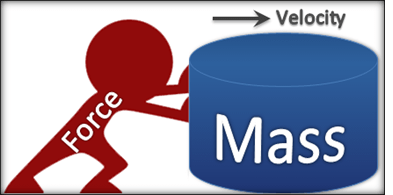
What Newton's law does this picture represent?
Newton's 2nd law
Newton's 1st law
Newton's 3rd law
Newton's 5th law
1000 kg is the -----
Force
Mass
Acceleration
Weight
20 N is the ----
Mass
Force
Acceleration
Weight
45 meters per second squared is the--
Acceleration
Mass
Weight
Force

If an object is stationary (not moving) the forces acting upon it are---
Balanced
Unbalanced
Weak
Hulk Smash?
An object at rest will _____ if not outside forces are applied.
Stay at rest
Decrease mass
Increase velocity
Which one needs a greater net force to move, a kilogram of feathers or a kilogram of iron?
feathers
iron
same
depends on their friction
After a cannonball is fired into frictionless space, the amount of force needed to keep it going equals
twice the force with which it was fired
the same amount of force with which it was fired
1/2 the force with which it was fired
zero, since no force is required to keep it moving.
The acceleration produced by a net force on an object is
inversely proportional to the mass of the object.
directly proportional to the magnitude of the net force.
in the same direction as the net force.
all of the above
A 10-kg brick and a 1-kg book are dropped in a vacuum. The force of gravity on the 10-kg brick is
10 times as much as the force on the 1-kg book
zero.
the same as the force on the 1-kg book.
none of the above
A book weighs 4 N. When held at rest in your hands, the net force on the book is
0 N.
0.4 N.
4 N.
39 N.
A 20 kg bike accelerates at 10 m/s2. what was the net force
25 Newtons
20 Newtons
200 Newtons
10 Newtons
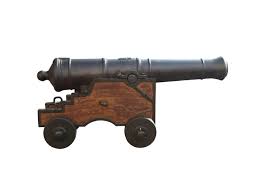
When a cannon fires a cannonball we observe Newton's third law. Which force is the reaction force?
The cannon moving forward
The cannonball moving forward
The cannon moving backward
The cannonball moving backward

Which one of Newton’s Laws of Motion best explains why the dishes do not move when the table cloth is removed?
Newton's 1st Law
Newton's 2nd Law
Newton's 3rd Law
Newton's Law of Biology
The tendency of an object to stay in motion or at rest is called
velocity
acceleration
speed
inertia
What is the difference between mass and weight?
mass is how much matter is in an object, and weight is the gravitational pull on that object
mass and weight are the same
weight affects how much mass is in an object
weight is determined by how many atoms make up an object

What is the net force?
5000 N right
4000 N right
40 N left
4000 N left

Which of the following shows the direction of the friction force?
A
B
C
D
If a baseball and a cannonball are dropped from the same height at the same time, which ball will hit the ground first?
the cannonball
the baseball
The balls land at the same time.
the ball with the larger volume
A crumpled piece of paper hits the ground before a flat sheet of paper because
the acceleration of gravity is greater on the crumpled paper.
there is more air resistance against the flat paper.
the crumpled paper is more massive
the crumpled paper is less massive.
How does Newton’s third law explain how a rocket takes off?
The rocket’s acceleration is positive, while the gasses acceleration is negative but the direction is the same.
The rocket is at rest until ignition.
The hot gasses move in one direction, while the rocket moves in the opposite direction but with equal force.
If a force of 26 N is exerted on two balls, one with a mass of 0.52 kg and the other with a mass of 0.78 kg, which ball will have the greater acceleration? (F=ma)
The one with a mass of .78 kg will have the greatest acceleration.
The one with a mass of .52 kg will have the greatest acceleration.
They will both accelerate at the same rate.
A greater applied force is required to move an object with a greater mass than one with a smaller mass.
True
False

An automobile you are riding in suddenly stops, but you continue to go forward.
Newton's
1st
Law of Motion
Newton's
2nd
Law of Motion
Newton's
3rd
Law of Motion
For every action, there is an equal and opposite reaction.
Newton's
1st
Law of Motion
Newton's
2nd
Law of Motion
Newton's
3rd
Law of Motion
F=ma
Newton's
1st
Law of Motion
Newton's
2nd
Law of Motion
Newton's
3rd
Law of Motion

When the force on a car is doubled, the acceleration is doubled.
Newton's
1st
Law of Motion
Newton's
2nd
Law of Motion
Newton's
3rd
Law of Motion

A skater pushes another skater forward, but the one pushing moves backwards.
Newton's
1st
Law of Motion
Newton's
2nd
Law of Motion
Newton's
3rd
Law of Motion

The harder you hit a baseball, the faster it accelerates.
Newton's
1st
Law of Motion
Newton's
2nd
Law of Motion
Newton's
3rd
Law of Motion

You push against a wall and the wall is pushing back on you.
Newton's
1st
Law of Motion
Newton's
2nd
Law of Motion
Newton's
3rd
Law of Motion
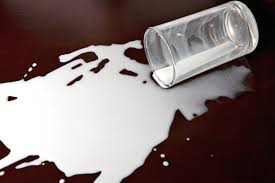
You are carrying a lunch tray when you bump into the edge of a table. Although the tray did not tip, your milk falls off of the front of the tray.
Newton's
1st
Law of Motion
Newton's
2nd
Law of Motion
Newton's
3rd
Law of Motion
When you double the force the acceleration
decreases by 1/2
doubles
triples
decreases by 1/3