
 Worksheets
Cellular ultrastructure
Total questions: 60
Worksheet time: 2hrs 59mins
Unicellular organisms has more than one cell
True
False
Unicellular organisms have a short lifespan due because...
these organisms being very large in size
they do not have cytoplasm to protect the cell from its environment
they only has one available cell to conduct all processes in the cell
The surface-area to volume ratio tells us that...
smaller cells have a higher surface area to volume ratio
larger cells have a higher surface area to volume ratio
Cells > Tissues > ? > System
Nucleus
Proteins
Organs
Prokaryotic cells have no genetic material
True
False
Eukaryotic cells have
membrane bound organelles
a nucleus
cytoplasm
all of the above
Prokaryotic cells can be either unicellular or multi-cellular
True
False
Eukaryotic cells can be unicellular or multicellular
True
False
The following organisms are prokaryotic (select multiple)
plants
bacteria
archaea
fungi
Endosymbiotic theory is a ...
mathematical theory
geographical theory
evolutionary theory
The endosymbiotic theory can be used to explain the presence of which organelles in modern eukaryotes?
nucleus
mitochondrion
golgi apparatus
chloroplasts
Eukaryotes can never be unicellular
True
False
The outer layer of both animal and plants cells is called the...
plasma membrane
cell wall
cytoplasm
Homeostasis refers to the process whereby...
photosynthesis takes place
the internal environment of the cell is kept constant
cell die because of changes in their environments
The Protoplasm refers to
Nucleus + cytosol + organelles
Cytosol + organelles
Nucleus only
Cytoplasm only
The cytoplasm refers to...
The nucleus alone
Nucleus + cytosol + organelles
Cytosol + organelles
Protoplasm
Colloids have 3 properties. Which of the following properties is INCORRECT?
Colloids will separate into their constituents over time
Colloids can imbibe
Colloids can shift between a sol and gel state
The cytoplasm can be regarded as a colloid
Animal cells have a fixed shape to aid in structural support
True
False
All plant cells have chloroplasts
True
False
The plasma membrane is...
extremely permeable
extremely impermeable
semi-permeable
The arrangement of the plasma membrane is...
Hydrophobic tails facing outward, whereas hydrophilic heads are all inside the membrane
Hydrophilic heads all facing outwards, whereas the hydrophobic tails are inside the membrane
Hydrophobic heads all facing outwards, whereas hydrophilic tails are inside of the membrane
Hydrophilic tails facing outwards, with the hydrophobic heads inside of the membrane
The plasma membrane is...
a phospholipid bilayer
a sugary bilayer
nitrogenous bilayer
The fluid mosaic model suggests...
Proteins are fixed in one spot within the membrane
All components in the membrane are constantly moving around
The plasma membrane will eventually become a cell wall
Active transport
Requires diffusion
Requires ATP
Requires osmosis
Requires no ATP
Passive transport relies on molecules moving from...
a high concentration to a higher concentration
a low concentration to a high concentration
a high concentration to a low concentration
similar concentrations
The nuclear envelope refers to the...
Plasma membrane
Double membrane around the nucleus
Single membrane around the nucleus
the nucleoplasm
The nucleolus is...
the site of ribosome production
the site of chromosome production
the powerhouse of the cell
The outer membrane of the nucleus is continuous with...
the golgi apparatus
the mitochondrion
the endoplasmic reticulum
the plasma membrane
Cellular respiration takes place in the...
nucleus
chloroplast
endoplasmic reticulum
mitochondrion
Cellular respiration ends with
glucose
starch
chemical potential energy
kinetic energy
The mitochondrion has two membranes...
a folded outer layer and a smooth inner layer
a folded inner layer and a smooth outer layer
two smooth outer layers
two smooth inner layers
In general, when membranes are folded, this is done to...
increase the cell volume
increase the cell size
change the cell shape
increase the cell's surface area
Where do the enzymes within the mitochondrial matrix come from?
They are pumped into the cell
They are made by the ribosomes within the mitochondrial matrix
They were always there
They only appear once the mitochondria is ready to undergo cellular respiration
What are the membrane bound sacks that are folded to make up the endoplasmic reticulum called?
The matrix
Cisternae
Cristae
Crista
Which statement is false regarding the rough endoplasmic reticulum?
it is continuous with the outer membrane of the nucleus
it is involved in protein production and transport
it has no ribosomes attached to it
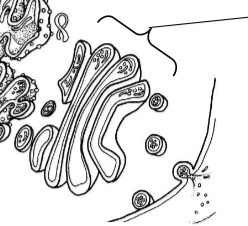
Which organelle is indicated by the bracket?
Mitochondrion
Smooth endoplasmic reticulum
Rough endoplasmic reticulum
Golgi apparatus
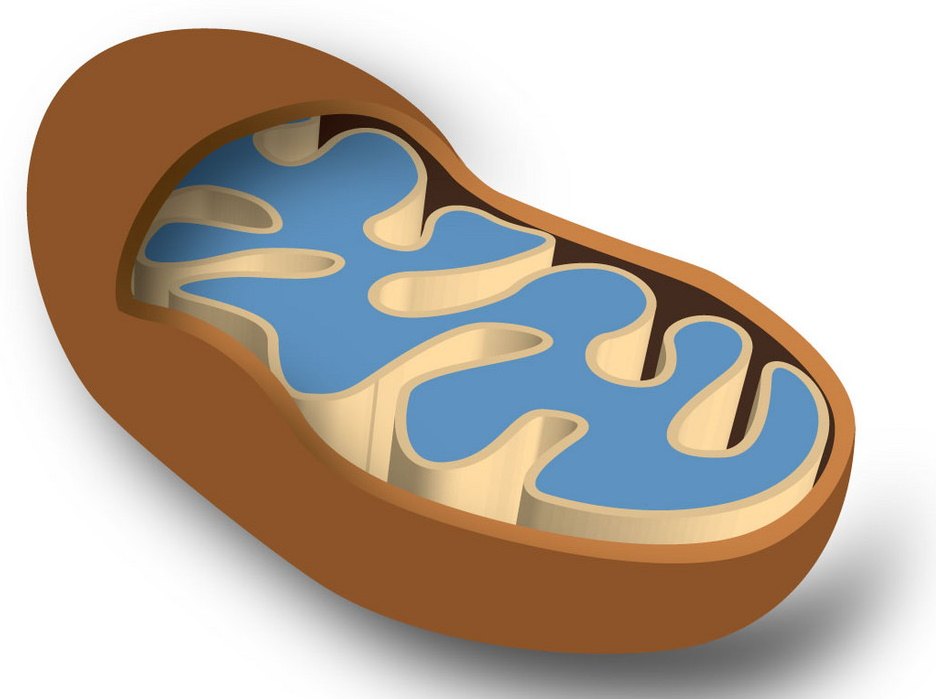
Identify this organelle
Golgi apparatus
Mitochondria
Nucleus
Endoplasmic reticulum
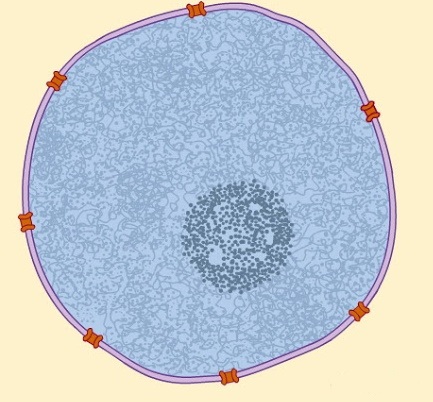
Identify this organelle
Nucleus
Mitochondria
Endoplasmic reticulum
Golgi apparatus
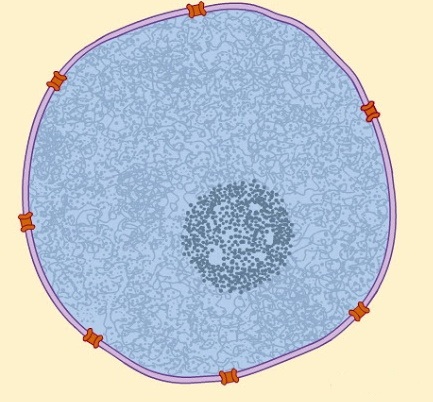
What are the orange structures found around the peripheries of the membrane?
DNA
Ribosomes
Pores
Nucleoplasm
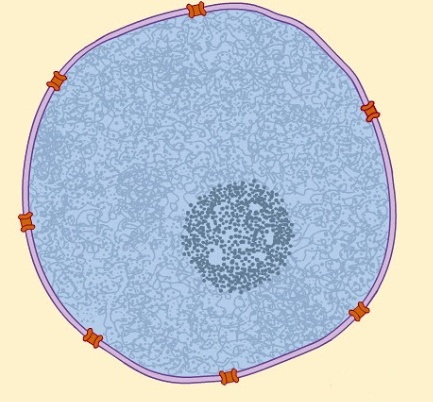
What is the darker spot in the middle of this organelle called?
Mitochondria
Nucleolus
Nucleoplasm
Ribosome
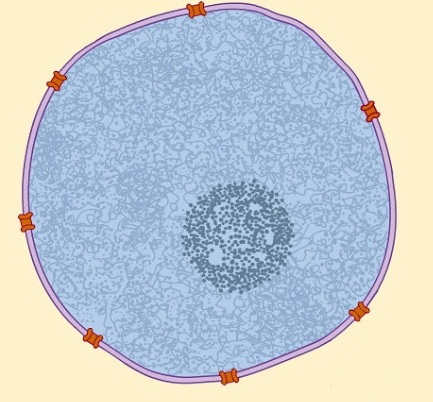
What is the function of the darker spot in the middle of this organelle?
It is the site for ribosome production
It is the site for cellular respiration
It is the site for active transport
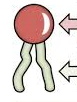
This is a phospholipid. The pink arrow indicates the?
Hydrophobic phosphorous head
Hydrophilic phosphorous head
Hydrophobic lipid tails
Hydrophilic lipid tails
This is a phospholipid. The white arrow indicates the?
Hydrophobic phosphorous head
Hydrophilic phosphorous head
Hydrophobic lipid tails
Hydrophilic lipid tails
Larger and lives longer
Multicellular organisms
Unicellular organisms
The prokaryotic cell has membrane bound organelles
True
False
The endoplasmic reticulum is the __________ of the cell
brain
transport system
powerhouse
The outer membrane of the nuclear envelope is continuous with ...
the golgi apparatus
the mitochondria
the chloroplast
the endoplasmic reticulum
The membrane bound sac folds of the endoplasmic reticulum is called the...
cristae
cisternae
grana
thylakoids
When substances have travelled through the golgi apparatus and are ready to leave, they bud off into a ...
ribosome
vesicle
sac
golgi bubble
The golgi apparatus is associated closely with the...
nucleus
endoplasmic reticulum
nuclear membrane
mitochondria
Lysosomes contain...
sugars
lysine
digestive enzymes
anabolic enzymes
Ribosomes are important for ...
protein synthesis
energy synthesis
starch synthesis
ozygen synthesis
True or false: The organelle known as the centrosome is found in the region known as the centrioles
true
false
Chloroplasts store
photosynthetic pigment
non-photosynthetic pigment
Chromoplasts store
photosynthetic pigment
non-photosynthetic pigment
Large vacuoles are present in plant cells to do what? Pick all that apply
store cell sap
keep the cell turgid
act as the background substance for the cell
gives animal cells it's fixed shape
The middle lamella between plant cells contains ________ to stick the cells together
cellulose
lignin
pectin
starch
True or false: The secondary cell wall is built on the outside of the primary cell wall
true
false
Waterproofing of plant cells is achieved by which substance in some plant cells?
suberin
lignin
cellulose
pectin
The walls of adjacent plant cells are linked with passages through which the cytoplasm stretches called...
pits
middle lamella
plasmodesmata
stomata

