Wayground logo

Free Printable Worksheets

Font size

S
M
L
XL
Worksheets

DPM Review #3 - 7th

Total questions: 145

Worksheet time: 4hrs 37mins

Name
Class
Date
1.
The purpose of selective breeding is to 
a)
Get bigger animals
b)
get smaller animals
c)
create animals with desirable traits
d)
create animals with bad traits
2.
All of the following statements are reasons for selective breeding except:
a)
To produce offspring with desirable characteristics
b)
Farmers increase their profit by improving crops
c)
To improve the quality of food products
d)
To increase migration patterns
3.
Where humans have bred organisms together based on traits we like.
a)
Evolution
b)
Natural Selection
c)
Extinction 
d)
Artificial Selection
4.
The evolution of dogs from wolves is due to:
a)
Natural Selection
b)
Sexual Selection
c)
Artificial Selection
d)
Vestigial Structures
5.
Which is another term for selective breeding?
a)
Artificial selection
b)
Natural Selection
c)
Intelligent selection
6.
A farmer has bred his pineapple plants from the sweetest pineapples from his last harvest to get even sweeter pineapple plants. What is this an example of?
a)
Selective breeding
b)
Natural selection
c)
Extinction
d)
Mutagenesis
7.
Evidence shows that the wolf is the ancestor to all of the breeds of dogs shown below. How did this variation arise in a relatively short period of time?
a)
A.  Genetic manipulation
b)
Natural selection
c)
Random chance
d)
Selective breeding
8.
Problems with selective breeding include
a)
Better animals
b)
More Meat
c)
Animals can have bad health problems
d)
more diversity
9.
It is very common for yellow labs to have bad hips. This is because owners want purebred yellow labs who are good hunting dogs.  This is an example of 
a)
Natural Selection
b)
Selective breeding
c)
Mitosis
d)
Fossil Record
10.

The figure below shows four different species of finches found on the Galapagos Islands. Each of these finches evolved from a common ancestor through natural selection. Which of these finches is best suited to pick small insects off a cactus?

a)
b)
c)
d)
11.

A green rat snake that lives in the grass and a brown rat snake that lives in the desert is a form of _______________.

a)

Human Genetic Modification

b)

Selective Breeding

c)

Natural Selection

d)

Artificial Breeding

12.

Which is not a result of selective breeding?

a)

Large seedless watermelons that consumer demand

b)

Bright oranges that are all about the same size

c)

An insect that matches the color of the environment

d)

A dog that has been bred to have short hair

13.

Which of the following best represents inbreeding?

a)

removing DNA from an organism

b)

changing traits based on environment

c)

crossing 2 similiar animals

d)

crossing 2 different animals

14.
Use the following table to answer the next question. A family visited a dog breeder and requested a puppy that had short fur and was friendly and lovable.  Which dogs should the breeder select to be the parents of the requested puppy?
a)
1 and 2
b)
2 and 3
c)
1 and 4
d)
2 and 4
15.
Scientists genetically engineer corn to be immune to corn diseases. This is BENEFICIAL because
a)
This causes corn to be less likely to reproduce
b)
This causes corn to be less likely to survive
c)
This causes corn to be smaller
d)
This allows increased production of corn
16.
A clone can be BEST thought of as a(n)  _____ created in the lab. 
a)
identical twin
b)
GMO
c)
science fiction experiment
17.

Problems with animals that are selectively bred include:

a)

Being more disease resistant

b)

Producing more meat

c)

Being more likely to suffer from genetic disease

d)

Being more genetically diverse

18.

What is Inbreeding

a)

When two closely related animals are bred together

b)

When two none related animals are bred together

c)

When animals are allowed to chose their own mates

d)

When humans choose which animals will mate together

19.
1.  Modern horses developed their traits through natural selection.  What occurs during the process of natural selection?
a)
only the fittest organisms survive and reproduce
b)
organisms choose mates from other species
c)
breeders cross organisms with desirable traits.
d)
organisms remain exactly the same over many generations.
20.
Which of these would be considered an adaptation of an animal that lives in the snowy tundra?
a)
a thick coat
b)
green colored skin
c)
large, flat leaves
d)
webbed feet
21.
In which scenario could natural selection occur?
a)
a wolf with a heavy fur coat survives harsh winters better than other wolves and passes the trait on
b)
a woodpecker learnes how to eat a new type of beetle.
c)
a shark receives a neutral mutation
d)
a mother passes a deadly mutation on to her child.
22.
In which scenario could natural selection occur?
a)
a wolf with a heavy fur coat survives harsh winters better than other wolves and passes the trait on
b)
a woodpecker learnes how to eat a new type of beetle.
c)
a shark receives a neutral mutation
d)
a mother passes a deadly mutation on to her child.
23.
A spider may produce hundreds of eggs, only a few  of which may survive.  This is an example of 
a)
overproduction
b)
specialization
c)
genetic change
d)
division
24.
Which of the following is an example of selective breeding?
a)
populations of lizards that have a certain trait become more numerous after a change in climate
b)
a population of insects develops resistance to a pesticide after farmers repeatedly use the same pesticide to kill the insects
c)
a population of bacteria develops resistance to an antibiotic
d)
farmers allow only sheep that produces the best wool to breed.
25.

Which statement explains how a population’s genetic variability and diversity can be affected by selective breeding?

a)

Genetic variability and diversity decrease because only select individuals are bred.

b)

Genetic variability and diversity increase because only select individuals are bred.

c)

Genetic variability increases and diversity decreases because only select individuals are bred.

d)

Genetic variability decreases and diversity increases because only select individuals are bred.

26.

What word describes a trait that helps an organism survive in its environment?

a)

natural selection

b)

mutation

c)

camouflage

d)

adaptation

27.
The differences among a species, like different bird beaks, are called
a)
genes.
b)
variations.
c)
traits.
d)
theories.
28.

Selective breeding is where ___________ decides which traits should be passed on

a)

Nature

b)

A human

c)

Mrs. Yezak

d)

The illuminati

29.

When organisms have advantageous traits that help them survive and reproduce this is...

a)

Natural Selection

b)

Selective Breeding

30.

All these birds are finches but they have developed different beaks due to the type of foods available to them, this is because of

a)

Natural Selection

b)

Selective Breeding

31.
Do organisms "decide" to evolve and change?
a)
Yes, they know they need to change to survive 
b)
No, they change because of natural selection
32.
This sequence of pictures of a population of mice in the wild BEST represents _______. 
a)
natural selection
b)
selective breeding 
c)
inbreeding (selective breeding that crosses two organisms with similar genetic traits. )
d)
asexual reproduction
33.
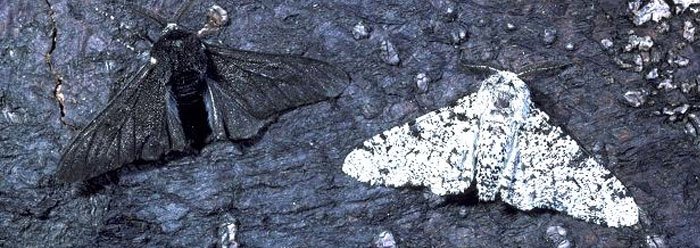
The trees these moths used to live on were white, but have been covered in soot from coal factories. Which moth will be more successful in this environment?
a)
Dark moth
b)
Light moth
c)
Both will be equally successful
d)
Neither will be successful
34.
The trees these moths used to live on were white, but have been covered in soot from coal factories. Which moth will be more successful in this environment?
a)
Dark moth
b)
Light moth
c)
Both will be equally successful
d)
Neither will be successful
35.
Change over time
a)
Natural Selection
b)
Selective Breeding
c)
Homeostasis
d)
Evolution
36.

What is one of the processes involved in selective breeding?

a)

allowing organisms to reproduce without interference

b)

choosing individuals with desirable characteristics to be parents of the next generation

37.

A specific characteristic that varies from one individual to another is?

a)

an allele

b)

a gene

c)

a trait

d)

a chromosome

38.

What must all species do in order to survive?

a)

change its behavior

b)

change its environment

c)

change its location

d)

adapt to changes in its environment

39.

The passing of traits from parent to offspring is called?

a)

reproduction

b)

diversity

c)

heredity

d)

chromosome

40.

A certain species of owl lives only in old growth forests. If the trees where these owls lives are removed by loggers what will most likely happen to the owl population?

a)

it will decrease to the point of extinction

b)

it will hibernate until the trees grow back

c)

it will increase in number

d)

it will evolve into a new species

41.
Where are genes located within the cell?
a)
Chromosomes
b)
Mitochondria
c)
Ribosomes
d)
tRNA
42.
What carries the code that tells a plant what color it will be or how it will taste?
a)
Genes
b)
Stem
c)
Leaves
d)
Proteins
43.
Mom is to parent as daughter is to
a)
Offspring
b)
Husband
c)
Girl
d)
Grandchild
44.
What does GMO stand for?
a)
Genetically Modified Organism
b)
Genetically Made Organelles
c)
Genes Made Organically
d)
Get Money, Oh!
45.
A scientist inserts a gene into an apple that makes it resistant to drought from a bacteria. What is this an example of?
a)
Genetic engineering
b)
Natural selection
c)
Mutagenesis
d)
Genetic screening
46.
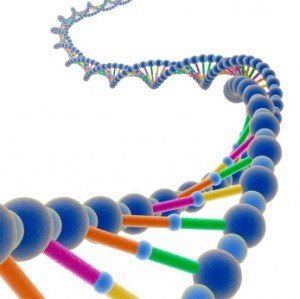
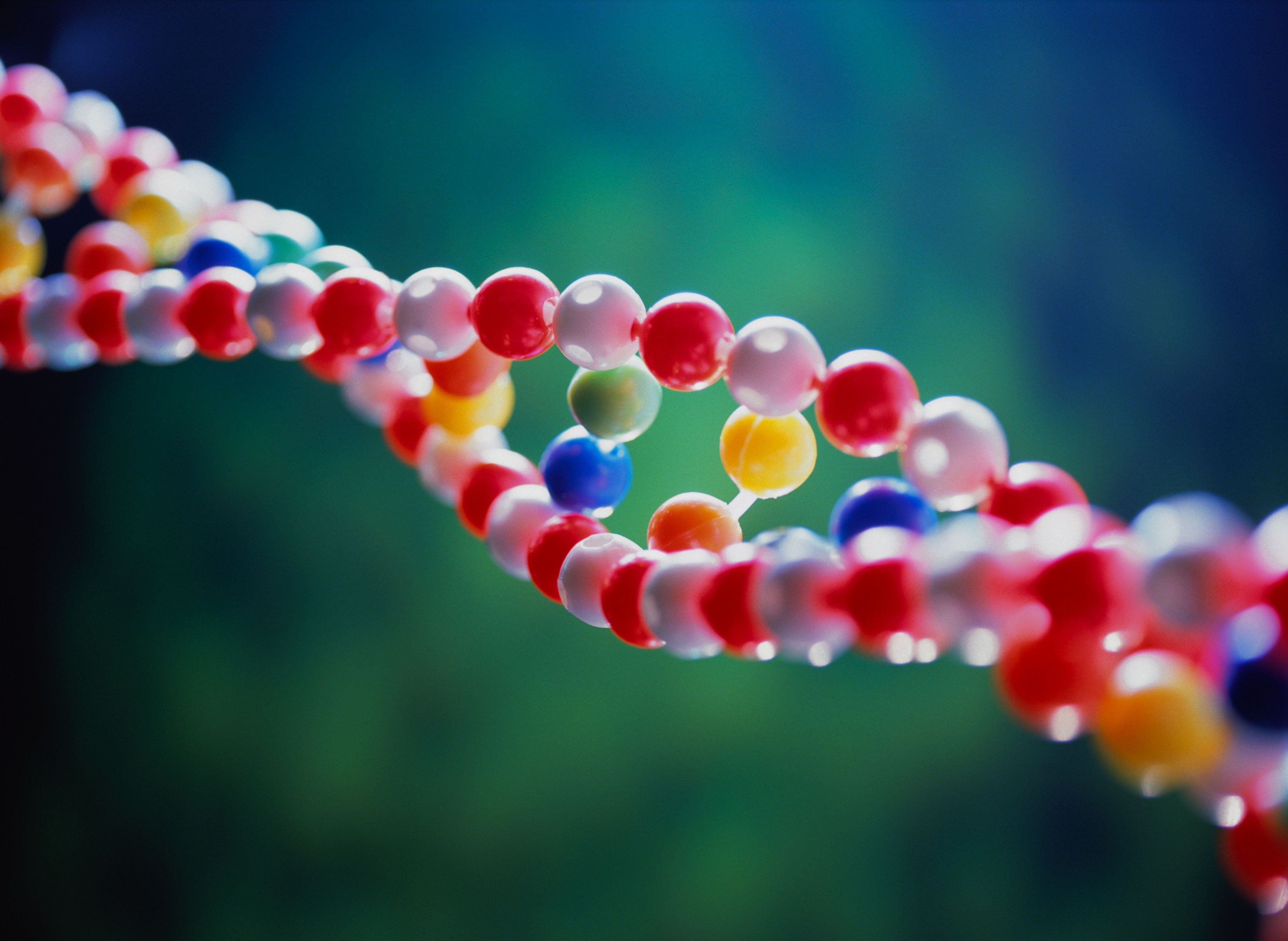
Which of the following best describes a DNA molecule?
a)
double helix
b)
contains ribose
c)
made of amino acids
d)
contains Uracil
47.
Which organelle is DNA usually found in?
a)
cell membrane
b)
vacuole
c)
chloroplast
d)
nucleus
48.
Why is DNA important?
a)
it is very small and very complicated
b)
it's in everything
c)
it serves as the blueprint for traits of all living things
d)
because we eat it every day for energy
49.
1.  Darwin observed 13 species of finches on the Galapagos Islands.  What did Darwin conclude about the finches?
a)
a.  They evolved from a common ancestor.
b)
They all came from different continents.
c)
they evolved from 13 different types of birds.
d)
they developed from other types of organisms.
50.
1.  Which statement best describes the process of evolution?
a)
Populations can survive in different locations.
b)
Populations grow when resources are plentiful
c)
Conditions limit the number of species on earth.
d)
The characteristics of a species can change over time.
51.
1.  Why did the population of peppered moths in England change from light to dark after the Industrial Revolution?
a)
Light moths were killed by soot.
b)
Dark moths were produces by industrial processes.
c)
The birds that ate the dark moths were killed by the soot.
d)
Light moths were more obvious against the soot-stained trees.
52.
1.  Which is a condition required for natural selection to occur in birds?
a)
Humans must interfere with the breeding of organisms.
b)
Species must produce more offspring than can survive.
c)
Resources must be unlimited in the natural environments.
d)
All organisms of the same species must have the same genetic material.
53.
 Which of the following correctly lists the four essential parts of natural selection?
a)
selection; underproduction; homeostatsis; fossil records
b)
underproduction; genetic variation; extinction; adaptation
c)
adaptation; inconsistency; sexual reproduction; energy use
d)
overproduction; genetic variation; struggle to survive; successful reproduction
54.
Baby elephants can walk from nearly the moment they are born.  Which of these terms best describes this ability?
a)
instinct
b)
learned behavior
c)
gene
d)
physical trait
55.
How does natural selection lead to the spread of an adaptation?
a)
adaptations can be taught to offspring
b)
better adapted organisms live longer and have more offspring than other organism
c)
better adapted organisms kill competing organisms off
d)
adaptations can be traded between organisms.
56.
Farmers often make observations about the traits of their plants as they practice selective breeding.  A farmer might practice selective breeding to produce corn plants that
a)
use more water
b)
all look the same
c)
are resistant to disease
d)
can grow human proteins
57.
A characteristic that improves an organism's ability to survive is a (n)
a)
adaptation
b)
inherited variation
c)
reproduction
d)
breeding
58.
 Which biome is more likely to survive a change in the environment?
a)
High (rich) biodiversity
b)
Low (poor) biodiversity
59.
What does biodiversity mean?
a)
Only one species in an area.
b)
The different amount of species in an area
c)
All abiotic life
d)
Nitrogen fixation
60.
Which organelle is only found in a plant cell? 
a)
nucleus
b)
chloroplast
c)
mitochondria
d)
cell membrane
61.
Directs all cell activities through the DNA located there.
a)
Lysosomes
b)
Nucleus
c)
ribosomes
d)
Mitochondria
62.
What is found in both plant and animal cells but is much larger in plant cells?
a)
Nucleus
b)
Mitochondria
c)
Chloroplast
d)
Vacuole
63.
This organelle takes food and turns it into ENERGY for plant and animal cells.
a)
Chloroplast
b)
Mitochondria
c)
Lysosome
d)
Ribosome
64.
The site of photosynthesis
a)
ribosome
b)
mitochondria
c)
chloroplast
d)
nucleus
65.
I am the outer most layer of an animal cell. What am I?
a)
cell wall
b)
nucleus
c)
cell membrane 
d)
cell skin
66.
What are tiny organelles that convert glucose into ATP?
a)
Ribosomes
b)
Vesicles
c)
Cytoskeleton
d)
Mitochondria
67.
A rigid layer that lies outside the cell's  membrane is...
a)
Cytoskeleton
b)
Cilia
c)
Cell Wall
d)
Flagella
68.
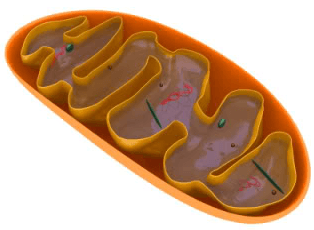
What organelle is called the "powerhouse" of a cell?

a)
Endoplasmic Reticulum
b)
Nucleus
c)
Mitochondria
d)
Nucleolus
69.
What is the gel-like substance inside of cells called?

a)
photoplasm
b)
photosynthesis
c)
cytoskeleton
d)
cytoplasm
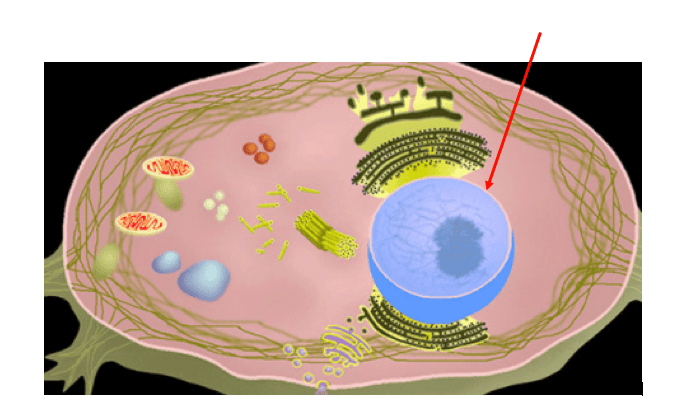
70.

Identify the structure at the end of the arrow.

a)

Mitochondria

b)

Nucleus

c)

Ribosome

d)

Endoplasmic Reticulum

71.

What is the function of a chloroplast?

a)

makes proteins for animal cells

b)

allows materials in and out of the cell

c)

provides structure and support

d)

absorbs sunlight for photosynthesis

72.

Looking in a microscope, you see cells that have rectangular shapes and a green color. What type of cells are you probably viewing?

a)

plant cells

b)

animals cells

c)

muscle cells

d)

blood cells

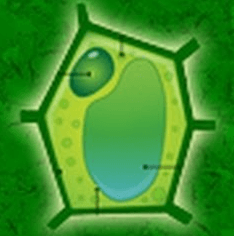
73.

Identify the structure that is indicated by the arrow in the image.

a)

cell wall

b)

central vacuole

c)

chloroplast

d)

nucleus

74.

The arrow is showing the fluid inside the cell that surrounds the cell organelles. What is the arrow pointing to in the cell?

a)

cytoplasm

b)

mitochondria

c)

ribosomes

d)

nucleus

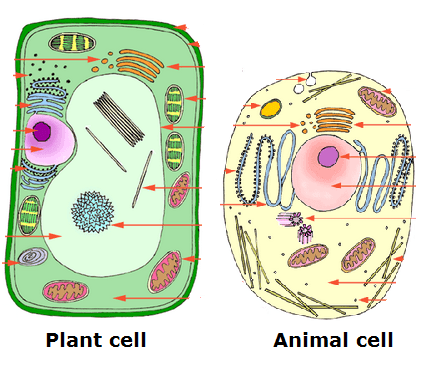
75.

What type of cell is being shown in the image?

a)

plant

b)

animal

76.
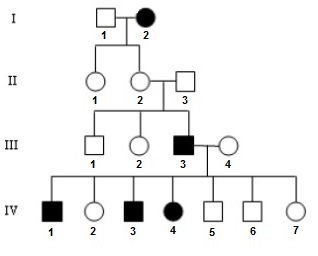
How many affected females are present? 
a)
1
b)
2
c)
3
d)
4
77.
How many offsprings did generation 2 have? 
a)
5
b)
8
c)
9
d)
10
78.
How many carrier males are present? 
a)
2
b)
4
c)
6
d)
8
79.
Which generation connects these two pedigrees? 
a)
1
b)
2
c)
3
80.
A carrier is represented by what symbol? 
a)
Clear 
b)
Shaded 
c)
Half Shaded
d)
1:4 ratio 
81.
Offsprings are represented by....
a)
Horizontal Line 
b)
Vertical Line 
82.
How are mates identified in a Pedigree? 
a)
Vertical Line 
b)
Horizontal Line 
83.

What distinguishes a plant cell from an animal cell? (How do you tell them apart) Hint: There's 3 ways (Check all 3)

a)

Central Vacuole

b)

Mitochondria

c)

Cell Wall

d)

Ribosomes

e)

Chloroplasts

84.

Animal and Plant Cells are...

a)

Shopkoytes

b)

Eukaryotes

c)

Prokaryotes

d)

The building blocks of non-living things

85.
What is one way in which all living things on Earth are alike?
a)
All living things have hair.
b)
All living things are made of cells and come from other cells.
c)
The cells of all living things have chloroplast.
d)
All living things can move. 
86.
Robert Hooke, Anton van Leeuwenhoek, Theodor Schwann, Rudolf Virchow, and Matthias Schliden were all responsible for what theory?
a)
The Theory of Gravity
b)
The Theory of Relativity
c)
The Cell Theory
d)
The Theory of Continental Drift
87.
Rocks are not living because
a)
they never move
b)
they aren't needed for humans
c)
they are not made of cells
d)
they don't break down
88.
What tool do you use to view the cells?
a)
metric ruler
b)
centrifuge
c)
microscope
d)
pipette
89.
The smallest unit that can perform the basic activities of life is
a)
a cell 
b)
a tissue
c)
an organ
d)
an organism
90.
Which of the following statements is not part of the cell theory?
a)
Cells are the basic unit of structure and function in all living things.
b)
All cells are produced from other cells.
c)
Only animal cells are composed of cells.
d)
All living things are composed of cells.
91.
A plant and an animal are both living things. According to the Cell Theory, what can you conclude about these two very different organisms?
a)
Plants have cells but animals do not.
b)
They are both made of one or more cells. 
c)
They both come from the same kind of cell.
d)
They both come from a non-living organism.
92.
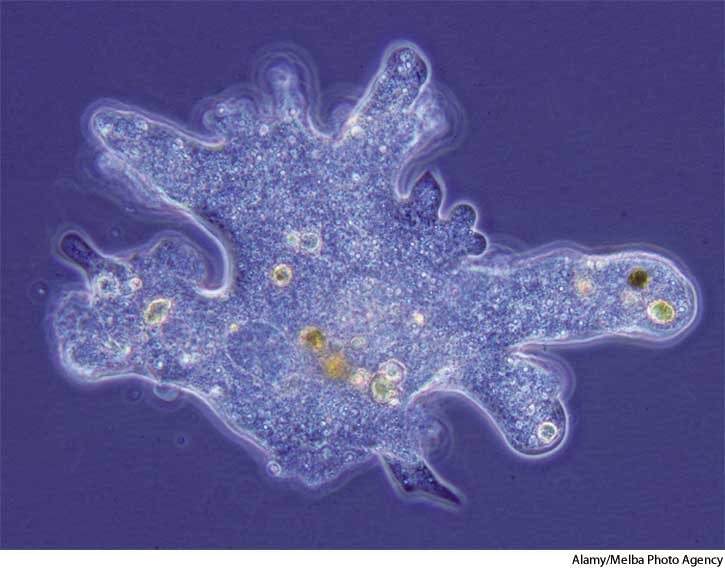
An Amoeba is a unicellular, animal-like protist that lives in ponds and streams. According to cell theory, where did this cell come from?
a)
another pre-existing amoeba cell.
b)
energy from sun that allowed the protist to reproduce.
c)
a multicellular organism.
d)
the nonliving environment.
93.
All cells come from___________ cells.
a)
pregnant
b)
pre-existing
c)
paternal
d)
pin size
94.
what is a cell classified as?
a)
a basic unit of structure and function of all living organisms
b)
a unit based on only plants and animals that are living
95.
In order to sustain life, all cells must...
a)
digest nutrients and water
b)
excrete waste and fluids
c)
must be able to maintain a homeostasis environment (aka cellular respiration and regulation)
d)
All of the above
96.
Which is NOT part of the Cell Theory
a)
New cells are produced from existing cells
b)
All living things are composed of cells
c)
Only eukaryotic cells have a nucleus
d)
Cells are the basic unit of structure & function in living things
97.
How are unicellular organisms different from multicellular organisms? 
a)
There are no differences.
b)
They are made of many cells. 
c)
They are only classified as prokaryotes.
d)
They are made of only one cell. 
98.
A group of organs that work together to perform the same function is called _____________?
a)
cells
b)
tissues 
c)
organ system
d)
organs
99.
Groups of tissues that work together to perform a similar function are called_____. (Examples include the heart, lungs or stomach)
a)
cells
b)
tissues
c)
organ
d)
organ system
100.
 A group of cells that have similar functions? Examples are nervous, epithelial, muscle and connective
a)
cells
b)
tissues
c)
organs
d)
atoms
101.
When many organ systems work together it can form...
a)
organ
b)
cells
c)
organ system
d)
organism 
102.
What is the correct order of organization
a)
tissues-cells-organs-organ systems-organism
b)
cell-tissue-organs-organ systems-organism
c)
organism-cells-tissues-organ systems-organism
d)
tissues-cells-organs-organ sytems-organism
103.
This is a example of........ 
a)
organ system
b)
cells
c)
organ
d)
tissue
104.
This is a example of ........
a)
cell
b)
tissue
c)
organ 
d)
organ system
105.
This is a example of ........
a)
cell
b)
organ system
c)
organ
d)
tissue
106.
This is a example of ........
a)
organ
b)
organ system
c)
tissue
d)
cell
107.
Describes an organism made of more than one (specialized) cell
a)
unicellular
b)
specialized
c)
interdependent
d)
multicellular
108.
Which of the following is an organism?
a)
air
b)
lung
c)
heart
d)
grass
109.

What is the level of organization?

a)

cell

b)

tissue

c)

organ

d)

organ system

e)

organism

110.

What is the level of organization?

a)

cell

b)

tissue

c)

organ

d)

organ system

e)

organism

111.

What is the level of organization?

a)

cell

b)

tissue

c)

organ

d)

organ system

e)

organism

112.

What is the level of organization?

a)

cell

b)

tissue

c)

organ

d)

organ system

e)

organism

113.
In asexual reproduction, all of the offspring are:
a)
Physically Identical
b)
Genetically Identical
c)
Physically and Genetically Identical
d)
Not Identical
114.
Which statement best describes the process of asexual reproduction?
a)
new organisms are usually genetically identical to the parent
b)
the reproductive cycle involves the production of games
c)
nuclei of sex cells fuse to form a zygote
d)
it involves the production of genetic copies 
115.
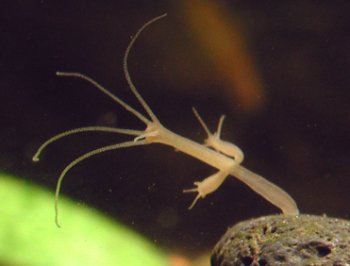
This is when a new organism grows by cell division on the body of its parent. The bud, or offspring is identical to the parent. The bud, when large enough, can break off of the parent and live on its own.  Examples of this include yeast, hydra and potatoes.
 
a)
Regeneration
b)
Vegetative propagation
c)
Fission
d)
Budding
116.
How many parent(s)are needed for asexual?
a)
4
b)
1
c)
9
d)
100
117.
What are some of the facts about asexual reproduction?
a)
Takes only one mate to reproduce and takes a longer time to reproduce
b)
Takes a shorter amount of time to reproduce and it takes two mates to reproduce
c)
Reproduces diverse offspring and takes a longer time to reproduce
d)
Takes only one mate to reproduce and takes a shorter time to reproduce
118.
How are genetic traits passed down from generation to generation?
a)
Chromosomes
b)
Reproduction
c)
DNA
d)
Genes
119.

All of the offspring of an organism have the same genetic material, which is identical to the parent organism. From this, we can conclude that this organism -

a)

makes its own food

b)

is unicellular

c)

live in a marine habitat

d)

reproduces asexually

120.

Reproducing asexually will produce offspring ...

a)

genetically different from each other

b)

genetically identical to the parent

121.
What is a disadvantage of asexual reproduction?
a)
New species of organisms cannot come into being.
b)
The offspring does not multiply rapidly.
c)
The offspring does not live for long.
d)
All of these
122.
Which of the following describes the main advantages of sexual reproduction? 
a)
requires lots of time/energy
b)
no new gene combos can arise 
c)
diversity
d)
looks identical to the parent
123.
What does a filled in square represent?
a)
Not affected Female
b)
Not affected Male
c)
Affected Male
d)
Affected Female
124.
How many generations are shown in this pedigree?
a)
1
b)
2
c)
3
d)
4
125.
This pedigree represents the inheritance of hemophilia in this family. How many of the females have the hemophilia trait?
a)
8
b)
5
c)
2
d)
3
126.
What does an open circle represent?
a)
Not Affected Male
b)
Not Affected Female
c)
Affected Male
d)
Affected Female
127.
What is this?
a)
Pedigree
b)
Karyotype
c)
Venn diagram
d)
Punnett Square
128.

A pedigree charts tracks how various traits are passed to the next generation contained in DNA. Which statement is true?

a)

Traits are passed through asexual reproduction

b)

Traits are passed through sexual reproduction

c)

Traits are acquired from the environment through sexual reproduction

d)

Traits are acquired from the environment through asexual reproduction

129.

Which of the following is NOT a structure of a plant?

a)

root

b)

stem

c)

feet

d)

flower

130.

What is the function of the leaf?

a)

To absorb water from the ground

b)

To absorb sunlight and make food

c)

To absorb nutrients from the soil

d)

To absorb pollen from pollinatros

131.

Why would a plant have thick, waxy leaves?

a)

to move water up the plant

b)

to help store water

c)

to help it float

132.

Select the correct term for the following definition:

"The water transport system in plants."

a)

Villi

b)

Bronchi

c)

Bolus

d)

Xylem

133.

Recall the main function of a xylem cell.

a)

To transport nutrients (mainly sucrose) to different parts of a plant.

b)

To make energy for the plant via photosynthesis.

c)

To transport carbon dioxide to the leaves for photosynthessis.

d)

To transport water to different parts of plant.

134.

Recall the main funtion of a phloem cell.

a)

To transport nutrients (mainly sucrose) to different parts of a plant.

b)

To transport water to different parts of a plant.

c)

To make energy for the plant via photosynthesis.

d)

To provide structural support to a plant.

135.

What is the gel-like liquid that supports all of the cell's structures and holds them in place?

a)

Cytoplasm

b)

Cell Wall

c)

Mitochondria

d)

Vacuole

136.

What is the outermost layer of an animal cell?

a)

Cell Wall

b)

Cell Membrane

c)

Nucleus

d)

Mitochondria

137.

What is the outermost layer of a plant cell?

a)

Cell Wall

b)

Cell Membrane

c)

Nucleus

d)

Mitochondria

138.
Selectively permeable barrier that controls what enters and leaves the cell.
a)
cell membrane
b)
cell wall
c)
cytoskeleton
d)
rough ER
139.

All cells have these in common EXCEPT

a)

cell membrane

b)

nucleus

c)

cytoplasm

d)

DNA

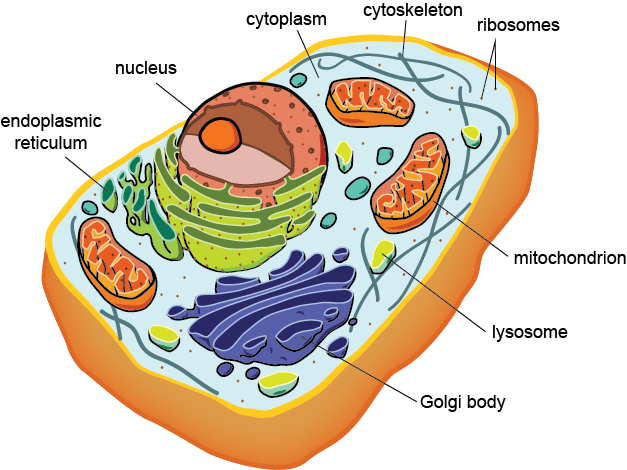
140.

This cell is a(n)

a)

prokaryote

b)

eukaryote

141.

This cell is a eukaryote because it

a)

contains cytoplasm

b)

has a nucleus

c)

has no nucleus

d)

has DNA

142.

A tree is biotic because

a)

it is living, made of cells, responds and grows

b)

it is made of cells, but does not responds and grows

c)

is not made of cells but grows

143.
How are unicellular organisms different from multicellular organisms? 
a)
There are no differences.
b)
They are made of many cells. 
c)
They are only classified as prokaryotes.
d)
They are made of only one cell. 
144.
Which of the following is NOT a part of cell theory? 
a)
All cells come from other cells. 
b)
Cells are the basic unit of life. 
c)
Living things are made of cells.
d)
Atoms are the basic unit of life. 
145.
When an organism of a species has an adaptation, it will compete for resources better, survive longer and pass that adaptation on to it's offspring. This process is called
a)
evolution by natural selection
b)
artificial selection
c)
inbreeding
d)
outbreeding