
 Worksheets
Electromagnetic Spectrum
Total questions: 140
Worksheet time: 3hrs 42mins


Which color has the longest wavelength?
Yellow
Red
Green
Purple
The name for the range of electromagnetic waves placed in order of increasing frequency is...
Electromagnetic Spectrum
Electromagnesis
Visible light spectrum
The range of light

Which of the following is not in the electromagnetic spectrum?
Light waves
Sound waves
Radio Waves
X-rays

In which list are forms of electromagnetic energy arranged in order from longest to shortest wavelength?
Microwave -> Radio wave -> Infrared rays
Visible light -> x-ray -> radio wave
Microwave -> infrared -> visibile light
Infrared -> radio wave -> ultraviolet

Which electromagnetic radiation has the greatest frequency?
Radio waves
Visibile light
Infrared
X-rays
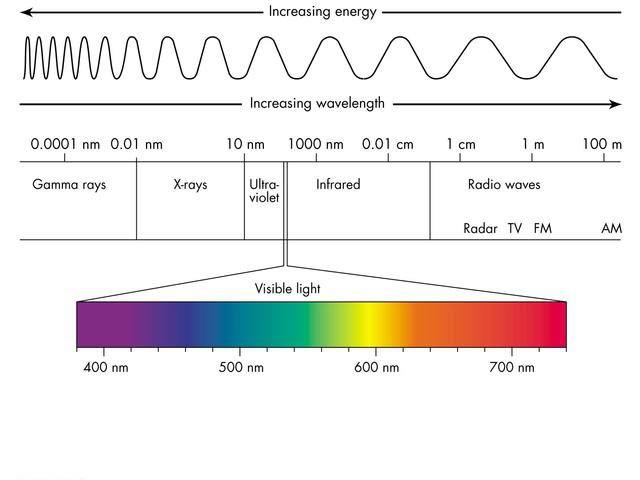
What is the correct order of the visible light spectrum starting with the longer wavelength?
Red, yellow, orange, blue, violet, indigo
Violet, indigo, blue, green, yellow, orange, red
Green, yellow, blue, indigo, red, orange
Red, orange, yellow, green, blue, indigo, violet
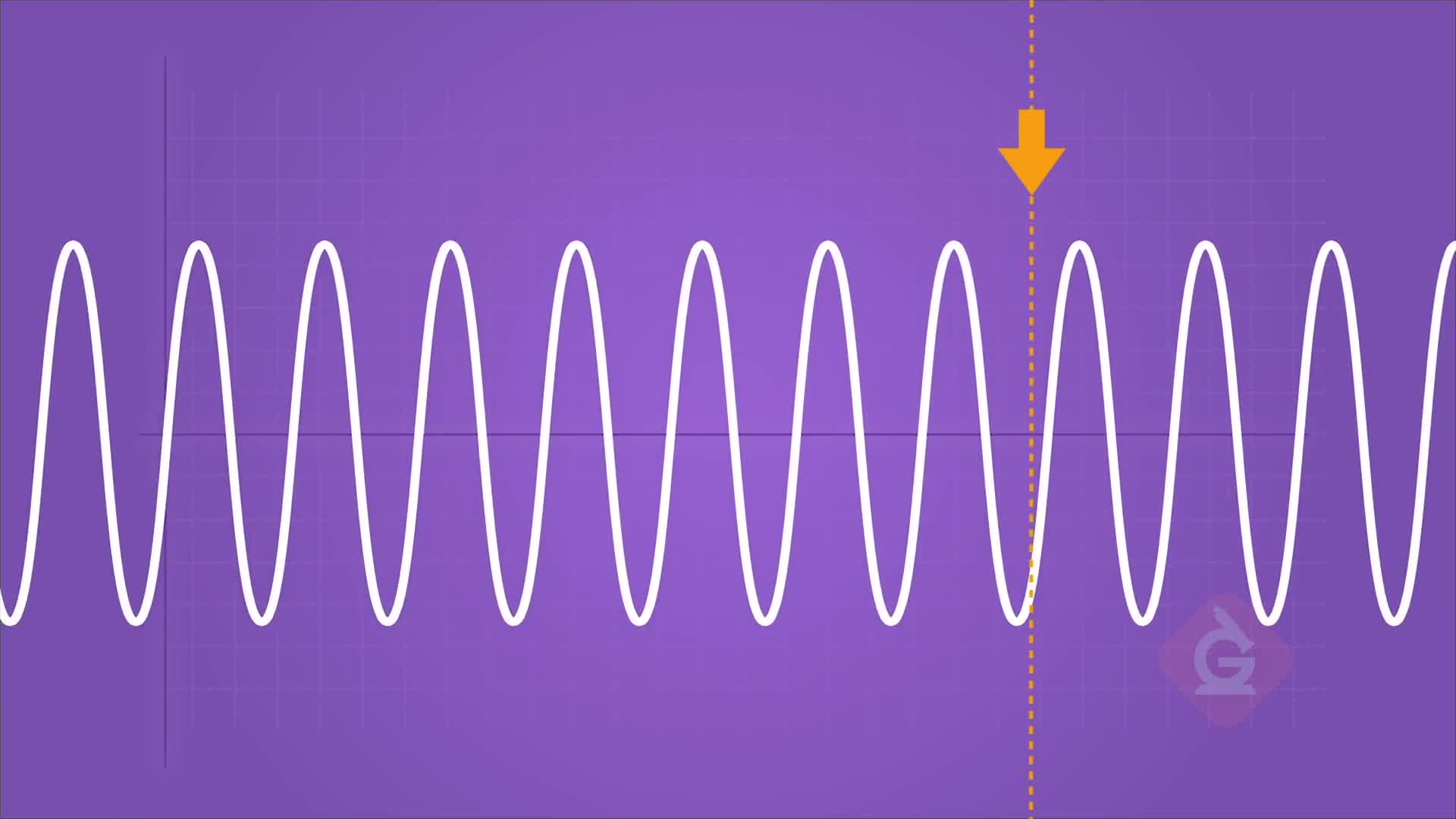
What is the distance from the peak of one wave to the next peak?
Wavelength
Amplitude
Frequency
Period
What is the height of a wave from its resting point?
Wavelength
Amplitude
Frequency
Period
What is the height of a wave from its resting point?
Wavelength
Amplitude
Frequency
Period
These waves make water molecules vibrate and warm up.
Gamma
Radio
Microwave
Ultraviolet
These high-energy waves are given off by radioactive materials.
Gamma
Radio
Microwave
Ultraviolet
These waves are used to send signals, including Wi-Fi and text messages.
Gamma
Radio
Microwave
Ultraviolet
These waves are used to send signals, including Wi-Fi and text messages.
Gamma
Radio
Microwave
Ultraviolet
These waves from the Sun cause sunburn.
Gamma
Radio
Microwave
Ultraviolet
What is amplitude?
the height of a wave from rest position to the crest
the height of a wave from crest to trough
the length of a wave from crest to crest
the length of a wave from crest to trough
Increasing the amplitude of a wave _____ the wave's energy.
increases
decreases
doesn't change

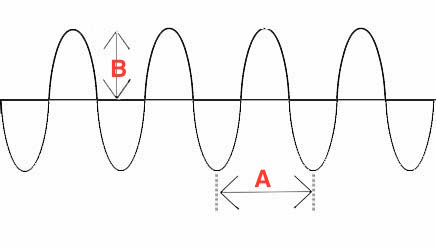
This is the distance between two peaks. What is this called?
amplitude
wavelength
longitude
trough

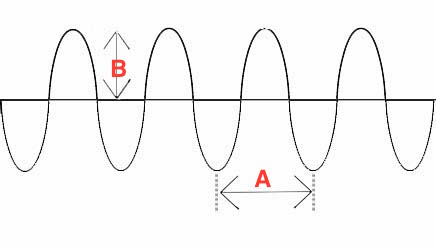
What does this picture represent?
wavelength
echolocation
amplitude
peak
Waves DO NOT transfer ______?
Matter
Energy
The highest point of a wave is called what?
Trough
energy
Peak
amplitude
Which type of waves have vibrations that run perpendicular to the direction the wave travels?
transverse
longitudinal
Which type of waves have vibrations that run parallel to the direction the wave travels?
transverse
longitudinal
Examples of this type of waves include water waves, waves on a string/jump rope, and light waves.
transverse
longitudinal
An example of this type of wave is a sound wave.
transverse
longitudinal
_______ is the length of a full cycle of a wave, from one crest to the next crest.
Wavelength
Frequency
Amplitude
The _______ is the highest point on a transverse wave.
Crest
Trough
Wavelength
Amplitude

The _______ of a wave is how many waves pass a given point every second.
Frequency
Wavelength
Amplitude
Frequency is measured in _______.
Hertz (Hz)
Meters per second
Meters
Newtons

Examples of ________ waves include visible light, xrays, ultraviolet, and radio waves.
transverse
longitudinal

What kind of wave is pictured below?
compressional wave
transverse wave
sound wave
mechanical wave

Which type of waves have vibrations that run perpendicular to the direction the wave travels?
transverse
longitudinal
Which type of waves have vibrations that run parallel to the direction the wave travels?
transverse
longitudinal
Examples of this type of waves include water waves, waves on a string/jump rope, and light waves.
transverse
longitudinal
An example of this type of wave is a sound wave.
transverse
longitudinal
The _______ is the size or height of a wave, measured from the equilibrium to the crest or trough.
Amplitude
Wavelength
Frequency
The _______ of a wave is how many waves pass a given point every second.
Frequency
Wavelength
Amplitude

In a longitudinal wave, a ________ is an area where the particles are spread apart.
rarefaction
compression
crest
trough

In a longitudinal wave, a ________ is an area where the particles are close together.
rarefaction
compression
crest
trough
Examples of ________ waves include visible light, xrays, ultraviolet, and radio waves.
transverse
longitudinal

Scientists use the light-year to describe the relationships between objects in space. What does a light-year measure?
the distance that light can travel in one year
the brightness of light that travels through space
the number of years it takes light to travel to Earth
the time it takes light to travel 1 million km
What is an astronomical unit (A.U.)?
the time it takes light to travel one year
the distance between the Earth and the Moon
the distance between the Earth and the Sun
the distance between the Earth and the Neptune

The Sun is a _______ that illuminates and emits heat.
planet
star
light
satellite
When light bounces off of an object into a different direction
absorbtion
refraction
reflection
When light hits a translucent object and bends
absorbtion
refraction
reflection
when light is stored inside of an object and turns into heat energy
absorbtion
refraction
reflection

How is white light able to separate through a prism?
the light is being absorbed
the light is being refracted
the light is being reflected

We are able to see a mirrored image of the mountains on the water through...
refraction
reflection

reflection
refraction

reflection
refraction

reflection
refraction

reflection
refraction

reflection
refraction

What color is being reflected?
green
blue and yellow
red, orange, yellow, blue, indigo, violet

What colors are being absorbed?
red, orange, yellow
green, blue, indigo, violet

What colors are being reflected?
all of the colors in the color spectrum
none of the colors in the color spectrum
Which is true about white light?
it reflects all color of light
it absorbs all color of light
it only reflects red, blue, and yellow light
What happens when light hits a shiny or smooth surface?
It disappears.
It is refracted.
It is absorbed.
It is reflected.
Light Absorption, Reflection, & Refraction
What is the angle of reflection equal to?
the angle of refraction
the angle of incidence
the angle of absorption
the angle of light
What might explain why light travels in a straight line?
If there is nothing to interfere with light waves, they should travel in a straight line.
Light waves will always travel in a straight line, even if they come into contact with another object.
Light waves don’t travel in a straight line.
Light waves travel in a straight line because sound waves travel in a straight line.
What is the angle of incidence?
the angle at which light bends in water
the angle at which light hits a surface
the angle at which light is absorbed by an object
the angle at which light bounces off a surface
When you look into a mirror, what is happening to the light?
It is increasing in wavelengths.
It is being refracted.
It is being absorbed.
It is being reflected.
This describes an object where light passes through completely without any obstruction.
Transmission
Transparent
Translucent
Opaque
This describes an object where light passes through, but not as clearly or easily.
Transmission
Transparent
Translucent
Opaque
This describes an object where light does not pass though at all.
Transmission
Transparent
Translucent
Opaque

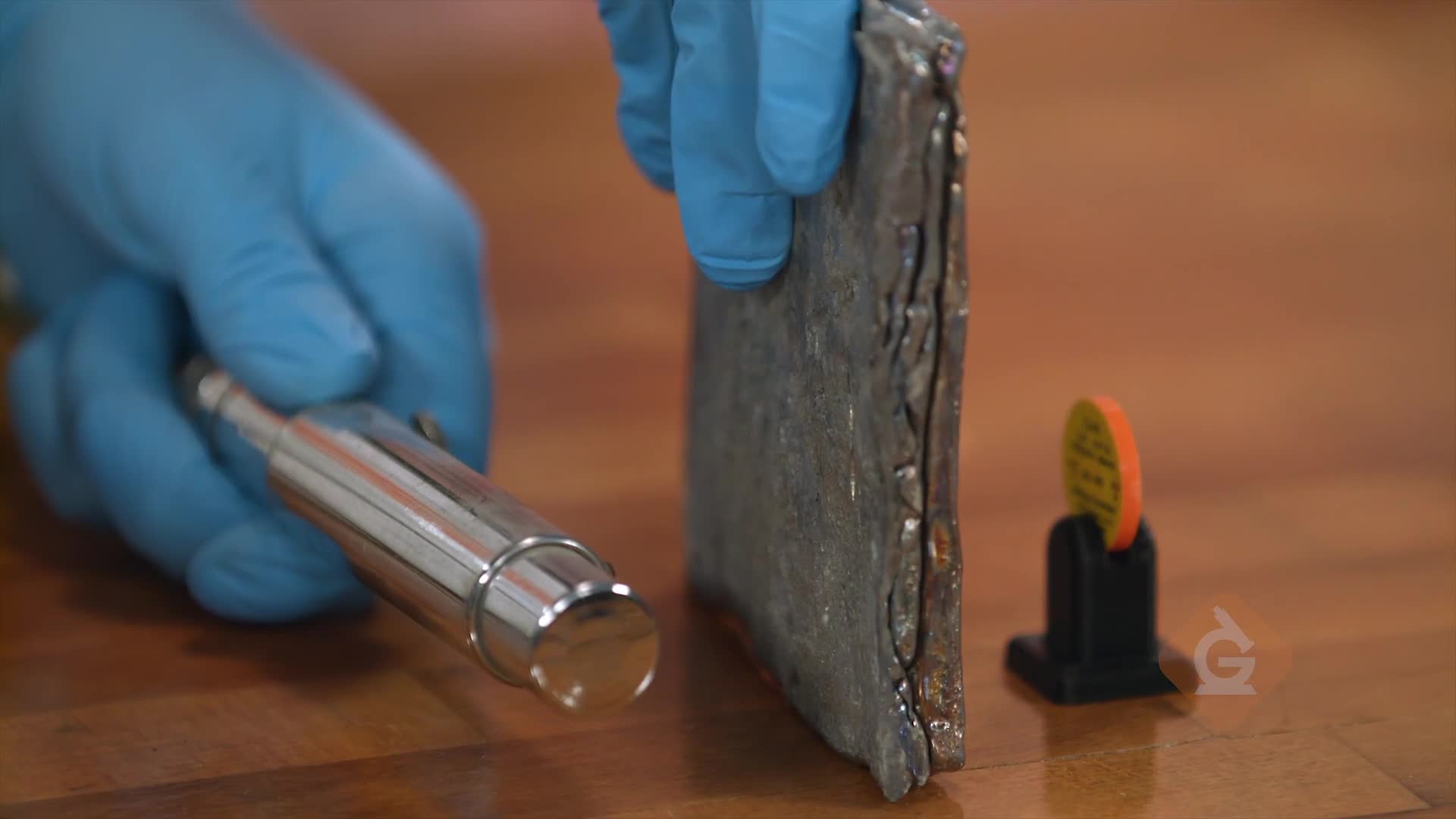
Which word best describes the material shown in the picture?
Transparent
Translucent
Opaque


The type of wave in which the medium moves parallel to the wave motion is
transverse
longitudinal
light
electromagnetic






The Greek meaning for the word "hydro" is ______________
Air
Water
Earth
Life

Water vapor is an example of what sphere?
Atmosphere
Cryosphere
Biosphere
Geosphere

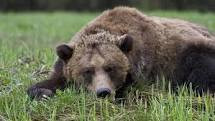
Polar Bears hunt seals on ice is an interaction of what two spheres?
Biosphere-Hydrosphere
Biosphere-Atmosphere
Hydrosphere-Atmosphere
Hydrosphere-Geosphere
Coral reefs protect coastlines by absorbing energy from pounding waves.
Biosphere and Atmosphere
Geosphere and Biosphere
Hydrosphere and Biosphere
The surivial of organisms is impacted by the air temperature.
Atmosphere and Hydrosphere
Geosphere and Biosphere
Atmosphere and Biosphere
Biosphere and Hydrosphere
Which one is an example of Atmosphere and Geosphere?
A volcano erupts adding Carbon Dioxide to the air.
Air temperature impacts the evaporation of lakes and streams.
Plants use essential elements such as water, carbon and nitrogen from the soil.
Which of these are an example of Atmosphere and Biosphere interacting:
The survival organisms is impacted by the air temperature.
Wind can carry seeds to new places,, so more plants can grow.
Bacteria and algae convert Nitrogen from the air into a form that is usable by plants and animals.
all the above
How much of the planet is covered by water?
20%
50%
70%
90%
Which of the following is found in the earths Geosphere
Soil
Rocks
Minerals
All of the Above
Which layer of the Atmosphere contains most of the air we breathe?
Stratosphere
Atmosphere
Troposphere
Exosphere
Of the earth's water how much of it is considered SALT water?
80%
97%
3%
30%
Which is the highest layer of our atmosphere
troposphere
stratosphere
mesosphere
exosphere
Which gas released in the atmosphere creates a greenhouse effect trapping the heat?
oxygen
Carbon dioxide
nitrogen
all of these
What are the important objects for survival of plants and animals?
rainfall
sun light
oxygen
all of these
Which one of the following gases is present in the atmosphere in the highest amount?
oxygen
nitrogen
carbondioxide
lithium
Which one of the following gases protects us from harmful sun’s rays?
ozone
nitrogen
carbodioxide
nitrogen
The layer of gases, known as air that surrounds planet Earth and is retained by gravity is called the (a) . Type your answer.
The ozone layer is in a part of the atmosphere high above the surface of the Earth that protects us from the sun's radiation. What is the name of the atmosphere?
exosphere
thermosphere
mesosphere
stratosphere

A mixture of gases that surrounds the Earth like a blanket.
atmosphere
troposphere
ozone
nitrogen
"atmo-" means
gas or vapor
water
Earth or rocks
life
Which layer of the atmosphere has meteors?
troposphere
stratosphere
mesosphere
thermosphere
Which layer of the atmosphere contains the ionosphere?
troposphere
stratosphere
mesosphere
thermosphere
Which layer of the atmosphere has weather?
troposphere
stratosphere
mesosphere
thermosphere
Which layer of the atmosphere contains the ozone?
troposphere
stratosphere
mesosphere
thermosphere
Which is not a factor that influences daily weather?
heat
air pressure
elevation
moisture

